Twister
Brassica oleracea var. botrytis
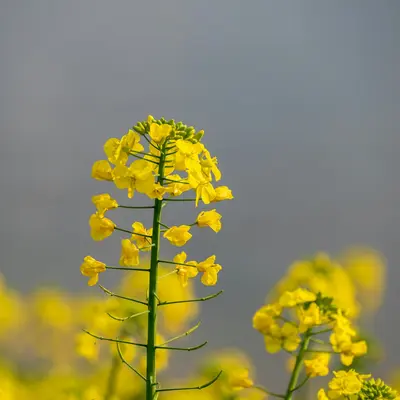
The big, heavy, well-domed heads have large wrapper leaves that protect them from the sun, resulting in excellent color and head quality. Twister performs well in summer and fall in the Northeast and Midwest, from late June through late October in Coastal California, and in desert areas in the winter. A great complement to Mardi.
Harvest
62d
Days to harvest
Sun
Full sun to partial shade
Zones
6–9
USDA hardiness
Height
10-24 inches
Planting Timeline
Showing dates for Twister in USDA Zone 7
All Zone 7 brassica →Zone Map
Click a state to update dates
Twister · Zones 6–9
Growing Details
Succession Planting
Start seeds indoors 4–6 weeks before last frost — late February to early March in zone 7 — and transplant out in April once nights stay reliably above 40°F. Twister matures in 62 days, so a second round transplanted in late July to early August will carry you into November before hard frost shuts things down. Don't push a third succession; cauliflower stalls badly once daytime highs sit consistently above 80°F, and heads that form in that heat turn grainy and loose rather than tight and white.
Complete Growing Guide
The big, heavy, well-domed heads have large wrapper leaves that protect them from the sun, resulting in excellent color and head quality. Twister performs well in summer and fall in the Northeast and Midwest, from late June through late October in Coastal California, and in desert areas in the winter. A great complement to Mardi. According to Johnny's Selected Seeds, Twister is 62 days to maturity, annual, hybrid (f1). Notable features: Heat Tolerant.
Light: Full sun (6 or more hours of direct sunlight a day), Partial Shade (Direct sunlight only part of the day, 2-6 hours). Soil: Clay, Loam (Silt), Sand. Soil pH: Acid (<6.0), Neutral (6.0-8.0). Drainage: Good Drainage, Moist. Height: 0 ft. 10 in. - 2 ft. 0 in.. Spread: 1 ft. 0 in. - 2 ft. 0 in.. Spacing: 12 inches-3 feet. Growth rate: Medium. Maintenance: Medium. Propagation: Seed, Stem Cutting. Regions: Coastal, Mountains, Piedmont.
Harvesting
Twister reaches harvest at 62 days from sowing per Johnny's Selected Seeds. As an annual, harvest continues until frost ends the season.
The fruits dry and split when ripe.
Color: Brown/Copper, Green. Type: Siliqua. Length: > 3 inches.
Garden value: Edible
Harvest time: Fall, Summer
Edibility: The foliage is edible raw or cooked but when cooked can emit an unpleasant odor.
Storage & Preservation
Store freshly harvested Twister heads in the refrigerator at 32–40°F with 95% humidity, ideally in perforated plastic bags or containers to maintain moisture while allowing air circulation. Whole heads keep for 2–3 weeks under these conditions; individual florets deteriorate more quickly, so delay cutting until use.
Freezing is the most practical preservation method: blanch florets for 3–4 minutes in boiling water, shock in ice water, drain thoroughly, and freeze in airtight containers or freezer bags for up to ten months. Twister's compact, tender florets freeze exceptionally well compared to larger cauliflower varieties, retaining texture and color.
For longer-term storage without freezing, consider pickling small florets in vinegar brine, which preserves them for several months in a cool pantry. Drying is less common but possible; slice florets thinly and dehydrate at 135°F until brittle, then store in airtight jars.
History & Origin
Twister is an F1 hybrid developed through controlled cross-pollination. Listed in the Johnny's Selected Seeds catalog.
Origin: W. Europe
Advantages
- +Large, heavy, well-domed heads with excellent color and quality.
- +Protective wrapper leaves shield curds from sun damage effectively.
- +Performs reliably in summer and fall Northeast and Midwest.
- +Extended harvest window from late June through late October.
- +Complements Mardi variety for succession planting strategies.
Considerations
- -62-day maturity requires consistent cool temperatures for optimal head formation.
- -Wrapper leaves may harbor pests or moisture-related fungal issues.
- -Performance inconsistent outside optimal regional growing windows and climates.
Companion Plants
Dill and thyme both pull their weight near Twister — dill attracts predatory wasps that hit imported cabbageworms (Pieris rapae) hard, while thyme's volatile oils disrupt the host-finding behavior of cabbage moths looking for a place to lay eggs. Nasturtiums act as a trap crop, drawing aphids and flea beetles onto themselves and off the heads. Onions and celery slot in at a shallower root depth, so they're not pulling from the same zone where Twister needs consistent moisture at 1–1.5 inches per week. Tomatoes and pole beans both compete aggressively for nutrients and root space, and tomatoes can carry bacterial pathogens in the soil that brassicas don't need any extra exposure to.
Plant Together
Dill
Attracts beneficial insects like parasitic wasps that control cabbage worms
Nasturtium
Acts as trap crop for flea beetles and aphids, protecting brassicas
Marigold
Repels cabbage moths and other pests while attracting beneficial predators
Celery
Repels cabbage white butterflies and improves overall plant health
Onions
Strong scent deters cabbage worms, root maggots, and flea beetles
Lettuce
Makes efficient use of space and doesn't compete for nutrients
Spinach
Compatible growth habits and helps maximize garden space utilization
Thyme
Repels cabbage worms and flea beetles while attracting beneficial insects
Keep Apart
Strawberries
Compete for nutrients and may stunt brassica growth
Tomatoes
Both are heavy feeders competing for nutrients, may inhibit brassica growth
Pole beans
Can shade brassicas and compete for nutrients, reducing yields
Nutrition Facts
Per 100g serving. % Daily Value based on 2,000 calorie diet. Source: USDA FoodData Central (FDC #747447)
Pests & Disease Resistance
Common Pests
Cabbage moth, flea beetle, cabbage aphid, imported cabbageworm
Diseases
Clubroot, black rot, downy mildew
Troubleshooting Twister
What you'll see, why it happens, and what to do about it.
Irregular yellow patches on upper leaf surfaces with grayish-purple fuzz on the undersides, appearing in cool, wet stretches
Likely Causes
- Downy mildew (Peronospora parasitica) — thrives in cool temps around 50–60°F with high humidity or leaf wetness
- Crowded plants restricting airflow between heads
What to Do
- 1.Remove and bag affected leaves immediately — don't compost them
- 2.Space transplants at least 18 inches apart and water at the base rather than overhead in the evening
- 3.Apply a copper-based fungicide on a 7-day interval if the outbreak is spreading; stop once conditions dry out
Plants wilting and stunted with swollen, club-shaped roots when you pull them — sometimes just one or two plants at first, then spreading
Likely Causes
- Clubroot (Plasmodiophora brassicae) — a soil-borne pathogen that persists in acidic soils and can survive 10–20 years without a host
- Waterlogged or poorly drained beds that favor spore germination
What to Do
- 1.Pull and trash affected plants entirely — roots and all — do not compost
- 2.Lime the bed to raise soil pH above 7.0, which suppresses Plasmodiophora brassicae activity
- 3.Rotate brassicas out of that bed for at least 4 years; there's no soil treatment that eliminates it once it's established
V-shaped yellow lesions on leaf edges that turn brown, with dark streaking inside the stem when you cut it — often showing up after a rainy period
Likely Causes
- Black rot (Xanthomonas campestris pv. campestris) — a bacterial disease that enters through leaf margins and moves through the vascular tissue
- Infected transplants or seed, and overhead irrigation splashing bacteria between plants
What to Do
- 1.Cut out and dispose of affected leaves; sterilize your pruners with a 10% bleach solution between cuts
- 2.Switch to drip irrigation or water at the base — keeping foliage dry slows spread considerably
- 3.Don't replant brassicas in the same bed for 2 seasons; Xanthomonas campestris overwinters in crop debris
Frequently Asked Questions
How long does Twister broccoli take to grow?▼
Is Twister broccoli good for beginners?▼
Can you grow Twister broccoli in containers?▼
What's the difference between Twister and Mardi broccoli?▼
When should I plant Twister broccoli?▼
How much water does Twister broccoli need?▼
Zone-by-Zone Planting Calendar
| Zone | Indoor Start | Transplant | Direct Sow | Harvest |
|---|---|---|---|---|
| Zone 1 | April – May | June – July | June – July | August – September |
| Zone 2 | April – May | June – July | May – July | July – September |
| Zone 11 | January – January | January – February | January – February | February – December |
| Zone 12 | January – January | January – February | January – February | February – December |
| Zone 13 | January – January | January – February | January – February | February – December |
| Zone 3 | March – April | May – June | May – June | July – October |
| Zone 4 | March – April | May – June | April – June | June – October |
| Zone 5 | February – March | April – May | April – May | June – November |
| Zone 6 | February – March | April – May | April – May | June – November |
| Zone 7 | February – March | April – May | March – May | May – November |
| Zone 8 | January – February | March – April | March – April | May – December |
| Zone 9 | January – January | February – March | February – March | April – December |
| Zone 10 | January – January | February – March | January – March | March – December |
Growing Guides from Wind River Greens
Sources & References
External authority sources used in compiling this guide.
- BreederJohnny's Selected Seeds
- USDAUSDA FoodData Central
See the Methodology page for how this data is sourced, what's AI-assisted, and known limitations.