Tokyo Bekana
Brassica rapa var. chinensis
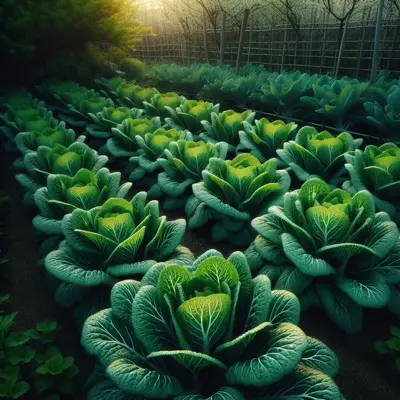
This one-of-a-kind blonde leaf with ruffled texture adds loft and a pop of color to salad mixes. A non-heading Chinese cabbage that has buttery leaves with a crunchy rib and mild flavor. At full size, softly curled leaves on narrow, white petioles can be sold as bunched greens. Thin to 4-8" for full-size heads for bunching. Also available in organic seed.
Harvest
21-45d
Days to harvest
Sun
Full sun to partial shade
Zones
5–10
USDA hardiness
Height
3 feet
Planting Timeline
Showing dates for Tokyo Bekana in USDA Zone 7
All Zone 7 brassica →Zone Map
Click a state to update dates
Tokyo Bekana · Zones 5–10
Growing Details
Succession Planting
Tokyo Bekana bolts fast once daytime highs push past 80–85°F, so in zone 7 the spring window closes around late May. Direct sow every 14–21 days starting March 1, and plan your last spring sowing for around May 1 — anything started after that is likely to bolt before you hit the 45-day full-head mark. Resume direct sowings in late August through September for a fall run, and push into November with row cover once nights drop below 40°F.
Because days to harvest range from 21 days at baby-leaf size to 45 days for a full head, you can stagger cuts as well as sowings — harvest outer leaves starting around day 21 and let the center keep going. That stretches each planting by another 2–3 weeks without touching your bed space.
Complete Growing Guide
Tokyo Bekana thrives in cool weather conditions, making it ideal for spring plantings 2-4 weeks before your last frost date and fall sowings 8-10 weeks before your first hard freeze. Choose a location that receives morning sun but benefits from afternoon shade in zones 7-9, while northern gardeners (zones 3-6) can provide full sun exposure.
Prepare your soil by working in 2-3 inches of compost or well-aged manure to improve both drainage and moisture retention. Tokyo Bekana performs best in soil with a pH between 6.0-7.0 and appreciates consistent moisture without waterlogging. Add a balanced granular fertilizer (10-10-10) at planting time, applying 1 tablespoon per square foot.
Direct sowing produces the strongest plants since Tokyo Bekana has a sensitive taproot. Sow seeds ¼ inch deep in rows spaced 12 inches apart, then thin seedlings to 6-8 inches apart when they reach 2 inches tall. For continuous harvest, succession plant every 10-14 days rather than the typical 2-3 week interval, as this variety's quick growth allows for more frequent plantings.
If starting indoors, use biodegradable pots to minimize root disturbance and transplant when seedlings have 3-4 true leaves. Harden off for 5-7 days, gradually increasing outdoor exposure. Water transplants with diluted fish emulsion to reduce transplant shock.
Maintain consistent soil moisture by mulching around plants with 2 inches of straw or shredded leaves. Side-dress with nitrogen-rich fertilizer (such as blood meal) 3 weeks after planting to encourage rapid leaf development. Tokyo Bekana grows quickly enough that it typically outpaces most pest problems, but row covers during the first 3 weeks provide extra protection from flea beetles.
Avoid the common mistake of planting too late in spring—temperatures above 75°F for several consecutive days trigger premature bolting. In hot climates, focus on fall plantings and use shade cloth during heat waves to extend the growing season.
Harvesting
Tokyo Bekana offers flexible harvesting options depending on your culinary needs. For baby leaf harvest, cut outer leaves when they reach 3-4 inches long, typically 21-25 days from sowing. The leaves should feel tender and pliable, with a bright light green color and glossy surface.
For full-sized heads, wait until the loose rosette reaches 6-8 inches across, usually 35-45 days from planting. The center leaves should still be tightly clustered but not forming a dense head like traditional cabbage. Test readiness by gently squeezing the center—it should feel firm but not hard.
Harvest in early morning when leaves are crisp and fully hydrated. Use a sharp knife to cut the entire plant at soil level, or continue the cut-and-come-again method by harvesting outer leaves while leaving the growing center intact. When cutting individual leaves, slice cleanly at the base of the leaf stem rather than tearing, which can damage the plant and invite disease. The plant will continue producing new growth for 3-4 additional harvests before quality declines.
Storage & Preservation
Fresh Tokyo Bekana leaves maintain peak quality for 7-10 days when stored properly in the refrigerator. Rinse harvested leaves in cool water, spin dry thoroughly, and wrap in slightly damp paper towels before placing in perforated plastic bags. Store in the crisper drawer at 32-35°F with high humidity.
For longer preservation, Tokyo Bekana's tender leaves are excellent for quick pickling—submerge whole leaves in seasoned rice vinegar brine for 24 hours for a traditional Japanese preparation. The leaves also freeze well when blanched for 30 seconds in boiling water, shocked in ice water, drained, and frozen in portion-sized bags for up to 6 months.
Fermentation works beautifully with Tokyo Bekana's mild flavor—use it as a substitute for napa cabbage in kimchi recipes, though reduce fermentation time by 1-2 days due to its more delicate structure. Avoid dehydrating as the high water content and thin leaves don't preserve well through drying methods.
History & Origin
Tokyo Bekana (Brassica rapa var. chinensis) originated in the Tokyo region of Japan during the Edo period (1603-1867), where it was developed as a quick-growing green to fill the gap between seasonal harvests. The name 'bekana' translates roughly to 'separate greens,' referring to its loose leaf structure that distinguishes it from tight-heading Chinese cabbages.
Japanese farmers selectively bred this variety from Chinese pak choi and local Japanese greens, prioritizing rapid growth, cold tolerance, and tender texture over storage capability. It became particularly valuable in urban Tokyo gardens where space was limited and quick turnaround was essential.
This heirloom variety remained largely unknown outside Japan until the 1980s, when American seed companies began importing Asian vegetables to serve growing immigrant communities. Tokyo Bekana gained popularity among Western gardeners in the 1990s as interest in Asian cuisines expanded and gardeners sought fast-growing, reliable greens for succession planting.
Today, it's considered an essential variety for four-season gardening and has been embraced by the farm-to-table movement for its versatility and consistent performance in diverse growing conditions.
Advantages
- +Extremely fast germination, often sprouting within 3-4 days in optimal conditions
- +Exceptional cold tolerance, surviving light frosts down to 28°F without protection
- +Minimal pest pressure due to rapid growth cycle that outpaces most insect lifecycles
- +Cut-and-come-again harvesting provides 4-5 harvests from a single planting
- +No bitter compounds develop even in stressed conditions, unlike most brassicas
- +Thrives in partial shade where lettuce would bolt, perfect for summer growing
- +Compact 6-8 inch spacing allows high yields in small garden spaces
Considerations
- -Bolts quickly in temperatures above 75°F for more than 3 consecutive days
- -Tender leaves are highly attractive to slugs in wet conditions
- -Short fresh storage life of only 7-10 days compared to harder brassicas
- -Sensitive taproot makes transplanting challenging with high failure rates
- -Loses texture and becomes mushy when overcooked in stir-fries
Companion Plants
Radishes are the most practical neighbor for Tokyo Bekana — direct sow them in the same bed and they're out of the ground in 25–30 days, well before the bekana fills in. They also draw flea beetles away from your brassica leaves, which matters a lot given how hard Phyllotreta spp. can hit plants in the first two to three weeks. Onions and garlic planted along the border add pest-confusing aromatics without competing much for root space at 6-inch brassica spacing. Dill attracts parasitic wasps that target cabbage worms; nasturtiums act as a trap crop for aphids — run them along the bed edge and check them every few days.
Tomatoes are the companion to skip. They're heavy feeders whose root systems compete directly for the consistent moisture Tokyo Bekana needs to stay tender, and any lapses in soil moisture push this variety toward tip burn fast. Pole beans fix nitrogen, which sounds like a benefit, but once they're climbing they cast serious shade — and this is a plant that already tolerates partial shade on its own terms. Having shade forced on it by a neighboring vine is a different thing entirely.
Plant Together
Lettuce
Fast-growing companion that maximizes space usage and doesn't compete for nutrients
Spinach
Similar growing requirements and helps utilize garden space efficiently
Radishes
Quick harvest allows succession planting and may help break up soil
Onions
Strong scent deters cabbage worms, aphids, and other brassica pests
Garlic
Natural fungicide properties and repels flea beetles that attack brassicas
Dill
Attracts beneficial insects like parasitic wasps that control cabbage pests
Nasturtiums
Acts as trap crop for aphids and flea beetles, drawing them away from bekana
Carrots
Different root depth reduces competition and may help improve soil structure
Keep Apart
Tomatoes
Allelopathic compounds can inhibit brassica growth and development
Strawberries
Compete for similar nutrients and may stunt growth of leafy brassicas
Pole Beans
Can create too much shade for sun-loving bekana and compete for nitrogen
Nutrition Facts
Per 100g serving. % Daily Value based on 2,000 calorie diet. Source: USDA FoodData Central (FDC #747447)
Pests & Disease Resistance
Resistance
Moderate resistance to bolting in cool weather
Common Pests
Flea beetles, aphids, cabbage worms
Diseases
Clubroot, downy mildew, bacterial soft rot
Troubleshooting Tokyo Bekana
What you'll see, why it happens, and what to do about it.
Tiny round holes scattered across leaves, appearing almost overnight — seedlings look like they've been hit with a pinhole punch
Likely Causes
- Flea beetles (Phyllotreta spp.) — adults jump when disturbed and feed aggressively on young brassica foliage
- Seedlings under heat stress, which slows growth and leaves plants vulnerable longer
What to Do
- 1.Cover beds with row cover immediately at direct sow or transplant — flea beetles are hardest on plants in their first 2–3 weeks
- 2.Delay planting by 10–14 days if your last sowing fell during a dry spell; faster-growing plants outgrow the damage
- 3.Diatomaceous earth dusted on foliage can reduce feeding pressure, though it needs reapplication after rain
Grayish or bluish-white fuzzy sporulation on the undersides of leaves, with yellowing patches visible on the upper surface
Likely Causes
- Downy mildew (Peronospora brassicae) — thrives in cool, humid nights paired with mild days, especially in dense plantings
- Spacing below 6 inches, which traps moisture and cuts airflow between plants
What to Do
- 1.Strip affected leaves and discard in the trash, not the compost pile
- 2.Space plants at the full 6–8 inches and switch to drip or morning watering — evening overhead irrigation keeps foliage wet overnight, which is exactly what this pathogen needs
- 3.NC State Extension notes that downy mildew spores travel on wind and can hitchhike on infected transplants, so inspect any starts you bring in before they go in the ground
Outer leaves wilting and collapsing at the base, with slimy, foul-smelling rot at the stem near soil level
Likely Causes
- Bacterial soft rot (Pectobacterium carotovorum) — enters through wounds or insect feeding sites and accelerates fast in warm, wet conditions
- Soil staying waterlogged for more than 24–48 hours after heavy rain
What to Do
- 1.Pull and remove the entire plant — there's no saving a plant with active soft rot, and leaving it in the ground spreads the bacteria to neighbors
- 2.Improve drainage before the next planting: raised beds or 2–3 inches of compost worked in will help considerably
- 3.Avoid nicking stems with tools at thinning time — wounds are the primary entry point for Pectobacterium
Frequently Asked Questions
How long does Tokyo Bekana take to grow from seed?▼
Can you grow Tokyo Bekana in containers?▼
What does Tokyo Bekana taste like?▼
When should I plant Tokyo Bekana?▼
Is Tokyo Bekana good for beginners?▼
Tokyo Bekana vs bok choy - what's the difference?▼
Zone-by-Zone Planting Calendar
| Zone | Indoor Start | Transplant | Direct Sow | Harvest |
|---|---|---|---|---|
| Zone 3 | March – April | May – June | May – June | June – October |
| Zone 4 | March – April | May – June | April – June | May – October |
| Zone 5 | February – March | April – May | April – May | May – November |
| Zone 6 | February – March | April – May | April – May | May – November |
| Zone 7 | February – March | April – May | March – May | April – November |
| Zone 8 | January – February | March – April | March – April | April – December |
| Zone 9 | January – January | February – March | February – March | March – December |
| Zone 10 | January – January | February – March | January – March | February – December |
| Zone 1 | April – May | June – July | June – July | July – September |
| Zone 2 | April – May | June – July | May – July | June – September |
| Zone 11 | January – January | January – February | January – February | January – December |
| Zone 12 | January – January | January – February | January – February | January – December |
| Zone 13 | January – January | January – February | January – February | January – December |
Growing Guides from Wind River Greens
Sources & References
External authority sources used in compiling this guide.
- BreederJohnny's Selected Seeds
- USDAUSDA FoodData Central
See the Methodology page for how this data is sourced, what's AI-assisted, and known limitations.