Terek
Brassica oleracea var. gongylodes
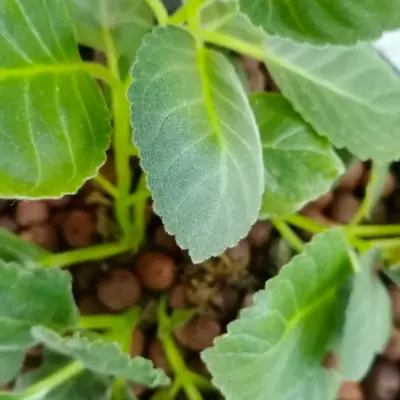
The best all-around kohlrabi we've found. Remarkable uniformity, texture, and flavor even past typical market size. Exceptionally sweet and mild. Holds a long time in the field without getting woody. Small petiole attachment makes for easier stripping and peeling. Terek's compact plant allows for tighter spacing and produces higher marketable yields. High quality up to 6" in diameter.
Harvest
40d
Days to harvest
Sun
Full sun to partial shade
Zones
6–9
USDA hardiness
Height
10-24 inches
Planting Timeline
Showing dates for Terek in USDA Zone 7
All Zone 7 brassica →Zone Map
Click a state to update dates
Terek · Zones 6–9
Growing Details
Succession Planting
In zone 7, Terek hits harvest in about 40 days, which means you can run two solid windows: one starting with transplants in April through early May, and a second round direct-sown or transplanted in late August through September for a fall harvest. Sow every 3 weeks within those windows rather than all at once — a single big planting will hand you more kohlrabi than you can use in one week.
Stop your spring successions by late May. Once daytime highs are consistently above 80°F, the bulbs turn woody and the plants push toward bolting. The fall window is actually more forgiving — kohlrabi sweetens up after a light frost, so don't be in a hurry to pull everything in October.
Complete Growing Guide
The best all-around kohlrabi we've found. Remarkable uniformity, texture, and flavor even past typical market size. Exceptionally sweet and mild. Holds a long time in the field without getting woody. Small petiole attachment makes for easier stripping and peeling. Terek's compact plant allows for tighter spacing and produces higher marketable yields. High quality up to 6" in diameter. According to Johnny's Selected Seeds, Terek is 40 days to maturity, hybrid (f1).
Light: Full sun (6 or more hours of direct sunlight a day), Partial Shade (Direct sunlight only part of the day, 2-6 hours). Soil: Clay, Loam (Silt), Sand. Soil pH: Acid (<6.0), Neutral (6.0-8.0). Drainage: Good Drainage, Moist. Height: 0 ft. 10 in. - 2 ft. 0 in.. Spread: 1 ft. 0 in. - 2 ft. 0 in.. Spacing: 12 inches-3 feet. Growth rate: Medium. Maintenance: Medium. Propagation: Seed, Stem Cutting. Regions: Coastal, Mountains, Piedmont.
Harvesting
Terek reaches harvest at 40 days from sowing per Johnny's Selected Seeds. Expect 6" at peak.
The fruits dry and split when ripe.
Color: Brown/Copper, Green. Type: Siliqua. Length: > 3 inches.
Garden value: Edible
Harvest time: Fall, Summer
Edibility: The foliage is edible raw or cooked but when cooked can emit an unpleasant odor.
Storage & Preservation
Harvest Terek kohlrabi at 2–3 inches in diameter for optimal tenderness. Store freshly picked bulbs in a perforated plastic bag in the refrigerator at 32–40°F with 90–95% humidity; they'll keep for 3–4 weeks. Remove leaves before storage to slow moisture loss from the stems. For longer preservation, blanch peeled and cubed bulbs for 3 minutes, then freeze in airtight containers for up to eight months. Terek also ferments well—slice thinly, salt at 2–3%, and submerge in brine for a crisp, tangy product ready in 2–3 weeks. Raw kohlrabi can be thinly sliced and dried in a dehydrator at 135°F for 6–8 hours to create chips, though this method concentrates the mild, slightly sweet flavor. A gardener's advantage: Terek's tender flesh means you can eat the young leaves raw or cooked alongside the bulb—don't discard them.
History & Origin
Terek is an F1 hybrid developed through controlled cross-pollination. Listed in the Johnny's Selected Seeds catalog.
Origin: W. Europe
Advantages
- +Remains sweet and mild even at larger 6-inch diameters
- +Holds well in field without becoming woody or tough
- +Small petiole attachment simplifies stripping and peeling processes
- +Compact plants enable tighter spacing and higher yields
- +Exceptional uniformity makes harvest and marketing more efficient
Considerations
- -Requires consistent moisture to prevent splitting at large sizes
- -May bolt prematurely in very hot summer conditions
- -Compact plant habit limits air circulation in humid climates
Companion Plants
Nasturtiums are the most useful plant you can put near Terek. They pull aphids off the brassica leaves — aphids genuinely prefer nasturtiums — and the flowers attract predatory insects that keep working through the rest of the bed. Dill does something different: it brings in parasitic wasps that target cabbage loopers (Trichoplusia ni) and imported cabbageworms (Pieris rapae), the two caterpillars most likely to shred your kohlrabi before day 40. Marigolds add scent disruption for root-feeding insects; in zone 7 Georgia, where flea beetle pressure spikes hard during the spring flush, that buffer is genuinely worth a row.
Tomatoes are the pairing to avoid. They're heavy feeders with an aggressive root system, and kohlrabi's relatively shallow roots lose that competition for water and nutrients — neither plant performs well when pushed together. Pole beans fix nitrogen slowly and, more practically, can shade out a low-growing kohlrabi planting before the bulbs size up. Save the bean bed for crops that won't be harvested at 10–12 inches tall.
Plant Together
Nasturtiums
Acts as trap crop for aphids and flea beetles, reducing pest pressure on brassicas
Dill
Attracts beneficial insects like parasitic wasps that control cabbage worms
Onions
Repels cabbage root fly and other brassica pests with strong sulfur compounds
Lettuce
Grows in shade of brassicas, maximizes garden space without competition
Carrots
Root crops complement shallow brassica roots, carrots may deter flea beetles
Marigolds
Natural pest deterrent against nematodes and various flying insects
Spinach
Compatible growing requirements and harvest timing, efficient space utilization
Chives
Repels aphids and may improve growth and flavor of nearby brassicas
Keep Apart
Tomatoes
May stunt brassica growth and both plants compete for similar soil nutrients
Strawberries
Brassicas can inhibit strawberry growth and fruit production
Pole Beans
Climbing beans can overshadow brassicas and compete for nutrients
Nutrition Facts
Per 100g serving. % Daily Value based on 2,000 calorie diet. Source: USDA FoodData Central (FDC #747447)
Pests & Disease Resistance
Common Pests
Cabbage worms, flea beetles, aphids, cabbage loopers
Diseases
Clubroot, black rot, powdery mildew
Troubleshooting Terek
What you'll see, why it happens, and what to do about it.
Irregular holes chewed through leaves, sometimes down to the midrib, on plants from transplant through mid-season
Likely Causes
- Imported cabbageworm (Pieris rapae) — the white butterfly you see hovering over the bed is laying eggs on the undersides of leaves
- Cabbage looper (Trichoplusia ni) — a different caterpillar, pale green, loops as it moves
What to Do
- 1.Check the undersides of leaves every few days and pick off eggs and caterpillars by hand
- 2.Spray Bt (Bacillus thuringiensis) on the foliage — it's effective and won't harm beneficial insects once it dries
- 3.Row cover from transplant through most of the season is the most reliable prevention if pressure is heavy
Swollen, distorted roots and stunted topgrowth — plants wilt in afternoon heat even when the soil is moist
Likely Causes
- Clubroot (Plasmodiophora brassicae) — a soil-borne pathogen that can persist in a bed for 10–20 years
- Planting into acidic soil below pH 6.5, which favors the pathogen
What to Do
- 1.Pull and bag the affected plants — do not compost them, and don't move that soil around on your tools
- 2.Lime the bed to bring pH above 7.0; clubroot is strongly suppressed above that threshold
- 3.Rotate brassicas out of that bed for at least 4 years; NC State Extension cultural management guidance specifically flags keeping susceptible crops out of affected areas for several seasons
Yellow V-shaped lesions starting at leaf margins, brown veins visible when you cut the stem crosswise, plants declining fast in warm weather
Likely Causes
- Black rot (Xanthomonas campestris pv. campestris) — a bacterial disease that enters through leaf margins and moves through the vascular tissue
- Overhead irrigation or heavy rain splashing contaminated soil onto leaves
What to Do
- 1.Remove and trash affected plants immediately — black rot moves fast through a stand
- 2.Switch to drip irrigation or water at the base to reduce splash transmission
- 3.Start with certified disease-free seed next season, and move brassicas to a different bed
Frequently Asked Questions
How long does Terek kohlrabi take to mature?▼
Is Terek kohlrabi good for beginner gardeners?▼
What does Terek kohlrabi taste like?▼
Can I grow Terek kohlrabi in containers?▼
How much space does Terek kohlrabi need between plants?▼
When should I plant Terek kohlrabi for best results?▼
Zone-by-Zone Planting Calendar
| Zone | Indoor Start | Transplant | Direct Sow | Harvest |
|---|---|---|---|---|
| Zone 1 | April – May | June – July | June – July | July – September |
| Zone 2 | April – May | June – July | May – July | June – September |
| Zone 11 | January – January | January – February | January – February | January – December |
| Zone 12 | January – January | January – February | January – February | January – December |
| Zone 13 | January – January | January – February | January – February | January – December |
| Zone 3 | March – April | May – June | May – June | June – October |
| Zone 4 | March – April | May – June | April – June | June – October |
| Zone 5 | February – March | April – May | April – May | May – November |
| Zone 6 | February – March | April – May | April – May | May – November |
| Zone 7 | February – March | April – May | March – May | April – November |
| Zone 8 | January – February | March – April | March – April | April – December |
| Zone 9 | January – January | February – March | February – March | March – December |
| Zone 10 | January – January | February – March | January – March | February – December |
Growing Guides from Wind River Greens
Sources & References
External authority sources used in compiling this guide.
- BreederJohnny's Selected Seeds
- USDAUSDA FoodData Central
See the Methodology page for how this data is sourced, what's AI-assisted, and known limitations.