Snowball Y Improved Cauliflower
Brassica oleracea var. botrytis 'Snowball Y Improved'
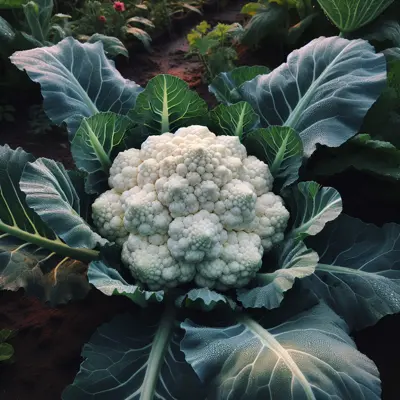
The gold standard for home gardeners seeking reliable, pure white cauliflower heads with exceptional flavor and texture. This improved variety produces dense, creamy white 6-8 inch heads that hold their quality longer than older varieties and resist yellowing. It's more heat tolerant than traditional Snowball types while maintaining that classic sweet, nutty cauliflower taste.
Harvest
68-75d
Days to harvest
Sun
Full sun to partial shade
Zones
6–9
USDA hardiness
Height
10-24 inches
Planting Timeline
Showing dates for Snowball Y Improved Cauliflower in USDA Zone 7
All Zone 7 brassica →Zone Map
Click a state to update dates
Snowball Y Improved Cauliflower · Zones 6–9
Growing Details
Succession Planting
In zone 7, sow Snowball Y Improved indoors around February 15–March 1 for a spring crop, then transplant out in April once nighttime lows hold reliably above 28°F. For a fall crop — which tends to produce better heads because the final 3–4 weeks of development happen in cooling weather — start seeds indoors around July 15 to August 1. The UGA Vegetable Garden Calendar specifically recommends starting cauliflower transplants in a half-shaded area in August for setting out in September, which lines up well with Snowball Y Improved's 68–75 day window before first frost.
Don't push the spring sowing past mid-March. Once daytime highs are regularly above 80°F, the heads tend to button — forming loose, ricey curds instead of the tight white dome you're after — before they ever size up. Two successions a year is realistic; trying to squeeze a summer planting into June or early July is usually a waste of seed and bed space.
Complete Growing Guide
Snowball Y Improved thrives when planted for a fall harvest, as the cooler nights of autumn trigger superior head formation and prevent the premature bolting that often plagues spring sowings of this variety. Start seeds indoors 4-6 weeks before your target transplant date, then move seedlings into rich, well-draining soil with consistent moisture and a pH between 6.0-7.5, as this cultivar is moderately sensitive to clubroot and demands excellent drainage to prevent it. While the improved heat tolerance allows some flexibility compared to heirloom Snowballs, temperatures above 75°F can still cause loose, ricey curds, so afternoon shade cloth in hot climates helps maintain that creamy texture the variety is bred for. Monitor closely for cabbage worms and diamondback moths during establishment, as young plants are particularly vulnerable; rowcovers provide excellent protection without chemicals. A practical advantage of Snowball Y Improved is its natural self-blanching habit—the outer leaves partially fold over the head—but manually gathering leaves and securing them with twine 2-3 weeks before harvest ensures the purest white color and prevents any yellowing from sun exposure.
Light: Full sun (6 or more hours of direct sunlight a day), Partial Shade (Direct sunlight only part of the day, 2-6 hours). Soil: Clay, Loam (Silt), Sand. Soil pH: Acid (<6.0), Neutral (6.0-8.0). Drainage: Good Drainage, Moist. Height: 0 ft. 10 in. - 2 ft. 0 in.. Spread: 1 ft. 0 in. - 2 ft. 0 in.. Spacing: 12 inches-3 feet. Growth rate: Medium. Maintenance: Medium. Propagation: Seed, Stem Cutting. Regions: Coastal, Mountains, Piedmont.
Harvesting
Harvest Snowball Y Improved when heads reach 6-8 inches in diameter and display the characteristic dense, creamy white curds with a firm feel when gently squeezed—avoid waiting for yellowing, as this variety resists discoloration better than older types, making visual cues less reliable. Cut the main head at the base with a sharp knife while curds remain tightly clustered and before any separation occurs. This variety typically produces a single primary head rather than side shoots, so plan for one main harvest per plant around 68-75 days from transplanting. For peak tenderness and sweetest flavor, harvest in early morning after temperatures cool overnight, as heat stress can cause slight bitterness even in this heat-tolerant cultivar.
The fruits dry and split when ripe.
Color: Brown/Copper, Green. Type: Siliqua. Length: > 3 inches.
Garden value: Edible
Harvest time: Fall, Summer
Edibility: The foliage is edible raw or cooked but when cooked can emit an unpleasant odor.
Storage & Preservation
Fresh Snowball Y Improved heads store best in your refrigerator's crisper drawer, wrapped loosely in perforated plastic bags. They'll maintain quality for 5-7 days when stored at 32-40°F with high humidity. Don't wash before storing as excess moisture promotes decay.
For freezing, blanch florets in boiling water for 3 minutes, then plunge into ice water to stop cooking. Drain thoroughly and freeze in airtight containers for up to 12 months. The dense texture of this variety holds up well to freezing.
Pickling works excellently with this variety's firm texture - use small florets in mixed vegetable pickles or make standalone cauliflower pickles with vinegar, spices, and garlic. For longer preservation, pressure can cauliflower following USDA guidelines. This variety also dehydrates well when cut into small, uniform pieces.
History & Origin
The Snowball Y Improved variety descends from the classic Snowball cauliflower lineage that gained prominence in the late nineteenth century. While specific breeder attribution and introduction date for this particular "Y Improved" strain remain poorly documented in readily available horticultural records, the variety represents decades of selection work within commercial seed companies focused on enhancing the original Snowball type. The improvements—notably increased heat tolerance, resistance to yellowing, and extended shelf life—reflect typical twentieth-century breeding objectives for home garden cauliflower varieties. This cultivar exemplifies the ongoing refinement of established vegetable lines rather than a formally registered or university-bred introduction, making it a product of incremental industry advancement rather than a single documented breeding achievement.
Origin: W. Europe
Advantages
- +Produces consistently pure white, dense 6-8 inch heads reliable for home gardens
- +Superior heat tolerance compared to traditional Snowball cauliflower varieties
- +Excellent sweet, nutty flavor with tender texture ideal for fresh eating
- +Resists yellowing and holds quality longer than older Snowball varieties
- +68-75 day maturity provides relatively quick harvest window
Considerations
- -Highly susceptible to clubroot, requiring careful soil management and crop rotation
- -Vulnerable to multiple pests including cabbage worms, aphids, and flea beetles
- -Moderate difficulty level demands consistent watering, feeding, and pest monitoring
- -Susceptible to bacterial soft rot in overly wet growing conditions
Companion Plants
Dill and nasturtiums are the two I'd prioritize if space is tight. Dill draws in parasitic wasps from the Braconidae and Ichneumonidae families that parasitize cabbageworm larvae and knock back aphid colonies — both pests will find your cauliflower with or without your help. Nasturtiums pull aphid populations toward themselves and away from the main planting, acting as a sacrificial host you can yank and dispose of mid-season. French marigolds (Tagetes patula) are worth a row too; their root exudates suppress soil nematode populations over a full growing season, which matters more in a bed you're using year after year. Onions and chives planted along the border seem to disrupt the egg-laying behavior of adult cabbage moths — not a guarantee, but in our zone 7 Georgia garden the fall brassica window runs warm enough that every deterrent adds up.
Keep strawberries, tomatoes, and pole beans out of the same bed. Tomatoes and pole beans compete hard for similar nutrients at the same root depth and tend to host aphid populations that migrate straight onto brassica foliage. The strawberry problem is different: both strawberries and Brassica oleracea share susceptibility to Verticillium wilt (Verticillium dahliae), and growing them together accelerates the buildup of that pathogen in the soil.
Plant Together
Dill
Attracts beneficial insects like parasitic wasps that prey on cabbage worms and aphids
Marigolds
Repels cabbage moths, aphids, and other brassica pests with strong scent
Nasturtiums
Acts as trap crop for aphids and flea beetles, drawing them away from cauliflower
Onions
Repels cabbage flies, aphids, and cabbage worms with sulfur compounds
Celery
Repels cabbage white butterflies and provides natural pest deterrent
Spinach
Provides living mulch, conserves soil moisture, and doesn't compete for nutrients
Lettuce
Efficient use of space as shallow-rooted crop, ready to harvest before cauliflower matures
Chives
Repels aphids and cabbage worms while improving soil health
Keep Apart
Strawberries
Competes for nutrients and may stunt cauliflower growth due to similar feeding requirements
Tomatoes
Allelopathic effects inhibit brassica growth and both are heavy feeders competing for nutrients
Pole Beans
May shade cauliflower and compete for nutrients, potentially reducing head formation
Nutrition Facts
Per 100g serving. % Daily Value based on 2,000 calorie diet. Source: USDA FoodData Central (FDC #2685573)
Pests & Disease Resistance
Resistance
Improved resistance to clubroot and black rot
Common Pests
Cabbage worms, aphids, flea beetles, cabbage root maggots
Diseases
Clubroot, black rot, downy mildew, bacterial soft rot
Troubleshooting Snowball Y Improved Cauliflower
What you'll see, why it happens, and what to do about it.
White to gray fuzzy growth on the undersides of leaves, with yellow patches visible on the upper surface
Likely Causes
- Downy mildew — a distinct pathogen class from true fungi, favored by cool, wet nights and poor airflow
- Overhead watering late in the day, leaving foliage wet overnight
What to Do
- 1.Remove and bag affected leaves immediately — don't compost them
- 2.Water at the base of the plant in the morning so foliage dries before evening
- 3.Space plants at least 18 inches apart to improve airflow; clear any weeds crowding the bed edges
Plants wilting and stunted despite adequate water, with roots showing swollen, distorted galls when pulled
Likely Causes
- Clubroot (Plasmodiophora brassicae) — a soil-borne pathogen that persists in infested ground for 20 or more years
- Low soil pH below 6.0, which favors clubroot spore germination
What to Do
- 1.Pull and bag the entire plant including roots — do not compost
- 2.Test your soil pH and lime to bring it up to at least 6.5–7.0; NC State Extension notes clubroot activity drops sharply above pH 7.0
- 3.Rotate this bed out of all brassicas — cabbage, broccoli, kale, collards — for a minimum of 4 years
V-shaped yellow lesions on outer leaves starting at the leaf margins, with dark discoloration in the stem veins when cut crosswise
Likely Causes
- Black rot (Xanthomonas campestris pv. campestris) — a bacterial disease spread by infected seed, rain splash, and contaminated transplants
- Warm, wet weather that moves the bacteria through natural leaf pores called hydathodes
What to Do
- 1.Remove and trash infected leaves and plants — debris left on the soil surface keeps the bacteria cycling
- 2.Switch to drip or soaker hose irrigation; keeping foliage dry cuts transmission significantly
- 3.Source certified disease-free seed or transplants next season; black rot frequently arrives on contaminated seed lots
Ragged holes chewed through leaves, with pale green or bronze caterpillars found tucked against the head or on leaf undersides
Likely Causes
- Imported cabbageworm (Pieris rapae) — the larva of that small white butterfly you'll see hovering over the bed
- Cabbage looper (Trichoplusia ni) — a similar caterpillar that loops its body as it crawls
What to Do
- 1.Apply Bacillus thuringiensis var. kurstaki (Bt) directly onto foliage and into the developing head every 5–7 days while larvae are active — it only kills caterpillars that ingest treated tissue
- 2.Check heads and leaf undersides twice a week and pick caterpillars off by hand when numbers are low
- 3.Drape row cover over transplants right after setting them out and leave it on until heads begin to form
Frequently Asked Questions
How long does Snowball Y Improved cauliflower take to grow?▼
Can you grow Snowball Y Improved cauliflower in containers?▼
Is Snowball Y Improved good for beginners?▼
When should I plant Snowball Y Improved cauliflower?▼
What does Snowball Y Improved taste like compared to regular cauliflower?▼
Do I need to blanch Snowball Y Improved cauliflower heads?▼
Zone-by-Zone Planting Calendar
| Zone | Indoor Start | Transplant | Direct Sow | Harvest |
|---|---|---|---|---|
| Zone 3 | March – April | May – June | May – June | July – October |
| Zone 4 | March – April | May – June | April – June | July – October |
| Zone 5 | February – March | April – May | April – May | June – November |
| Zone 6 | February – March | April – May | April – May | June – November |
| Zone 7 | February – March | April – May | March – May | May – November |
| Zone 8 | January – February | March – April | March – April | May – December |
| Zone 9 | January – January | February – March | February – March | April – December |
| Zone 10 | January – January | February – March | January – March | March – December |
| Zone 1 | April – May | June – July | June – July | August – September |
| Zone 2 | April – May | June – July | May – July | July – September |
| Zone 11 | January – January | January – February | January – February | February – December |
| Zone 12 | January – January | January – February | January – February | February – December |
| Zone 13 | January – January | January – February | January – February | February – December |
Growing Guides from Wind River Greens
Sources & References
External authority sources used in compiling this guide.
See the Methodology page for how this data is sourced, what's AI-assisted, and known limitations.