Silvia
Brassica oleracea var. gemmifera
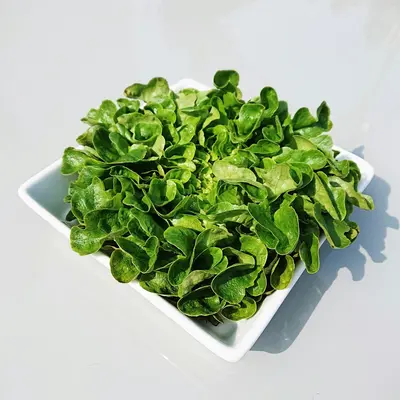
Sprouts are medium-large, round, and very dense. The plants are medium-tall, upright, and resist lodging. Similar to Dagan, but a few days later and with the added benefit of intermediate resistance to black rot.
Harvest
103d
Days to harvest
Sun
Full sun to partial shade
Zones
6–9
USDA hardiness
Height
10-24 inches
Planting Timeline
Showing dates for Silvia in USDA Zone 7
All Zone 7 brassica →Zone Map
Click a state to update dates
Silvia · Zones 6–9
Growing Details
Succession Planting
Silvia takes 103 days from transplant to harvest, so it doesn't cycle the way lettuce or radishes do. In zone 7, you get two realistic windows: start seeds indoors in February for a spring transplant in April, targeting a June–July harvest before serious heat arrives, then start a second round indoors in late June or early July for a fall transplant in August, harvesting October through November. The fall planting is usually the better one — brussels sprouts sweeten noticeably after a light frost hits them.
Don't try to squeeze in more than two rounds. Silvia needs consistent moisture at 1–1.5 inches per week, and putting transplants in the ground during peak summer heat (daytime highs regularly above 90°F) will stress them hard during the window when sprouts are sizing up. Aim for at least 2–3 weeks of cooler nights before your first expected frost on the fall planting so the buttons have time to firm up properly.
Complete Growing Guide
Sprouts are medium-large, round, and very dense. The plants are medium-tall, upright, and resist lodging. Similar to Dagan, but a few days later and with the added benefit of intermediate resistance to black rot. According to Johnny's Selected Seeds, Silvia is 103 days to maturity, annual, hybrid (f1). Disease resistance includes Black Rot Resistant, Fusarium Yellows.
Light: Full sun (6 or more hours of direct sunlight a day), Partial Shade (Direct sunlight only part of the day, 2-6 hours). Soil: Clay, Loam (Silt), Sand. Soil pH: Acid (<6.0), Neutral (6.0-8.0). Drainage: Good Drainage, Moist. Height: 0 ft. 10 in. - 2 ft. 0 in.. Spread: 1 ft. 0 in. - 2 ft. 0 in.. Spacing: 12 inches-3 feet. Growth rate: Medium. Maintenance: Medium. Propagation: Seed, Stem Cutting. Regions: Coastal, Mountains, Piedmont.
Harvesting
Silvia reaches harvest at 103 days from sowing per Johnny's Selected Seeds. As an annual, harvest continues until frost ends the season.
The fruits dry and split when ripe.
Color: Brown/Copper, Green. Type: Siliqua. Length: > 3 inches.
Garden value: Edible
Harvest time: Fall, Summer
Edibility: The foliage is edible raw or cooked but when cooked can emit an unpleasant odor.
Storage & Preservation
Harvest Silvia sprouts at peak firmness and store immediately at 32–35°F in a perforated plastic bag within your refrigerator's crisper drawer, maintaining 95% humidity. Fresh sprouts remain crisp and flavorful for 7–10 days under these conditions. For longer preservation, blanch sprouts for 3–4 minutes, then plunge into ice water, drain thoroughly, and freeze in airtight containers for up to 10 months. Alternatively, freeze raw sprouts directly, though texture becomes softer upon thawing. Fermentation works well too: pack sprouts into jars with a 3% brine solution and leave at room temperature for 2–3 weeks for a tangy, probiotic product. Silvia's dense, compact sprouts handle freezing better than many other Brussels sprout varieties, with minimal mushiness upon cooking, making it particularly well-suited to batch processing.
History & Origin
Silvia is an F1 hybrid developed through controlled cross-pollination. Listed in the Johnny's Selected Seeds catalog.
Origin: W. Europe
Advantages
- +Medium-large, dense sprouts ideal for commercial harvesting and consistent sizing
- +Upright growth habit resists lodging in windy or wet conditions
- +Intermediate black rot resistance provides better disease protection than similar varieties
- +103-day maturity allows reliable fall harvest planning and crop scheduling
- +Easy cultivation makes Silvia suitable for both novice and experienced growers
Considerations
- -Slightly later maturity than Dagan may complicate succession planting schedules
- -Still susceptible to other Brassica diseases despite black rot resistance
- -Medium-tall plants require more vertical space in intensive growing systems
Companion Plants
Nasturtiums and marigolds do the most work here. Nasturtiums act as a trap crop — aphids genuinely prefer them over the brussels sprouts, which pulls the colony off your developing buttons before it gets established. French marigolds (Tagetes patula) have a well-documented history as a nematode deterrent when planted densely; NC State Extension recommends solid plantings of them to knock back nematode populations in problem beds. Neither plant will crowd a sprout that needs 18–24 inches of space, so tuck them along bed edges and let them do their thing.
Dill, garlic, and onions pull their weight through strong aromatics that disrupt the host-finding behavior of cabbage moths (Mamestra brassicae) and cabbage loopers. The effect isn't total pest control, but anything that makes your brassicas harder to locate in a mixed planting is worth doing. Chamomile is a quieter addition — it attracts parasitic wasps that prey on caterpillar pests, and it stays short enough (under 24 inches) not to shade the lower leaves where sprouts form along the main stem.
Tomatoes and pole beans belong in a different bed. Tomatoes produce allelopathic compounds that suppress brassica growth, and both are heavy feeders that will compete for soil nitrogen over a long season. Silvia clocks in at 103 days to harvest — that's a long time to be losing ground to your neighbors in the same bed.
Plant Together
Dill
Attracts beneficial insects like parasitic wasps that control cabbage worms
Onions
Strong scent deters cabbage moths, aphids, and flea beetles
Nasturtiums
Acts as trap crop for aphids and flea beetles, draws pests away from brassicas
Marigolds
Repels cabbage moths and other harmful insects with strong fragrance
Carrots
Root depth complements shallow brassica roots, doesn't compete for nutrients
Lettuce
Grows well in partial shade of brassicas, efficient use of garden space
Chamomile
Improves soil health and may enhance flavor of nearby brassicas
Garlic
Natural fungicide properties help prevent clubroot and other soil diseases
Keep Apart
Tomatoes
Both are heavy feeders competing for same nutrients, tomatoes may stunt brassica growth
Strawberries
Brassicas can inhibit strawberry growth and fruit production
Pole beans
Can overshadow brassicas and compete for nitrogen in soil
Nutrition Facts
Per 100g serving. % Daily Value based on 2,000 calorie diet. Source: USDA FoodData Central (FDC #747447)
Pests & Disease Resistance
Resistance
Black Rot (Intermediate); Fusarium Yellows (High)
Common Pests
Cabbage moth, cabbage looper, flea beetle, aphid
Diseases
Black rot, clubroot, powdery mildew
Troubleshooting Silvia
What you'll see, why it happens, and what to do about it.
Leaves riddled with small, ragged holes — mostly on younger leaves near the top of the plant, often appearing within the first few weeks after transplant
Likely Causes
- Flea beetle (Phyllotreta spp.) — tiny, jumping beetles that feed aggressively on brassica seedlings
- Cabbage looper (Trichoplusia ni) — pale green caterpillars that chew irregularly shaped holes and leave frass behind
What to Do
- 1.Cover transplants with row cover immediately at planting — flea beetles find plants fast, so don't wait until you see damage
- 2.Hand-pick cabbage loopers in the evening when they're easier to spot; drop them in soapy water
- 3.Spinosad-based sprays are effective on loopers if hand-picking isn't keeping up — apply in the evening to avoid harming pollinators
V-shaped yellow lesions on leaf edges that eventually turn brown and papery, with black discoloration spreading into the leaf veins
Likely Causes
- Black rot (Xanthomonas campestris pv. campestris) — a bacterial disease that enters through leaf margins and spreads through the vascular tissue
- Infected transplants or contaminated soil moved in on tools or footwear
What to Do
- 1.Pull and bag affected plants — don't compost them; the bacteria persist
- 2.Avoid overhead irrigation once you've seen symptoms; drip irrigation keeps the foliage dry and slows spread
- 3.Rotate out of brassicas in that bed for at least 2 seasons, and sanitize any tools that touched infected plants before using them elsewhere
Plants stunted and yellowing; when you pull one, the roots are swollen into irregular club-shaped galls instead of normal fibrous roots
Likely Causes
- Clubroot (Plasmodiophora brassicae) — a soil-borne pathogen that thrives in acidic, wet soils and can persist for 20+ years in infected ground
- Moving soil or transplants from an infected area into a clean bed
What to Do
- 1.Test soil pH and lime to 7.0–7.2 — clubroot is significantly less active above neutral pH
- 2.Remove and bag entire infected plants, roots and all; do not compost
- 3.Don't replant brassicas in that bed for at least 4 years; improve drainage if standing water is a recurring issue
Frequently Asked Questions
How long does it take Silvia Brussels sprouts to mature?▼
Is Silvia a good Brussels sprout variety for beginners?▼
What growing conditions does Silvia Brussels sprouts prefer?▼
How does Silvia compare to Dagan Brussels sprouts?▼
What size are Silvia Brussels sprout heads?▼
Can you grow Silvia Brussels sprouts in containers?▼
Zone-by-Zone Planting Calendar
| Zone | Indoor Start | Transplant | Direct Sow | Harvest |
|---|---|---|---|---|
| Zone 1 | April – May | June – July | June – July | September – September |
| Zone 2 | April – May | June – July | May – July | August – September |
| Zone 11 | January – January | January – February | January – February | March – December |
| Zone 12 | January – January | January – February | January – February | March – December |
| Zone 13 | January – January | January – February | January – February | March – December |
| Zone 3 | March – April | May – June | May – June | August – October |
| Zone 4 | March – April | May – June | April – June | August – October |
| Zone 5 | February – March | April – May | April – May | July – November |
| Zone 6 | February – March | April – May | April – May | July – November |
| Zone 7 | February – March | April – May | March – May | June – November |
| Zone 8 | January – February | March – April | March – April | June – December |
| Zone 9 | January – January | February – March | February – March | May – December |
| Zone 10 | January – January | February – March | January – March | April – December |
Growing Guides from Wind River Greens
Sources & References
External authority sources used in compiling this guide.
- BreederJohnny's Selected Seeds
- USDAUSDA FoodData Central
See the Methodology page for how this data is sourced, what's AI-assisted, and known limitations.