Ruby Perfection Cabbage
Brassica oleracea var. capitata
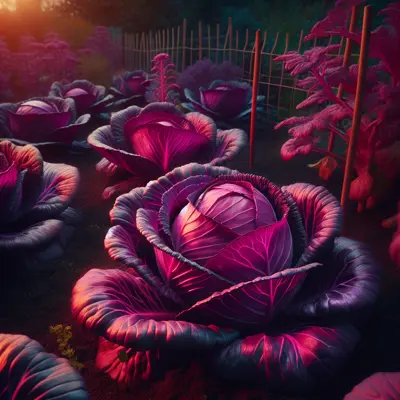
The #1 mid-late red cabbage. The heads are medium-size and dense with a uniform high-round shape and good wrapper leaves. Good field-holding ability. Matures just in time for late summer crops or fall harvest for medium-term storage. Avg. weight: 3 1/2 lb. Resistant to thrips. Unsized seed.
Harvest
85d
Days to harvest
Sun
Full sun to partial shade
Zones
6–9
USDA hardiness
Height
10-24 inches
Planting Timeline
Showing dates for Ruby Perfection Cabbage in USDA Zone 7
All Zone 7 brassica →Zone Map
Click a state to update dates
Ruby Perfection Cabbage · Zones 6–9
Growing Details
Succession Planting
Ruby Perfection is a one-cut crop — once the head is harvested, that plant is done — so succession planting is worth doing if you want cabbage across more than a two-week window. In zone 7, start a second round of seeds indoors about 3–4 weeks after your first indoor sow (late February for the first, mid-to-late March for the second). Transplant the second wave in May, targeting a fall harvest in October–November. At 85 days to maturity, count back from your first expected hard frost to find your last safe transplant date — in most of zone 7, that's a mid-August transplant at the latest.
Don't try to squeeze in a summer succession. Cabbage transplanted when daytime highs are regularly above 85°F will bolt or produce loose, poor-quality heads. The spring and fall windows are the two reliable ones; anything planted between them is a gamble that's usually not worth the bed space.
Complete Growing Guide
Plant Ruby Perfection as a late-season crop, targeting maturity 85 days before your first expected frost, making it ideal for fall harvest and medium-term storage rather than summer use. This cultivar performs best in full sun with consistent moisture and well-draining, nitrogen-rich soil; avoid nitrogen spikes that can cause loose heads. While thrips resistance is a notable strength, monitor for cabbage moths and root maggots typical to Brassicas, though this variety's tight wrapper leaves provide good natural protection. Ruby Perfection has excellent field-holding ability, meaning you can harvest over several weeks without quality loss—a significant advantage over earlier red varieties that tend to split or soften quickly. For best results, thin seedlings to 18 inches apart and provide steady watering to prevent cracking; a light mulch helps regulate soil moisture and keeps roots cool during warm fall weather.
Light: Full sun (6 or more hours of direct sunlight a day), Partial Shade (Direct sunlight only part of the day, 2-6 hours). Soil: Clay, Loam (Silt), Sand. Soil pH: Acid (<6.0), Neutral (6.0-8.0). Drainage: Good Drainage, Moist. Height: 0 ft. 10 in. - 2 ft. 0 in.. Spread: 1 ft. 0 in. - 2 ft. 0 in.. Spacing: 12 inches-3 feet. Growth rate: Medium. Maintenance: Medium. Propagation: Seed, Stem Cutting. Regions: Coastal, Mountains, Piedmont.
Harvesting
Harvest Ruby Perfection Cabbage when heads reach their characteristic deep red-purple color with a uniform high-round shape and feel firm and dense when squeezed—indicators of peak maturity for this mid-late variety. The medium-sized heads typically weigh around 3½ pounds at harvest readiness. This cultivar follows a single-harvest pattern rather than continuous picking, so time your cutting for when most heads on a planting have reached full density simultaneously, usually around day 85 from transplant. A specific timing advantage: Ruby Perfection's excellent field-holding ability means you can harvest slightly later than other red cabbages without quality loss, making it ideal for coordinating with fall weather windows or storage preparation schedules.
The fruits dry and split when ripe.
Color: Brown/Copper, Green. Type: Siliqua. Length: > 3 inches.
Garden value: Edible
Harvest time: Fall, Summer
Edibility: The foliage is edible raw or cooked but when cooked can emit an unpleasant odor.
Storage & Preservation
Store freshly harvested Ruby Perfection in your refrigerator's crisper drawer wrapped loosely in perforated plastic bags. Maintain humidity around 90-95% and temperature just above 32°F for optimal storage – properly stored heads last 3-4 months. Don't wash before storing, and remove any damaged outer leaves that could promote decay.
For long-term preservation, Ruby Perfection excels at fermentation due to its firm texture and sweet flavor profile. Shred for traditional sauerkraut or kimchi, where the purple color creates stunning presentations. The variety also freezes well when blanched for 90 seconds and cooled quickly – frozen cabbage works perfectly for cooked applications like braised dishes or soups. Quick pickling brings out Ruby Perfection's natural sweetness while maintaining its vibrant color, creating an excellent condiment that keeps refrigerated for 2-3 months.
History & Origin
Ruby Perfection Cabbage emerged from modern vegetable breeding programs focused on developing improved red cabbage varieties for commercial production during the late twentieth century. While specific breeder attribution and introduction year remain undocumented in readily available sources, the variety reflects decades of selective breeding work targeting the mid-late maturity segment and storage qualities essential for fall harvests. The cultivar represents the cumulative refinement of red cabbage genetics, likely developed through a major seed company's breeding line rather than a single university program. Its characteristics—uniform head shape, density, and thrips resistance—demonstrate contemporary breeding objectives that distinguish it from earlier heirloom red cabbage varieties.
Origin: W. Europe
Advantages
- +#1 mid-late red cabbage variety with proven market performance
- +Dense, uniform high-round heads store medium-term better than early varieties
- +Sweet, mild flavor with tender texture superior to most red cabbages
- +85-day maturity ideal for late summer and fall harvest timing
- +Good field-holding ability reduces harvest scheduling pressure
Considerations
- -Susceptible to multiple serious diseases including clubroot and black rot
- -Requires moderate growing difficulty with pest management for cabbage worms
- -Moderate 3.5 lb heads yield less volume per plant than larger varieties
- -Unsized seed requires additional sorting or stratification before planting
Companion Plants
Onions and celery are the most practical companions for Ruby Perfection. Onions' sulfur compounds genuinely confuse cabbage worms and aphids that locate host plants by smell, and celery has a similar repellent effect on the white cabbage butterfly (Pieris rapae). Plant them at 12–15 inch intervals between your cabbage rows rather than bunching them at the bed edge — proximity is what matters. Nasturtiums work well as a trap crop, pulling aphid colonies onto themselves and off the heads. Dill draws in parasitic wasps that prey on diamondback moth larvae, which NC State Extension flags as a serious cabbage pest. If you've had nematode pressure before, a solid interplanting of French marigolds — not African — can reduce populations over a full season.
Tomatoes compete hard for the same nutrients and attract overlapping pest pressure, so keep them on opposite ends of the garden. Strawberries spread aggressively by runner and compete for the same shallow moisture zone that cabbage roots depend on — the heading stage is especially sensitive to that kind of water competition. Pole beans fix nitrogen, but slowly through decomposition; a cabbage transplant needs available nitrogen in the first few weeks, not weeks after the legume residue breaks down, so the timing just doesn't line up.
Plant Together
Dill
Attracts beneficial wasps that parasitize cabbage worms and aphids
Onions
Repel cabbage maggots, aphids, and flea beetles with their sulfur compounds
Marigolds
Deter cabbage worms and other pests while attracting beneficial predatory insects
Nasturtiums
Act as trap crop for aphids and flea beetles, drawing them away from cabbage
Celery
Repels cabbage worms and white cabbage butterfly through natural compounds
Carrots
Help break up soil and don't compete for nutrients, good space utilization
Lettuce
Provides ground cover to retain moisture and suppress weeds around cabbage
Thyme
Repels cabbage worms and flea beetles with aromatic compounds
Keep Apart
Tomatoes
Compete for similar nutrients and may stunt cabbage growth through root competition
Strawberries
Both are heavy feeders that compete for nutrients, particularly nitrogen
Pole Beans
Can shade cabbage and compete for nutrients, reducing head formation
Nutrition Facts
Per 100g serving. % Daily Value based on 2,000 calorie diet. Source: USDA FoodData Central (FDC #169975)
Pests & Disease Resistance
Resistance
Good resistance to splitting and tipburn
Common Pests
Cabbage worms, aphids, flea beetles, diamondback moths
Diseases
Black rot, clubroot, downy mildew, bacterial soft rot
Troubleshooting Ruby Perfection Cabbage
What you'll see, why it happens, and what to do about it.
Leaves develop yellow V-shaped lesions starting at the leaf margins, with dark veins underneath — often appearing around day 30–50 after transplant
Likely Causes
- Black rot (Xanthomonas campestris pv. campestris) — a bacterial disease that enters through leaf margins and water pores
- Contaminated seed or transplants carrying the pathogen in
What to Do
- 1.Pull and bag affected leaves immediately — don't compost them
- 2.Stop overhead watering; switch to drip or soaker hose to keep foliage dry
- 3.Rotate this bed out of all brassicas for at least 2 seasons, since the bacteria persists in soil debris
Small, ragged holes punched through leaves on young transplants — looks almost like buckshot — within the first 2–3 weeks in the ground
Likely Causes
- Flea beetles (Phyllotreta spp.) — tiny, jumping beetles that feed heavily on stressed or newly transplanted seedlings
- Transplant stress making plants slow to outgrow the damage
What to Do
- 1.Cover transplants immediately with row cover (Agribon AG-19 or similar) and seal the edges — flea beetles won't find them
- 2.Side-dress with compost and water consistently so plants grow past the vulnerable stage fast; Ruby Perfection at 85 days can't afford to stall early
- 3.If row cover isn't an option, apply spinosad-based spray in the early morning when beetles are most active
Grayish-purple fuzzy sporulation on the undersides of outer leaves, with corresponding yellow patches on top — most common in cool, wet spells
Likely Causes
- Downy mildew (Peronospora parasitica) — an oomycete that thrives when nights drop below 60°F and humidity is high
- Dense planting that traps moisture around the canopy
What to Do
- 1.Space plants at least 18 inches apart — crowding is the main cultural mistake that feeds this disease
- 2.Strip and trash affected outer leaves at first sign; don't let them sit on the soil surface
- 3.Apply a copper-based fungicide (copper octanoate or copper hydroxide) on a 7–10 day interval during prolonged wet weather
Frequently Asked Questions
How long does Ruby Perfection cabbage take to grow?▼
Can you grow Ruby Perfection cabbage in containers?▼
What does Ruby Perfection cabbage taste like?▼
When should I plant Ruby Perfection cabbage seeds?▼
Is Ruby Perfection cabbage good for beginners?▼
Ruby Perfection vs regular red cabbage - what's the difference?▼
Zone-by-Zone Planting Calendar
| Zone | Indoor Start | Transplant | Direct Sow | Harvest |
|---|---|---|---|---|
| Zone 3 | March – April | May – June | May – June | July – October |
| Zone 4 | March – April | May – June | April – June | July – October |
| Zone 5 | February – March | April – May | April – May | July – November |
| Zone 6 | February – March | April – May | April – May | June – November |
| Zone 7 | February – March | April – May | March – May | June – November |
| Zone 8 | January – February | March – April | March – April | May – December |
| Zone 9 | January – January | February – March | February – March | April – December |
| Zone 10 | January – January | February – March | January – March | April – December |
| Zone 1 | April – May | June – July | June – July | August – September |
| Zone 2 | April – May | June – July | May – July | August – September |
| Zone 11 | January – January | January – February | January – February | March – December |
| Zone 12 | January – January | January – February | January – February | March – December |
| Zone 13 | January – January | January – February | January – February | March – December |
Growing Guides from Wind River Greens
Sources & References
External authority sources used in compiling this guide.
See the Methodology page for how this data is sourced, what's AI-assisted, and known limitations.