Red Trumpet
Brassica rapa var. pekinensis
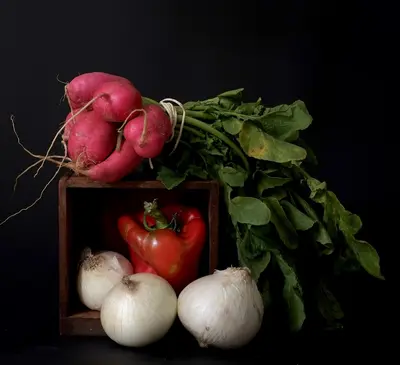
Tall, fancy, vibrant red heads avg. 11-12" tall by 3-3 1/2" wide. Good for salads, slaws, and attractive red kimchi. Similar color but much more slender than Merlot. NOTE: There are 4-5% green Napa-type off-types in this variety.
Harvest
60d
Days to harvest
Sun
Full sun to part shade
Zones
5–9
USDA hardiness
Height
3 feet
Planting Timeline
Showing dates for Red Trumpet in USDA Zone 7
All Zone 7 brassica →Zone Map
Click a state to update dates
Red Trumpet · Zones 5–9
Growing Details
Succession Planting
Direct sow or transplant every 3 weeks from March through early May in zone 7, targeting harvest before daytime highs consistently hit 85°F — Chinese cabbage types bolt fast once heat sets in, and a headed napa type like Red Trumpet won't recover once it bolts. A second round starting in late August works well for fall; transplants going in around the first week of September put you at harvest around early November, just ahead of hard frost. The 60-day clock is fairly reliable once plants are established.
Skip any mid-summer attempt. Soil temperatures above 85°F stall germination, and any seedlings that do push through will sprint to bolt before forming a usable head. Spring and fall are the two windows — there's no workaround for the heat gap between them.
Complete Growing Guide
Tall, fancy, vibrant red heads avg. 11-12" tall by 3-3 1/2" wide. Good for salads, slaws, and attractive red kimchi. Similar color but much more slender than Merlot. NOTE: There are 4-5% green Napa-type off-types in this variety. According to Johnny's Selected Seeds, Red Trumpet is 60 days to maturity, annual, hybrid (f1).
Light: Full sun (6 or more hours of direct sunlight a day), Partial Shade (Direct sunlight only part of the day, 2-6 hours). Soil: Clay, Loam (Silt), Sand. Soil pH: Acid (<6.0), Neutral (6.0-8.0). Drainage: Good Drainage, Moist. Height: 0 ft. 10 in. - 2 ft. 0 in.. Spread: 1 ft. 0 in. - 2 ft. 0 in.. Spacing: 12 inches-3 feet. Growth rate: Medium. Maintenance: Medium. Propagation: Seed, Stem Cutting. Regions: Coastal, Mountains, Piedmont.
Harvesting
Red Trumpet reaches harvest at 60 days from sowing per Johnny's Selected Seeds. Expect 11-12" at peak. As an annual, harvest continues until frost ends the season.
The fruits dry and split when ripe.
Color: Brown/Copper, Green. Type: Siliqua. Length: > 3 inches.
Garden value: Edible
Harvest time: Fall, Summer
Bloom time: Spring, Summer
Edibility: The foliage is edible raw or cooked but when cooked can emit an unpleasant odor.
Storage & Preservation
Store freshly harvested Red Trumpet heads in a perforated plastic bag in the refrigerator at 32–40°F with 95% humidity; they'll keep for three to four weeks. For longer storage, remove outer leaves and pack heads loosely in breathable containers to prevent moisture buildup and rot.
Fresh shelf life is relatively short—plan to use within two to three weeks for best quality and flavor. Red Trumpet ferments exceptionally well; slice thinly, salt at 2–3% by weight, pack into jars, and submerge under its own brine for tangy kimchi or traditional sauerkraut. Freezing works if you blanch heads for three minutes first, then cool and pack in freezer bags. Drying is less common for this variety but possible; slice thinly and dry at low heat (120–140°F) for crispy chips.
This variety holds its crimped texture better than standard napa cabbage when fermented, making it ideal for preparations where you want structure and slight crunch even after preservation.
History & Origin
Red Trumpet is an F1 hybrid developed through controlled cross-pollination. Listed in the Johnny's Selected Seeds catalog.
Brassica is a genus of plants in the cabbage and mustard family (Brassicaceae). The members of the genus are informally known as cruciferous vegetables, cabbages, mustard plants, or simply brassicas. Crops from this genus are sometimes called cole crops—derived from the Latin caulis, denoting the stem or stalk of a plant.
Advantages
- +Vibrant red color makes visually striking salads and kimchi dishes
- +Tall slender heads are ideal for attractive plating and presentation
- +60-day maturity allows multiple sowings in extended growing seasons
- +Easy cultivation makes it suitable for beginner gardeners
- +Good dual-purpose variety for both fresh eating and fermentation
Considerations
- -4-5% green off-type plants require roguing for visual uniformity
- -Slender heads may have lower total yield than stockier varieties
- -Tall form potentially prone to splitting or lodging in high winds
Companion Plants
Nasturtiums are worth planting 12–18 inches away from Red Trumpet specifically because aphids find them irresistible — they'll colonize the nasturtiums first, giving you a visible cluster to deal with before pressure moves to your crop. Marigolds pull double duty: NC State Extension is straightforward that most repellent claims are unproven, but they add botanical diversity to the bed, and a mixed planting breaks up the concentrated odor signal that draws cabbageworm moths to a solid block of brassica. Onions, chives, and dill work the same way — unrelated crops that interrupt the scent trail — while also being worth growing on their own terms.
Tomatoes and pole beans are the companions to cut from the list entirely. Both compete hard for water at the root zone, and tomatoes carry Ralstonia solanacearum, a bacterial wilt pathogen that, once established in soil, doesn't leave. Mustard greens are a harder no: they're Brassica too, meaning they share every pest and disease Red Trumpet does — planting them side by side gives Pieris rapae and Sclerotium rolfsii a continuous host chain with no interruption. Lettuce and spinach fill the gaps between plants well; shallow-rooted, unrelated, and they won't crowd the 18–24 inch spacing Red Trumpet needs to head up properly.
Plant Together
Nasturtiums
Acts as trap crop for aphids and flea beetles, protecting brassicas from these pests
Marigolds
Repels cabbage worms, aphids, and other brassica pests with their strong scent
Dill
Attracts beneficial insects like parasitic wasps that prey on cabbage worms
Onions
Repels cabbage root fly, aphids, and cabbage worms with sulfur compounds
Lettuce
Provides ground cover and efficient space usage without competing for nutrients
Spinach
Compatible root systems and similar growing requirements, good space utilization
Carrots
Different root depths reduce competition while carrots help break up soil
Chives
Repels aphids and may improve flavor while deterring various brassica pests
Keep Apart
Tomatoes
Competes for nutrients and may stunt brassica growth due to allelopathic compounds
Strawberries
Both are heavy feeders that compete for similar nutrients, reducing yields
Pole Beans
Can shade brassicas and compete for nutrients, potentially stunting growth
Mustard Greens
Same family plants attract similar pests and diseases, increasing infestation risk
Nutrition Facts
Per 100g serving. % Daily Value based on 2,000 calorie diet. Source: USDA FoodData Central (FDC #747447)
Troubleshooting Red Trumpet
What you'll see, why it happens, and what to do about it.
Seedlings collapse at soil level within the first 1–2 weeks after germination, sometimes with a white fuzzy mold on the soil surface nearby
Likely Causes
- Damping off — a complex of soil-borne fungi (Pythium spp., Rhizoctonia solani) that attack stems at the waterline
- Overwatering combined with poor drainage, which creates ideal conditions for those pathogens
What to Do
- 1.Pull and discard affected seedlings; don't compost them
- 2.Let the top inch of soil dry slightly between waterings — Red Trumpet needs consistent moisture, not constant saturation
- 3.Start new seeds in fresh, sterile seed-starting mix rather than reusing old trays or garden soil
Stems near the soil line develop a light-brown rot, and in humid weather a white felt-like fungal growth appears at the base of the plant
Likely Causes
- Southern stem blight (Sclerotium rolfsii) — a soil-borne fungus that produces small tan-to-brown sclerotia resembling BB pellets near the infected tissue
- Planting in a bed that hosted other susceptible brassicas or broadleaf crops the previous season
What to Do
- 1.Dig up and remove the entire plant, including roots, and dispose of it in the trash — not the compost
- 2.As NC State Extension notes, crop rotation offers limited protection against S. rolfsii because of how many host species it attacks; relocating the bed entirely is more effective than rotating within it
- 3.Pull mulch back an inch or two from the stem base to reduce the moist soil contact this pathogen needs to establish
Ragged holes in outer leaves, or leaves reduced to a lacy skeleton, with no obvious caterpillar visible in daylight
Likely Causes
- Imported cabbageworm (Pieris rapae) or cabbage looper (Trichoplusia ni) — both common on Brassica rapa; loopers feed mostly at night
- Planting Red Trumpet in a dense block next to other brassicas, which concentrates the host odor and makes it easier for egg-laying adults to locate the crop
What to Do
- 1.Check the undersides of leaves early morning for pale yellow eggs or small green caterpillars; hand-pick and drop them in soapy water
- 2.Apply Bacillus thuringiensis var. kurstaki (Bt) as a foliar spray — effective on young larvae and harmless to beneficial insects
- 3.Spread Red Trumpet plants through the garden rather than massing them together; NC State Extension's IPM guidance notes that interplanting with unrelated crops dilutes the host odor and slows pest spread between plants
Frequently Asked Questions
How long does Red Trumpet Brassica take to harvest?▼
Is Red Trumpet cabbage good for beginners?▼
What does Red Trumpet taste like?▼
Can you grow Red Trumpet in containers?▼
What are the best uses for Red Trumpet cabbage?▼
When should I plant Red Trumpet cabbage?▼
Zone-by-Zone Planting Calendar
| Zone | Indoor Start | Transplant | Direct Sow | Harvest |
|---|---|---|---|---|
| Zone 3 | March – April | May – June | May – June | July – October |
| Zone 4 | March – April | May – June | April – June | June – October |
| Zone 5 | February – March | April – May | April – May | June – November |
| Zone 6 | February – March | April – May | April – May | June – November |
| Zone 7 | February – March | April – May | March – May | May – November |
| Zone 8 | January – February | March – April | March – April | May – December |
| Zone 9 | January – January | February – March | February – March | April – December |
| Zone 10 | January – January | February – March | January – March | March – December |
| Zone 1 | April – May | June – July | June – July | August – September |
| Zone 2 | April – May | June – July | May – July | July – September |
| Zone 11 | January – January | January – February | January – February | February – December |
| Zone 12 | January – January | January – February | January – February | February – December |
| Zone 13 | January – January | January – February | January – February | February – December |
Growing Guides from Wind River Greens
Sources & References
External authority sources used in compiling this guide.
- BreederJohnny's Selected Seeds
- USDAUSDA FoodData Central
See the Methodology page for how this data is sourced, what's AI-assisted, and known limitations.