Purple Moon
Brassica oleracea var. botrytis
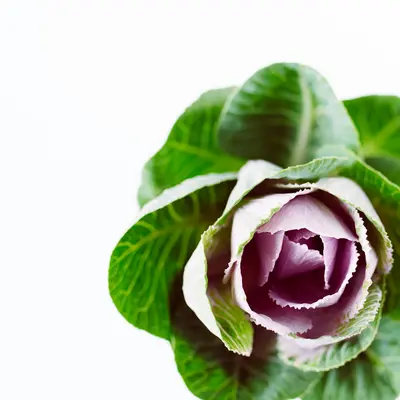
Early maturing purple cauliflower. Very attractive medium-dark, purple heads. Our best-performing purple variety in warm weather and also makes an excellent fall crop. Widely adapted.
Harvest
62d
Days to harvest
Sun
Full sun to partial shade
Zones
6–9
USDA hardiness
Height
10-24 inches
Planting Timeline
Showing dates for Purple Moon in USDA Zone 7
All Zone 7 brassica →Zone Map
Click a state to update dates
Purple Moon · Zones 6–9
Growing Details
Succession Planting
Start seeds indoors in February or March and transplant out in April through May once nighttime temps hold reliably above 40°F. With 62 days to harvest, a second round started indoors in late July can go into the ground in August for a fall crop — brassicas do their best work in September and October, and fall heads typically form tighter, denser curds than spring ones. Don't push a third planting; once daytime highs are consistently above 85°F, Purple Moon produces loose, ricey curds that aren't worth the bed space.
Complete Growing Guide
Early maturing purple cauliflower. Very attractive medium-dark, purple heads. Our best-performing purple variety in warm weather and also makes an excellent fall crop. Widely adapted. According to Johnny's Selected Seeds, Purple Moon is 62 days to maturity, annual, hybrid (f1).
Light: Full sun (6 or more hours of direct sunlight a day), Partial Shade (Direct sunlight only part of the day, 2-6 hours). Soil: Clay, Loam (Silt), Sand. Soil pH: Acid (<6.0), Neutral (6.0-8.0). Drainage: Good Drainage, Moist. Height: 0 ft. 10 in. - 2 ft. 0 in.. Spread: 1 ft. 0 in. - 2 ft. 0 in.. Spacing: 12 inches-3 feet. Growth rate: Medium. Maintenance: Medium. Propagation: Seed, Stem Cutting. Regions: Coastal, Mountains, Piedmont.
Harvesting
Purple Moon reaches harvest at 62 days from sowing per Johnny's Selected Seeds. As an annual, harvest continues until frost ends the season.
The fruits dry and split when ripe.
Color: Brown/Copper, Green. Type: Siliqua. Length: > 3 inches.
Garden value: Edible
Harvest time: Fall, Summer
Edibility: The foliage is edible raw or cooked but when cooked can emit an unpleasant odor.
Storage & Preservation
# Storage and Preservation
Purple Moon cauliflower keeps best in the refrigerator's crisper drawer at 32–40°F with 95% humidity, ideally in a perforated plastic bag to retain moisture without trapping excess condensation. Fresh heads maintain quality for 7–10 days when harvested at peak maturity and handled gently to avoid bruising the delicate curds.
Freezing is the most practical preservation method: blanch cut florets in boiling water for 3–4 minutes, ice-bath immediately, drain thoroughly, and pack in freezer containers or bags for up to eight months. The purple pigmentation remains relatively stable through this process. Roasting before freezing concentrates flavor and extends usability in cooked dishes. For longer-term storage, dehydrating blanched florets at 135°F produces shelf-stable pieces suitable for soups and stews year-round. Fermenting works well too—simply salt-pack florets with aromatics for a tangy condiment that develops character over 2–4 weeks.
History & Origin
Purple Moon is an F1 hybrid developed through controlled cross-pollination. Listed in the Johnny's Selected Seeds catalog.
Origin: W. Europe
Advantages
- +Early 62-day maturity allows multiple harvests per season
- +Striking purple heads provide visual appeal and market differentiation
- +Excellent performance in warm weather when other varieties struggle
- +Widely adapted growing range reduces regional climate concerns
- +Easy difficulty level makes it suitable for beginner gardeners
Considerations
- -Purple coloration may fade or turn green in excessive heat
- -Requires consistent soil moisture to prevent hollow or bitter heads
- -Smaller head size typical of purple varieties reduces yield per plant
- -Purple varieties generally command lower market prices than green cauliflower
Companion Plants
Dill and thyme draw in parasitic wasps that target the cabbage worms and cabbage moths that will find Purple Moon regardless of what you do — put them within a few feet, not across the garden where they can't do any work. Nasturtiums act as a trap crop, pulling aphids off the cauliflower heads onto themselves, and French marigolds (Tagetes patula) add enough visual and scent disruption to slow down egg-laying moths. Radishes slip into the 6-inch gaps and are out of the ground before they compete for water. Keep tomatoes and pole beans elsewhere — tomatoes bring shared fungal pressure, and pole beans inhibit brassica root development through allelopathic compounds in their root exudates.
Plant Together
Dill
Attracts beneficial wasps that parasitize cabbage worms and aphids
Onions
Repel cabbage moths, aphids, and flea beetles with their strong scent
Marigolds
Deter cabbage worms, aphids, and other pests while attracting beneficial insects
Nasturtiums
Act as trap crop for aphids and flea beetles, drawing them away from brassicas
Lettuce
Grows well in partial shade of brassicas and helps maximize garden space
Carrots
Help break up soil and don't compete for nutrients with shallow-rooted brassicas
Thyme
Repels cabbage worms and flea beetles while attracting beneficial predatory insects
Radishes
Fast-growing companion that helps deter flea beetles and root maggots
Keep Apart
Tomatoes
Compete for similar nutrients and may stunt brassica growth through allelopathy
Strawberries
Can inhibit brassica growth and compete for soil nutrients
Pole Beans
May shade brassicas excessively and compete for nitrogen
Nutrition Facts
Per 100g serving. % Daily Value based on 2,000 calorie diet. Source: USDA FoodData Central (FDC #747447)
Pests & Disease Resistance
Common Pests
Cabbage worms, flea beetles, aphids, cabbage moths
Diseases
Clubroot, black rot, powdery mildew, downy mildew
Troubleshooting Purple Moon
What you'll see, why it happens, and what to do about it.
White powdery coating on upper leaf surfaces, sometimes spreading to stems, most noticeable in warm dry spells
Likely Causes
- Powdery mildew — a fungal disease that thrives when days are warm and nights are cool with low surface moisture
- Poor air circulation from tight spacing (under 18 inches)
What to Do
- 1.Mix 1 tablespoon baking soda plus 1 tablespoon summer horticultural oil per gallon of water and spray as a preventive every 3 to 5 days — NC State Extension notes this combination works against powdery mildew; don't go stronger than that ratio or you'll scorch the leaves
- 2.Space plants at least 18 inches apart and strip any heavily coated leaves to cut down the spore load
- 3.OMRI-listed sulfur fungicides are a fallback if the spray schedule isn't keeping pace
Pale or yellowed patches on upper leaf surfaces with bluish-gray fuzzy growth on the undersides
Likely Causes
- Downy mildew — sporulates on leaf undersides and spreads fast in cool, wet conditions, distinct from powdery mildew
- Overhead watering that leaves foliage wet overnight
What to Do
- 1.Switch to drip irrigation or water early in the morning so leaves dry before nightfall
- 2.Remove and trash (not compost) affected leaves as soon as you spot them
- 3.Rotate that bed out of all brassicas for at least 2 seasons — the pathogen overwinters in plant debris
Plants wilt and stunt despite adequate water; roots are swollen, knobbly, and smell faintly rotten when you pull one
Likely Causes
- Clubroot (Plasmodiophora brassicae) — a soil-borne pathogen that deforms roots and shuts down water and nutrient uptake
- Low soil pH (below 6.5) accelerates clubroot severity
What to Do
- 1.Pull and bag the entire plant — roots, clinging soil, all of it — do not compost
- 2.Lime the bed to push pH toward 7.0 or slightly above; clubroot pressure drops significantly above that threshold
- 3.Don't plant any brassica — cabbage, kale, broccoli, radishes — in that spot for at least 4 years
Frequently Asked Questions
How long does Purple Moon cauliflower take to mature?▼
Is Purple Moon cauliflower good for beginners?▼
Can you grow Purple Moon cauliflower in containers?▼
What does Purple Moon cauliflower taste like?▼
When should I plant Purple Moon cauliflower?▼
How much space does Purple Moon need between plants?▼
Zone-by-Zone Planting Calendar
| Zone | Indoor Start | Transplant | Direct Sow | Harvest |
|---|---|---|---|---|
| Zone 1 | April – May | June – July | June – July | August – September |
| Zone 2 | April – May | June – July | May – July | July – September |
| Zone 11 | January – January | January – February | January – February | February – December |
| Zone 12 | January – January | January – February | January – February | February – December |
| Zone 13 | January – January | January – February | January – February | February – December |
| Zone 3 | March – April | May – June | May – June | July – October |
| Zone 4 | March – April | May – June | April – June | June – October |
| Zone 5 | February – March | April – May | April – May | June – November |
| Zone 6 | February – March | April – May | April – May | June – November |
| Zone 7 | February – March | April – May | March – May | May – November |
| Zone 8 | January – February | March – April | March – April | May – December |
| Zone 9 | January – January | February – March | February – March | April – December |
| Zone 10 | January – January | February – March | January – March | March – December |
Growing Guides from Wind River Greens
Sources & References
External authority sources used in compiling this guide.
- BreederJohnny's Selected Seeds
- USDAUSDA FoodData Central
See the Methodology page for how this data is sourced, what's AI-assisted, and known limitations.