Premium Crop Broccoli
Brassica oleracea var. italica 'Premium Crop'
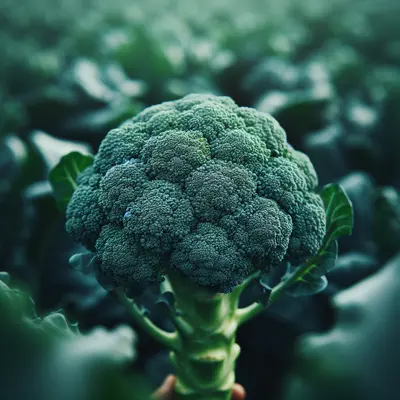
An award-winning F1 hybrid that produces large, dense blue-green heads with exceptional flavor and texture. This reliable variety offers excellent heat tolerance and produces abundant side shoots after the main head is harvested. A favorite among both home gardeners and commercial growers for its consistent performance.
Harvest
82-85d
Days to harvest
Sun
Full sun to partial shade
Zones
6–9
USDA hardiness
Height
10-24 inches
Planting Timeline
Showing dates for Premium Crop Broccoli in USDA Zone 7
All Zone 7 brassica →Zone Map
Click a state to update dates
Premium Crop Broccoli · Zones 6–9
Growing Details
Succession Planting
In zone 7, start transplants indoors in February for an April set-out, then do a second sowing in late June or early July for a fall crop set out in August. Fall is the better window — NC State Extension specifically recommends planting cole crops in fall rather than spring because warming weather triggers bolting and a bitter sap in the heads.
Don't try to succession-sow through the summer. Once daytime highs sit above 80°F consistently, new transplants will button (form tiny premature heads) instead of sizing up. Two plantings a year — early spring and late summer — is the right cadence for Premium Crop.
Complete Growing Guide
Premium Crop's 82-85 day maturity makes it ideal for succession planting in summer for fall harvest, allowing you to time sowings 2-3 weeks apart for continuous side-shoot production. This hybrid excels in warm conditions—plant when soil reaches 60°F and maintain consistent moisture to prevent the heat-induced bolting that can plague other broccoli varieties. Unlike slower heirloom types, Premium Crop's vigor means it performs well in containers and raised beds with good air circulation, reducing fungal disease pressure common in crowded plantings. Watch for cabbage worms and loopers, which aggressively target young florets; row covers at transplanting offer preventive protection. The cultivar's propensity for abundant secondary shoots after main-head harvest rewards prompt cutting of the primary crown at full size—delay harvesting even a few days and the head will begin splitting into side shoots, compromising that prized dense texture.
Light: Full sun (6 or more hours of direct sunlight a day), Partial Shade (Direct sunlight only part of the day, 2-6 hours). Soil: Clay, Loam (Silt), Sand. Soil pH: Acid (<6.0), Neutral (6.0-8.0). Drainage: Good Drainage, Moist. Height: 0 ft. 10 in. - 2 ft. 0 in.. Spread: 1 ft. 0 in. - 2 ft. 0 in.. Spacing: 12 inches-3 feet. Growth rate: Medium. Maintenance: Medium. Propagation: Seed, Stem Cutting. Regions: Coastal, Mountains, Piedmont.
Harvesting
Harvest Premium Crop Broccoli when the main head reaches 4-6 inches in diameter with tightly closed, blue-green florets that feel firm to the touch; heads should be harvested before florets begin to yellow or loosen, as this signals overmaturity and declining flavor. Cut the main head at an angle about 5-8 inches down the stem, leaving the plant in place to encourage the abundant side shoot production this variety is known for. These secondary heads will continue developing over several weeks, providing multiple harvests from a single plant rather than a one-time yield. For optimal sweetness and tenderness, harvest in early morning after dew has dried, as broccoli cut during cooler times of day retains better texture and flavor than afternoon harvests.
The fruits dry and split when ripe.
Color: Brown/Copper, Green. Type: Siliqua. Length: > 3 inches.
Garden value: Edible
Harvest time: Fall, Summer
Edibility: The foliage is edible raw or cooked but when cooked can emit an unpleasant odor.
Storage & Preservation
Fresh Premium Crop broccoli stores best in the refrigerator, wrapped loosely in perforated plastic bags in the crisper drawer. At 32-35°F with high humidity, heads maintain quality for 10-14 days. Never wash before storing, as excess moisture promotes decay.
For freezing, blanch florets and tender stems in boiling water for 3 minutes, then immediately plunge into ice water. Drain thoroughly and freeze in portions. Properly blanched Premium Crop maintains excellent texture and flavor for 12 months frozen.
This variety's dense, uniform heads also work well for fermentation – try making broccoli kraut or adding florets to mixed vegetable ferments. The sweet, nutty flavor of Premium Crop intensifies beautifully through lacto-fermentation, creating a tangy preserved vegetable that keeps for months refrigerated.
History & Origin
Premium Crop Broccoli emerged from the commercial F1 hybrid breeding programs of the late 20th century, though specific breeder attribution and introduction date remain undocumented in widely accessible sources. The variety represents the culmination of decades of Brassica oleracea improvement work, particularly focused on developing heat-tolerant cultivars with strong side-shoot production—traits increasingly valued by both commercial operations and home gardeners. Its lineage traces to classical broccoli germplasm combined with modern hybrid vigor techniques, likely developed by a major seed company specializing in vegetable breeding. The award recognition it earned reflects the horticultural standards of its era, though the specific award and year are not clearly recorded in standard reference materials.
Origin: W. Europe
Advantages
- +Award-winning F1 hybrid delivers consistently large, dense blue-green heads reliably
- +Exceptional heat tolerance allows successful growing in warmer climates and seasons
- +Abundant side shoots provide extended harvests after main head removal
- +Sweet, nutty flavor with tender stems appeals to discerning home gardeners
- +Moderate difficulty makes it accessible to intermediate and experienced growers
Considerations
- -Susceptible to multiple serious diseases including clubroot and bacterial soft rot
- -Vulnerable to four major pest problems requiring vigilant monitoring and control
- -Requires well-draining soil and careful disease management for optimal success
- -Hybrid seed must be purchased annually; cannot save seeds for replanting
Companion Plants
Nasturtiums and marigolds pull their weight here as trap and decoy crops — cabbage worms (the larvae of Pieris rapae) and aphids will hit nasturtiums first, and you can pull infested leaves and toss them in the trash. Dill brings in parasitic wasps and hoverflies that take down aphid colonies, and it doesn't compete for the same root zone. Onions and thyme muddle the scent profile that cabbage root maggot flies and flea beetles use to locate brassicas. Lettuce and spinach are good bedfellows — shallow-rooted, cool-season, and they finish before the broccoli head sizes up.
Tomatoes are the worst neighbor: both are heavy nitrogen feeders, and NC State Extension specifically calls broccoli a heavy feeder, so the two will scrap over fertility while wanting opposite season windows. Pole beans climb into the broccoli canopy and shade the developing head right when it needs light to size up. Strawberries share root-zone real estate and overlap on several soil-borne pathogens, so nobody comes out ahead in that bed.
Plant Together
Nasturtiums
Act as trap crop for aphids and flea beetles, protecting broccoli from pest damage
Marigolds
Repel cabbage worms, aphids, and other brassica pests with their strong scent
Dill
Attracts beneficial insects like parasitic wasps that prey on cabbage worms
Onions
Repel cabbage moths and root maggots with their sulfur compounds
Lettuce
Provides ground cover and efficient space use without competing for nutrients
Spinach
Grows well in broccoli's partial shade and has similar water requirements
Celery
Repels cabbage white butterflies and provides natural pest deterrent
Thyme
Repels cabbage worms and flea beetles while attracting beneficial pollinators
Keep Apart
Tomatoes
Both are heavy feeders competing for nutrients, and tomatoes may stunt broccoli growth
Strawberries
Compete for space and nutrients, and may attract slugs that also damage broccoli
Pole Beans
May shade broccoli excessively and compete for nitrogen despite being nitrogen-fixing
Nutrition Facts
Per 100g serving. % Daily Value based on 2,000 calorie diet. Source: USDA FoodData Central (FDC #747447)
Pests & Disease Resistance
Resistance
Excellent resistance to downy mildew and black rot
Common Pests
Cabbage worms, aphids, flea beetles, cabbage root maggots
Diseases
Clubroot, black leg, alternaria leaf spot, bacterial soft rot
Troubleshooting Premium Crop Broccoli
What you'll see, why it happens, and what to do about it.
Tiny heads the size of a quarter forming on small plants, often within a few weeks of transplant
Likely Causes
- Buttoning — caused by cold snaps, drought stress, or nutrient shortage soon after transplant (NC State Extension)
- Transplants were too large at set-out; plants with more than 4–6 true leaves are much more prone to buttoning
- Skipped a feeding — broccoli pulls heavy nitrogen
What to Do
- 1.Set out transplants while they still have only 4–6 true leaves, not bigger
- 2.Keep soil consistently moist for the first 3 weeks after transplant — 1 to 1.5 inches of water per week
- 3.Side-dress with blood meal or composted poultry manure about 3 weeks after transplant, and again when heads start forming
Ragged holes chewed in leaves and small green caterpillars tucked along the midribs
Likely Causes
- Imported cabbageworm (Pieris rapae) — the larvae of the white butterflies you see fluttering around the bed
- Cabbage looper (Trichoplusia ni) — the inchworm-style ones that loop as they crawl
- Diamondback moth (Plutella xylostella) larvae on younger leaves
What to Do
- 1.Spray Bt (Bacillus thuringiensis kurstaki) every 7–10 days once you see the white butterflies — it only kills caterpillars and is safe to eat off of
- 2.Cover the bed with insect netting or floating row cover from transplant until heads start forming
- 3.Hand-pick what you can in the evening; check the undersides of leaves where eggs cluster
Plant suddenly shoots up a tall stalk with yellow flowers instead of a tight head
Likely Causes
- Bolting triggered by warming spring weather — NC State Extension notes this is the standard signal for cole crops to flower
- Spring planting that ran too late into the heat
- Heat stress combined with inconsistent watering
What to Do
- 1.Harvest immediately — the head is still edible but turns bitter fast once flowers open
- 2.Shift next year's main crop to a fall planting (transplant August, harvest October–November)
- 3.After cutting the main head, leave the plant — you'll usually get 4–6 weeks of side shoots before it gives up
Frequently Asked Questions
How long does Premium Crop broccoli take to grow from seed?▼
Can you grow Premium Crop broccoli in containers?▼
What does Premium Crop broccoli taste like?▼
When should I plant Premium Crop broccoli for fall harvest?▼
Is Premium Crop broccoli good for beginners?▼
How do you get Premium Crop broccoli to produce side shoots?▼
Zone-by-Zone Planting Calendar
| Zone | Indoor Start | Transplant | Direct Sow | Harvest |
|---|---|---|---|---|
| Zone 3 | March – April | May – June | May – June | July – October |
| Zone 4 | March – April | May – June | April – June | July – October |
| Zone 5 | February – March | April – May | April – May | July – November |
| Zone 6 | February – March | April – May | April – May | June – November |
| Zone 7 | February – March | April – May | March – May | June – November |
| Zone 8 | January – February | March – April | March – April | May – December |
| Zone 9 | January – January | February – March | February – March | April – December |
| Zone 10 | January – January | February – March | January – March | April – December |
| Zone 1 | April – May | June – July | June – July | August – September |
| Zone 2 | April – May | June – July | May – July | August – September |
| Zone 11 | January – January | January – February | January – February | March – December |
| Zone 12 | January – January | January – February | January – February | March – December |
| Zone 13 | January – January | January – February | January – February | March – December |
Growing Guides from Wind River Greens
Sources & References
External authority sources used in compiling this guide.
See the Methodology page for how this data is sourced, what's AI-assisted, and known limitations.