Paxton
Brassica oleracea var. botrytis
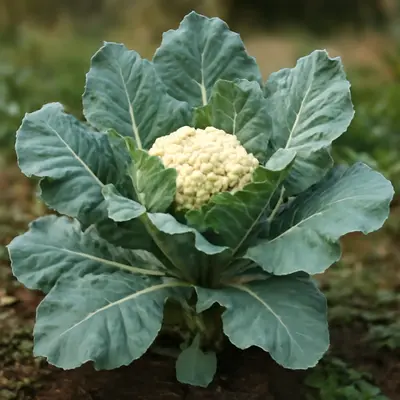
An excellent choice for summer and fall-harvested crops, particularly in the Pacific Northwest and the Northeast. Large well-domed, attractive heads that are self-wrapping and do not need to be tied.
Harvest
67d
Days to harvest
Sun
Full sun to partial shade
Zones
6–9
USDA hardiness
Height
10-24 inches
Planting Timeline
Showing dates for Paxton in USDA Zone 7
All Zone 7 brassica →Zone Map
Click a state to update dates
Paxton · Zones 6–9
Growing Details
Succession Planting
Paxton comes in at 67 days, which gives you two realistic windows in zone 7: start seeds indoors in late February, transplant in April, and cut heads by mid-June before heat stalls development. Then start a second round indoors in late June or early July, transplant in August, and plan on harvest from October into November. Don't attempt a midsummer direct sow — cauliflower will "button" (form small, premature curds) if daytime highs stay consistently above 80°F during head set.
The fall planting is often cleaner than the spring one. Cabbage worm and flea beetle pressure drops sharply after the first frost, typically late October here. Count back 67 days from that date and add a week of buffer — fall growth slows as days shorten, and Paxton needs the full time to size up properly.
Complete Growing Guide
An excellent choice for summer and fall-harvested crops, particularly in the Pacific Northwest and the Northeast. Large well-domed, attractive heads that are self-wrapping and do not need to be tied. According to Johnny's Selected Seeds, Paxton is 67 days to maturity, annual, hybrid (f1). Disease resistance includes Club Root. Notable features: Heat Tolerant.
Light: Full sun (6 or more hours of direct sunlight a day), Partial Shade (Direct sunlight only part of the day, 2-6 hours). Soil: Clay, Loam (Silt), Sand. Soil pH: Acid (<6.0), Neutral (6.0-8.0). Drainage: Good Drainage, Moist. Height: 0 ft. 10 in. - 2 ft. 0 in.. Spread: 1 ft. 0 in. - 2 ft. 0 in.. Spacing: 12 inches-3 feet. Growth rate: Medium. Maintenance: Medium. Propagation: Seed, Stem Cutting. Regions: Coastal, Mountains, Piedmont.
Harvesting
Paxton reaches harvest at 67 days from sowing per Johnny's Selected Seeds. As an annual, harvest continues until frost ends the season.
The fruits dry and split when ripe.
Color: Brown/Copper, Green. Type: Siliqua. Length: > 3 inches.
Garden value: Edible
Harvest time: Fall, Summer
Edibility: The foliage is edible raw or cooked but when cooked can emit an unpleasant odor.
Storage & Preservation
# Storage and Preservation
Harvest Paxton heads when firm and compact, ideally in cool morning hours. Store freshly picked heads in a perforated plastic bag in the refrigerator's crisper drawer at 32–40°F with 95% humidity; they'll keep for two to three weeks. For longer storage, remove outer leaves and place heads in a cold room or root cellar at 32–35°F, where they remain acceptable for up to six weeks.
Freezing is the most practical preservation method: blanch florets for three minutes, cool in ice water, drain thoroughly, and freeze in airtight containers for up to one year. Paxton's dense curds freeze particularly well without excessive mushiness. Pickling and fermenting also work; cut into florets, pack with vinegar and spices, and refrigerate. Drying is less common but possible—slice thinly and dry in a dehydrator at 125°F until brittle.
History & Origin
Paxton is an F1 hybrid developed through controlled cross-pollination. Listed in the Johnny's Selected Seeds catalog.
Origin: W. Europe
Advantages
- +Self-wrapping heads eliminate labor-intensive tying operations
- +Well-domed heads provide excellent visual appeal for market sales
- +Rapid 67-day maturity enables multiple succession plantings per season
- +Thrives in cool Pacific Northwest and Northeast growing conditions
- +Large head size maximizes yield per plant in limited space
Considerations
- -Requires consistent moisture or heads develop riciness and poor quality
- -Susceptible to cabbage looper and other Brassica-specific pests
- -Narrow temperature range preference limits spring planting flexibility
- -Bolting risk increases significantly if transplants experience stress or cold
Companion Plants
Nasturtiums act as a trap crop, pulling cabbage aphids off your Paxton heads and onto themselves — check them every few days and cut the colonized stems before populations migrate back. Marigolds suppress soil nematodes through root exudates, which matters most in beds that have grown brassicas before. Dill and chamomile draw in parasitic wasps that target diamondback moths and cabbage loopers, both of which run hard from August through October in our zone 7 Georgia gardens. Tomatoes are the companion to skip — they're heavy feeders competing for the same water budget (Paxton wants 1.5–2 inches per week), and planting them together bunches two demanding crops with nothing to offer each other.
Plant Together
Nasturtiums
Acts as trap crop for aphids and flea beetles, protecting brassicas
Marigolds
Repels cabbage worms and other brassica pests with strong scent
Dill
Attracts beneficial wasps that parasitize cabbage worms and aphids
Onions
Repels cabbage root fly and cabbage worms with sulfur compounds
Garlic
Deters aphids, cabbage loopers, and fungal diseases
Chamomile
Improves flavor and attracts beneficial insects for pest control
Carrots
Helps break up soil and doesn't compete for same nutrients
Lettuce
Provides ground cover and uses different soil layer than brassicas
Keep Apart
Tomatoes
Both are heavy feeders competing for same nutrients, may stunt growth
Strawberries
Inhibits brassica growth and both attract similar fungal diseases
Pole Beans
May inhibit brassica growth and create too much shade
Nutrition Facts
Per 100g serving. % Daily Value based on 2,000 calorie diet. Source: USDA FoodData Central (FDC #747447)
Pests & Disease Resistance
Resistance
Club Root races 0-2 (High)
Common Pests
Cabbage worms, cabbage loopers, flea beetles, diamondback moths, cabbage aphids
Diseases
Black rot, clubroot, bacterial spot, fusarium yellows, downy mildew
Troubleshooting Paxton
What you'll see, why it happens, and what to do about it.
Leaves with dark, V-shaped yellow lesions starting at the leaf margins, stems turning black inside when cut
Likely Causes
- Black rot (Xanthomonas campestris pv. campestris) — seed-borne or soil-borne bacterium, spreads fast in warm, wet weather
- Overhead irrigation keeping foliage wet for extended periods
What to Do
- 1.Pull and trash affected plants immediately — don't compost them
- 2.Switch to drip irrigation or water at the base only, early in the morning so foliage dries before evening
- 3.Per NC State IPM guidance, rotate brassicas out of this bed for at least 3 to 4 years before replanting
Plants wilting and yellowing despite adequate water, roots swollen and distorted when pulled
Likely Causes
- Clubroot (Plasmodiophora brassicae) — a soil-borne pathogen that persists for up to 20 years, especially in acidic soil
- Low soil pH (below 6.0) accelerating spore germination
What to Do
- 1.Lime the bed to raise pH to 7.0–7.2, which suppresses clubroot activity significantly
- 2.Remove and bag the entire plant including all roots — do not till infected material back into the bed
- 3.Sterilize transplant trays and tools from infected beds with a 10% bleach solution before reuse
Small ragged holes chewed through leaves, especially on seedlings or transplants within the first 2 weeks
Likely Causes
- Flea beetles (Phyllotreta spp.) — tiny, jumping beetles that explode in population during warm, dry spells
- Imported cabbageworm (Pieris rapae larvae) — pale green caterpillars, often hidden along the midrib
What to Do
- 1.Cover transplants with row cover immediately at planting and leave it on until heads begin to form
- 2.For caterpillars, apply Bacillus thuringiensis (Bt) to the foliage in the evening — it's specific to lepidopteran larvae and won't harm beneficial insects
- 3.Scout every 3 to 4 days; early intervention keeps flea beetle populations from outpacing plant recovery, especially on transplants under 6 inches tall
Gray-purple downy coating on the undersides of leaves, with corresponding yellow patches on top
Likely Causes
- Downy mildew (Peronospora parasitica) — thrives when nights are cool (50–60°F) and humidity is high
- Overcrowded planting reducing airflow between plants
What to Do
- 1.Space plants at the full 18–24 inches — tighter than that and a wet fall will do real damage
- 2.Strip and trash affected leaves; don't let them sit on the soil surface where spores can splash back up
- 3.NC State Extension notes that overcrowding decreases air movement and spikes humidity — if you planted tight, thin aggressively rather than waiting it out
Frequently Asked Questions
How long does Paxton cabbage take to mature?▼
Is Paxton a good cabbage variety for beginners?▼
What does Paxton cabbage look like?▼
When should I plant Paxton cabbage?▼
How much sun does Paxton cabbage need?▼
Can I grow Paxton cabbage in containers?▼
Zone-by-Zone Planting Calendar
| Zone | Indoor Start | Transplant | Direct Sow | Harvest |
|---|---|---|---|---|
| Zone 3 | March – April | May – June | May – June | July – October |
| Zone 4 | March – April | May – June | April – June | July – October |
| Zone 5 | February – March | April – May | April – May | June – November |
| Zone 6 | February – March | April – May | April – May | June – November |
| Zone 7 | February – March | April – May | March – May | May – November |
| Zone 8 | January – February | March – April | March – April | May – December |
| Zone 9 | January – January | February – March | February – March | April – December |
| Zone 10 | January – January | February – March | January – March | March – December |
| Zone 1 | April – May | June – July | June – July | August – September |
| Zone 2 | April – May | June – July | May – July | July – September |
| Zone 11 | January – January | January – February | January – February | February – December |
| Zone 12 | January – January | January – February | January – February | February – December |
| Zone 13 | January – January | January – February | January – February | February – December |
Growing Guides from Wind River Greens
Sources & References
External authority sources used in compiling this guide.
- BreederJohnny's Selected Seeds
- USDAUSDA FoodData Central
See the Methodology page for how this data is sourced, what's AI-assisted, and known limitations.