Lavender
Brassica oleracea var. botrytis
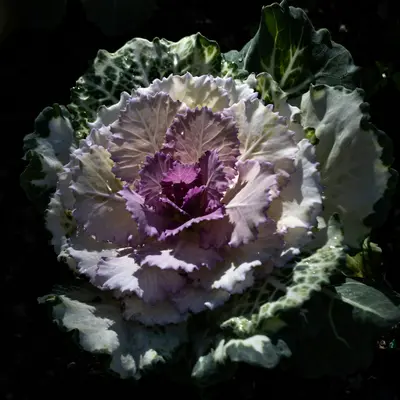
Attractive bright purple florets make Lavender a great choice for dipping platters. Stems are a beautiful medium-purple in fall, paler in spring. Compared to Graffiti, heads are a much brighter violet-purple and have a slightly larger dome. Performs best for fall crops but may also be grown successfully for summer crops.
Harvest
70d
Days to harvest
Sun
Full sun to partial shade
Zones
6–9
USDA hardiness
Height
10-24 inches
Planting Timeline
Showing dates for Lavender in USDA Zone 7
All Zone 7 brassica →Zone Map
Click a state to update dates
Lavender · Zones 6–9
Growing Details
Succession Planting
Cauliflower doesn't lend itself to tight succession the way lettuce or radishes do — each head is a one-time harvest, but the 70-day window means two distinct plantings per year are doable if you time them right. Start seeds indoors in February–March for a spring crop, transplanting out in April–May. For fall, back-calculate from your first frost date: count back 70 days plus roughly 18 days of harvest buffer, then start transplants in a half-shaded area in late July or August — in line with UGA Extension's calendar for fall brassica starts. Don't push a third planting; cauliflower forms heads poorly when daytime temperatures stay above 80°F, and the curds come out loose and discolored in the heat.
Complete Growing Guide
Attractive bright purple florets make Lavender a great choice for dipping platters. Stems are a beautiful medium-purple in fall, paler in spring. Compared to Graffiti, heads are a much brighter violet-purple and have a slightly larger dome. Performs best for fall crops but may also be grown successfully for summer crops. According to Johnny's Selected Seeds, Lavender is 70 days to maturity, annual, hybrid (f1).
Light: Full sun (6 or more hours of direct sunlight a day), Partial Shade (Direct sunlight only part of the day, 2-6 hours). Soil: Clay, Loam (Silt), Sand. Soil pH: Acid (<6.0), Neutral (6.0-8.0). Drainage: Good Drainage, Moist. Height: 0 ft. 10 in. - 2 ft. 0 in.. Spread: 1 ft. 0 in. - 2 ft. 0 in.. Spacing: 12 inches-3 feet. Growth rate: Medium. Maintenance: Medium. Propagation: Seed, Stem Cutting. Regions: Coastal, Mountains, Piedmont.
Harvesting
Lavender reaches harvest at 70 days from sowing per Johnny's Selected Seeds. As an annual, harvest continues until frost ends the season.
The fruits dry and split when ripe.
Color: Brown/Copper, Green. Type: Siliqua. Length: > 3 inches.
Garden value: Edible
Harvest time: Fall, Summer
Edibility: The foliage is edible raw or cooked but when cooked can emit an unpleasant odor.
Storage & Preservation
# Storage and Preservation
Harvest lavender heads when flowers are fully open but before they begin to fade. Store fresh stems in a cool, dark place at 50–60°F with moderate humidity to prevent moisture loss and mold. Keep them in a loosely bunched arrangement with stems in shallow water, or lay them on paper towels if storing dry. Fresh lavender retains quality for 1–2 weeks under these conditions.
For longer preservation, hang-dry bundles in a well-ventilated space away from direct sunlight; flowers dry completely in 2–3 weeks and store for months in airtight containers. Alternatively, freeze flower buds on trays before bagging for use in teas or culinary applications, though texture diminishes slightly. A unique advantage of lavender is its natural resistance to pests during drying, making it one of the easiest herbs to preserve without additional treatment.
History & Origin
Lavender is an F1 hybrid developed through controlled cross-pollination. Listed in the Johnny's Selected Seeds catalog.
Origin: W. Europe
Advantages
- +Bright purple florets are visually striking for fresh vegetable platters
- +Beautiful medium-purple stems add ornamental value to fall gardens
- +Larger dome shape and more vibrant color than Graffiti variety
- +Relatively quick 70-day maturity makes succession planting feasible
- +Easy difficulty level suitable for beginner gardeners
Considerations
- -Performs best in fall crops; summer production may be unreliable
- -Purple color can fade or appear less vibrant in spring
- -May require consistent watering to prevent head quality degradation
Companion Plants
Rosemary, thyme, and sage pull their weight here — all three are shallow-rooted and low-water, so they don't compete much below ground, and their volatile oils do seem to disorient cabbage worms and flea beetles when planted within 18 inches. Carrots are a natural fit too, since their taproot sits well below the cauliflower's fibrous zone — no real resource competition between them. Keep mint out of this bed; it spreads by underground runners and will take over within a single season. Impatiens is a subtler problem: NC State Extension documents it as a host for downy mildew (Peronospora), and you don't want that pathogen any closer to your brassicas than it already gets on its own.
Plant Together
Rosemary
Both are Mediterranean herbs with similar water and soil requirements, mutually repel pests
Thyme
Shares similar growing conditions, both attract beneficial pollinators and repel harmful insects
Sage
Compatible water needs, both deter cabbage moths and other garden pests
Cabbage
Lavender repels cabbage moths, flea beetles, and other brassica pests
Broccoli
Lavender deters cabbage worms and aphids that commonly attack brassicas
Cauliflower
Lavender's strong scent masks brassica odors and repels cabbage white butterflies
Tomatoes
Lavender repels aphids, whiteflies, and moths that damage tomato plants
Carrots
Lavender deters carrot fly while carrots help break up soil for lavender roots
Keep Apart
Mint
Aggressive spreader that competes for space and resources, different water requirements
Impatiens
Requires consistently moist soil which can cause root rot in drought-tolerant lavender
Camellias
Prefer acidic soil while lavender needs alkaline conditions, incompatible pH requirements
Nutrition Facts
Per 100g serving. % Daily Value based on 2,000 calorie diet. Source: USDA FoodData Central (FDC #747447)
Pests & Disease Resistance
Common Pests
Cabbage worms, flea beetles, aphids
Diseases
Downy mildew, clubroot, black rot
Troubleshooting Lavender
What you'll see, why it happens, and what to do about it.
Gray-purple fuzz on the underside of leaves, with yellow patches on top — showing up 3–5 weeks after transplant
Likely Causes
- Downy mildew (Peronospora parasitica) — an oomycete that spreads by wind-blown spores and thrives in cool, wet conditions above 85% humidity
- Poor airflow from crowded spacing under 18 inches
What to Do
- 1.Strip and bag affected leaves — don't compost them
- 2.Space plants at least 18 inches apart and avoid overhead watering in the evening
- 3.Apply a copper-based fungicide on a 7-day interval if the outbreak is spreading; stop once conditions dry out
Plants wilting and stunting despite adequate water, with roots that look swollen or club-shaped when pulled
Likely Causes
- Clubroot (Plasmodiophora brassicae) — a soil-borne pathogen that persists for 10–20 years in infected ground
- Soil pH below 6.5, which favors spore germination
What to Do
- 1.Pull and bag the entire plant — roots and all — and do not replant brassicas in that bed for at least 4 years
- 2.Lime the bed to raise pH to 7.0–7.2 before the next planting; clubroot activity drops sharply above pH 7.0
- 3.Send a soil sample to your state lab to confirm before replanting brassicas
V-shaped yellow lesions on older leaves, progressing to blackened, water-soaked veins — usually appearing after a rainy stretch
Likely Causes
- Black rot (Xanthomonas campestris pv. campestris) — a bacterial disease that enters through leaf margins and moves fast in warm, wet weather
- Infected transplants or seed stock already carrying the bacterium at planting
What to Do
- 1.Remove infected leaves immediately and put them in the trash, not the compost pile
- 2.Stay out of the bed when foliage is wet — black rot travels easily on hands and tools
- 3.Rotate out of all brassicas for at least 2 seasons; the bacterium overwinters in crop debris
Frequently Asked Questions
How long does it take Lavender broccoli to mature?▼
Is Lavender broccoli good for beginners?▼
Can you grow Lavender broccoli in containers?▼
When should I plant Lavender broccoli?▼
What does Lavender broccoli taste like?▼
How does Lavender compare to Graffiti broccoli?▼
Zone-by-Zone Planting Calendar
| Zone | Indoor Start | Transplant | Direct Sow | Harvest |
|---|---|---|---|---|
| Zone 3 | March – April | May – June | May – June | July – October |
| Zone 4 | March – April | May – June | April – June | July – October |
| Zone 5 | February – March | April – May | April – May | June – November |
| Zone 6 | February – March | April – May | April – May | June – November |
| Zone 7 | February – March | April – May | March – May | May – November |
| Zone 8 | January – February | March – April | March – April | May – December |
| Zone 9 | January – January | February – March | February – March | April – December |
| Zone 10 | January – January | February – March | January – March | March – December |
| Zone 1 | April – May | June – July | June – July | August – September |
| Zone 2 | April – May | June – July | May – July | July – September |
| Zone 11 | January – January | January – February | January – February | February – December |
| Zone 12 | January – January | January – February | January – February | February – December |
| Zone 13 | January – January | January – February | January – February | February – December |
Growing Guides from Wind River Greens
Sources & References
External authority sources used in compiling this guide.
- BreederJohnny's Selected Seeds
- USDAUSDA FoodData Central
See the Methodology page for how this data is sourced, what's AI-assisted, and known limitations.