Haku
Brassica rapa var. pekinensis
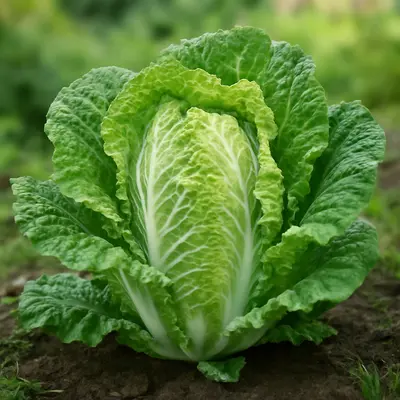
Very good performance along the Eastern Seaboard, as well as in Arizona and California. Heads avg. 11" tall and 5 1/2-6 lb. Our most heat tolerant, tipburn tolerant, and adaptable variety.
Harvest
55d
Days to harvest
Sun
Full sun to part shade
Zones
5–9
USDA hardiness
Height
3 feet
Planting Timeline
Showing dates for Haku in USDA Zone 7
All Zone 7 brassica →Zone Map
Click a state to update dates
Haku · Zones 5–9
Growing Details
Succession Planting
Direct sow Haku every 14–18 days from late March through early May for a spring run, then stop — napa bolts quickly once daytime highs push past 80°F and nights stop cooling down. Resume in late August for a fall succession, counting back 55 days from your expected first frost to set your last sow date. The fall window tends to produce cleaner, tighter heads, though NC State Extension cautions that flea beetle and looper populations run higher in fall after building up all summer — have row cover ready from day one.
Complete Growing Guide
Very good performance along the Eastern Seaboard, as well as in Arizona and California. Heads avg. 11" tall and 5 1/2-6 lb. Our most heat tolerant, tipburn tolerant, and adaptable variety. According to Johnny's Selected Seeds, Haku is 55 days to maturity, annual, hybrid (f1). Disease resistance includes Club Root, Downy Mildew.
Light: Full sun (6 or more hours of direct sunlight a day), Partial Shade (Direct sunlight only part of the day, 2-6 hours). Soil: Clay, Loam (Silt), Sand. Soil pH: Acid (<6.0), Neutral (6.0-8.0). Drainage: Good Drainage, Moist. Height: 0 ft. 10 in. - 2 ft. 0 in.. Spread: 1 ft. 0 in. - 2 ft. 0 in.. Spacing: 12 inches-3 feet. Growth rate: Medium. Maintenance: Medium. Propagation: Seed, Stem Cutting. Regions: Coastal, Mountains, Piedmont.
Harvesting
Haku reaches harvest at 55 days from sowing per Johnny's Selected Seeds. Expect 11" at peak. As an annual, harvest continues until frost ends the season.
The fruits dry and split when ripe.
Color: Brown/Copper, Green. Type: Siliqua. Length: > 3 inches.
Garden value: Edible
Harvest time: Fall, Summer
Bloom time: Spring, Summer
Edibility: The foliage is edible raw or cooked but when cooked can emit an unpleasant odor.
Storage & Preservation
Haku cabbage keeps longest in cold, humid storage at 32–40°F with 95% relative humidity—a root cellar or refrigerator crisper drawer works well. Wrap heads loosely in plastic to prevent moisture loss. Expect 2–3 months of fresh storage if harvested at full maturity and kept undamaged. For preservation, blanch shredded Haku for 2 minutes before freezing in airtight containers; it holds well for up to 8 months. Fermentation is excellent—slice cabbage, salt at 2–3% by weight, and pack into jars under brine for a crisp, tangy product ready in 1–4 weeks. Dehydrating thin slices at 130–140°F yields shelf-stable chips. This variety's tender, pale leaves ferment faster than storage cabbages and develop mild flavor quickly, making it ideal for quick-turn ferments rather than long aging.
History & Origin
Haku is an F1 hybrid developed through controlled cross-pollination. Listed in the Johnny's Selected Seeds catalog.
Brassica is a genus of plants in the cabbage and mustard family (Brassicaceae). The members of the genus are informally known as cruciferous vegetables, cabbages, mustard plants, or simply brassicas. Crops from this genus are sometimes called cole crops—derived from the Latin caulis, denoting the stem or stalk of a plant.
Advantages
- +Excellent heat tolerance makes Haku ideal for warm season growing
- +Fast 55-day maturity allows multiple plantings per season
- +Superior tipburn resistance reduces crop loss from physiological disorder
- +Outstanding adaptability performs well across diverse US growing regions
- +Reliable heading produces consistently sized 5.5-6 lb compact heads
Considerations
- -Limited performance outside Eastern Seaboard, Arizona, and California regions
- -Susceptible to cabbage worms and other common Brassica pests
- -Requires consistent moisture to prevent bolting and quality decline
Companion Plants
Nasturtiums and marigolds do real work here — nasturtiums act as a trap crop that pulls aphids off your napa, while Tagetes patula specifically has documented nematode-suppressing properties in the root zone. Dill attracts parasitic wasps that target Trichoplusia ni larvae, and onions' sulfur compounds help mask the brassica scent that flea beetles key in on. Tomatoes are the one to avoid: they compete aggressively for the same calcium and moisture that a heading napa needs over its 55-day run, and the root chemistry doesn't do your brassicas any favors. Pole beans can physically shade out a developing head — keep them on the far side of the bed.
Plant Together
Nasturtiums
Acts as trap crop for aphids and flea beetles, protecting brassicas from these pests
Marigolds
Repels cabbage worms, aphids, and other brassica pests with natural compounds
Dill
Attracts beneficial insects like parasitic wasps that control cabbage worms
Onions
Repels cabbage maggots, aphids, and flea beetles with sulfur compounds
Lettuce
Provides ground cover and efficient space usage without competing for nutrients
Carrots
Different root depths prevent competition while carrots benefit from brassica soil conditioning
Celery
Repels cabbage worms and provides natural pest deterrent through aromatic compounds
Spinach
Cool-season companion that maximizes garden space without nutrient competition
Keep Apart
Strawberries
Brassicas can stunt strawberry growth and negatively affect fruit production
Tomatoes
Allelopathic effects inhibit brassica growth and both compete for similar nutrients
Pole Beans
Can inhibit brassica growth and create too much shade for optimal development
Nutrition Facts
Per 100g serving. % Daily Value based on 2,000 calorie diet. Source: USDA FoodData Central (FDC #747447)
Pests & Disease Resistance
Resistance
Club Root (Intermediate); Downy Mildew (Intermediate)
Common Pests
Cabbage looper, flea beetles, diamondback moths, aphids
Diseases
Clubroot, black rot, fusarium wilt
Troubleshooting Haku
What you'll see, why it happens, and what to do about it.
Seedlings collapse at soil level — stems look pinched or water-soaked, then turn black and shrivel within a day or two of germination
Likely Causes
- Damping off (Pythium or Rhizoctonia spp.) — fungal pathogens that thrive in cold, wet, poorly-drained soil
- Overwatering or sowing too densely, which keeps the soil surface wet and cuts airflow around stems
What to Do
- 1.Pull and discard affected seedlings immediately — don't let them sit and spread spores
- 2.Let the soil surface dry slightly between waterings; bottom-watering trays is better than overhead watering for starts
- 3.Next round, start in fresh sterile seed-starting mix and make sure trays drain freely within 30 minutes of watering
Leaves show small, ragged holes — mostly along the edges and across the blade — starting a week or two after transplant
Likely Causes
- Flea beetles (Phyllotreta spp.) — tiny, fast-jumping beetles that chew shotgun-pattern holes, worst on young transplants
- Cabbage looper (Trichoplusia ni) — larger, irregular holes, often with green caterpillars visible on the undersides of leaves
What to Do
- 1.Cover transplants with row cover (Agribon AG-19 or equivalent) immediately at planting — flea beetles find plants fast
- 2.For cabbage looper, hand-pick caterpillars in the morning and apply Bt (Bacillus thuringiensis) at dusk when larvae are actively feeding
- 3.NC State Extension notes that stressed plants draw heavier insect pressure — keep moisture consistent so Haku doesn't go drought-stressed between waterings
Outer leaves yellow and wilt; pulling the plant reveals swollen, distorted roots that smell faintly rotten
Likely Causes
- Clubroot (Plasmodiophora brassicae) — a soil-borne pathogen that persists for 20+ years and moves on contaminated tools or transplants
- Fusarium wilt (Fusarium oxysporum) — a separate fungal issue that also causes yellowing and collapse, but leaves roots discolored rather than galled
What to Do
- 1.No cure once a plant is infected — remove the whole plant, roots and all, and bag it for the trash, not the compost
- 2.Don't put any Brassica family crop (cabbage, broccoli, kale, turnips) back in that bed for at least 4 years; NC State Extension's disease chapter notes that Plasmodiophora brassicae doesn't disappear quickly with short rotations
- 3.If clubroot is confirmed, raise soil pH toward 7.2 with agricultural lime — the pathogen is far less active above pH 7.0
Frequently Asked Questions
How long does Haku cabbage take to harvest?▼
Is Haku cabbage good for beginner gardeners?▼
Can you grow Haku cabbage in containers?▼
What does Haku cabbage taste like?▼
Is Haku cabbage heat tolerant?▼
When should I plant Haku cabbage?▼
Zone-by-Zone Planting Calendar
| Zone | Indoor Start | Transplant | Direct Sow | Harvest |
|---|---|---|---|---|
| Zone 3 | March – April | May – June | May – June | June – October |
| Zone 4 | March – April | May – June | April – June | June – October |
| Zone 5 | February – March | April – May | April – May | June – November |
| Zone 6 | February – March | April – May | April – May | May – November |
| Zone 7 | February – March | April – May | March – May | May – November |
| Zone 8 | January – February | March – April | March – April | April – December |
| Zone 9 | January – January | February – March | February – March | March – December |
| Zone 10 | January – January | February – March | January – March | March – December |
| Zone 1 | April – May | June – July | June – July | July – September |
| Zone 2 | April – May | June – July | May – July | July – September |
| Zone 11 | January – January | January – February | January – February | February – December |
| Zone 12 | January – January | January – February | January – February | February – December |
| Zone 13 | January – January | January – February | January – February | February – December |
Growing Guides from Wind River Greens
Sources & References
External authority sources used in compiling this guide.
- BreederJohnny's Selected Seeds
- USDAUSDA FoodData Central
See the Methodology page for how this data is sourced, what's AI-assisted, and known limitations.