Gladius
Brassica oleracea var. gemmifera
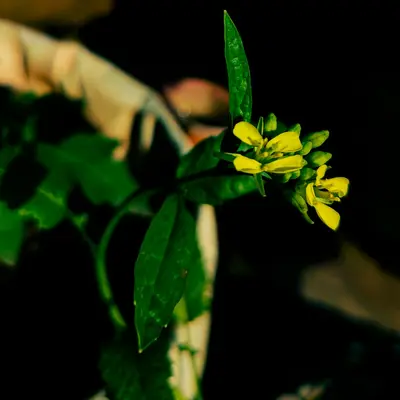
Blue-green sprouts are uniform in size and color and hold well on their stalks. Plants resist lodging. Medium-small sprouts. For early and mid-fall harvest.
Harvest
98d
Days to harvest
Sun
Full sun to partial shade
Zones
6–9
USDA hardiness
Height
10-24 inches
Planting Timeline
Showing dates for Gladius in USDA Zone 7
All Zone 7 brassica →Zone Map
Click a state to update dates
Gladius · Zones 6–9
Growing Details
Succession Planting
Gladius takes 98 days from transplant, so you're not succession planting the way you would a cut-and-come-again crop — each plant gives one harvest run. What you can do is stagger your start dates: sow a first round indoors in late February, transplant in April, then sow a second round in mid-March to transplant in early May. That spreads your harvest window from roughly September into November rather than everything coming in at once.
Don't push transplants out past mid-May in zone 7. Sprouts still sizing up when daytime highs hit 85–90°F tend to stall, and the buttons stay loose and leafy rather than tightening up. A light frost in October actually improves flavor — cold converts starches to sugars — so the fall end of that window is where Gladius does its best work.
Complete Growing Guide
Blue-green sprouts are uniform in size and color and hold well on their stalks. Plants resist lodging. Medium-small sprouts. For early and mid-fall harvest. According to Johnny's Selected Seeds, Gladius is 98 days to maturity, annual, hybrid (f1).
Light: Full sun (6 or more hours of direct sunlight a day), Partial Shade (Direct sunlight only part of the day, 2-6 hours). Soil: Clay, Loam (Silt), Sand. Soil pH: Acid (<6.0), Neutral (6.0-8.0). Drainage: Good Drainage, Moist. Height: 0 ft. 10 in. - 2 ft. 0 in.. Spread: 1 ft. 0 in. - 2 ft. 0 in.. Spacing: 12 inches-3 feet. Growth rate: Medium. Maintenance: Medium. Propagation: Seed, Stem Cutting. Regions: Coastal, Mountains, Piedmont.
Harvesting
Gladius reaches harvest at 98 days from sowing per Johnny's Selected Seeds. As an annual, harvest continues until frost ends the season.
The fruits dry and split when ripe.
Color: Brown/Copper, Green. Type: Siliqua. Length: > 3 inches.
Garden value: Edible
Harvest time: Fall, Summer
Edibility: The foliage is edible raw or cooked but when cooked can emit an unpleasant odor.
Storage & Preservation
# Storage and Preservation
Store freshly harvested Gladius sprouts in a perforated plastic bag in the refrigerator's crisper drawer at 32–40°F with humidity around 95 percent. They'll keep for up to two weeks when handled gently, as loose sprouts bruise easily and deteriorate faster than intact stalks. For longer storage, freeze blanched sprouts in ice-water baths for three minutes, then spread on trays before bagging—they'll maintain quality for eight months. Fermentation works exceptionally well with this variety; pack whole small sprouts in a 3-percent salt brine and let sit at room temperature for one to three weeks for a tangy, probiotic preserve. Many gardeners also find Gladius responds well to quick freezing on the stalk, then stripping individual sprouts once solid, which prevents premature oxidation better than blanching alone.
History & Origin
Gladius is an F1 hybrid developed through controlled cross-pollination. Listed in the Johnny's Selected Seeds catalog.
Origin: W. Europe
Advantages
- +Blue-green color and uniform size create visually appealing, marketable sprouts
- +Sprouts hold exceptionally well on stalks, reducing harvest losses and waste
- +Plants resist lodging, making them reliable for windy or exposed locations
- +Easy difficulty rating makes Gladius suitable for beginner and experienced growers
- +98-day maturity fits early and mid-fall harvest windows perfectly
Considerations
- -Medium-small sprout size may yield lower total weight per plant than larger varieties
- -Early and mid-fall timing limits planting flexibility for year-round production
- -Blue-green varieties can be more prone to certain fungal diseases in humid conditions
Companion Plants
Nasturtiums and marigolds are the two companions worth prioritizing. Nasturtiums act as a trap crop for aphids — colonies pile onto them and stay off your sprouts. French marigolds (Tagetes patula) have a well-documented track record against soil nematodes, and NC State Extension specifically recommends a solid planting of them in beds with nematode history before returning susceptible crops. Dill draws in parasitic wasps that go after cabbage worms; let it flower and you'll see the beneficials working within a few days. Onions at the bed's edge confuse cabbage moths with their scent. Lettuce and spinach fill the 6–8 inches of bare ground between sprouts without any real competition — Brussels sprouts root deep while those two stay shallow.
Tomatoes are the companion to cut from the plan entirely. In our zone 7 Georgia gardens, both crops go in around the same window and compete directly for the 1.5–2 inches of weekly water Gladius needs; beyond that, tomatoes are reported to inhibit brassica growth through root-zone chemistry. Pole beans fix nitrogen, which sounds useful, but excess nitrogen in the soil pushes leafy top growth while the sprout buttons stay loose and fail to button up tight — skip them in this bed.
Plant Together
Nasturtium
Acts as trap crop for flea beetles and aphids, protecting brassicas
Marigold
Repels cabbage worms, aphids, and other brassica pests with strong scent
Dill
Attracts beneficial wasps that parasitize cabbage worms and aphids
Onions
Repel cabbage root flies and aphids with sulfur compounds
Lettuce
Provides ground cover and efficient space use without competing for nutrients
Spinach
Compatible growth habits and helps maximize garden space efficiently
Carrots
Different root depths prevent competition and carrots loosen soil for brassicas
Celery
Repels cabbage white butterflies and other brassica pests naturally
Keep Apart
Tomatoes
Compete for similar nutrients and may stunt brassica growth
Strawberries
Brassicas can inhibit strawberry growth and fruit production
Pole Beans
Can shade brassicas excessively and compete for root space
Nutrition Facts
Per 100g serving. % Daily Value based on 2,000 calorie diet. Source: USDA FoodData Central (FDC #747447)
Pests & Disease Resistance
Common Pests
Cabbage worms, flea beetles, aphids
Diseases
Clubroot, powdery mildew, downy mildew
Troubleshooting Gladius
What you'll see, why it happens, and what to do about it.
Ragged holes in leaves, starting on seedlings or young transplants, with tiny dark beetles visible on the foliage
Likely Causes
- Flea beetles (Phyllotreta spp.) — worst on transplants under stress in cool, dry spells
- Plants too small to outpace the feeding damage
What to Do
- 1.Cover transplants immediately with row cover (Reemay or similar) at planting and leave it on for the first 3–4 weeks
- 2.Side-dress with a balanced fertilizer to push fast early growth — a plant that sizes up quickly shrugs off flea beetle damage better than a stunted one
- 3.If beetles are heavy, apply spinosad-based spray in the evening to avoid harming beneficials
Leaves skeletonized or riddled with large irregular holes; green caterpillars visible on the undersides, or frass (dark pellets) scattered across leaves
Likely Causes
- Imported cabbageworm (Pieris rapae) — larvae of the white butterfly you see fluttering around the bed
- Cabbage looper (Trichoplusia ni) — loopers arch their back as they crawl
What to Do
- 1.Spray Bacillus thuringiensis var. kurstaki (Bt-k) directly on affected leaves; repeat every 5–7 days and after rain
- 2.Hand-pick any caterpillars you can see — check undersides of leaves at your 18-inch spacing every few days
- 3.Float row cover over transplants until they're well established to block egg-laying butterflies
Stunted, yellowing plants that wilt at midday even with adequate water; roots pulled up show swollen, distorted galls instead of clean white tissue
Likely Causes
- Clubroot (Plasmodiophora brassicae) — a soil-borne pathogen that persists for 10–20 years in infected ground
- Acidic soil below pH 6.5 favors the pathogen significantly
What to Do
- 1.Lime the bed to raise soil pH to 7.0–7.2 before planting; clubroot is far less aggressive in near-neutral soil
- 2.Pull and bag infected plants — do not compost them, and wash your tools before moving to another bed
- 3.Rotate brassicas on a minimum 4-year cycle; don't put Gladius or any Brussels sprout back in a bed that grew brassicas within the last four seasons
Gray-purple fuzzy coating on the undersides of leaves; upper surfaces show yellow angular patches blocked in by leaf veins
Likely Causes
- Downy mildew (Peronospora parasitica) — spreads fast in cool, wet weather; NC State Extension notes it shows up at different times and locations each season, making it worth monitoring closely
- Dense planting that traps humid air around the foliage
What to Do
- 1.Space plants at the full 18–24 inches and keep irrigation off the foliage — drip line or soaker hose at the base
- 2.Strip and bag infected leaves at first sign; don't leave them on the soil surface
- 3.Apply a copper-based fungicide as a protectant during prolonged cool, wet stretches in fall — Gladius matures into October and November, right when conditions favor this disease
Frequently Asked Questions
How long does Gladius Brussels sprout take to grow?▼
Is Gladius good for beginning gardeners?▼
Can you grow Gladius Brussels sprouts in containers?▼
What makes Gladius different from other Brussels sprout varieties?▼
When should I plant Gladius for a fall harvest?▼
What do Gladius Brussels sprouts taste like?▼
Zone-by-Zone Planting Calendar
| Zone | Indoor Start | Transplant | Direct Sow | Harvest |
|---|---|---|---|---|
| Zone 1 | April – May | June – July | June – July | September – September |
| Zone 2 | April – May | June – July | May – July | August – September |
| Zone 11 | January – January | January – February | January – February | March – December |
| Zone 12 | January – January | January – February | January – February | March – December |
| Zone 13 | January – January | January – February | January – February | March – December |
| Zone 3 | March – April | May – June | May – June | August – October |
| Zone 4 | March – April | May – June | April – June | August – October |
| Zone 5 | February – March | April – May | April – May | July – November |
| Zone 6 | February – March | April – May | April – May | July – November |
| Zone 7 | February – March | April – May | March – May | June – November |
| Zone 8 | January – February | March – April | March – April | June – December |
| Zone 9 | January – January | February – March | February – March | May – December |
| Zone 10 | January – January | February – March | January – March | April – December |
Growing Guides from Wind River Greens
Sources & References
External authority sources used in compiling this guide.
- BreederJohnny's Selected Seeds
- USDAUSDA FoodData Central
See the Methodology page for how this data is sourced, what's AI-assisted, and known limitations.