Flame Star
Brassica oleracea var. botrytis
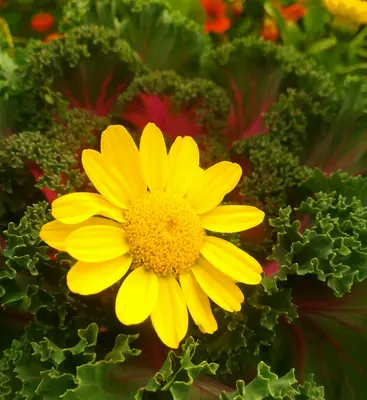
Flame Star performs very well in both spring and fall trials. Compared to Clementine and Cheddar, Flame Star is paler in color and more tolerant to heat and stress. Pastel-orange heads on medium-large plants.
Harvest
62d
Days to harvest
Sun
Full sun to partial shade
Zones
6–9
USDA hardiness
Height
10-24 inches
Planting Timeline
Showing dates for Flame Star in USDA Zone 7
All Zone 7 brassica →Zone Map
Click a state to update dates
Flame Star · Zones 6–9
Growing Details
Succession Planting
Flame Star takes 62 days to harvest and doesn't keep producing after you cut the head, so succession planting is worth the effort if you want more than one flush. In zone 7, start transplants indoors in late February, get them in the ground by mid-April, then start a second round of seeds indoors in early July for a fall crop — transplant those out in mid-August, and they'll head up in October when temperatures drop back into the 60s°F. Cauliflower heads poorly once daytime highs are consistently above 80°F, so a midsummer planting isn't worth the seed. Two rounds — one spring, one fall — is the practical ceiling for most Georgia gardens.
Complete Growing Guide
Flame Star performs very well in both spring and fall trials. Compared to Clementine and Cheddar, Flame Star is paler in color and more tolerant to heat and stress. Pastel-orange heads on medium-large plants. According to Johnny's Selected Seeds, Flame Star is 62 days to maturity, annual, hybrid (f1). Notable features: Heat Tolerant.
Light: Full sun (6 or more hours of direct sunlight a day), Partial Shade (Direct sunlight only part of the day, 2-6 hours). Soil: Clay, Loam (Silt), Sand. Soil pH: Acid (<6.0), Neutral (6.0-8.0). Drainage: Good Drainage, Moist. Height: 0 ft. 10 in. - 2 ft. 0 in.. Spread: 1 ft. 0 in. - 2 ft. 0 in.. Spacing: 12 inches-3 feet. Growth rate: Medium. Maintenance: Medium. Propagation: Seed, Stem Cutting. Regions: Coastal, Mountains, Piedmont.
Harvesting
Flame Star reaches harvest at 62 days from sowing per Johnny's Selected Seeds. As an annual, harvest continues until frost ends the season.
The fruits dry and split when ripe.
Color: Brown/Copper, Green. Type: Siliqua. Length: > 3 inches.
Garden value: Edible
Harvest time: Fall, Summer
Edibility: The foliage is edible raw or cooked but when cooked can emit an unpleasant odor.
Storage & Preservation
Harvest Flame Star cauliflower heads at full size with 2–3 inches of stem attached. Store immediately in a perforated plastic bag in the refrigerator's crisper drawer at 32–50°F with 85–95% humidity; properly stored heads keep for 7–10 days before yellowing and developing off-flavors. For longer storage, blanch florets for 3–4 minutes, cool quickly, then freeze in airtight containers for up to eight months. Flame Star's vibrant orange curds make excellent candidates for pickling—slice heads into florets, pack into jars with vinegar brine, and process for shelf stability. Dehydrating is also effective; slice thin, dry at 130°F until brittle, and store in airtight containers. The deep color intensity holds well through freezing and maintains its appeal in finished dishes better than paler varieties, making it particularly rewarding for batch preservation.
History & Origin
Flame Star is an F1 hybrid developed through controlled cross-pollination. Listed in the Johnny's Selected Seeds catalog.
Origin: W. Europe
Advantages
- +Flame Star performs exceptionally well in both spring and fall growing seasons.
- +Heat and stress tolerance makes it ideal for challenging climate conditions.
- +Matures quickly in just 62 days, allowing multiple harvests per year.
- +Medium-large plants produce pastel-orange heads with attractive appearance.
- +Easy difficulty rating makes it suitable for beginner gardeners.
Considerations
- -Paler color compared to Clementine and Cheddar may indicate less anthocyanin.
- -Pastel-orange coloring suggests potential sensitivity to certain nutrient deficiencies.
- -May require more careful monitoring in extreme temperature fluctuations.
Companion Plants
Onions are the most practical neighbors for Flame Star — their sulfur compounds confuse the cabbage moths scouting by smell, and they don't compete for the same root depth. Nasturtiums pull double duty as a trap crop for aphids, keeping those populations off the heads. Chamomile and dill attract parasitic wasps that prey on cabbageworms, and in our zone 7 Georgia garden that pressure kicks in as early as April, so having those beneficials already established before your transplants go in is worth the planning. Keep mustard out of the bed entirely — NC State Extension's IPM notes that mustard hosts the same insects that hammer brassicas and will sustain looper and cabbageworm populations right into your cauliflower. Tomatoes are a poor fit mostly because of spacing and water competition; they'll crowd Flame Star and turn pest scouting into a guessing game.
Plant Together
Onions
Repels cabbage maggots, aphids, and flea beetles with sulfur compounds
Lettuce
Grows well in shade of brassicas, efficient use of garden space
Spinach
Compatible root systems, similar growing conditions, good space utilization
Catnip
Repels flea beetles and aphids that commonly attack brassicas
Chamomile
May improve growth and flavor while attracting beneficial predatory insects
Nasturtium
Acts as trap crop for aphids and flea beetles, protects brassicas from pest damage
Marigold
Deters cabbage worms, aphids, and other brassica pests with strong scent
Dill
Attracts beneficial insects like parasitic wasps that control cabbage worms
Keep Apart
Tomatoes
Compete for nutrients and may stunt brassica growth through root competition
Strawberries
Inhibit brassica growth and compete for soil nutrients and space
Mustard
Same family plant that attracts similar pests and diseases, increases pest pressure
Nutrition Facts
Per 100g serving. % Daily Value based on 2,000 calorie diet. Source: USDA FoodData Central (FDC #747447)
Pests & Disease Resistance
Common Pests
Cabbage worms, cabbage loopers, flea beetles, whiteflies
Diseases
Black rot, clubroot, cauliflower mosaic virus
Troubleshooting Flame Star
What you'll see, why it happens, and what to do about it.
V-shaped yellow lesions on leaf edges, browning along the midrib veins, starting on older outer leaves
Likely Causes
- Black rot (Xanthomonas campestris pv. campestris) — a bacterial disease that enters through leaf margins and spreads inward through the vascular system
- Infected transplants or seed lots carrying the pathogen in
What to Do
- 1.Pull and trash affected leaves immediately — don't compost them
- 2.Stop overhead watering; switch to drip or base watering to keep foliage dry
- 3.Rotate this bed out of all brassicas (cauliflower, cabbage, kale, broccoli) for at least 2 seasons
Stunted, wilting plants with swollen, distorted roots that look like lumpy fists when you pull them
Likely Causes
- Clubroot (Plasmodiophora brassicae) — a soil-borne pathogen that thrives in acidic, poorly drained ground and can persist in the soil for 20+ years
- Low soil pH (below 6.0) that favors spore germination
What to Do
- 1.Pull and bag infected plants — do not compost, do not till the debris back in
- 2.Lime the bed to raise pH to 7.0–7.2; NC State Extension recommends this as the primary cultural control for clubroot in brassicas
- 3.Don't plant any brassica in that bed for at least 4 years — the spores are that persistent
Ragged holes chewed through leaves, pale caterpillars or green loopers visible on the undersides, dark frass pellets scattered across the developing head
Likely Causes
- Imported cabbageworm (Pieris rapae) — larvae of the white butterfly you see hovering around the bed
- Cabbage looper (Trichoplusia ni) — arches its body when it moves; both feed heavily on developing heads
What to Do
- 1.Spray Bt (Bacillus thuringiensis, strain kurstaki) every 5–7 days while caterpillars are small — it stops working once they're large
- 2.Cover transplants with row cover immediately after planting; a physical barrier is more reliable than any spray schedule
- 3.Hand-pick eggs — tiny yellow ovals laid singly on leaf undersides — before they hatch
Frequently Asked Questions
How long does Flame Star take to harvest?▼
Is Flame Star cauliflower good for beginners?▼
Can you grow Flame Star in containers?▼
What color are Flame Star cauliflower heads?▼
When should I plant Flame Star cauliflower?▼
Does Flame Star require full sun?▼
Zone-by-Zone Planting Calendar
| Zone | Indoor Start | Transplant | Direct Sow | Harvest |
|---|---|---|---|---|
| Zone 1 | April – May | June – July | June – July | August – September |
| Zone 2 | April – May | June – July | May – July | July – September |
| Zone 11 | January – January | January – February | January – February | February – December |
| Zone 12 | January – January | January – February | January – February | February – December |
| Zone 13 | January – January | January – February | January – February | February – December |
| Zone 3 | March – April | May – June | May – June | July – October |
| Zone 4 | March – April | May – June | April – June | June – October |
| Zone 5 | February – March | April – May | April – May | June – November |
| Zone 6 | February – March | April – May | April – May | June – November |
| Zone 7 | February – March | April – May | March – May | May – November |
| Zone 8 | January – February | March – April | March – April | May – December |
| Zone 9 | January – January | February – March | February – March | April – December |
| Zone 10 | January – January | February – March | January – March | March – December |
Growing Guides from Wind River Greens
Sources & References
External authority sources used in compiling this guide.
- BreederJohnny's Selected Seeds
- USDAUSDA FoodData Central
See the Methodology page for how this data is sourced, what's AI-assisted, and known limitations.