Fioretto 70
Brassica oleracea var. botrytis
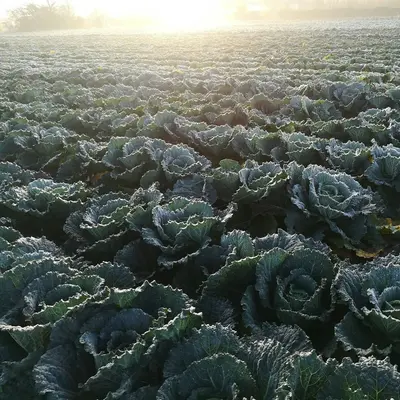
Most reliable sprouting cauliflower in our trials. The sweet and tender, light green stems with white florets are ideal for light cooking or serving raw for dipping. Eye-catching when paired with sprouting broccoli. Market heads whole, or cut and bunched. Stems will continue to elongate once heads form. Harvest anytime up to about 8" tall. NOTE: This variety can be difficult to grow. Requires moderate heat, but excess heat can result in purpling and uneven curds. Recommended temperature range: 60-80°F during head formation. We suggest trialing before implementing on a larger scale.
Harvest
70d
Days to harvest
Sun
Full sun to partial shade
Zones
6–9
USDA hardiness
Height
10-24 inches
Planting Timeline
Showing dates for Fioretto 70 in USDA Zone 7
All Zone 7 brassica →Zone Map
Click a state to update dates
Fioretto 70 · Zones 6–9
Growing Details
Succession Planting
Fioretto 70 comes in at 70 days and doesn't re-head meaningfully after the main harvest, so succession planting is worth planning out. In zone 7, start seeds indoors in late February and transplant in April for a late-June harvest, then start a second round indoors in late June for an August transplant and a mid-to-late October harvest. That fall planting catches the cooler temperatures that tighten the curd and improve flavor on most cauliflower types.
Don't run two rounds through the same bed without a rotation plan. NC State Extension's IPM guidance notes that planting the same family in the same spot in consecutive years builds pest and disease pressure — black rot and clubroot in particular persist in soil. Any bed coming out of brassicas should stay out of them for at least 3 years. Follow Fioretto with a legume crop to put nitrogen back before a heavier feeder moves in.
Complete Growing Guide
Most reliable sprouting cauliflower in our trials. The sweet and tender, light green stems with white florets are ideal for light cooking or serving raw for dipping. Eye-catching when paired with sprouting broccoli. Market heads whole, or cut and bunched. Stems will continue to elongate once heads form. Harvest anytime up to about 8" tall. NOTE: This variety can be difficult to grow. Requires moderate heat, but excess heat can result in purpling and uneven curds. Recommended temperature range: 60-80°F during head formation. We suggest trialing before implementing on a larger scale. According to Johnny's Selected Seeds, Fioretto 70 is 70 days to maturity, annual, hybrid (f1).
Light: Full sun (6 or more hours of direct sunlight a day), Partial Shade (Direct sunlight only part of the day, 2-6 hours). Soil: Clay, Loam (Silt), Sand. Soil pH: Acid (<6.0), Neutral (6.0-8.0). Drainage: Good Drainage, Moist. Height: 0 ft. 10 in. - 2 ft. 0 in.. Spread: 1 ft. 0 in. - 2 ft. 0 in.. Spacing: 12 inches-3 feet. Growth rate: Medium. Maintenance: Medium. Propagation: Seed, Stem Cutting. Regions: Coastal, Mountains, Piedmont.
Harvesting
Fioretto 70 reaches harvest at 70 days from sowing per Johnny's Selected Seeds. Expect 8" at peak. As an annual, harvest continues until frost ends the season.
The fruits dry and split when ripe.
Color: Brown/Copper, Green. Type: Siliqua. Length: > 3 inches.
Garden value: Edible
Harvest time: Fall, Summer
Edibility: The foliage is edible raw or cooked but when cooked can emit an unpleasant odor.
Storage & Preservation
Harvest Fioretto 70 heads when compact and firm, ideally in cool morning hours. Store immediately at 32–40°F with 90–95% humidity in perforated plastic bags or ventilated containers; properly stored heads will keep 2–3 weeks. For longer preservation, blanch florets for 3–4 minutes, cool rapidly in ice water, then freeze in airtight bags for up to 10 months. Alternatively, ferment florets with salt (5% by weight) in jars for a tangy condiment, or dry them slowly at 95–105°F until brittle for soups and broth. Because Fioretto 70's smaller, tender florets mature more quickly than standard varieties, harvest secondary side shoots promptly after the main head is cut to encourage continued production rather than storing the entire plant at once.
History & Origin
Fioretto 70 is an F1 hybrid developed through controlled cross-pollination. Listed in the Johnny's Selected Seeds catalog.
Origin: W. Europe
Advantages
- +Most reliable sprouting cauliflower variety based on trial results
- +Sweet, tender light green stems with white florets ideal for raw consumption
- +Stems continue elongating after head formation for extended harvest window
- +Eye-catching pale green color pairs beautifully with sprouting broccoli
- +Can be marketed whole or cut and bunched for flexibility
Considerations
- -Requires precise temperature control between 60-80°F during head formation
- -Excess heat causes purpling and uneven curds reducing market quality
- -Growers advised to trial before large-scale implementation due to difficulty
- -Sensitive to temperature fluctuations making consistent production challenging
Companion Plants
Onions and thyme are worth prioritizing near Fioretto 70. Onions' sulfur compounds disrupt the host-finding behavior of cabbage moths and aphids — both flagged by NC State Extension as common problems on this variety. Thyme works by a similar mechanism: its volatile oils interfere with cabbage loopers orienting toward brassica foliage. Nasturtiums pull their weight as a trap crop. Aphids find them before they find your cauliflower, which concentrates the problem in one easy-to-yank spot instead of spreading it across the whole bed.
Tomatoes and pole beans belong on the opposite end of the garden. Tomatoes compete for calcium and share enough soil-borne disease pressure with brassicas that planting them adjacent raises the risk of both crops suffering for it. Pole beans are an allelopathy problem — Brassica oleracea crops grown within a few feet of them show measurable yield suppression, and Fioretto 70 at 70 days to harvest can't afford to spend weeks recovering from a slow start.
Plant Together
Dill
Attracts beneficial insects like parasitic wasps that control cabbage worms
Onions
Repel cabbage moths, aphids, and flea beetles with their strong scent
Nasturtiums
Act as trap crops for aphids and flea beetles, protecting brassicas
Marigolds
Repel cabbage worms and other harmful insects with their strong fragrance
Lettuce
Grows well in partial shade of brassicas and doesn't compete for nutrients
Spinach
Compatible growth patterns and helps maximize garden space utilization
Carrots
Deep roots don't compete with shallow brassica roots, mutually beneficial
Thyme
Repels cabbage worms and other pests that commonly attack brassicas
Keep Apart
Strawberries
May inhibit brassica growth and compete for similar soil nutrients
Tomatoes
Can stunt brassica growth and both plants may suffer from shared diseases
Pole Beans
Can shade out brassicas and compete for nitrogen in the soil
Nutrition Facts
Per 100g serving. % Daily Value based on 2,000 calorie diet. Source: USDA FoodData Central (FDC #747447)
Pests & Disease Resistance
Common Pests
Cabbage moths, flea beetles, aphids, cabbage loopers
Diseases
Black rot, clubroot, cauliflower mosaic virus, downy mildew
Troubleshooting Fioretto 70
What you'll see, why it happens, and what to do about it.
Yellowing leaves with V-shaped lesions spreading from leaf margins, starting on older foliage around days 30–45
Likely Causes
- Black rot (Xanthomonas campestris pv. campestris) — bacterial disease that enters through leaf margins and spreads through the vascular system
- Infected transplants or contaminated seed
What to Do
- 1.Remove and trash affected leaves immediately — don't compost them
- 2.Water at the base, not overhead, to reduce splash transmission
- 3.Per NC State Extension's IPM guidance, rotate this bed out of all brassicas for at least 3 years before replanting
Small, irregular holes punched through leaves on young transplants within the first 2 weeks after setting out
Likely Causes
- Flea beetles — tiny, fast-jumping beetles that feed most aggressively on stressed transplants in warm soil above 50°F
- Transplant stress leaving plants vulnerable during establishment
What to Do
- 1.Cover transplants immediately with row cover (Agribon AG-19 or similar) and seal the edges — flea beetles will find any gap
- 2.Side-dress with compost at transplant to get roots established faster; a healthy plant at 18–24 inches spacing outgrows flea beetle damage more easily than a stressed one
- 3.Remove row cover once heads begin to form and daytime temps stay above 70°F
White or grayish coating on leaf undersides with corresponding yellow patches on top, appearing during cool, humid stretches
Likely Causes
- Downy mildew (Peronospora parasitica) — thrives when nights drop below 65°F and humidity stays high for several consecutive days
- Poor airflow from crowded spacing or weeds growing tight against the base of plants
What to Do
- 1.Thin or transplant to the full 18–24 inch spacing — cramped plants trap moisture and kill air movement
- 2.Strip affected leaves and put them in the trash, not the compost pile
- 3.Switch to drip irrigation or water early in the morning so foliage has time to dry before nightfall
Frequently Asked Questions
How long does Fioretto 70 take to grow from seed to first harvest?▼
Is Fioretto 70 good for beginners?▼
Can you grow Fioretto 70 in containers or pots?▼
What does Fioretto 70 taste like compared to standard cauliflower?▼
When should I plant Fioretto 70 for best results?▼
Fioretto 70 vs. sprouting broccoli—what's the difference?▼
Zone-by-Zone Planting Calendar
| Zone | Indoor Start | Transplant | Direct Sow | Harvest |
|---|---|---|---|---|
| Zone 1 | April – May | June – July | June – July | August – September |
| Zone 2 | April – May | June – July | May – July | July – September |
| Zone 11 | January – January | January – February | January – February | February – December |
| Zone 12 | January – January | January – February | January – February | February – December |
| Zone 13 | January – January | January – February | January – February | February – December |
| Zone 3 | March – April | May – June | May – June | July – October |
| Zone 4 | March – April | May – June | April – June | July – October |
| Zone 5 | February – March | April – May | April – May | June – November |
| Zone 6 | February – March | April – May | April – May | June – November |
| Zone 7 | February – March | April – May | March – May | May – November |
| Zone 8 | January – February | March – April | March – April | May – December |
| Zone 9 | January – January | February – March | February – March | April – December |
| Zone 10 | January – January | February – March | January – March | March – December |
Growing Guides from Wind River Greens
Sources & References
External authority sources used in compiling this guide.
- ExtensionNC State Extension
- BreederJohnny's Selected Seeds
- USDAUSDA FoodData Central
See the Methodology page for how this data is sourced, what's AI-assisted, and known limitations.