Denali
Brassica oleracea var. botrytis
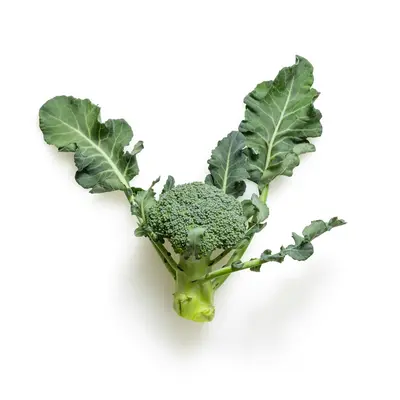
Heads are large, heavy, and self-wrapping. Good heat and humidity tolerances make Denali an excellent choice for summer sowings for fall harvest in Eastern conditions. Good for fall and winter in mild climates. Extensive root system makes it a good choice for plantings in fields with below-average fertility. Good for fresh market or florets. Widely adapted.
Harvest
73d
Days to harvest
Sun
Full sun to partial shade
Zones
6–9
USDA hardiness
Height
10-24 inches
Planting Timeline
Showing dates for Denali in USDA Zone 7
All Zone 7 brassica →Zone Map
Click a state to update dates
Denali · Zones 6–9
Growing Details
Succession Planting
Cauliflower produces one head per plant, so once Denali cuts, that bed slot is done — successions are worth planning. In zone 7, start seeds indoors in late February and transplant in April for a late-spring harvest around day 73 (mid-June). For a fall run, back-calculate from your first frost date: start a second round indoors in late June or early July and transplant by early August. Don't plan any succession that puts heads sizing up when daytime highs are consistently above 80°F — heat causes loose, ricey curds, and Denali won't recover once that happens.
Complete Growing Guide
Heads are large, heavy, and self-wrapping. Good heat and humidity tolerances make Denali an excellent choice for summer sowings for fall harvest in Eastern conditions. Good for fall and winter in mild climates. Extensive root system makes it a good choice for plantings in fields with below-average fertility. Good for fresh market or florets. Widely adapted. According to Johnny's Selected Seeds, Denali is 73 days to maturity, annual, hybrid (f1).
Light: Full sun (6 or more hours of direct sunlight a day), Partial Shade (Direct sunlight only part of the day, 2-6 hours). Soil: Clay, Loam (Silt), Sand. Soil pH: Acid (<6.0), Neutral (6.0-8.0). Drainage: Good Drainage, Moist. Height: 0 ft. 10 in. - 2 ft. 0 in.. Spread: 1 ft. 0 in. - 2 ft. 0 in.. Spacing: 12 inches-3 feet. Growth rate: Medium. Maintenance: Medium. Propagation: Seed, Stem Cutting. Regions: Coastal, Mountains, Piedmont.
Harvesting
Denali reaches harvest at 73 days from sowing per Johnny's Selected Seeds. As an annual, harvest continues until frost ends the season.
The fruits dry and split when ripe.
Color: Brown/Copper, Green. Type: Siliqua. Length: > 3 inches.
Garden value: Edible
Harvest time: Fall, Summer
Edibility: The foliage is edible raw or cooked but when cooked can emit an unpleasant odor.
Storage & Preservation
Store freshly harvested Denali heads in a perforated plastic bag in the refrigerator's crisper drawer, maintaining 32–40°F with 90–95% humidity. Properly stored heads remain fresh for 7–10 days. For longer preservation, freezing is ideal: blanch florets for three minutes, cool in ice water, drain thoroughly, and freeze in airtight containers or bags for up to eight months. Denali also freezes exceptionally well raw if you blanch immediately after harvest, retaining better texture than many other cauliflower varieties. Pickling is another excellent option—pack raw or lightly steamed florets into jars with vinegar, spices, and aromatics for a crisp, shelf-stable product. For drying, slice heads thinly, blanch briefly, and dry in a dehydrator at 130°F until brittle, though this method concentrates strong brassica flavors and is less commonly preferred than freezing.
History & Origin
Denali is an F1 hybrid developed through controlled cross-pollination. Listed in the Johnny's Selected Seeds catalog.
Origin: W. Europe
Advantages
- +Large, heavy heads with natural wrapping reduce processing labor
- +Excellent heat and humidity tolerance enables reliable summer plantings
- +Extensive root system performs well in below-average fertility fields
- +Versatile for fresh market sales or floret processing operations
- +Relatively fast maturity at 73 days suits fall harvest scheduling
Considerations
- -May require consistent moisture during hot weather to prevent splitting
- -Self-wrapping heads can trap moisture and increase disease pressure
- -Limited cold hardiness compared to winter-specific brassica varieties
- -Performance depends heavily on adequate spacing in dense plantings
Companion Plants
Onions and garlic are the most practical neighbors for Denali — their sulfur compounds help mask the scent cues that cabbage worms and flea beetles use to locate brassicas, and NC State's IPM guidance notes that mixing unrelated species can interrupt egg-laying by diluting a host plant's attractive odor. Nasturtiums pull double duty as a trap crop, drawing aphids onto themselves and off the forming curd. Tuck dill at the row ends — it draws parasitic wasps that prey on cabbage looper larvae. Tomatoes and strawberries belong on the other side of the garden entirely; both compete at overlapping root depths, and the crowding stress that results makes all three crops more susceptible to disease, which is a trade nobody wins.
Plant Together
Dill
Attracts beneficial insects like parasitic wasps that control cabbage worms
Nasturtiums
Acts as trap crop for aphids and flea beetles, draws pests away from brassicas
Onions
Repels cabbage root maggots, aphids, and other brassica pests with strong sulfur compounds
Marigolds
Deters nematodes and aphids while attracting beneficial predatory insects
Spinach
Provides ground cover and doesn't compete for nutrients, shares similar growing conditions
Lettuce
Makes efficient use of space as understory crop, matures quickly before brassica reaches full size
Garlic
Natural fungicide properties help prevent clubroot and other soil-borne diseases
Celery
Repels cabbage white butterflies and other brassica-specific pests
Keep Apart
Tomatoes
Compete for similar nutrients and may inhibit brassica growth through root competition
Strawberries
Brassicas can inhibit strawberry growth and fruit production through allelopathic compounds
Pole Beans
Can stunt brassica growth due to nitrogen competition and physical shading
Nutrition Facts
Per 100g serving. % Daily Value based on 2,000 calorie diet. Source: USDA FoodData Central (FDC #747447)
Pests & Disease Resistance
Common Pests
Cabbage worm, cabbage looper, imported cabbageworm, flea beetles, diamondback moth larvae
Diseases
Black rot, clubroot, yellows (fusarium wilt), powdery mildew
Troubleshooting Denali
What you'll see, why it happens, and what to do about it.
Irregular holes chewed through leaves, or leaves reduced to skeletal veins, starting 2-3 weeks after transplant
Likely Causes
- Imported cabbageworm (Pieris rapae larvae) — pale green caterpillars that blend into the head
- Cabbage looper (Trichoplusia ni) — arches its back as it moves, feeds heavily on outer wrapper leaves
- Diamondback moth larvae (Plutella xylostella) — smaller, wriggle off leaves when disturbed
What to Do
- 1.Inspect the undersides of leaves every 3-4 days and hand-pick egg clusters and larvae
- 2.Apply Bt (Bacillus thuringiensis) as a foliar spray in the evening; repeat every 5-7 days after rain
- 3.Cover transplants with floating row cover immediately after planting to block egg-laying adults
V-shaped yellow lesions on outer leaves, progressing inward, with blackened veins visible when you cut the stem
Likely Causes
- Black rot (Xanthomonas campestris pv. campestris) — bacterial disease that enters through leaf margins and spreads through vascular tissue
- Infected transplants or seed, or splash from overhead irrigation
What to Do
- 1.Remove and bag affected plants immediately — do not compost them
- 2.Switch to drip irrigation or water at the base to stop splash transmission
- 3.Rotate out of all brassicas (cabbage, broccoli, collards) in that bed for at least 2 seasons, per NC State Extension disease management guidance
Plants stunted and yellowing, roots knotted into lumpy galls when you pull one up
Likely Causes
- Clubroot (Plasmodiophora brassicae) — soil-borne pathogen that persists for years, thrives in acidic, wet conditions
- Moving infected transplants or soil between beds
What to Do
- 1.Test soil pH and lime to 7.0-7.2 — clubroot is far less active above pH 7.0
- 2.Pull and bag affected plants; don't move that soil to clean beds
- 3.Don't plant any brassica family crop in that spot for at least 4 years — NC State Extension notes that some pathogens do not disappear quickly once introduced
Frequently Asked Questions
How long does Denali cabbage take to mature?▼
Is Denali cabbage good for beginners?▼
When should I plant Denali cabbage for fall harvest?▼
Can Denali cabbage grow in poor soil?▼
What are the light requirements for Denali cabbage?▼
What is Denali cabbage good for?▼
Zone-by-Zone Planting Calendar
| Zone | Indoor Start | Transplant | Direct Sow | Harvest |
|---|---|---|---|---|
| Zone 3 | March – April | May – June | May – June | July – October |
| Zone 4 | March – April | May – June | April – June | July – October |
| Zone 5 | February – March | April – May | April – May | June – November |
| Zone 6 | February – March | April – May | April – May | June – November |
| Zone 7 | February – March | April – May | March – May | May – November |
| Zone 8 | January – February | March – April | March – April | May – December |
| Zone 9 | January – January | February – March | February – March | April – December |
| Zone 10 | January – January | February – March | January – March | March – December |
| Zone 1 | April – May | June – July | June – July | August – September |
| Zone 2 | April – May | June – July | May – July | July – September |
| Zone 11 | January – January | January – February | January – February | February – December |
| Zone 12 | January – January | January – February | January – February | February – December |
| Zone 13 | January – January | January – February | January – February | February – December |
Growing Guides from Wind River Greens
Sources & References
External authority sources used in compiling this guide.
- BreederJohnny's Selected Seeds
- USDAUSDA FoodData Central
See the Methodology page for how this data is sourced, what's AI-assisted, and known limitations.