Contender Green Beans
Phaseolus vulgaris 'Contender'
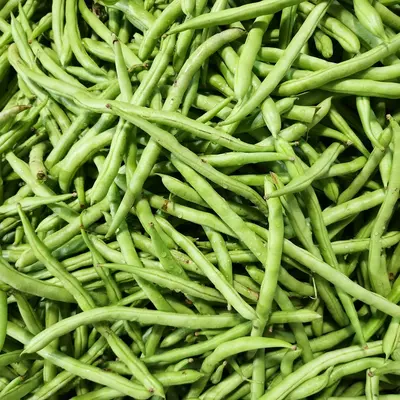
A reliable bush bean that's perfect for beginners and experienced gardeners alike. This hardy variety produces abundant yields of tender, stringless pods even in cool weather conditions. Contender's compact growth habit and disease resistance make it an excellent choice for home gardens with limited space.
Harvest
49-55d
Days to harvest
Sun
Full sun
Zones
2–11
USDA hardiness
Difficulty
Easy
Planting Timeline
Showing dates for Contender Green Beans in USDA Zone 7
All Zone 7 brassica →Zone Map
Click a state to update dates
Contender Green Beans · Zones 2–11
Growing Details
Succession Planting
Direct sow Contender every 10-14 days starting when soil temps hit 60°F, running through mid-July in zone 7. Each sowing gives you a roughly 7-10 day window at peak tenderness — pods are best pulled at 4-6 inches, before the seeds inside start to bulge and the texture goes tough. Staggered plantings prevent the all-at-once glut that bush beans are known for. Count 49-55 days back from your first expected frost to find your last safe sow date; in zone 7, that usually puts the final planting in late July to early August for a fall harvest before hard frost in late October.
Stop sowing once daytime highs are consistently above 90°F. Blossoms drop in that heat and pod set drops to nearly nothing. Pick back up in late July or early August once temperatures start to back off and you still have a full 55-day run ahead of you.
Complete Growing Guide
Contender green beans are best started by direct sowing seeds into the garden soil after your last spring frost date, as they germinate quickly and transplanting offers no real advantage. Wait until soil temperatures reach at least 60°F, though 70°F is ideal for fastest germination. You can sow seeds every two weeks through mid-summer for successive harvests, allowing you to enjoy continuous bean production rather than a single large crop. Direct sowing seeds about one inch deep, spaced four to six inches apart in rows, ensures vigorous seedling development. Once seedlings emerge in five to ten days, thin them to six inches apart if they're crowded, as Contender's compact bush habit still needs adequate air circulation.
Prepare your garden bed with well-draining soil enriched with compost or aged manure worked in several weeks before planting. Contender performs best in soil with a pH between 6.0 and 7.0. Unlike some legume varieties, these beans prefer soil that isn't overly nitrogen-rich at planting time, as excess nitrogen promotes leafy growth at the expense of pod production. A balanced fertilizer applied at flowering time, rather than at sowing, gives better results.
Water consistently throughout the season, providing about one inch per week through rainfall or irrigation. Deep, regular watering is especially important when flowers appear and pods are developing. Inconsistent watering can cause pod drop and reduce yields. Mulching around plants helps retain soil moisture and keeps roots cool during hot spells, which actually helps this variety set pods even when temperatures climb.
Watch closely for bean beetles, as Contender's foliage is attractive to them. Hand-pick beetles and their orange egg clusters from undersides of leaves, especially early in the season. Aphids and spider mites can weaken plants in dry conditions, so maintaining consistent moisture helps prevent infestations. Thrips may cause silvery streaking on pods but rarely affect overall yield significantly.
Contender's disease resistance is one of its major strengths, but bacterial blight and anthracnose can still occur during wet springs. Space plants adequately for air circulation, avoid working in wet foliage, and remove any diseased leaves promptly. Rust appears as rust-colored spots on leaf undersides; resistant varieties like Contender rarely succumb, but remove affected leaves if spotted.
One critical mistake gardeners make with Contender is allowing pods to mature too long on the plant. These beans are most tender and flavorful when picked young, around five to six inches long. Harvesting regularly every two to three days encourages more flower production and extended productivity. Allowing beans to mature fully and dry on the plant signals the plant that its reproductive duty is complete, causing it to slow or stop flowering altogether. Consistent picking keeps Contender productive throughout its season, maximizing your harvest from these reliable, compact plants.
Harvesting
Harvest Contender green beans when pods reach four to five inches long and display a bright, medium green color with a slightly glossy finish; they should snap crisply when bent and feel firm but not woody to the touch. For maximum productivity, pick pods every two to three days using a continuous harvest method rather than waiting for a single mature picking, as regular removal encourages the plant to produce additional flowers and beans throughout the season. The critical timing tip is to harvest in the early morning after dew has dried but before heat stress sets in, as pods are crispest and most tender at this time, and morning harvesting minimizes plant stress that could reduce subsequent yields.
The boat-shaped seed pods are bilaterally symmetrical and can be green, yellow, white, or purple at maturity. There is a wide variety of color and shape choices among cultivars.
Color: Gold/Yellow, Green, Purple/Lavender, White. Type: Legume. Length: > 3 inches. Width: < 1 inch.
Garden value: Edible, Good Dried
Harvest time: Fall, Summer
Storage & Preservation
Fresh Contender beans stay crisp for 5-7 days in the refrigerator when stored unwashed in perforated plastic bags. Avoid washing until ready to use, as excess moisture causes rapid deterioration.
For freezing, blanch whole pods in boiling water for 3 minutes, then immediately plunge into ice water. Drain thoroughly and freeze in portions you'll use within 8-10 months. Contender's tender texture makes it excellent for freezing—unlike tougher varieties, it maintains good quality when thawed.
For canning, use only tested recipes and proper canning methods due to beans' low acidity. Process in a pressure canner following USDA guidelines. Contender's uniform pod size makes it ideal for whole-pack canning methods. The variety also pickles well when harvested young—try dilly beans using 3-4 inch pods for best texture and flavor.
History & Origin
Contender green beans were introduced by the USDA in 1949 as a bush bean variety developed through conventional breeding to meet the needs of home gardeners and commercial producers seeking disease-resistant cultivars that could perform reliably in cooler climates. The variety emerged from the Agricultural Research Service's breeding program, which prioritized vigor, productivity, and pod quality in compact plants. While the specific parentage and primary breeder are not extensively documented in readily available sources, Contender represents the mid-twentieth-century effort to create dependable snap beans suitable for diverse growing regions. The variety gained popularity and remains a standard offering in seed catalogs today, valued for its consistent performance and beginner-friendly cultivation requirements.
Origin: Tropical America
Advantages
- +Produces abundant yields of tender, stringless pods in just 49-55 days.
- +Grows well in cool weather when many other bean varieties struggle.
- +Compact bush habit fits perfectly in small or container gardens.
- +Excellent disease resistance reduces need for fungicide treatments.
- +Perfect for beginner gardeners due to straightforward, low-maintenance care requirements.
Considerations
- -Susceptible to bacterial blight and anthracnose in humid or wet conditions.
- -Bean beetles and aphids frequently infest plants, requiring regular monitoring.
- -White mold can develop if soil moisture remains too high consistently.
- -Rust infection can reduce foliage health and pod production significantly.
Companion Plants
Marigolds — French marigolds (Tagetes patula) specifically — are worth planting along the border of your bean rows. Their root exudates have been shown to deter root-knot nematodes (Meloidogyne spp.), which will go after Phaseolus vulgaris roots without much hesitation. Nasturtiums earn their spot differently: they act as a trap crop for aphids, pulling infestations away from beans, and the open flowers bring in predatory wasps and ladybugs that do real work. Radishes tucked in 2-3 inches between bean seeds germinate in 5-7 days and break up the top few inches of soil crust before beans are even established — they're out of the ground before beans need the space.
Keep onions, garlic, and fennel on the other side of the garden. Alliums suppress bean germination and stunt early growth consistently enough that most extension sources treat them as flatly incompatible, even if the exact biochemical mechanism is still debated. Fennel is antagonistic to most vegetables and offers nothing in return — there's no companion benefit that outweighs the growth suppression it causes in a mixed planting.
Plant Together
Marigolds
Repel bean beetles and other harmful insects while attracting beneficial predators
Carrots
Improve soil structure and don't compete for nutrients, beans provide nitrogen for carrots
Nasturtiums
Act as trap crops for aphids and cucumber beetles, protecting beans
Radishes
Break up compacted soil and mature quickly without competing with beans
Corn
Provides natural support structure for climbing varieties and benefits from nitrogen fixation
Summer Squash
Large leaves provide ground cover and weed suppression, part of Three Sisters planting
Rosemary
Repels bean beetles and other pests with aromatic oils
Lettuce
Grows well in bean shade and doesn't compete for root space
Keep Apart
Onions
Inhibit growth and nitrogen fixation in bean roots through chemical compounds
Garlic
Stunts bean growth and interferes with beneficial root bacteria
Fennel
Allelopathic properties inhibit germination and growth of beans
Nutrition Facts
Per 100g serving. % Daily Value based on 2,000 calorie diet. Source: USDA FoodData Central (FDC #747447)
Pests & Disease Resistance
Resistance
Good resistance to common bean mosaic virus and powdery mildew
Common Pests
Bean beetles, aphids, spider mites, thrips
Diseases
Bacterial blight, rust, anthracnose, white mold
Troubleshooting Contender Green Beans
What you'll see, why it happens, and what to do about it.
Leaves and pods show small, water-soaked spots that turn brown with yellow halos, appearing 3-4 weeks after germination
Likely Causes
- Bacterial blight (Pseudomonas syringae pv. phaseolicola) — spreads rapidly in wet, cool conditions and splashes from soil to foliage
- Overhead watering that keeps foliage wet for extended periods
What to Do
- 1.Switch to drip irrigation or water at the base only — Contender is listed as sensitive to overhead moisture for exactly this reason
- 2.Pull and bin (don't compost) any heavily infected plants; the bacteria overwinter in debris
- 3.Rotate beans out of that bed for at least 2 seasons and start with certified disease-free seed next time
Small brick-red or orange pustules breaking through the undersides of leaves, usually showing up mid-season around day 35-45
Likely Causes
- Bean rust (Uromyces appendiculatus) — a fungal disease that spreads by airborne spores and accelerates in humid weather between 60-75°F
- Dense planting at less than 4 inches apart that traps moisture and cuts airflow
What to Do
- 1.Strip affected leaves and dispose of them in the trash, not the compost pile
- 2.Give plants the full 4-6 inch spacing called for — crowded rows are where rust takes hold fastest
- 3.Apply a sulfur-based fungicide at first sign if the planting is large; for a small bed, aggressive leaf removal usually keeps it from spreading
Frequently Asked Questions
How long does Contender green beans take to grow?▼
Can you grow Contender green beans in containers?▼
Are Contender green beans good for beginners?▼
What does Contender green beans taste like?▼
When should I plant Contender green beans?▼
Contender vs Provider green beans—what's the difference?▼
Zone-by-Zone Planting Calendar
| Zone | Indoor Start | Transplant | Direct Sow | Harvest |
|---|---|---|---|---|
| Zone 3 | March – April | May – June | May – June | June – October |
| Zone 4 | March – April | May – June | April – June | June – October |
| Zone 5 | February – March | April – May | April – May | June – November |
| Zone 6 | February – March | April – May | April – May | May – November |
| Zone 7 | February – March | April – May | March – May | May – November |
| Zone 8 | January – February | March – April | March – April | April – December |
| Zone 9 | January – January | February – March | February – March | March – December |
| Zone 10 | January – January | February – March | January – March | March – December |
| Zone 1 | April – May | June – July | June – July | July – September |
| Zone 2 | April – May | June – July | May – July | July – September |
| Zone 11 | January – January | January – February | January – February | February – December |
| Zone 12 | January – January | January – February | January – February | February – December |
| Zone 13 | January – January | January – February | January – February | February – December |
Growing Guides from Wind River Greens
Sources & References
External authority sources used in compiling this guide.
See the Methodology page for how this data is sourced, what's AI-assisted, and known limitations.