Cabbage 'Stonehead'
Brassica oleracea capitata 'Stonehead'
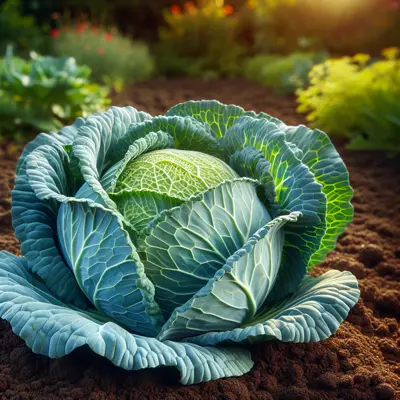
An award-winning hybrid that produces perfectly round, compact heads with exceptional storage quality. This reliable variety forms dense, 3-4 pound heads that resist splitting and maintain their quality in the garden longer than most cabbages. Stonehead's consistent performance and excellent flavor make it a top choice for home gardeners seeking reliability.
Harvest
70-80d
Days to harvest
Sun
Full sun to partial shade
Zones
6–9
USDA hardiness
Height
10-24 inches
Planting Timeline
Showing dates for Cabbage 'Stonehead' in USDA Zone 7
All Zone 7 brassica →Zone Map
Click a state to update dates
Cabbage 'Stonehead' · Zones 6–9
Growing Details
Succession Planting
Start seeds indoors in late February, then transplant out in April through early May for a spring crop. Once daytime highs are consistently above 80°F, stop — Stonehead will still form heads, but heat pushes it toward splitting and off flavor. Pick back up with an indoor sow in late July for fall transplants, aiming to get heads sizing up in the cooler stretch from October through November, which is where this variety performs best anyway.
For fall timing, count back 80 days from your average first frost date to set your transplant deadline. One spring planting and one fall planting covers most households; more than that and you'll be handing cabbage to everyone you know around week 10.
Complete Growing Guide
Start Stonehead seeds indoors 4-6 weeks before your last frost, or direct seed in late summer for fall harvest, as this hybrid thrives with consistent 60-70°F temperatures and becomes prone to bolting if exposed to prolonged heat above 75°F. Plant in full sun with rich, well-draining soil amended with nitrogen-rich compost, spacing plants 18-24 inches apart to allow air circulation that prevents clubroot and fungal issues this variety can develop in humid conditions. Unlike less compact varieties, Stonehead's dense head structure makes it particularly vulnerable to cabbage loopers and imported cabbageworms that hide between tightly packed leaves, so scout frequently and consider row covers early in the season. Water consistently at soil level—irregular moisture causes the splitting it's bred to resist, negating its key advantage. A practical tip: harvest heads when they feel rock-solid to the touch rather than waiting for maximum size, as Stonehead maintains quality and sweetness better when picked at 3-3.5 pounds.
Light: Full sun (6 or more hours of direct sunlight a day), Partial Shade (Direct sunlight only part of the day, 2-6 hours). Soil: Clay, Loam (Silt), Sand. Soil pH: Acid (<6.0), Neutral (6.0-8.0). Drainage: Good Drainage, Moist. Height: 0 ft. 10 in. - 2 ft. 0 in.. Spread: 1 ft. 0 in. - 2 ft. 0 in.. Spacing: 12 inches-3 feet. Growth rate: Medium. Maintenance: Medium. Propagation: Seed, Stem Cutting. Regions: Coastal, Mountains, Piedmont.
Harvesting
Harvest Stonehead cabbage when heads reach their characteristic dense, round shape and feel rock-hard when squeezed—a hallmark of this variety's exceptional solidity. Heads typically reach peak maturity at 3-4 pounds, displaying a uniform blue-green color without any soft spots. For continuous harvests, remove outer leaves weekly while leaving the central head to develop further, or cut entire heads at soil level once they achieve full firmness. A key timing tip: harvest in the morning after dew has dried, as this maximizes crispness and shelf life, and plan to cut before prolonged hot spells, which can trigger splitting despite Stonehead's natural resistance to this problem.
The fruits dry and split when ripe.
Color: Brown/Copper, Green. Type: Siliqua. Length: > 3 inches.
Garden value: Edible
Harvest time: Fall, Summer
Edibility: The foliage is edible raw or cooked but when cooked can emit an unpleasant odor.
Storage & Preservation
Fresh Stonehead heads store exceptionally well due to their dense structure and natural disease resistance. Remove loose outer leaves and store unwashed heads in perforated plastic bags in the refrigerator at 32-40°F with high humidity. Properly stored Stonehead maintains quality for 3-4 months, significantly longer than most cabbage varieties.
For longer preservation, Stonehead's firm texture makes it ideal for sauerkraut—its natural sugars ferment beautifully, creating complex flavors. The variety also freezes well when blanched for 3 minutes and shocked in ice water, though the texture becomes softer. Core and chop before blanching for best results.
For root cellaring, Stonehead excels when stored at 32-35°F with 90-95% humidity. Wrap individual heads in newspaper and store on wooden shelves, checking monthly and removing any that show soft spots. This method can extend storage to 5-6 months in ideal conditions.
History & Origin
Stonehead cabbage emerged from the hybrid breeding programs of the late twentieth century, developed to address home gardeners' demand for reliable, storage-resistant varieties. While specific breeder attribution remains undocumented in widely accessible horticultural records, this cultivar represents the culmination of decades of Brassica oleracea capitata improvement work, particularly the focus on compact head formation and disease resistance characteristic of modern American seed companies. The variety's award recognition and commercial success suggest institutional backing, likely from a major seed house, though historical documentation of its exact origin point and breeding lineage is limited in public archives.
Origin: W. Europe
Advantages
- +Award-winning hybrid with perfectly round, compact heads ideal for storage
- +Produces dense 3-4 pound heads that resist splitting in garden
- +Maintains quality longer than most cabbage varieties before harvesting
- +Sweet, mild flavor with crisp texture appeals to most gardeners
- +Reliable 70-80 day maturity fits well into typical growing seasons
Considerations
- -Susceptible to multiple pests including cabbage worms and flea beetles
- -Vulnerable to clubroot and fusarium yellows in poor soil conditions
- -Requires consistent moisture and nutrients for optimal head formation
Companion Plants
Onions, garlic, and celery are the most useful neighbors for Stonehead — their sulfur compounds can disrupt the egg-laying behavior of cabbage moths, though NC State Extension is upfront that the repellent evidence for garlic and marigolds is mixed at best. The real payoff from scattering these companions throughout the bed is what NC State's IPM guidance calls dilution: breaking up a solid block of host plants slows both insect spread and disease progression, buying you time to act. Nasturtiums earn a spot as a trap crop for aphids specifically — colonies pile onto them first, and you can yank the whole plant when it gets bad. Keep tomatoes and strawberries a full bed away; both compete for the consistent 1–1.5 inches of weekly moisture that Stonehead needs to size up without splitting, and tomatoes add shading that cool-season brassicas don't need.
Plant Together
Dill
Attracts beneficial insects like parasitic wasps that control cabbage worms
Onions
Repel cabbage root fly, aphids, and other brassica pests with strong scent
Nasturtiums
Act as trap crop for aphids and flea beetles, drawing pests away from cabbage
Marigolds
Repel nematodes and various garden pests while attracting beneficial insects
Celery
Improves growth and flavor of cabbage while repelling cabbage white butterflies
Lettuce
Provides living mulch, conserves soil moisture, and doesn't compete for nutrients
Garlic
Natural fungicide properties help prevent clubroot and other soil-borne diseases
Carrots
Deep roots complement shallow cabbage roots without competing for space
Keep Apart
Tomatoes
Compete for similar nutrients and may stunt cabbage growth through allelopathy
Strawberries
Both are heavy feeders that compete for nutrients, leading to poor growth
Pole Beans
Can shade cabbage and compete for nitrogen, reducing head formation
Nutrition Facts
Per 100g serving. % Daily Value based on 2,000 calorie diet. Source: USDA FoodData Central (FDC #169975)
Pests & Disease Resistance
Resistance
Good resistance to splitting and yellows disease
Common Pests
Cabbage worms, aphids, flea beetles, cutworms, cabbage root maggot
Diseases
Clubroot, black rot, fusarium yellows, downy mildew
Troubleshooting Cabbage 'Stonehead'
What you'll see, why it happens, and what to do about it.
Ragged holes chewed in leaves, sometimes down to the midrib, with small green caterpillars or frass visible on the outer leaves
Likely Causes
- Imported cabbageworm (Pieris rapae) — larvae from white butterflies you'll see hovering around the bed
- Cabbage looper (Trichoplusia ni) — similar damage, slightly larger caterpillar that loops when it moves
What to Do
- 1.Hand-pick caterpillars in the morning when they're easy to spot, and drop them in soapy water
- 2.Spray Bt (Bacillus thuringiensis) on the leaves every 5-7 days while butterflies are active — it only kills caterpillars, not beneficials
- 3.Cover transplants with row cover immediately after planting to block egg-laying entirely
Outer leaves wilting and yellowing, plant stunted overall, roots swollen and distorted when you pull one up
Likely Causes
- Clubroot (Plasmodiophora brassicae) — a soil-borne pathogen that is nearly impossible to eradicate once established
- Planting brassicas in the same bed two or more years running, which lets the pathogen build up in the soil
What to Do
- 1.Pull the plant and its entire root ball — bag it and trash it, do not compost it
- 2.Raise soil pH to at least 6.8 with lime; clubroot thrives below 6.0 and lime slows its spread significantly
- 3.Rotate brassicas — cabbage, broccoli, collards, kale — out of this bed for at least 3 years; NC State Extension confirms same-family crops should not follow each other in the same spot
V-shaped yellow lesions starting at leaf edges, leaves turning brown and papery, sometimes with a foul smell at the cut stem
Likely Causes
- Black rot (Xanthomonas campestris pv. campestris) — a bacterial disease that enters through leaf margins and moves into the vascular tissue
- Overhead watering or heavy rain that splashes contaminated soil onto leaves
- Starting with infected seed or transplants
What to Do
- 1.Remove and trash affected leaves or entire plants — black rot moves fast once it reaches the stem
- 2.Switch to drip irrigation or water at the base to keep foliage dry
- 3.Start with certified disease-free seed next season and move the bed out of brassicas for 2-3 years
Frequently Asked Questions
How long does Stonehead cabbage take to grow from seed?▼
Can you grow Stonehead cabbage in containers?▼
Is Stonehead cabbage good for beginners?▼
What does Stonehead cabbage taste like compared to other varieties?▼
When should I plant Stonehead cabbage for fall harvest?▼
Why are my Stonehead cabbage heads not forming properly?▼
Zone-by-Zone Planting Calendar
| Zone | Indoor Start | Transplant | Direct Sow | Harvest |
|---|---|---|---|---|
| Zone 1 | April – May | June – July | June – July | August – September |
| Zone 2 | April – May | June – July | May – July | August – September |
| Zone 11 | January – January | January – February | January – February | March – December |
| Zone 12 | January – January | January – February | January – February | March – December |
| Zone 13 | January – January | January – February | January – February | March – December |
| Zone 3 | March – April | May – June | May – June | July – October |
| Zone 4 | March – April | May – June | April – June | July – October |
| Zone 5 | February – March | April – May | April – May | June – November |
| Zone 6 | February – March | April – May | April – May | June – November |
| Zone 7 | February – March | April – May | March – May | June – November |
| Zone 8 | January – February | March – April | March – April | May – December |
| Zone 9 | January – January | February – March | February – March | April – December |
| Zone 10 | January – January | February – March | January – March | April – December |
Growing Guides from Wind River Greens
Sources & References
External authority sources used in compiling this guide.
See the Methodology page for how this data is sourced, what's AI-assisted, and known limitations.