Cabbage 'Red Express'
Brassica oleracea var. capitata 'Red Express'
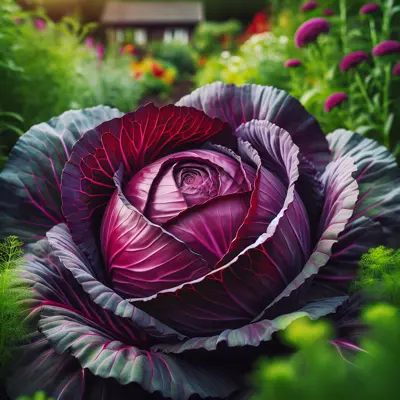
A compact, early-maturing hybrid that produces perfectly round, deep red-purple heads in just 76 days. This space-saving variety is ideal for small gardens and containers while delivering the crisp texture and peppery-sweet flavor that makes red cabbage a kitchen favorite. The uniform heads resist splitting and store exceptionally well.
Harvest
76-80d
Days to harvest
Sun
Full sun to partial shade
Zones
6–9
USDA hardiness
Height
10-24 inches
Planting Timeline
Showing dates for Cabbage 'Red Express' in USDA Zone 7
All Zone 7 brassica →Zone Map
Click a state to update dates
Cabbage 'Red Express' · Zones 6–9
Growing Details
Succession Planting
Red Express heads up in 76-80 days and doesn't keep producing after you cut it, so succession planting is the only way to avoid a glut followed by nothing. Start seeds indoors in late February, then sow a second round 3-4 weeks later. Transplant the first round out in April, the second in early May. That gap typically produces two distinct harvest windows — one in June, one pushing into early July before sustained heat shuts things down.
For a fall run, the UGA Vegetable Garden Calendar recommends counting back from your first frost date by days-to-maturity plus 18 days of harvest buffer. In zone 7, with a frost around November 15, that puts your fall transplant date in late August — which means starting seeds indoors in early August. Fall cabbage often outperforms spring; cooler nights tighten the heads, and the worst cabbageworm pressure has usually eased by September. Don't push transplants out after mid-September in zone 7 — they won't form heads before a hard freeze catches them.
Complete Growing Guide
With a compressed 76-day maturity, 'Red Express' demands consistent soil moisture and cool temperatures between 60–70°F to prevent premature bolting and ensure deep color development. This hybrid's compact 10–24 inch frame makes it excellent for succession planting in short-season regions, but start seeds indoors 4–6 weeks before your last spring frost to maximize the harvest window before summer heat arrives. Unlike slower cabbage varieties, 'Red Express' shows reduced susceptibility to clubroot when rotated properly, though it remains vulnerable to cabbage moths and flea beetles during the seedling stage—use row covers immediately after transplanting. The variety's natural head uniformity and resistance to splitting means you can harvest confidently without the extended storage window required by late-season types. Plant in nitrogen-rich, well-draining soil and pinch back seedlings at 3–4 weeks to encourage stockier, more compact plants that fit container gardens perfectly.
Light: Full sun (6 or more hours of direct sunlight a day), Partial Shade (Direct sunlight only part of the day, 2-6 hours). Soil: Clay, Loam (Silt), Sand. Soil pH: Acid (<6.0), Neutral (6.0-8.0). Drainage: Good Drainage, Moist. Height: 0 ft. 10 in. - 2 ft. 0 in.. Spread: 1 ft. 0 in. - 2 ft. 0 in.. Spacing: 12 inches-3 feet. Growth rate: Medium. Maintenance: Medium. Propagation: Seed, Stem Cutting. Regions: Coastal, Mountains, Piedmont.
Harvesting
Harvest Red Express cabbage when the heads reach full size and feel firm and dense to the touch, typically around 76-80 days after planting. The deep red-purple color should be uniformly rich across the entire head, indicating peak maturity and optimal sweetness. For maximum crispness, pick heads in the early morning after dew has dried but before afternoon heat sets in. Red Express produces a single main head per plant, so timing your harvest is crucial—cut at the base with a sharp knife once the head reaches 4-6 inches in diameter and resistance is felt when gently squeezed. While this variety resists splitting better than many cabbages, harvesting promptly after reaching peak firmness prevents any potential quality decline and ensures the best storage potential.
The fruits dry and split when ripe.
Color: Brown/Copper, Green. Type: Siliqua. Length: > 3 inches.
Garden value: Edible
Harvest time: Fall, Summer
Edibility: The foliage is edible raw or cooked but when cooked can emit an unpleasant odor.
Storage & Preservation
Fresh Red Express heads keep exceptionally well when stored properly. Remove damaged outer leaves and store unwashed heads in the refrigerator crisper drawer at 32-40°F with high humidity. Properly stored heads maintain quality for 3-4 months—significantly longer than most cabbage varieties.
For longer preservation, Red Express excels at fermentation due to its dense texture and balanced sugar content. Shred for traditional sauerkraut or quick-pickle in vinegar brine for refrigerator storage up to 6 months. The variety's natural purple pigments create stunning ferments.
Blanch and freeze shredded cabbage for cooked applications, though texture becomes softer. Red Express also dehydrates well—slice thinly and dry for soup mixes or grind into purple cabbage powder for natural food coloring. Avoid water-bath canning as the texture becomes mushy, but pressure canning works for soups and stews.
History & Origin
Red Express is a modern hybrid cabbage developed within the commercial breeding programs of professional seed companies focused on compact, early-maturing Brassica varieties for home gardeners and small-scale producers. While specific breeder attribution and introduction year remain undocumented in readily available horticultural records, this cultivar represents the continuation of intensive red cabbage breeding that accelerated during the late twentieth century. The variety draws from the established lineage of red cabbage (Brassica oleracea var. capitata), selectively bred for uniformity, disease resistance, and rapid maturation. Its 76-day maturity and compact growth habit exemplify modern hybrid vigor techniques applied to traditional red cabbage genetics, positioning it within contemporary seed catalogs rather than heritage or heirloom traditions.
Origin: W. Europe
Advantages
- +Matures in just 76 days, allowing multiple harvests per season.
- +Compact size makes it perfect for small gardens and container growing.
- +Perfectly round heads resist splitting even during heavy rainfall.
- +Stores exceptionally well for weeks without quality loss.
- +Crisp texture and mild peppery-sweet flavor appeals to most palates.
Considerations
- -Susceptible to clubroot, which can devastate soil for future crops.
- -Vulnerable to multiple pests including cabbage worms and flea beetles.
- -Requires consistent moisture and well-draining soil to prevent disease.
- -Less cold-hardy than some traditional late-season red cabbage varieties.
Companion Plants
Nasturtiums and marigolds are the two companions worth planting close to Red Express. Nasturtiums act as a trap crop — aphids pile onto them instead of your cabbage, giving you an early warning and a concentrated target you can spray or pull before the problem spreads. French marigolds (Tagetes patula) have a well-documented suppressive effect on soil nematodes when planted densely, though that benefit takes a full season to accumulate. For a 76-80 day crop like this one, the above-ground pest confusion is the more immediate return.
Dill, thyme, and celery are worth tucking into the bed edges. They pull in parasitic wasps that prey on cabbageworm larvae — the same caterpillars that will hollow out your heads if pressure is high and you're not using row cover. Onion and garlic in a border around the planting may slow down aphids and cabbage moths navigating by scent. It's not a guaranteed deterrent, but alliums run shallower roots than cabbage, so there's no real competition underground.
Tomatoes and strawberries are the ones to keep separated. Tomatoes compete hard for nitrogen and share several soil-borne pathogens with brassicas — putting them in the same bed is asking for trouble on both counts. Strawberries and cabbage are documented to suppress each other's growth; the exact mechanism is still debated, but the pattern shows up consistently enough in field observations that it's not worth testing. Pole beans are also off the list — they're thought to inhibit brassica development, and planted on the wrong side of the row, they'll shade a low-growing head crop through its entire 80-day run.
Plant Together
Nasturtium
Acts as trap crop for aphids and flea beetles, draws pests away from cabbage
Marigold
Repels cabbage worms, aphids, and other harmful insects with strong scent
Dill
Attracts beneficial insects like parasitic wasps that control cabbage worms
Onion
Repels cabbage maggots, aphids, and flea beetles with sulfur compounds
Celery
Repels cabbage white butterflies and provides ground cover to retain moisture
Lettuce
Grows well in cabbage's shade and doesn't compete for nutrients
Thyme
Repels cabbage worms and flea beetles while attracting beneficial insects
Garlic
Deters cabbage loopers, aphids, and cabbage root maggots with strong aroma
Keep Apart
Tomato
Competes for nutrients and may stunt cabbage growth due to allelopathic effects
Strawberry
Both plants attract similar pests and compete for soil nutrients
Pole Bean
Can shade cabbage excessively and compete for nitrogen in soil
Nutrition Facts
Per 100g serving. % Daily Value based on 2,000 calorie diet. Source: USDA FoodData Central (FDC #169975)
Pests & Disease Resistance
Resistance
Good resistance to fusarium yellows and black rot
Common Pests
Cabbage worms, cutworms, aphids, flea beetles
Diseases
Clubroot, black leg, downy mildew, white rust
Troubleshooting Cabbage 'Red Express'
What you'll see, why it happens, and what to do about it.
Ragged holes in leaves, or leaves skeletonized down to the midrib — most visible on young transplants in the first 2-3 weeks
Likely Causes
- Imported cabbageworm (Pieris rapae larvae) — look for pale green caterpillars and small yellow eggs on leaf undersides
- Flea beetles — tiny black beetles that leave a shotgun-hole pattern, especially bad on seedlings under 4 inches tall
What to Do
- 1.Cover transplants immediately with row cover (Agribon AG-19 or similar) and seal the edges — cabbage moths can't lay eggs through it
- 2.For active cabbageworm infestations, spray Bt (Bacillus thuringiensis) every 5-7 days; it only kills caterpillars and won't harm beneficials
- 3.Flea beetles usually back off once plants hit 6 inches and have several true leaves — row cover buys you that time
Plants wilt during the day even when soil is moist, look stunted, and pull up with a swollen, distorted root system — no normal taproot visible
Likely Causes
- Clubroot (Plasmodiophora brassicae) — a soil-borne pathogen that persists for 15-20 years in infected ground
- Planting brassicas in the same bed multiple seasons running, especially in acidic soil below pH 6.0
What to Do
- 1.Pull and trash (don't compost) every infected plant; clubroot spores spread through soil on tools and boots
- 2.Lime the bed to raise soil pH to 6.8 — clubroot activity drops sharply above that threshold
- 3.Rotate brassicas on a strict 3-4 year cycle and don't bring transplants in from unknown sources
Gray-purple fuzzy growth on the undersides of outer leaves, with yellowing patches on the upper surface — appears during cool, wet stretches
Likely Causes
- Downy mildew (Peronospora parasitica) — a fungus-like oomycete that thrives below 65°F with high humidity or overhead irrigation
- Crowded spacing under 12 inches that traps moisture between heads
What to Do
- 1.Strip affected outer leaves and dispose of them away from the garden — don't let them sit on the soil surface
- 2.Water at the base, not overhead, and do it early in the morning so foliage dries before nightfall
- 3.Give heads their full 12-15 inch spacing; airflow through the row makes a real difference with this disease
Frequently Asked Questions
How long does Red Express cabbage take to grow from seed?▼
Can you grow Red Express cabbage in containers?▼
Is Red Express cabbage good for beginners?▼
What does Red Express cabbage taste like compared to green cabbage?▼
When should I plant Red Express cabbage for fall harvest?▼
Why are my Red Express cabbage heads splitting open?▼
Zone-by-Zone Planting Calendar
| Zone | Indoor Start | Transplant | Direct Sow | Harvest |
|---|---|---|---|---|
| Zone 1 | April – May | June – July | June – July | August – September |
| Zone 2 | April – May | June – July | May – July | August – September |
| Zone 11 | January – January | January – February | January – February | March – December |
| Zone 12 | January – January | January – February | January – February | March – December |
| Zone 13 | January – January | January – February | January – February | March – December |
| Zone 3 | March – April | May – June | May – June | July – October |
| Zone 4 | March – April | May – June | April – June | July – October |
| Zone 5 | February – March | April – May | April – May | July – November |
| Zone 6 | February – March | April – May | April – May | June – November |
| Zone 7 | February – March | April – May | March – May | June – November |
| Zone 8 | January – February | March – April | March – April | May – December |
| Zone 9 | January – January | February – March | February – March | April – December |
| Zone 10 | January – January | February – March | January – March | April – December |
Growing Guides from Wind River Greens
Sources & References
External authority sources used in compiling this guide.
See the Methodology page for how this data is sourced, what's AI-assisted, and known limitations.