Burpee Hybrid Broccoli
Brassica oleracea var. italica 'Burpee Hybrid'
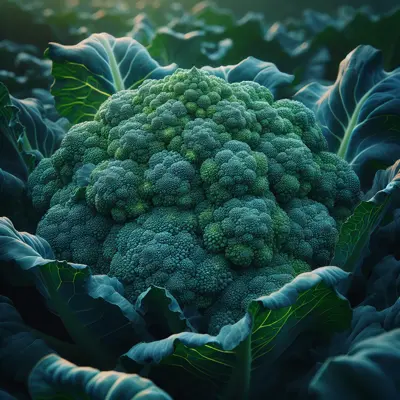
A reliable hybrid broccoli that produces large, tight heads with excellent uniformity and heat tolerance. This variety is prized for its ability to produce substantial side shoots after the main head is harvested, extending the harvest season significantly.
Harvest
70-80d
Days to harvest
Sun
Full sun to partial shade
Zones
6–9
USDA hardiness
Height
10-24 inches
Planting Timeline
Showing dates for Burpee Hybrid Broccoli in USDA Zone 7
All Zone 7 brassica →Zone Map
Click a state to update dates
Burpee Hybrid Broccoli · Zones 6–9
Growing Details
Succession Planting
Broccoli throws one main head, then smaller side shoots — so a single planting doesn't stretch your harvest the way cut-and-come-again greens do. You need staggered plantings. In zone 7, start a first round indoors in late February and transplant in April for a June harvest; then start a second round in mid-to-late July — UGA's Vegetable Garden Calendar recommends a half-shaded area for those summer starts — to transplant in September for a fall crop. That fall planting is usually the better one: cooler temperatures sweeten the heads and slow the aphid pressure you'll deal with all spring.
Space successions about 3 weeks apart within each season, but don't push past mid-August for fall starts in zone 7. Work backwards from your first frost date: 80 days to maturity plus 18 days for side-shoot harvest means your latest safe transplant lands around late September, which puts your seed-starting deadline at early August at the absolute latest.
Complete Growing Guide
Burpee Hybrid Broccoli thrives in cool-season conditions (60-70°F), so time spring plantings to mature before summer heat or start fall crops 70-80 days before first frost, as this cultivar excels in autumn harvests when temperatures moderate. Plant in rich, nitrogen-heavy soil with consistent moisture to prevent the bolting that can occur under heat stress; inconsistent watering particularly triggers premature flowering in this variety. This hybrid shows strong resistance to common Brassica diseases like clubroot and black rot, but monitor closely for cabbage worms and aphids, which are attracted to the tender new growth that emerges on its prolific side shoots. The cultivar's exceptional vigor produces substantial secondary heads after main-head removal—a defining characteristic—but avoid high-nitrogen fertilization during side-shoot development, which encourages excessive leafy growth over compact head formation. Plant seedlings deeply, burying stems up to the first true leaves, which strengthens the plant's ability to support its characteristically large primary head and multiple side shoots throughout an extended harvest window.
Light: Full sun (6 or more hours of direct sunlight a day), Partial Shade (Direct sunlight only part of the day, 2-6 hours). Soil: Clay, Loam (Silt), Sand. Soil pH: Acid (<6.0), Neutral (6.0-8.0). Drainage: Good Drainage, Moist. Height: 0 ft. 10 in. - 2 ft. 0 in.. Spread: 1 ft. 0 in. - 2 ft. 0 in.. Spacing: 12 inches-3 feet. Growth rate: Medium. Maintenance: Medium. Propagation: Seed, Stem Cutting. Regions: Coastal, Mountains, Piedmont.
Harvesting
Harvest Burpee Hybrid Broccoli when the main head reaches 4–7 inches in diameter with tightly clustered, deep green florets that feel firm to gentle pressure; the florets should not show any yellowing or flowering. This variety excels at producing abundant side shoots after the primary head is removed, enabling continuous harvesting over several weeks rather than a single-harvest approach—cut the main head at an angle 5–8 inches down the stem to encourage lateral bud development. Time your main harvest in early morning when stems are crisp and fully hydrated for optimal texture and flavor, then monitor side shoots closely as they develop, harvesting them when they reach 3–4 inches to maintain tenderness and promote further branching.
The fruits dry and split when ripe.
Color: Brown/Copper, Green. Type: Siliqua. Length: > 3 inches.
Garden value: Edible
Harvest time: Fall, Summer
Edibility: The foliage is edible raw or cooked but when cooked can emit an unpleasant odor.
Storage & Preservation
Fresh broccoli heads keep best in the refrigerator crisper drawer, wrapped loosely in perforated plastic bags. Burpee Hybrid maintains quality for 7-10 days when stored at 32-35°F with high humidity. Don't wash before storing—moisture accelerates deterioration.
For freezing, blanch florets in boiling water for 3 minutes, then plunge into ice water. Drain thoroughly and freeze in portions. Properly blanched Burpee Hybrid retains excellent texture and flavor for 8-12 months frozen.
Fermentation works wonderfully with this variety's tender stems and mild flavor. Chop heads and stems into small pieces for broccoli kimchi or add to mixed vegetable ferments. The stems pickle particularly well due to their crisp texture.
Dehydrating works best with the smaller side shoots—slice stems thinly and dry florets whole for adding to soups and stews.
History & Origin
Burpee Hybrid Broccoli emerged from W. Atlee Burpee Company's extensive vegetable breeding programs in the mid-twentieth century, though specific documentation of its exact development year and breeding lineage remains limited in publicly available horticultural records. The variety reflects Burpee's systematic approach to hybrid vigor in brassicas, combining desirable traits from conventional broccoli germplasm to achieve improved uniformity and heat tolerance. As a hybrid cultivar, it likely incorporated multiple parent lines selected for complementary characteristics, particularly enhanced side-shoot production and head consistency. While detailed breeding records are not widely accessible, Burpee's introduction of this variety exemplifies the company's broader commitment to developing practical, commercially viable vegetables for American home gardeners throughout the latter half of the twentieth century.
Origin: W. Europe
Advantages
- +Produces abundant side shoots extending harvest well beyond main head maturity
- +Excellent heat tolerance allows successful growing in warmer climates and seasons
- +Large, tight heads with uniform size perfect for commercial and home markets
- +Tender stems with mild, sweet flavor make entire plant enjoyable to eat
- +Reliable hybrid genetics ensure consistent performance across growing conditions
Considerations
- -Susceptible to clubroot, requiring careful crop rotation and soil management
- -Vulnerable to multiple pests including cabbage worms, loopers, and flea beetles
- -Moderate difficulty level demands attentive care for optimal head development
- -Downy mildew and black rot can devastate plants in humid, wet conditions
Companion Plants
Nasturtiums and marigolds are worth planting along the bed edges for different reasons. Nasturtiums act as a trap crop, drawing aphids away from the broccoli heads — you'll often see the nasturtiums buried in black aphid colonies while your heads stay clean. French marigolds are the better long-game choice if you've had nematode trouble in the bed before; NC State Extension recommends a solid planting of them in affected areas to reduce nematode populations before returning susceptible crops. Onions, garlic, and celery are good neighbors too — their volatile compounds tend to interfere with cabbage moths locating a place to lay eggs, and none of them compete hard for the 1–1.5 inches of weekly water broccoli needs.
Tomatoes are the companion to leave out. They're heavy feeders that want the same root zone and soil nutrients, and they do nothing to deter the caterpillar pressure broccoli faces — you're just stacking two demanding crops together with no upside. Mustard is the worse call: it shares the Brassicaceae family with broccoli, so tucking it nearby concentrates clubroot (Plasmodiophora brassicae) and black rot (Xanthomonas campestris pv. campestris) inoculum exactly where you don't want it.
Plant Together
Nasturtiums
Acts as trap crop for aphids and flea beetles, protecting broccoli from these pests
Marigolds
Repels cabbage worms, aphids, and other brassica pests with strong scent
Onions
Deters cabbage moths, aphids, and cabbage root maggots with sulfur compounds
Dill
Attracts beneficial insects like parasitic wasps that control cabbage worms
Lettuce
Provides ground cover and efficient space use without competing for nutrients
Spinach
Compatible growth habits and helps maximize garden space utilization
Celery
Repels cabbage white butterflies and other brassica pests
Garlic
Natural fungicide properties help prevent clubroot and other soil-borne diseases
Keep Apart
Tomatoes
Competes for similar nutrients and may stunt broccoli growth
Strawberries
Both plants inhibit each other's growth through allelopathic effects
Mustard
Same plant family attracts identical pests and diseases, increasing infestation risk
Nutrition Facts
Per 100g serving. % Daily Value based on 2,000 calorie diet. Source: USDA FoodData Central (FDC #747447)
Pests & Disease Resistance
Resistance
Good resistance to downy mildew and black rot
Common Pests
Cabbage worms, aphids, flea beetles, cabbage loopers
Diseases
Clubroot, black rot, downy mildew
Troubleshooting Burpee Hybrid Broccoli
What you'll see, why it happens, and what to do about it.
Leaves riddled with small, irregular holes — especially on young transplants in spring or fall
Likely Causes
- Flea beetles (Phyllotreta spp.) — tiny, jumping beetles that chew shotgun-pattern holes in brassica leaves
- Cabbage loopers (Trichoplusia ni) or imported cabbageworm (Pieris rapae) on larger, more ragged holes
What to Do
- 1.Cover transplants immediately with row cover (Agribon-19 or similar) and seal the edges — flea beetles find new transplants within hours
- 2.Hand-pick cabbage worm eggs (pale yellow, laid singly on leaf undersides) and caterpillars; drop them in soapy water
- 3.Spray Bt (Bacillus thuringiensis var. kurstaki) every 5-7 days while caterpillars are active — it only works on larvae, so timing matters
Plants wilting and yellowing despite adequate water, with roots that look stubby, swollen, or club-shaped when you pull one up
Likely Causes
- Clubroot (Plasmodiophora brassicae) — a soilborne pathogen that persists in soil for up to 20 years
- Planting brassicas in the same bed year after year without rotation
What to Do
- 1.Pull and bag the entire plant — roots and all — and put it in the trash, not the compost; the spores spread easily
- 2.Raise soil pH to 7.0-7.2 with lime before planting next season; clubroot is far less active above pH 7.0
- 3.Rotate brassicas on at least a 3-year cycle, keeping Brassica oleracea crops (broccoli, cabbage, kale) out of affected beds
Frequently Asked Questions
How long does Burpee Hybrid broccoli take to grow from seed?▼
Can you grow Burpee Hybrid broccoli in containers?▼
Is Burpee Hybrid broccoli good for beginners?▼
When should I plant Burpee Hybrid broccoli for fall harvest?▼
What does Burpee Hybrid broccoli taste like compared to store-bought?▼
How do you get more side shoots from Burpee Hybrid broccoli?▼
Zone-by-Zone Planting Calendar
| Zone | Indoor Start | Transplant | Direct Sow | Harvest |
|---|---|---|---|---|
| Zone 1 | April – May | June – July | June – July | August – September |
| Zone 2 | April – May | June – July | May – July | August – September |
| Zone 11 | January – January | January – February | January – February | March – December |
| Zone 12 | January – January | January – February | January – February | March – December |
| Zone 13 | January – January | January – February | January – February | March – December |
| Zone 3 | March – April | May – June | May – June | July – October |
| Zone 4 | March – April | May – June | April – June | July – October |
| Zone 5 | February – March | April – May | April – May | June – November |
| Zone 6 | February – March | April – May | April – May | June – November |
| Zone 7 | February – March | April – May | March – May | June – November |
| Zone 8 | January – February | March – April | March – April | May – December |
| Zone 9 | January – January | February – March | February – March | April – December |
| Zone 10 | January – January | February – March | January – March | April – December |
Growing Guides from Wind River Greens
Sources & References
External authority sources used in compiling this guide.
See the Methodology page for how this data is sourced, what's AI-assisted, and known limitations.