Bok Choy 'Joi Choi'
Brassica rapa chinensis 'Joi Choi'
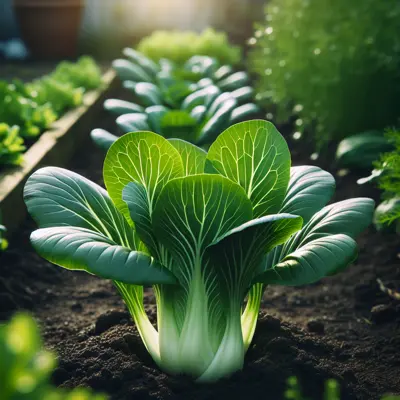
An All-America Selections winner that produces beautiful, uniform heads with crisp white stems and dark green leaves. This hybrid variety is slow to bolt and performs exceptionally well in both spring and fall gardens. Joi Choi's tender texture and mild flavor make it perfect for both raw and cooked applications.
Harvest
45-50d
Days to harvest
Sun
Full sun to partial shade
Zones
5–11
USDA hardiness
Height
3 feet
Planting Timeline
Showing dates for Bok Choy 'Joi Choi' in USDA Zone 7
All Zone 7 brassica →Zone Map
Click a state to update dates
Bok Choy 'Joi Choi' · Zones 5–11
Growing Details
Succession Planting
In zone 7, direct sow 'Joi Choi' every 14 days starting around March 15, continuing through late April. Each sowing gives you a 45–50 day harvest window before the next batch comes in. Stop once daytime highs are consistently above 80°F — the leaves toughen and the flavor turns sharp well before you'd see a full bolt. Pick back up with direct sowing in late August through mid-September for a fall run, which often produces the cleanest, most tender heads of the year.
For that fall succession, count backward from your first frost date (typically late November in zone 7) and make your last sowing no later than early October. A light frost down to 28°F actually sweetens the heads, so don't rush to pull them at the first cold snap — just have row cover ready if a harder freeze is coming.
Complete Growing Guide
Start by preparing your planting site with rich, well-draining soil amended with 2-3 inches of compost or aged manure. Joi Choi thrives in soil with a pH between 6.0-7.5 and benefits from organic matter that retains moisture while preventing waterlogged roots. This variety performs exceptionally well in both full sun and partial shade, making it ideal for spots that receive morning sun but afternoon protection in hot climates.
For spring plantings, you can direct sow seeds 2-3 weeks before your last frost date, as Joi Choi handles light frosts well. Plant seeds ¼ inch deep and space them 4-6 inches apart in rows 12-18 inches apart. If starting indoors, sow seeds 4-5 weeks before transplanting to give seedlings time to develop strong root systems. When transplanting, handle seedlings gently and plant them slightly deeper than they were in their containers to encourage sturdy stem development.
For fall crops, direct sow 10-12 weeks before your first expected frost. Fall plantings often produce the best flavor as cool weather enhances Joi Choi's natural sweetness and prevents premature bolting. In zones 9-10, you can succession plant every 2-3 weeks through winter for continuous harvests.
Fertilize with a balanced fertilizer (10-10-10) at planting, then side-dress with nitrogen-rich fertilizer like fish emulsion every 3-4 weeks during active growth. Joi Choi is a heavy feeder and responds well to consistent nutrition. Apply fertilizer to the soil around plants, not directly on leaves, to prevent burn.
Maintain consistent moisture with 1-1.5 inches of water weekly, including rainfall. Mulch around plants with straw or shredded leaves to retain moisture and suppress weeds. Avoid overhead watering late in the day, as wet leaves overnight can encourage fungal diseases.
Common mistakes include overcrowding (which leads to smaller heads), inconsistent watering (causing bitter flavor), and planting too late in spring when hot weather triggers bolting. To maximize yield, harvest outer leaves continuously once plants reach 6 inches tall, allowing centers to keep producing, or wait for full head development at 45-50 days for maximum size.
Harvesting
Harvest Joi Choi when heads reach 8-12 inches tall with fully developed white stems that are 1-2 inches wide at the base. The leaves should be dark green, crisp, and free from yellowing or wilting. You can begin harvesting baby leaves when plants are just 4-6 inches tall for tender salad greens, or wait for full maturity for the classic thick-stemmed bok choy.
For whole head harvest, cut at soil level with a sharp knife in early morning when plants are fully hydrated and crisp. The stems should make a clean snapping sound when bent – this indicates peak freshness and optimal water content. Avoid harvesting during the heat of the day when leaves may be slightly wilted from sun stress.
Joi Choi's slow-bolting nature means you have a wider harvest window than other varieties, but watch for flower stalks beginning to form in the center, which signals the end of prime eating quality. Once bolting begins, leaves become increasingly bitter and tough.
Storage & Preservation
Fresh Joi Choi stores best in the refrigerator wrapped loosely in plastic bags or stored in the crisper drawer, where it maintains quality for 5-7 days. Keep stems and leaves intact until ready to use, as cutting accelerates deterioration. Avoid washing before storage, as excess moisture promotes rot.
For longer preservation, blanch whole leaves or chopped pieces in boiling water for 2 minutes, then plunge into ice water before freezing. Frozen bok choy works well in cooked dishes but loses its crisp texture. Joi Choi also ferments beautifully into kimchi or quick pickles – its sturdy stems hold up well to fermentation. The thick white stems can be separately preserved by pickling in rice vinegar with ginger and garlic, creating a crunchy condiment that keeps for weeks refrigerated.
History & Origin
Joi Choi was developed by Sakata Seeds and earned recognition as an All-America Selections winner for its exceptional garden performance and uniform growth habit. This hybrid variety represents decades of selective breeding aimed at creating a bok choy that could reliably perform across diverse American growing conditions, from the cool springs of the Pacific Northwest to the challenging heat of Southern gardens.
The parent company, Sakata, has roots dating back to 1913 in Japan and has been instrumental in bringing Asian vegetables to Western gardens. Joi Choi was specifically bred to address common complaints about bok choy varieties available to American gardeners – namely inconsistent heading, early bolting, and poor heat tolerance. The name 'Joi Choi' reflects its hybrid nature, combining traditional Chinese naming conventions with modern breeding techniques.
This variety gained popularity in the 1990s as interest in Asian cuisine grew and home gardeners sought reliable varieties for growing their own stir-fry vegetables. Its All-America Selections status helped establish it as a standard variety in American seed catalogs.
Advantages
- +Exceptional bolt resistance allows extended harvest window even in variable spring weather
- +Produces uniformly sized heads with consistently thick, 1-2 inch white stems
- +All-America Selections winner proven to perform reliably across diverse climate zones
- +Tender leaves and mild flavor make it equally suitable for raw and cooked applications
- +Strong tip burn resistance prevents unsightly brown leaf edges common in other varieties
- +Compact growth habit makes it ideal for intensive planting and small garden spaces
- +Excellent succession planting variety with predictable 45-50 day maturity
Considerations
- -Higher seed cost compared to open-pollinated varieties due to hybrid nature
- -Cannot save seeds for next season as hybrid vigor won't transfer to offspring
- -Still susceptible to flea beetle damage on young seedlings despite good overall pest resistance
- -Requires consistent moisture and fertility to achieve advertised uniformity and size
- -May struggle in extremely hot, humid conditions despite improved heat tolerance
Companion Plants
Chives and onions are the most practical neighbors for 'Joi Choi.' Alliums emit sulfur compounds that disrupt aphid host-finding — and aphids will absolutely locate your bok choy given warm weather and a bit of nitrogen. Carrots slot in well too, their thin taproots working a different soil depth than bok choy's shallower root zone, so there's no real competition for moisture. Nasturtiums planted at the bed edges draw aphids and cabbage worms (Pieris rapae larvae) onto themselves first, giving you an early visual warning. In our zone 7 Georgia garden, that early-spring nasturtium border has saved more than one bed from going downhill before we even noticed pressure building.
Keep tomatoes well away — not for any allelopathic reason, but because they want soil temps above 70°F and heavy, consistent feeding that simply doesn't suit a cool-season crop trying to head up below 75°F. Pole beans are a subtler problem: their root nodules and lateral spread physically crowd brassica roots at the 6–10 inch depth, and the canopy shade slows 'Joi Choi' down at a stage when it needs full light to size up before heat arrives.
Plant Together
Dill
Attracts beneficial insects like parasitic wasps that control cabbage worms and aphids
Onions
Repels cabbage root maggots, aphids, and flea beetles with their strong sulfur compounds
Lettuce
Provides ground cover, conserves moisture, and doesn't compete for nutrients
Spinach
Similar growing requirements, efficient space usage, and harvest times complement each other
Carrots
Help break up soil for shallow bok choy roots and don't compete for space or nutrients
Nasturtiums
Act as trap crop for flea beetles and aphids, protecting bok choy from pest damage
Cilantro
Attracts beneficial insects and provides pest control without competing for root space
Chives
Natural pest deterrent against aphids and cabbage worms with their onion-like properties
Keep Apart
Tomatoes
Heavy feeders that compete for nutrients and may stunt bok choy growth
Strawberries
Can harbor slugs and snails that damage bok choy leaves
Pole Beans
Create too much shade for bok choy which needs consistent sunlight for proper growth
Nutrition Facts
Per 100g serving. % Daily Value based on 2,000 calorie diet. Source: USDA FoodData Central (FDC #2685572)
Pests & Disease Resistance
Resistance
Good resistance to bolting and tip burn
Common Pests
Flea beetles, aphids, cabbage worms, diamondback moth
Diseases
Clubroot, black rot, downy mildew, white spot
Troubleshooting Bok Choy 'Joi Choi'
What you'll see, why it happens, and what to do about it.
Tiny irregular holes punched through leaves, especially on seedlings in spring and fall
Likely Causes
- Flea beetles (Phyllotreta spp.) — they overwinter in soil and leaf litter, emerge hungry when temperatures hit the 50s and 60s°F
- Young transplants under 3 weeks old are especially vulnerable because they can't outgrow the damage fast enough
What to Do
- 1.Cover transplants or direct-seeded beds immediately with row cover (Agribon-15 or similar) and seal the edges — flea beetles will find any gap
- 2.If plants are already getting hit, sprinkle diatomaceous earth around the base and reapply after rain
- 3.Once 'Joi Choi' gets past 6 inches tall and the leaves thicken up, flea beetle pressure matters a lot less — keep the cover on until then
Yellow V-shaped lesions starting at leaf margins, leaves browning and collapsing from the edges inward
Likely Causes
- Black rot (Xanthomonas campestris pv. campestris) — a bacterial disease that enters through leaf margins and spreads through the vascular tissue
- Overhead irrigation or heavy rain splashing contaminated soil onto leaves
- Planting into a bed that grew brassicas the previous season
What to Do
- 1.Pull and bag affected plants — don't compost them, black rot persists in plant debris
- 2.Switch to drip irrigation or water at the base; keeping leaves dry cuts transmission significantly
- 3.Rotate this bed out of all brassicas (cabbage, kale, broccoli, turnips) for at least 2 full seasons before replanting
Frequently Asked Questions
How long does Joi Choi bok choy take to grow?▼
Can you grow Joi Choi bok choy in containers?▼
Is Joi Choi bok choy good for beginners?▼
What does Joi Choi bok choy taste like?▼
When should I plant Joi Choi bok choy?▼
Joi Choi vs regular bok choy - what's the difference?▼
Zone-by-Zone Planting Calendar
| Zone | Indoor Start | Transplant | Direct Sow | Harvest |
|---|---|---|---|---|
| Zone 1 | April – May | June – July | June – July | July – September |
| Zone 2 | April – May | June – July | May – July | July – September |
| Zone 11 | January – January | January – February | January – February | February – December |
| Zone 12 | January – January | January – February | January – February | February – December |
| Zone 13 | January – January | January – February | January – February | February – December |
| Zone 3 | March – April | May – June | May – June | June – October |
| Zone 4 | March – April | May – June | April – June | June – October |
| Zone 5 | February – March | April – May | April – May | June – November |
| Zone 6 | February – March | April – May | April – May | May – November |
| Zone 7 | February – March | April – May | March – May | May – November |
| Zone 8 | January – February | March – April | March – April | April – December |
| Zone 9 | January – January | February – March | February – March | March – December |
| Zone 10 | January – January | February – March | January – March | March – December |
Growing Guides from Wind River Greens
Sources & References
External authority sources used in compiling this guide.
See the Methodology page for how this data is sourced, what's AI-assisted, and known limitations.