Biker
Allium porrum
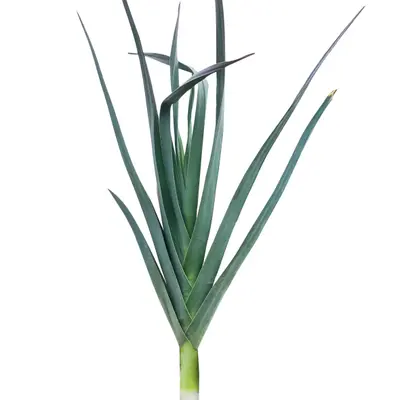
Shanks bulk up quickly by mid-early season and resist bulbing for easy stripping. Performs well across the US and maintains high quality, even at a large size. An easy replacement for Jumper, which was discontinued by our supplier. Primed seed.
Harvest
90d
Days to harvest
Sun
Full sun to partial shade
Zones
4–9
USDA hardiness
Height
1-3 feet
Planting Timeline
Showing dates for Biker in USDA Zone 7
All Zone 7 allium →Zone Map
Click a state to update dates
Biker · Zones 4–9
Growing Details
Succession Planting
Direct sow Biker leeks every 3–4 weeks from March through early May in zone 7. At 90 days to harvest, each sowing needs a full run before fall shuts things down — a May 1 sowing gets you to harvest by late August, which works fine. Don't push past mid-May or you'll be racing the first hard freeze in November with shanks that haven't sized up.
Leeks don't bolt in summer heat the way lettuce does, so the cutoff isn't temperature — it's the frost calendar. In zones 4–6, move your last sowing no later than early April to guarantee 90 days before your first fall frost date.
Complete Growing Guide
Shanks bulk up quickly by mid-early season and resist bulbing for easy stripping. Performs well across the US and maintains high quality, even at a large size. An easy replacement for Jumper, which was discontinued by our supplier. Primed seed. According to Johnny's Selected Seeds, Biker is 90 days to maturity, hybrid (f1). Disease resistance includes Purple Blotch, Common Rust, White Tip.
Light: Full sun (6 or more hours of direct sunlight a day), Partial Shade (Direct sunlight only part of the day, 2-6 hours). Soil: High Organic Matter, Loam (Silt), Sand. Drainage: Good Drainage. Height: 1 ft. 0 in. - 3 ft. 0 in.. Spread: 0 ft. 6 in. - 2 ft. 0 in.. Spacing: Less than 12 inches. Growth rate: Medium. Maintenance: Low. Propagation: Division. Regions: Coastal, Mountains, Piedmont.
Harvesting
Biker reaches harvest at 90 days from sowing per Johnny's Selected Seeds.
The capsule splits longitudinally and contains small round black seeds.
Type: Capsule.
Storage & Preservation
Harvest Biker leeks at 90 days and store unwashed in a perforated plastic bag in the refrigerator's lower drawer, where they'll keep for 2–3 weeks at 32–40°F with 90–95% humidity. For longer storage, trim roots and tops, wrap individually in damp paper towels, and they'll last 4–6 weeks. Freezing works well: blanch 2-minute segments for 3 minutes, cool in ice water, then pack into freezer bags for up to 8 months. Biker's mild, slightly sweet flavor holds up excellently when frozen for soups and stews. You can also dry thin slices in a low oven (200°F) until papery, then store in airtight containers for winter seasoning. For fermentation, slice and salt at 2–3%, pressing under brine for a tangy condiment ready in 1–2 weeks. Avoid washing until just before use, as moisture accelerates decay.
History & Origin
Biker is an F1 hybrid developed through controlled cross-pollination. Listed in the Johnny's Selected Seeds catalog.
Origin: Northern Hemisphere, North America and Eurasia
Advantages
- +Shanks bulk up quickly, reaching harvestable size by mid-early season
- +Resists bulbing tendency, making stripping and processing much easier
- +Performs reliably across diverse US growing regions and climates
- +Maintains excellent quality even when allowed to grow large
- +Direct replacement for discontinued Jumper variety with proven performance
Considerations
- -Primed seed requires careful storage and handling to maintain viability
- -May struggle in poorly draining soils prone to waterlogging issues
- -Large mature size demands consistent nitrogen fertility throughout season
Companion Plants
Carrots and leeks are a genuinely useful pairing — leeks deter carrot fly (Psila rosae) and carrots reportedly return the favor against onion fly (Delia antiqua), though the effect is stronger when the two are interplanted in alternating rows rather than separate blocks. Brassicas and lettuce work well nearby because they share similar water needs and don't compete hard for root space alongside leeks set at 4–6 inches. Marigolds (Tagetes spp.) at the bed edges pull in generalist predators and may confuse thrips — which matters more on alliums than on most crops, given how reliably Thrips tabaci finds them by mid-season.
Beans and peas are the ones to keep separated. Alliums produce sulfur compounds that suppress the nitrogen-fixing Rhizobium bacteria legumes depend on — plant them within a few feet of each other and your bean yields take a measurable hit. Asparagus competes at the root level and both crops sit in the ground long enough that crowding becomes a real problem, not a theoretical one.
Plant Together
Tomatoes
Alliums repel aphids, whiteflies, and spider mites that commonly attack tomatoes
Carrots
Alliums deter carrot rust fly while carrots help break up soil for allium bulbs
Brassicas
Alliums repel cabbage worms, flea beetles, and aphids that damage cabbage family plants
Lettuce
Alliums provide natural pest control against aphids and slugs without competing for nutrients
Roses
Alliums repel aphids, thrips, and may help reduce black spot and other fungal diseases
Peppers
Alliums deter aphids, spider mites, and may help repel pepper maggots
Strawberries
Alliums repel slugs, aphids, and nematodes that commonly damage strawberry plants
Marigolds
Both plants repel similar pests and marigolds may enhance allium's pest-deterrent properties
Keep Apart
Beans
Alliums can inhibit nitrogen fixation by rhizobia bacteria in legume root nodules
Peas
Sulfur compounds from alliums may interfere with pea growth and nitrogen fixation
Asparagus
Alliums can stunt asparagus growth through allelopathic chemical interactions
Nutrition Facts
Per 100g serving. % Daily Value based on 2,000 calorie diet. Source: USDA FoodData Central (FDC #170000)
Pests & Disease Resistance
Resistance
Common Rust (Intermediate); Purple Blotch (Intermediate); White Tip (Intermediate)
Common Pests
Onion flies, thrips, armyworms
Diseases
Fusarium basal rot, white rot, botrytis
Troubleshooting Biker
What you'll see, why it happens, and what to do about it.
Leaf tips browning and silvery streaking on the outer leaves, appearing from mid-season onward
Likely Causes
- Thrips (Thrips tabaci) — tiny, hard to see without squinting, they rasp the leaf surface and leave behind that papery silver damage
- Dry conditions that stress the plant and make it more attractive to thrips
What to Do
- 1.Spray with insecticidal soap or spinosad in the early morning, getting inside the leaf folds where thrips hide
- 2.Keep soil consistently moist — water stress makes leeks pull thrips in faster than healthy plants do
- 3.Remove and trash heavily damaged outer leaves to cut down the population sheltering on the plant
Plants wilting and yellowing at the base, with the lower stem turning brown and soft around day 60–75
Likely Causes
- Fusarium basal rot (Fusarium oxysporum f. sp. porri) — soil-borne, spreads through infected transplants or contaminated beds
- White rot (Sclerotium cepivorum) — similar presentation but look for fluffy white mycelium and tiny black sclerotia at the base
What to Do
- 1.Pull affected plants immediately and bag them for the trash — do not compost
- 2.Rotate out of alliums for at least 3–4 years in that bed; white rot sclerotia can persist in soil for 20+ years
- 3.Next planting, start with certified disease-free seed or transplants and switch to drip irrigation to keep foliage dry
Ragged, chewed holes through the flag leaves, with frass (dark green pellets) visible in the leaf folds
Likely Causes
- Armyworms (Spodoptera spp.) — larvae feed at night, so you may not catch them in the act
- Onion flies (Delia antiqua) — larvae tunnel toward the base, but early feeding looks like surface chewing
What to Do
- 1.Check the leaf folds after dark with a headlamp; hand-pick armyworm caterpillars and drop them in soapy water
- 2.Apply Bt (Bacillus thuringiensis) to target armyworm larvae while they're still small — it loses effectiveness once they're past the second instar
- 3.Cover transplants with row cover immediately after planting to block onion fly egg-laying at the soil line
Frequently Asked Questions
How long does Biker Allium take to harvest?▼
Is Biker a good allium variety for beginners?▼
How much space do Biker Allium plants need?▼
Can Biker Allium resist bulbing during harvest season?▼
What light conditions does Biker Allium prefer?▼
What does Biker Allium taste like and how is it used?▼
Zone-by-Zone Planting Calendar
| Zone | Indoor Start | Transplant | Direct Sow | Harvest |
|---|---|---|---|---|
| Zone 3 | — | — | May – June | August – October |
| Zone 4 | — | — | April – June | July – October |
| Zone 5 | — | — | April – May | July – November |
| Zone 6 | — | — | April – May | July – November |
| Zone 7 | — | — | March – May | June – November |
| Zone 8 | — | — | March – April | June – December |
| Zone 9 | — | — | February – March | May – December |
| Zone 10 | — | — | January – March | April – December |
| Zone 1 | — | — | June – July | September – September |
| Zone 2 | — | — | May – July | August – September |
| Zone 11 | — | — | January – February | March – December |
| Zone 12 | — | — | January – February | March – December |
| Zone 13 | — | — | January – February | March – December |
Growing Guides from Wind River Greens
Sources & References
External authority sources used in compiling this guide.
- ExtensionNC State Extension
- BreederJohnny's Selected Seeds
- USDAUSDA FoodData Central
See the Methodology page for how this data is sourced, what's AI-assisted, and known limitations.