Innovator
Allium cepa var. aggregatum
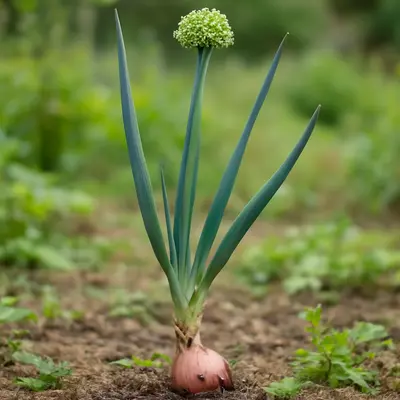
A Conservor type with elongated singular bulbs with reddish-bronze skins. Suitable for long storage. Adaptation: 40-60° latitude.
Harvest
110d
Days to harvest
Sun
Full sun
Zones
5–10
USDA hardiness
Height
12-18 inches
Planting Timeline
Showing dates for Innovator in USDA Zone 7
All Zone 7 allium →Zone Map
Click a state to update dates
Innovator · Zones 5–10
Growing Details
Succession Planting
Direct sow Innovator from March through early May in zone 7, spacing seeds about 1 inch apart in the row and thinning to 4–6 inches once they're a few inches tall. Get your last sowing in the ground by May 10 — at 110 days to harvest, anything later risks running into the hardest stretch of Georgia summer heat before the bulbs have finished sizing up. Two or three small sowings staggered 3 weeks apart will stretch your harvest window from July into fall without overwhelming you at once.
Don't try a fall succession with this variety. Germination drops off sharply once soil temperatures fall below 50°F, and Innovator isn't bred for overwintering. If you want an allium in the fall garden, plant garlic cloves in October or switch to a multiplier onion type that's actually suited to that window.
Complete Growing Guide
A Conservor type with elongated singular bulbs with reddish-bronze skins. Suitable for long storage. Adaptation: 40-60° latitude. According to Johnny's Selected Seeds, Innovator is 110 days to maturity, annual, hybrid (f1).
Light: Full sun (6 or more hours of direct sunlight a day). Soil: High Organic Matter, Loam (Silt), Sand. Soil pH: Alkaline (>8.0), Neutral (6.0-8.0). Drainage: Good Drainage, Moist. Height: 1 ft. 0 in. - 1 ft. 6 in.. Spread: 0 ft. 6 in. - 1 ft. 0 in.. Spacing: Less than 12 inches, 12 inches-3 feet. Maintenance: Medium. Regions: Coastal, Mountains, Piedmont.
Harvesting
Innovator reaches harvest at 110 days from sowing per Johnny's Selected Seeds. As an annual, harvest continues until frost ends the season.
Flowers wither and convert to bulblets
Type: Capsule.
Harvest time: Summer
Edibility: The bulb and tops are edible raw or cooked. However, the plant also has poisonous characteristics as noted in the "Poisonous to Humans" section of this record. Toxicity can depend on the age of the person or animal, the age of the plant, the part of the plant ingested, how much is ingested, whether the person or animal has sensitivities or allergies, whether it's eaten raw or cooked, and so forth. Consult with a medical professional for further details.
Storage & Preservation
After harvesting at 110 days, cure Innovator shallots in a warm, well-ventilated space (70–75°F, low humidity) for two to three weeks until the outer skin papery and the neck fully sealed. Store in mesh bags or open crates at 50–60°F with 65–70% humidity; properly cured bulbs keep four to six months. For longer preservation, dry thin slices in a dehydrator at 125°F until brittle, then store in airtight containers away from light. Freezing works well for minced or sliced shallots—blanch briefly if desired, though many gardeners freeze raw without loss of flavor. Pickling is particularly suited to Innovator's mild, sweet profile; pack peeled bulbs in vinegar brine for shelf-stable results. A useful trick specific to this variety: its small, tightly clustered cloves make it ideal for whole-bulb pickling, producing an elegant preserved product that holds texture better than larger onion varieties.
History & Origin
Innovator is an F1 hybrid developed through controlled cross-pollination. Listed in the Johnny's Selected Seeds catalog.
Origin: Central Asia and central Persia
Advantages
- +Excellent long-term storage capability due to reddish-bronze skin protection
- +110-day maturity fits well within temperate growing seasons
- +Reliable performer at 40-60° latitude without special interventions
- +Easy cultivation makes it ideal for beginner gardeners
- +Elongated bulb shape offers practical handling and consistent sizing
Considerations
- -Limited yield per plant compared to some multiplier onion varieties
- -Bronze skin requires careful curing to prevent storage rot
- -Performs poorly outside 40-60° latitude range; climate-sensitive
- -Susceptible to typical Allium diseases in humid conditions
Companion Plants
Carrots pair well with Innovator for a practical root-depth reason: carrots forage at 12–18 inches down while shallot-type aggregatums stay shallower, so they're not fighting for the same water or nutrients. Carrot scent may also interfere with host-location by onion flies (Delia antiqua) — the research on that is thin, but the root-depth logic alone justifies the planting. Tomatoes and peppers work as row neighbors because they want the same loose, well-amended, consistently moist soil you'd prepare for Innovator anyway; one irrigation run covers the whole block.
Lettuce is worth tucking into any gaps between clusters. It's shallow-rooted and fast — in our zone 7 Georgia garden, you can pull a full lettuce harvest by late May and have the bed cleared out well before Innovator needs that space to size up through summer.
Beans and peas should stay at least a bed away. Alliums release sulfur compounds that inhibit the rhizobial bacteria legumes depend on for nitrogen fixation. You won't see dramatic die-off, but your beans will set fewer pods and fix less nitrogen than they would in clean ground — and Innovator gets nothing out of the proximity to offset that cost. Asparagus is a non-starter for a different reason entirely: it's a 15–20 year perennial, and rotating alliums in and out of that bed on any kind of disease-management schedule simply isn't possible.
Plant Together
Tomatoes
Alliums repel aphids, spider mites, and hornworms that commonly attack tomatoes
Carrots
Alliums deter carrot flies while carrots help break up soil for allium bulbs
Cabbage
Alliums repel cabbage worms, aphids, and flea beetles from brassicas
Roses
Alliums deter aphids and may reduce black spot disease in roses
Lettuce
Alliums repel aphids and slugs while providing natural pest protection
Peppers
Alliums deter aphids and may improve pepper growth and flavor
Strawberries
Alliums repel aphids, slugs, and nematodes that damage strawberry plants
Cucumbers
Alliums deter cucumber beetles and aphids while improving overall plant health
Keep Apart
Beans
Alliums can inhibit nitrogen fixation and stunt bean growth
Peas
Alliums interfere with nitrogen-fixing bacteria and can reduce pea yields
Asparagus
Alliums can compete for nutrients and may inhibit asparagus spear development
Nutrition Facts
Per 100g serving. % Daily Value based on 2,000 calorie diet. Source: USDA FoodData Central (FDC #170000)
Pests & Disease Resistance
Common Pests
Onion flies, thrips, cutworms, nematodes
Diseases
Fusarium basal rot, downy mildew, pink root rot, white rot
Troubleshooting Innovator
What you'll see, why it happens, and what to do about it.
Soft, water-soaked rot at the base of the bulb, with white or pink fungal growth visible where the roots meet the stem
Likely Causes
- Fusarium basal rot (Fusarium oxysporum f. sp. cepae) — persists in soil for years, especially in warm, wet conditions
- Pink root rot (Phoma terrestris) — often shows up in the same poorly-drained beds, turns roots pink then brown
What to Do
- 1.Pull and trash any affected plants immediately — don't compost them
- 2.Don't replant alliums in that bed for at least 3 years; both pathogens are soil-borne and patient
- 3.Improve drainage before next season: raised beds or a 2–3 inch layer of compost worked in will help more than any spray
Pale gray or tan streaking on leaves, tiny dark insects visible on foliage, especially during dry spells in May or June
Likely Causes
- Onion thrips (Thrips tabaci) — they rasp the leaf surface and feed on the juice, thriving in hot, dry weather
- Downy mildew (Peronospora destructor) can look similar in early stages but favors cool, humid nights rather than drought
What to Do
- 1.Knock thrips back with a strong spray of water directed at the base of the leaves, repeated every 2–3 days
- 2.If pressure is heavy, apply spinosad (an OMRI-listed organic option) in the evening to avoid harming pollinators
- 3.For downy mildew, strip and trash the worst affected leaves and open up spacing to improve airflow — 6 inches between plants is the minimum
Frequently Asked Questions
How long does it take Innovator onions to mature from seed to harvest?▼
Is the Innovator onion variety good for beginners?▼
How should I space Innovator onion plants?▼
What makes Innovator onions suitable for storage?▼
When should I plant Innovator onion seeds or sets?▼
Can I grow Innovator onions in containers?▼
Zone-by-Zone Planting Calendar
| Zone | Indoor Start | Transplant | Direct Sow | Harvest |
|---|---|---|---|---|
| Zone 1 | — | — | June – July | September – September |
| Zone 2 | — | — | May – July | September – September |
| Zone 11 | — | — | January – February | April – December |
| Zone 12 | — | — | January – February | April – December |
| Zone 13 | — | — | January – February | April – December |
| Zone 3 | — | — | May – June | August – October |
| Zone 4 | — | — | April – June | August – October |
| Zone 5 | — | — | April – May | August – November |
| Zone 6 | — | — | April – May | July – November |
| Zone 7 | — | — | March – May | July – November |
| Zone 8 | — | — | March – April | June – December |
| Zone 9 | — | — | February – March | May – December |
| Zone 10 | — | — | January – March | May – December |
Growing Guides from Wind River Greens
Sources & References
External authority sources used in compiling this guide.
- BreederJohnny's Selected Seeds
- USDAUSDA FoodData Central
See the Methodology page for how this data is sourced, what's AI-assisted, and known limitations.