Red Wing Storage Onion
Allium cepa 'Red Wing'
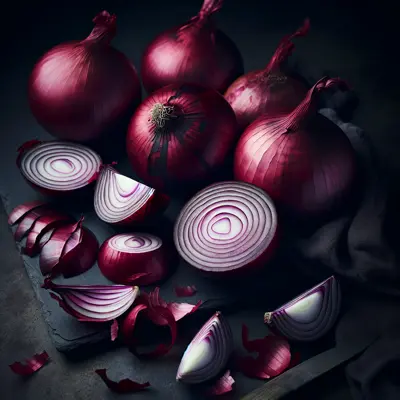
A premium red storage onion that combines excellent keeping quality with bold flavor and stunning deep red color. These perfectly round bulbs store for 8-10 months when properly cured, making them ideal for gardeners who want homegrown onions year-round. The firm texture and sharp flavor make them perfect for cooking.
Harvest
110-120d
Days to harvest
Sun
Full sun
Zones
5–10
USDA hardiness
Height
12-18 inches
Planting Timeline
Showing dates for Red Wing Storage Onion in USDA Zone 7
All Zone 7 allium →Zone Map
Click a state to update dates
Red Wing Storage Onion · Zones 5–10
Growing Details
Succession Planting
Red Wing runs 110-120 days to harvest and bulbs up in response to day length — you get one shot at the planting window, not a rolling cadence. Direct sow or set transplants once between March and early May in zone 7, and plan your harvest for July through November depending on when you got them in the ground. One planting, one pull.
Complete Growing Guide
Red Wing Storage Onions require a full 110-120 day season, so plant sets or seeds in early spring to ensure adequate time for bulb development before dormancy. These cultivars are prone to bolting if exposed to inconsistent moisture or temperature fluctuations during their growth phase, so maintain even watering throughout the season and avoid late-season nitrogen fertilization that encourages excessive leaf growth. Red Wings perform best in loose, well-draining soil with consistent sunlight and moderate fertility; they're susceptible to fusarium basal rot in overly wet conditions, making proper drainage essential. Unlike shorter-day red onion varieties, Red Wing matures reliably in most climates due to its intermediate photoperiod sensitivity. A practical tip: harvest when the tops naturally fall over and begin to brown, then cure bulbs in a warm, airy location for 2-3 weeks before storage to maximize their exceptional 8-10 month shelf life and develop their characteristic deep color.
Light: Full sun (6 or more hours of direct sunlight a day). Soil: High Organic Matter, Loam (Silt), Sand. Soil pH: Alkaline (>8.0), Neutral (6.0-8.0). Drainage: Good Drainage, Moist. Height: 1 ft. 0 in. - 1 ft. 6 in.. Spread: 0 ft. 6 in. - 1 ft. 0 in.. Spacing: Less than 12 inches, 12 inches-3 feet. Maintenance: Medium. Regions: Coastal, Mountains, Piedmont.
Harvesting
Harvest Red Wing Storage Onions when the foliage yellows and begins to fall over naturally, typically around 110-120 days after planting, and the bulbs have reached their characteristic deep red color with papery outer skin. Gently pull back soil to check that bulbs are firm and full-sized before digging, aiming for onions at least 2-3 inches in diameter. Unlike continuously harvested varieties, Red Wings are best harvested all at once when the entire crop matures together, maximizing their exceptional 8-10 month storage potential. For optimal curing and long-term storage success, harvest on a dry day and allow bulbs to cure in a warm, well-ventilated location for 2-3 weeks before final storage.
Flowers wither and convert to bulblets
Type: Capsule.
Harvest time: Summer
Edibility: The bulb and tops are edible raw or cooked. However, the plant also has poisonous characteristics as noted in the "Poisonous to Humans" section of this record. Toxicity can depend on the age of the person or animal, the age of the plant, the part of the plant ingested, how much is ingested, whether the person or animal has sensitivities or allergies, whether it's eaten raw or cooked, and so forth. Consult with a medical professional for further details.
Storage & Preservation
Cure your Red Wing onions in a warm, dry, well-ventilated area (80-85°F) for 2-3 weeks until necks are completely dry and papery. Once cured, trim tops to 1 inch and roots to ½ inch. Store in mesh bags or crates in a cool (32-40°F), dry location with good air circulation. Properly cured Red Wing onions will keep 8-10 months under ideal conditions.
For preservation, these onions excel when caramelized and frozen in portions, maintaining their rich flavor for up to 8 months. They're also excellent for pickling—their firm texture holds up well to the brining process. Dehydrating sliced Red Wings creates intensely flavored onion flakes perfect for seasoning blends.
History & Origin
Red Wing Storage Onion represents the modern lineage of red storage onions developed through conventional breeding programs emphasizing long-term storage capability and disease resistance. While specific breeder documentation for this particular cultivar is limited, it belongs to the heritage of red onion varieties refined throughout the twentieth century by seed companies and university agricultural programs. The variety reflects decades of selection for firm bulb structure, low moisture content, and strong papery outer scales—traits essential for the 8-10 month storage window that gardeners prize. Red Wing likely emerged from North American or European breeding work focused on intermediate-day onion types suited to diverse growing regions, though precise origin records remain unclear in publicly available sources.
Origin: Central Asia and central Persia
Advantages
- +Stores exceptionally well for 8-10 months when properly cured and kept cool
- +Deep red color and sharp flavor make these onions visually striking and flavorful
- +Medium maturity window of 110-120 days fits well into most growing seasons
- +Firm texture holds up excellently for cooking, slicing, and long-term storage
- +Easy to moderate difficulty level makes Red Wing accessible to most home gardeners
Considerations
- -Susceptible to multiple storage diseases including neck rot and bacterial soft rot
- -Vulnerable to onion thrips and onion maggots which can reduce bulb quality
- -Requires proper curing and cool storage conditions to achieve maximum 8-10 month shelf life
- -Pungent flavor is polarizing and may be too sharp for some palates raw
Companion Plants
Carrots are the most practical neighbor here — the sulfur compounds onions release above and below ground disrupt the host-finding of carrot fly, while carrot foliage returns the favor against onion fly. Marigolds (Tagetes spp.) add above-ground interference, with their scent shown to reduce onion thrips pressure when planted densely at the bed edge. Brassicas, lettuce, and spinach fit well because they pull from shallower soil layers and don't compete hard for the 6-12 inch root zone Red Wing uses. Beans and peas are the real problem: onion root exudates suppress the Rhizobium bacteria that legumes depend on for nitrogen fixation, so both crops lose.
Plant Together
Carrots
Onions repel carrot flies while carrots help break up soil for onion bulb development
Tomatoes
Onions deter aphids, whiteflies, and hornworms that commonly attack tomatoes
Brassicas (Cabbage, Broccoli)
Onions repel cabbage worms, flea beetles, and other brassica pests
Lettuce
Onions provide pest protection while lettuce's shallow roots don't compete with onion bulbs
Peppers
Onions help repel aphids and other soft-bodied insects that damage pepper plants
Strawberries
Onions deter slugs, aphids, and other pests while improving strawberry flavor
Spinach
Compatible root systems and onions provide natural pest deterrent for leafy greens
Marigolds
Both plants repel similar pests and marigolds add beneficial pollinator attraction
Keep Apart
Beans
Onions can inhibit bean growth and nitrogen fixation by legume bacteria
Peas
Onions stunt pea growth and interfere with their nitrogen-fixing root nodules
Asparagus
Onions can slow asparagus growth and reduce spear production
Nutrition Facts
Per 100g serving. % Daily Value based on 2,000 calorie diet. Source: USDA FoodData Central (FDC #170000)
Pests & Disease Resistance
Resistance
Good resistance to pink root and fusarium basal rot
Common Pests
Onion thrips, onion maggots, wireworms
Diseases
Pink root, neck rot, downy mildew, bacterial soft rot
Troubleshooting Red Wing Storage Onion
What you'll see, why it happens, and what to do about it.
Leaf tips turning silver-streaked or papery, with tiny black specks visible on the foliage around weeks 4-8
Likely Causes
- Onion thrips (Thrips tabaci) — rasping insects that feed between leaf layers and thrive in hot, dry spells
- Overcrowded planting below 4-inch spacing that reduces airflow and traps heat
What to Do
- 1.Spray foliage with spinosad or insecticidal soap in the early morning for 3 consecutive days, then weekly as needed
- 2.Keep spacing at 4-6 inches — thinning after the fact still helps more than leaving it crowded
- 3.Avoid overhead irrigation mid-day; thrips populations spike in dry conditions, so consistent 1-inch-per-week watering actually works against them
Bulbs in storage turning soft and slimy at the neck, sometimes with gray fuzzy growth, within 4-8 weeks of harvest
Likely Causes
- Neck rot (Botrytis allii) — a fungal disease that enters through the neck tissue, especially when tops are cut before they've fully dried
- Harvesting too early or curing in humid conditions rather than a dry, ventilated space
What to Do
- 1.Let tops die back naturally and cut all watering 3 weeks before harvest — don't rush it
- 2.Cure bulbs in a single layer at 75-85°F with good airflow for 3-4 weeks before moving to long-term storage
- 3.Cull any soft bulbs immediately; Botrytis allii spreads fast in a storage bin
Frequently Asked Questions
How long do Red Wing storage onions keep?▼
Can you grow Red Wing onions in containers?▼
When should I plant Red Wing storage onion seeds?▼
What does Red Wing storage onion taste like?▼
Are Red Wing onions good for beginners?▼
How do you cure Red Wing onions for storage?▼
Zone-by-Zone Planting Calendar
| Zone | Indoor Start | Transplant | Direct Sow | Harvest |
|---|---|---|---|---|
| Zone 1 | — | — | June – July | September – September |
| Zone 2 | — | — | May – July | September – September |
| Zone 11 | — | — | January – February | April – December |
| Zone 12 | — | — | January – February | April – December |
| Zone 13 | — | — | January – February | April – December |
| Zone 3 | — | — | May – June | August – October |
| Zone 4 | — | — | April – June | August – October |
| Zone 5 | — | — | April – May | August – November |
| Zone 6 | — | — | April – May | July – November |
| Zone 7 | — | — | March – May | July – November |
| Zone 8 | — | — | March – April | June – December |
| Zone 9 | — | — | February – March | May – December |
| Zone 10 | — | — | January – March | May – December |
Growing Guides from Wind River Greens
Sources & References
External authority sources used in compiling this guide.
See the Methodology page for how this data is sourced, what's AI-assisted, and known limitations.