Red Baron Shallots
Allium cepa var. aggregatum 'Red Baron'
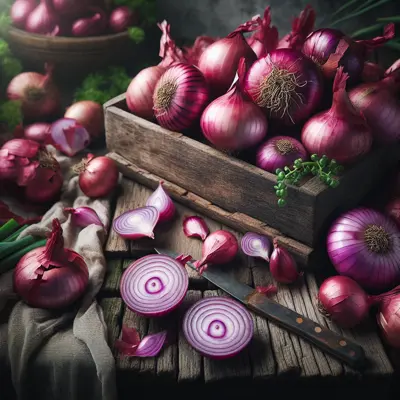
A premium French-type shallot with beautiful reddish-purple skin and crisp white flesh tinged with purple rings that adds both flavor and visual appeal to any dish. These elongated bulbs multiply underground to produce clusters of 6-8 shallots per plant, offering exceptional value and storage life. Their complex, wine-like flavor is more refined than onions, making them a favorite among gourmet cooks and essential for French cuisine.
Harvest
90-120d
Days to harvest
Sun
Full sun
Zones
5–10
USDA hardiness
Height
12-18 inches
Planting Timeline
Showing dates for Red Baron Shallots in USDA Zone 7
All Zone 7 allium →Zone Map
Click a state to update dates
Red Baron Shallots · Zones 5–10
Growing Details
Succession Planting
Plant sets or direct-sow seed every 3–4 weeks from early March through late April. Don't push past May — shallots need at least 10 weeks of cool weather to size up properly before summer heat shuts down bulb development. A second planting is possible in mid-September for overwintering, with harvest the following June or July; fall-planted bulbs tend to run noticeably larger than spring ones, likely because they get a longer slow-growth window before the days lengthen and trigger bulbing.
Complete Growing Guide
Red Baron shallots require planting in fall (September-October in most regions) rather than spring, as they need vernalization to develop proper bulb clusters, and they'll reach maturity by early summer. These French-type shallots prefer well-draining soil with consistent moisture during the growing season but demand excellent drainage in winter to prevent rot, making raised beds ideal in wet climates. Red Barons are prone to bolting if temperatures fluctuate dramatically in early spring, so consistent cold followed by gradual warming prevents premature flowering that reduces bulb size. Watch for pink root and fusarium rot, which thrive in poorly drained soil—rotate planting locations yearly to minimize disease pressure. A practical tip: when tops begin to yellow and fall over around day 110, stop watering entirely for two weeks before harvest to concentrate flavors and improve storage life, which can exceed six months in cool conditions.
Light: Full sun (6 or more hours of direct sunlight a day). Soil: High Organic Matter, Loam (Silt), Sand. Soil pH: Alkaline (>8.0), Neutral (6.0-8.0). Drainage: Good Drainage, Moist. Height: 1 ft. 0 in. - 1 ft. 6 in.. Spread: 0 ft. 6 in. - 1 ft. 0 in.. Spacing: Less than 12 inches, 12 inches-3 feet. Maintenance: Medium. Regions: Coastal, Mountains, Piedmont.
Harvesting
Red Baron shallots reach peak harvest readiness when their papery reddish-purple skin deepens to a rich burgundy and the bulbs feel firm and dry to the touch, typically 90-120 days after planting. Watch for the foliage to yellow and naturally fall over, signaling that underground clusters have fully developed their characteristic 6-8 bulbs per plant. You can employ either a single harvest approach by pulling all plants at once, or practice continuous harvesting by selectively digging individual mature bulbs while leaving smaller ones to develop further. For optimal storage life and skin integrity, harvest in late spring or early summer before excessive heat arrives, allowing the bulbs to cure in a warm, well-ventilated space for 2-3 weeks before storage.
Flowers wither and convert to bulblets
Type: Capsule.
Harvest time: Summer
Edibility: The bulb and tops are edible raw or cooked. However, the plant also has poisonous characteristics as noted in the "Poisonous to Humans" section of this record. Toxicity can depend on the age of the person or animal, the age of the plant, the part of the plant ingested, how much is ingested, whether the person or animal has sensitivities or allergies, whether it's eaten raw or cooked, and so forth. Consult with a medical professional for further details.
Storage & Preservation
Cure freshly harvested Red Baron shallots in a warm, dry, well-ventilated area for 2-3 weeks until outer skins become papery and necks are completely dry. Once cured, separate individual bulbs and trim roots and tops to 1 inch.
Store in mesh bags or braided strings in a cool (32-40°F), dry location with good air circulation. Properly cured Red Baron shallots keep 6-8 months under ideal conditions. Check stored bulbs monthly and remove any showing soft spots or sprouting.
For preservation, slice and dehydrate shallots for seasoning blends, or freeze chopped shallots in ice cube trays with oil for easy portioning. You can also pickle whole small bulbs in vinegar with herbs for gourmet condiments. Avoid refrigerating fresh whole shallots as humidity causes sprouting and deterioration.
History & Origin
The Red Baron shallot belongs to the French grey or French type shallots, a distinguished lineage prized for generations in French cuisine and cultivation. While specific breeder documentation for the Red Baron cultivar remains sparse in publicly available sources, it represents the modern commercial development of traditional French shallot germplasm, likely refined through selective breeding by a European seed company during the late 20th century. The variety exemplifies the characteristics long valued in French shallot traditions—elongated bulbs, copper-red exteriors, and complex flavor profiles—adapted for contemporary home gardeners and specialty growers seeking premium culinary performance.
Origin: Central Asia and central Persia
Advantages
- +Beautiful reddish-purple exterior and purple-ringed flesh enhance plate presentation
- +Produces 6-8 bulbs per plant, maximizing yield from limited garden space
- +Complex wine-like flavor superior to onions for gourmet French cooking
- +Excellent storage life extends harvest value throughout winter months
- +Moderate growing difficulty makes them achievable for intermediate gardeners
Considerations
- -Susceptible to onion thrips and maggots requiring vigilant pest management
- -Vulnerable to downy mildew, neck rot, and white rot diseases
- -90-120 day growing season requires long-term garden commitment and planning
- -Demands well-draining soil and specific conditions for optimal bulb development
Companion Plants
Carrots are the strongest pairing here — they share a shallow-to-mid root zone with shallots without much competition, and the volatile compounds each plant releases tend to disrupt host-finding by onion fly maggots (Delia antiqua) and carrot fly alike. Lettuce and spinach slot in well as row-fillers between sets; both are harvested before shallots need the full 4–6 inches of lateral space. Beans and peas are the ones to keep separated — alliums suppress Rhizobium bacteria in the soil, which is exactly what legumes depend on to fix nitrogen, so you're quietly sabotaging both crops if they share a bed. Keep at least 18 inches between your allium and legume plantings.
Plant Together
Carrots
Shallots repel carrot flies while carrots help break up soil for shallot bulb development
Tomatoes
Shallots deter aphids, spider mites, and nematodes that commonly attack tomatoes
Lettuce
Shallots repel aphids and slugs while lettuce provides ground cover to retain soil moisture
Cabbage
Shallots deter cabbage worms, cabbage loopers, and flea beetles from brassicas
Strawberries
Shallots repel slugs, snails, and aphids that damage strawberry plants and fruit
Peppers
Shallots help repel aphids and spider mites while peppers don't compete for nutrients
Parsley
Both plants have similar growing requirements and parsley attracts beneficial insects
Spinach
Shallots deter leaf miners and aphids while spinach provides living mulch
Keep Apart
Beans
Nitrogen fixation by beans can cause excessive leaf growth in shallots at expense of bulb development
Peas
Like beans, peas add too much nitrogen which promotes foliage over bulb formation
Asparagus
Both are perennial alliums that compete for similar soil nutrients and growing space
Nutrition Facts
Per 100g serving. % Daily Value based on 2,000 calorie diet. Source: USDA FoodData Central (FDC #170499)
Pests & Disease Resistance
Resistance
Good resistance to common allium diseases
Common Pests
Onion thrips, onion fly maggots
Diseases
Downy mildew, neck rot, white rot
Troubleshooting Red Baron Shallots
What you'll see, why it happens, and what to do about it.
Leaf tips silvering or streaking, with tiny black specks visible on the foliage
Likely Causes
- Onion thrips (Thrips tabaci) — they rasp the leaf surface and leave frass behind
- Dry, hot conditions that favor thrips population explosions
What to Do
- 1.Blast plants with a strong jet of water early in the morning to knock thrips off
- 2.Apply spinosad or insecticidal soap, hitting the base of leaves where thrips shelter
- 3.Keep soil consistently moist — stressed, dry plants attract heavier thrips pressure
Gray-purple fuzzy coating on leaves, usually appearing in cool, wet stretches before bulbs size up
Likely Causes
- Downy mildew (Peronospora destructor) — favored by temps between 50–60°F and high humidity
- Crowded planting that prevents foliage from drying out after rain or irrigation
What to Do
- 1.Space plants at least 4–6 inches apart and orient rows to catch prevailing wind
- 2.Avoid overhead irrigation; switch to drip or furrow watering if possible
- 3.Remove and bag (don't compost) any infected tops; a copper-based fungicide can slow spread if caught early
Bulbs rotting at the neck after harvest, sometimes with white fluffy fungal growth at the base
Likely Causes
- Neck rot (Botrytis allii) — enters through damaged or incompletely cured tissue
- White rot (Sclerotium cepivorum) — soil-borne, persists for 20+ years as sclerotia
- Pulling bulbs before tops have fully fallen and dried down
What to Do
- 1.Wait until at least 75% of tops have fallen naturally before lifting bulbs
- 2.Cure shallots in a single layer in a dry, shaded spot with good airflow for 2–3 weeks before storage
- 3.If white rot is confirmed, pull that bed out of all alliums for a minimum of 8 years — Sclerotium sclerotia don't break down fast, and there's no shortcut
Frequently Asked Questions
How long do Red Baron shallots take to grow from planting to harvest?▼
Can you grow Red Baron shallots in containers?▼
What's the difference between Red Baron shallots and regular onions?▼
When should I plant Red Baron shallot bulbs?▼
Are Red Baron shallots good for beginner gardeners?▼
How do you know when Red Baron shallots are ready to harvest?▼
Zone-by-Zone Planting Calendar
| Zone | Indoor Start | Transplant | Direct Sow | Harvest |
|---|---|---|---|---|
| Zone 1 | — | — | June – July | September – September |
| Zone 2 | — | — | May – July | September – September |
| Zone 11 | — | — | January – February | April – December |
| Zone 12 | — | — | January – February | April – December |
| Zone 13 | — | — | January – February | April – December |
| Zone 3 | — | — | May – June | August – October |
| Zone 4 | — | — | April – June | August – October |
| Zone 5 | — | — | April – May | July – November |
| Zone 6 | — | — | April – May | July – November |
| Zone 7 | — | — | March – May | July – November |
| Zone 8 | — | — | March – April | June – December |
| Zone 9 | — | — | February – March | May – December |
| Zone 10 | — | — | January – March | May – December |
Growing Guides from Wind River Greens
Sources & References
External authority sources used in compiling this guide.
See the Methodology page for how this data is sourced, what's AI-assisted, and known limitations.