Purple Sensation Allium
Allium giganteum 'Purple Sensation'
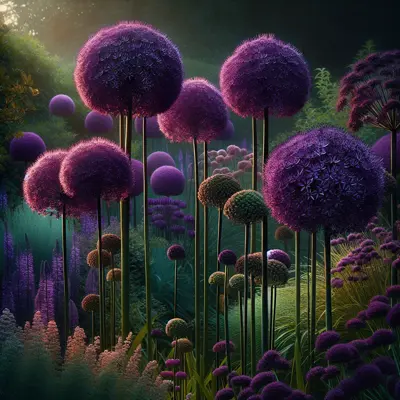
A spectacular ornamental allium that produces stunning 4-6 inch spherical flower heads on tall, sturdy stems in late spring. The deep purple globe-shaped blooms create dramatic architectural elements in perennial gardens and are exceptional as cut flowers. This award-winning variety naturalizes well and returns year after year with even more impressive displays.
Sun
Full sun
Zones
4–8
USDA hardiness
Height
1-6 feet
Planting Timeline
Showing dates for Purple Sensation Allium in USDA Zone 7
All Zone 7 allium →Zone Map
Click a state to update dates
Purple Sensation Allium · Zones 4–8
Growing Details
Complete Growing Guide
Light: Full sun (6 or more hours of direct sunlight a day). Soil: Clay, Loam (Silt), Sand. Soil pH: Acid (<6.0), Alkaline (>8.0), Neutral (6.0-8.0). Drainage: Good Drainage. Height: 1 ft. 0 in. - 6 ft. 0 in.. Spread: 1 ft. 0 in. - 2 ft. 0 in.. Spacing: Less than 12 inches. Growth rate: Medium. Maintenance: Low. Propagation: Division, Seed. Regions: Coastal, Mountains, Piedmont.
Harvesting
Type: Capsule.
Storage & Preservation
Fresh-cut Purple Sensation alliums last 7-10 days in arrangements when properly conditioned. Immediately after cutting, place stems in lukewarm water and re-cut stem ends under running water. They prefer cool room temperatures and benefit from flower food containing antibacterial agents.
For dried arrangements, hang cut stems upside down in bundles of 5-7 stems in a dark, well-ventilated area. Proper drying takes 2-3 weeks and results in attractive seed heads that maintain their spherical shape for months. These dried stems work beautifully in fall and winter arrangements.
You can also preserve individual flower heads by cutting stems short and inserting them into floral foam for table arrangements. The globular seed heads develop interesting texture as they dry naturally in arrangements, transitioning from deep purple flowers to silvery-brown architectural elements.
History & Origin
Origin: Himalayas, Western and Central Asia
Advantages
- +Attracts: Butterflies
- +Low maintenance
Considerations
- -Toxic (Flowers, Fruits, Leaves, Roots, Seeds, Stems): Low severity
Companion Plants
Roses and strawberries get the most out of Purple Sensation nearby — alliums produce sulfur compounds that deter aphids and suppress black spot fungus (Diplocarpon rosae), and in our zone 7 Georgia garden, April aphid pressure on roses is heavy enough that the pairing is worth planning into the bed layout. Carrots and brassicas work on the same principle: allium volatiles disrupt the host-finding behavior of carrot root fly (Psila rosae) and reduce first-generation cabbage looper egg-laying. Beans and peas are a different story — alliums suppress rhizobium bacteria in the surrounding soil, and legumes depend on those bacteria to fix nitrogen. Park them at least 3 feet apart or you'll get pale, stunted pea plants within a few weeks and wonder what went wrong.
Plant Together
Roses
Alliums repel aphids, thrips, and other pests that commonly attack roses
Tomatoes
Alliums deter aphids, cutworms, and may reduce fungal diseases in tomatoes
Carrots
Alliums repel carrot fly and other root pests while improving soil structure
Brassicas
Alliums deter cabbage worms, aphids, and flea beetles from cabbage family plants
Lettuce
Alliums repel aphids and slugs that commonly damage lettuce leaves
Strawberries
Alliums deter slugs, aphids, and nematodes while not competing for nutrients
Peppers
Alliums repel aphids and may reduce soil-borne fungal diseases affecting peppers
Marigolds
Both repel similar pests and create complementary pest control barrier
Keep Apart
Beans
Alliums can inhibit nitrogen fixation and stunt growth of legumes
Peas
Sulfur compounds from alliums interfere with nitrogen-fixing bacteria in pea roots
Asparagus
Alliums can stunt asparagus growth and reduce spear production
Nutrition Facts
Per 100g serving. % Daily Value based on 2,000 calorie diet. Source: USDA FoodData Central (FDC #170000)
Pests & Disease Resistance
Resistance
Excellent disease resistance, very low maintenance
Common Pests
Few pest problems, deer and rabbit resistant
Diseases
Root rot in poorly drained soils, otherwise very healthy
Troubleshooting Purple Sensation Allium
What you'll see, why it happens, and what to do about it.
Bulbs planted in fall never emerge in spring — no foliage at all by April
Likely Causes
- Bulbs planted too shallow (less than 4 inches deep) and heaved out by freeze-thaw cycles
- Bulbs rotted in the ground due to poorly drained clay soil holding water over winter
What to Do
- 1.Dig where you think the bulb was — if it's mushy, improve drainage before replanting in fall with coarse grit or a raised bed
- 2.Plant bulbs at 3–4 times their diameter deep (typically 4–6 inches) and mark spots with a stake so you don't accidentally till them up
- 3.If your beds stay wet after rain for more than an hour, amend with coarse sand or build up to a 6.0–7.0 pH raised mix before the next fall planting
Foliage emerges fine but yellows and collapses before the bloom stalk fully extends
Likely Causes
- Basal rot (Fusarium culmorum) — a soil-borne fungus that attacks the basal plate of the bulb
- Premature dormancy triggered by drought stress during the active growing window
What to Do
- 1.Pull the plant and check the bulb base — brown, soft tissue with a faint sweet-rot smell means Fusarium; discard it (not in the compost) and keep alliums out of that spot for at least 3 years
- 2.Water consistently once shoots push up in late winter — about 1 inch per week through bloom — then stop watering entirely once foliage yellows naturally
- 3.Buy bulbs with firm, dry basal plates; Fusarium hitchhikes reliably on discounted bulbs with soft spots or discoloration at the base
White fluffy mold at or just below the soil line, with foliage wilting from the base upward
Likely Causes
- White rot (Sclerotium cepivorum) — a persistent soil fungus whose sclerotia can survive 20+ years in undisturbed ground
- Dense planting with less than 6 inches between bulbs, trapping humidity at the soil surface
What to Do
- 1.Remove and bag infected plants immediately; don't compost anything — soil included — that was in contact with the infected root zone
- 2.Space bulbs 6–8 inches apart at planting so air moves freely between stems
- 3.Pull alliums from affected beds entirely; white rot sclerotia are practically impossible to eradicate once they've colonized a bed
Flower heads open but the purple color looks washed out or scorched, and blooms collapse within a week
Likely Causes
- Heat spike during the bloom window — 'Purple Sensation' peaks in May–June, and Georgia afternoons can hit 90°F before the flowers finish
- South-facing placement with afternoon heat radiating off a wall or dark hardscape, adding 5–10°F above ambient at the bloom level
What to Do
- 1.Site bulbs where they catch morning sun but get shade relief after 2 p.m. — even that buffer stretches bloom life by several days
- 2.Cut stems for a vase the moment flowers are fully open; they'll hold 7–10 days indoors in cool water, which beats what the garden will do to them in a heat wave
- 3.Next fall, get bulbs in the ground by late October rather than November so roots establish deeper before the erratic zone 7 warm spells push premature top growth
Frequently Asked Questions
How long does Purple Sensation allium take to flower after planting?▼
Can you grow Purple Sensation allium in containers?▼
When should I plant Purple Sensation allium bulbs?▼
Do Purple Sensation alliums come back every year?▼
What's the difference between Purple Sensation and Giganteum alliums?▼
Is Purple Sensation allium good for beginners?▼
Zone-by-Zone Planting Calendar
| Zone | Indoor Start | Transplant | Direct Sow | Harvest |
|---|---|---|---|---|
| Zone 1 | — | — | June – July | September – September |
| Zone 2 | — | — | May – July | August – September |
| Zone 11 | — | — | January – February | March – December |
| Zone 12 | — | — | January – February | March – December |
| Zone 13 | — | — | January – February | March – December |
| Zone 3 | — | — | May – June | August – October |
| Zone 4 | — | — | April – June | July – October |
| Zone 5 | — | — | April – May | July – November |
| Zone 6 | — | — | April – May | July – November |
| Zone 7 | — | — | March – May | June – November |
| Zone 8 | — | — | March – April | June – December |
| Zone 9 | — | — | February – March | May – December |
| Zone 10 | — | — | January – March | April – December |
Growing Guides from Wind River Greens
Sources & References
External authority sources used in compiling this guide.
- ExtensionNC State Extension
- USDAUSDA FoodData Central
See the Methodology page for how this data is sourced, what's AI-assisted, and known limitations.