Giant Red Beard
Allium hollandicum 'Giant Red Beard'
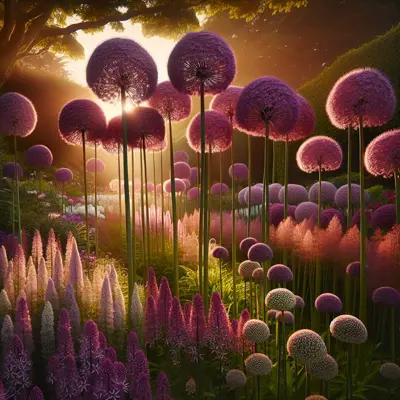
A showstopping ornamental allium that creates dramatic 6-inch purple globes on tall stems, making it a favorite for cutting gardens and perennial borders. This Dutch hybrid blooms in late spring with hundreds of star-shaped flowers that attract beneficial insects and dry beautifully for arrangements. The spherical flower heads are perfectly geometric and long-lasting.
Harvest
90-120d
Days to harvest
Sun
Full sun to partial shade
Zones
4–9
USDA hardiness
Height
24-30 inches
Planting Timeline
Showing dates for Giant Red Beard in USDA Zone 7
All Zone 7 allium →Zone Map
Click a state to update dates
Giant Red Beard · Zones 4–9
Growing Details
Complete Growing Guide
Light: Full sun (6 or more hours of direct sunlight a day), Partial Shade (Direct sunlight only part of the day, 2-6 hours). Soil: Clay, Loam (Silt), Sand. Soil pH: Alkaline (>8.0), Neutral (6.0-8.0). Drainage: Good Drainage, Moist, Occasionally Dry. Height: 2 ft. 0 in. - 2 ft. 6 in.. Spread: 0 ft. 6 in. - 0 ft. 9 in.. Spacing: 12 inches-3 feet. Growth rate: Medium. Maintenance: Low. Propagation: Division, Seed. Regions: Coastal, Mountains, Piedmont.
Harvesting
Type: Capsule.
Harvest time: Fall, Summer
Storage & Preservation
Fresh-cut Giant Red Beard stems last 7-10 days in cool water with flower food. Trim stems under running water and place immediately in a cool room away from direct sunlight. Change water every 2-3 days for maximum vase life.
For drying, bundle 3-4 stems together and hang upside down in a dark, well-ventilated area with low humidity. Avoid basements or areas prone to dampness. Proper drying takes 2-3 weeks, resulting in architectural seedheads that maintain their purple tint for months.
Alternatively, dry stems individually stuck into floral foam for arrangements, which maintains better shape than hanging. Once fully dried, store in boxes with tissue paper in a dry location. Properly dried Giant Red Beard flowers retain their form for 12-18 months in arrangements.
History & Origin
Origin: Iran and Kyrgyzstan
Advantages
- +Attracts: Butterflies
- +Low maintenance
Companion Plants
Alliums as a group off-gas sulfur compounds that disrupt how insects locate their host plants by scent. Planted near roses, Giant Red Beard can take some pressure off new canes from aphid colonies — and it's a practical pairing beyond that, since both want full sun and the 24–30 inch globe flowers hold their own visually against rose foliage without muscling into the root zone. Brassicas get a similar benefit: the allium scent interferes with cabbage white butterflies (Pieris rapae) orienting to their host plants. Give bulbs 6–8 inches between each other, and leave a foot or more between the allium clump and neighboring brassica transplants so neither is boxed in.
Tomatoes, peppers, and carrots are solid neighbors largely because they don't compete at the same soil depth and share no major disease vectors with alliums. Marigolds (Tagetes spp.) fit the same full-sun conditions and add another layer of insect confusion without fighting for moisture during the spring growth window.
Beans and peas need to stay several feet away — the same sulfur compounds that deter pest insects also suppress the Rhizobium bacteria that legumes rely on for nitrogen fixation, and you'll see measurably worse yields if the two are planted close. Asparagus is a longer-term conflict: both crops are permanent or semi-permanent bed residents that draw heavily on the same nutrient profile, and they'll grind each other down over a few seasons without either putting up an obvious fight until yield drops off.
Plant Together
Tomatoes
Alliums repel aphids, spider mites, and hornworms that commonly attack tomatoes
Brassicas
Alliums repel cabbage worms, flea beetles, and aphids that damage brassica crops
Roses
Alliums repel aphids, thrips, and may reduce black spot and other fungal diseases
Marigolds
Both repel similar pests and marigolds enhance allium's natural pest-deterrent properties
Carrots
Alliums deter carrot fly while carrots help break up soil for allium bulbs
Lettuce
Alliums provide natural pest control against aphids and slugs while using minimal root space
Peppers
Alliums deter aphids, spider mites, and some soil-borne pests that affect pepper plants
Strawberries
Alliums repel slugs, aphids, and nematodes while improving strawberry growth
Keep Apart
Beans
Alliums can inhibit nitrogen fixation by rhizobia bacteria in bean root nodules
Peas
Sulfur compounds from alliums interfere with pea growth and nitrogen fixation
Asparagus
Alliums can stunt asparagus growth and compete for similar soil nutrients
Nutrition Facts
Per 100g serving. % Daily Value based on 2,000 calorie diet. Source: USDA FoodData Central (FDC #170000)
Pests & Disease Resistance
Resistance
Good resistance when grown in well-drained soil, deer and rodent resistant
Common Pests
Bulb mites, aphids on flowers
Diseases
Bulb rot in wet conditions, otherwise very disease resistant
Troubleshooting Giant Red Beard
What you'll see, why it happens, and what to do about it.
Bulbs soft or rotting when you dig them after dormancy, no visible pest damage on leaves
Likely Causes
- Bulb rot (Fusarium oxysporum or Botrytis) — caused by sitting in waterlogged soil through winter or spring
- Planting in a low spot or heavy clay that doesn't drain between rain events
What to Do
- 1.Dig remaining bulbs, cut away soft tissue, dust with sulfur powder, and let them air-dry for a week before replanting or storing
- 2.Amend the bed with coarse grit or perlite — aim for soil that drains within an hour of a hard rain
- 3.Move the planting to a raised bed or a slope if standing water is the real problem; no amount of soil amendment fixes a drainage-limited site
Flower stems or buds covered in small sticky clusters, leaves look distorted around the scape
Likely Causes
- Aphid colonies (commonly Myzus persicae or Aphis fabae) — they prefer the tender tissue near flower heads in late spring
- Ant activity nearby — ants farm aphids and will actively move them to new growth to protect the colony
What to Do
- 1.Knock aphids off with a strong spray of water early in the morning, two or three days in a row
- 2.If pressure is heavy, apply insecticidal soap directly to the colonies — coat the underside of any affected tissue
- 3.Check for ant trails up the stem; a ring of diatomaceous earth around the base can interrupt them
Foliage yellowing and collapsing by mid-June, bulbs look fine when checked
Likely Causes
- Normal summer dormancy — Giant Red Beard is a spring-blooming Allium hollandicum hybrid that goes fully dormant by early summer
- Misread as disease or underwatering when it's just the plant's lifecycle
What to Do
- 1.Stop watering once the foliage starts to yellow — this variety prefers dry conditions during dormancy and extra moisture at this stage encourages rot
- 2.Let the foliage die back completely on its own before cutting it; the bulb is still pulling energy from those leaves for 2–3 weeks after they start to go
- 3.Mark the spot so you don't accidentally dig into dormant bulbs when planting summer crops nearby
Frequently Asked Questions
How long does Giant Red Beard allium take to bloom?▼
Can you grow Giant Red Beard alliums in containers?▼
When should I plant Giant Red Beard allium bulbs?▼
Is Giant Red Beard allium good for beginners?▼
Do Giant Red Beard alliums come back every year?▼
What grows well with Giant Red Beard alliums?▼
Zone-by-Zone Planting Calendar
| Zone | Indoor Start | Transplant | Direct Sow | Harvest |
|---|---|---|---|---|
| Zone 3 | — | — | May – June | August – October |
| Zone 4 | — | — | April – June | August – October |
| Zone 5 | — | — | April – May | July – November |
| Zone 6 | — | — | April – May | July – November |
| Zone 7 | — | — | March – May | July – November |
| Zone 8 | — | — | March – April | June – December |
| Zone 9 | — | — | February – March | May – December |
| Zone 10 | — | — | January – March | May – December |
| Zone 1 | — | — | June – July | September – September |
| Zone 2 | — | — | May – July | September – September |
| Zone 11 | — | — | January – February | April – December |
| Zone 12 | — | — | January – February | April – December |
| Zone 13 | — | — | January – February | April – December |
Growing Guides from Wind River Greens
Sources & References
External authority sources used in compiling this guide.
- ExtensionNC State Extension
- USDAUSDA FoodData Central
See the Methodology page for how this data is sourced, what's AI-assisted, and known limitations.