Big Bertha Bell Pepper
Capsicum annuum 'Big Bertha'
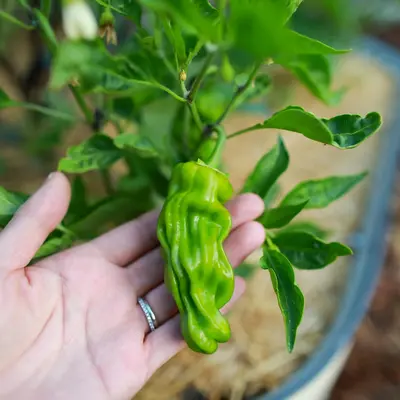
A massive sweet bell pepper that produces enormous 7-inch long fruits weighing up to 10 ounces each. This reliable hybrid delivers exceptional yields of thick-walled, sweet peppers that are perfect for stuffing or fresh eating. Big Bertha's impressive size and consistent performance make it a favorite among gardeners who want to grow show-stopping peppers.
Harvest
75-80d
Days to harvest
Sun
Full sun
Zones
4–11
USDA hardiness
Height
1-3 feet
Planting Timeline
Showing dates for Big Bertha Bell Pepper in USDA Zone 7
All Zone 7 tropical →Zone Map
Click a state to update dates
Big Bertha Bell Pepper · Zones 4–11
Growing Details
Succession Planting
Big Bertha is a long-season hybrid — 75 to 80 days to first harvest — and it keeps producing off the same plant until frost kills it, so succession planting doesn't apply here the way it does with lettuce or radishes. You get one planting per season; your job is to time that one transplant correctly and keep the plant alive and fruiting as long as possible. Start seeds indoors 8 to 10 weeks before your last frost date, then transplant out after soil temps are reliably above 65°F. That's the whole calendar.
Complete Growing Guide
Big Bertha's 75-80 day maturity requires starting seeds 8-10 weeks before your last frost to ensure peppers set before heat stress slows flowering. This cultivar thrives in consistently warm soil (70-85°F) and benefits from afternoon shade in regions exceeding 90°F, as its thin skin can blister in extreme heat. Big Bertha is moderately susceptible to aphids and spider mites when stressed by irregular watering; maintain consistent moisture without waterlogging to prevent root rot. The heavy fruit load demands sturdy support—stake or cage plants early, as the weight of 10-ounce peppers can snap brittle branches. One practical approach: pinch off the first flower cluster when plants are 6-8 inches tall to redirect energy into robust stem development, which substantially improves overall yield and fruit size in this otherwise straightforward variety.
Light: Full sun (6 or more hours of direct sunlight a day). Soil: Clay, High Organic Matter, Loam (Silt), Sand. Soil pH: Acid (<6.0), Alkaline (>8.0), Neutral (6.0-8.0). Drainage: Good Drainage. Height: 1 ft. 0 in. - 3 ft. 8 in.. Spread: 0 ft. 6 in. - 1 ft. 0 in.. Spacing: 12 inches-3 feet. Growth rate: Medium. Maintenance: Low. Propagation: Seed. Regions: Coastal, Mountains, Piedmont.
Harvesting
Harvest Big Bertha peppers when they reach their full 7-inch length and develop a glossy, firm exterior with thick walls that feel substantial to the touch. While the peppers can be picked at the green stage, waiting until they transition to red, yellow, or orange delivers maximum sweetness and sugar content ideal for fresh eating or stuffing. Practice continuous harvesting by regularly removing mature fruits throughout the season rather than waiting for a single flush, as this encourages the plant to produce additional blooms and extends productivity. For optimal results, pick peppers in early morning after dew dries but before afternoon heat peaks, as cooler temperatures help preserve their crisp texture and prevent stress to the plant.
Fruits are a non-pulpy berry and vary considerably across cultivars. Some are long, thin, bright red, and spicy; others are thick, large, and sweet-tasting; others still are small and in ornamental shapes and colors, grown as decoration.
Color: Black, Gold/Yellow, Green, Orange, Red/Burgundy. Type: Berry. Length: 1-3 inches. Width: < 1 inch.
Garden value: Edible, Good Dried, Showy
Harvest time: Summer
Edibility: Fruits edible, but spiciness is unpredictable in intensity.
Storage & Preservation
Big Bertha peppers keep best in a perforated plastic bag in the crisper drawer at 45–50°F with 85–95% humidity. Stored this way, they'll maintain quality for two to three weeks. For longer-term preservation, freezing works exceptionally well: dice or slice the peppers, spread them on a baking sheet to freeze solid, then transfer to freezer bags for up to eight months. Roasting and freezing intensifies their natural sweetness and is ideal for winter stir-fries and stuffed pepper dishes. Canning is viable using a tested hot-water bath recipe; the mild flavor holds up nicely in pickled preparations. Drying is less common but possible in a dehydrator at 135°F until papery. A key advantage of this variety is its thick, meaty walls—they retain texture better than thinner peppers when frozen, making them particularly suited to post-harvest preservation without becoming mushy.
History & Origin
The Big Bertha bell pepper emerged from commercial hybrid breeding programs focused on maximizing fruit size and yield in sweet pepper varieties during the late 20th century. While specific breeder attribution and introduction year remain poorly documented in readily available sources, Big Bertha represents the culmination of selective breeding within Capsicum annuum genetics aimed at producing exceptionally large, thick-walled fruits suited to home gardeners and market growers. The variety exemplifies the broader trend of hybrid pepper development by seed companies prioritizing horticultural performance traits—particularly vigor, productivity, and uniform large fruit—over heritage preservation. Its development reflects decades of work improving upon earlier sweet pepper cultivars to create a more reliable, productive option for commercial and amateur cultivation.
Origin: Tropical North and South America
Advantages
- +Produces enormous 7-inch fruits weighing up to 10 ounces each
- +Thick-walled peppers are ideal for stuffing and fresh eating
- +Delivers exceptional yields with reliable hybrid performance
- +Matures in just 75-80 days with minimal growing difficulty
- +Sweet, mild flavor appeals to most gardeners and families
Considerations
- -Susceptible to bacterial leaf spot and powdery mildew infections
- -Large fruit size requires sturdy stakes and consistent watering
- -Vulnerable to multiple pests including aphids and pepper weevils
- -Can be affected by pepper mild mottle virus in poor conditions
Companion Plants
Basil is the companion I'd actually plant with Big Bertha if I were only picking one. The aphid-repelling claims are thin, but basil needs the same heat and about 1 inch of water per week, so the two crops share a bed without one draining the other — and you end up with basil. Marigolds (Tagetes spp.) pull more weight than most gardeners realize: their root secretions are documented to suppress root-knot nematodes (Meloidogyne spp.) in the soil, which is a persistent headache in Georgia red clay. Chives and parsley fill border gaps without competing for the 12–18 inch root zone Big Bertha develops, and both draw in parasitic wasps that knock back aphid pressure before it gets out of hand.
Fennel produces anethole and other root exudates that inhibit growth across a wide range of vegetables, and peppers are no exception — keep it out of the same bed entirely. Black walnut produces juglone, a compound toxic to nightshades including Capsicum annuum; in our zone 7 Georgia garden, 50 feet is the minimum buffer you want between any walnut tree and your pepper rows. Brassicas are mostly a timing conflict — cabbage and broccoli are cool-season crops that'll be pulling out right as Big Bertha starts setting fruit — but if they do overlap, they draw different pest populations that can drift over and complicate an otherwise clean bed.
Plant Together
Basil
Repels aphids, spider mites, and thrips while potentially improving pepper flavor
Marigolds
Deters nematodes, aphids, and whiteflies with natural compounds
Tomatoes
Similar growing requirements and can share trellising systems
Oregano
Repels cucumber beetles and provides ground cover to retain soil moisture
Parsley
Attracts beneficial insects like hoverflies and parasitic wasps
Carrots
Different root depths allow efficient use of soil space and nutrients
Nasturtiums
Acts as trap crop for aphids and cucumber beetles
Chives
Repels aphids and may improve pepper growth through root interactions
Keep Apart
Black Walnut
Produces juglone toxin that severely stunts pepper growth and development
Fennel
Inhibits growth of peppers through allelopathic compounds
Brassicas
Compete heavily for nutrients and may stunt pepper development
Nutrition Facts
Per 100g serving. % Daily Value based on 2,000 calorie diet. Source: USDA FoodData Central (FDC #2258588)
Pests & Disease Resistance
Resistance
Good resistance to tobacco mosaic virus
Common Pests
Aphids, spider mites, pepper weevil, cutworms
Diseases
Bacterial leaf spot, powdery mildew, pepper mild mottle virus
Troubleshooting Big Bertha Bell Pepper
What you'll see, why it happens, and what to do about it.
Leaves puckering and curling, sticky residue on upper leaf surfaces, sometimes with small white shed skins underneath
Likely Causes
- Aphid colonies (commonly green peach aphid, Myzus persicae) clustering on new growth and leaf undersides
- Stressed or nitrogen-overfed plants — lush, soft growth attracts them faster
What to Do
- 1.Blast colonies off with a firm stream of water from a hose; do this in the morning so foliage dries before nightfall
- 2.Spray insecticidal soap directly on the undersides of affected leaves, making contact with the insects — it has to hit them to work
- 3.Pull back on nitrogen if you've been heavy-handed with fertilizer; Big Bertha doesn't need pushing
Dark, water-soaked spots on leaves with a yellow halo, sometimes spreading to fruit surfaces, appearing after warm rainy spells
Likely Causes
- Bacterial leaf spot (Xanthomonas campestris pv. vesicatoria) — spreads rapidly in wet, humid conditions above 75°F
- Overhead irrigation wetting foliage and splashing soil onto lower leaves
What to Do
- 1.Switch to drip irrigation or water at the base only; bacterial leaf spot spreads aggressively with overhead watering
- 2.Remove and bag affected leaves — don't compost them
- 3.Apply a copper-based bactericide (copper hydroxide or copper octanoate) at the first sign of infection, following label rates; NC State Extension notes copper sprays are most effective as a preventive or very early intervention
Frequently Asked Questions
How long does Big Bertha Bell Pepper take to harvest?▼
Is Big Bertha Bell Pepper good for beginners?▼
Can you grow Big Bertha Bell Pepper in containers?▼
What does Big Bertha Bell Pepper taste like?▼
How much sun does Big Bertha Bell Pepper need?▼
What pests affect Big Bertha Bell Pepper?▼
Zone-by-Zone Planting Calendar
| Zone | Indoor Start | Transplant | Direct Sow | Harvest |
|---|---|---|---|---|
| Zone 11 | — | — | January – March | May – June |
| Zone 4 | — | — | June – July | September – October |
| Zone 5 | — | — | May – June | September – October |
| Zone 6 | — | — | May – June | August – October |
| Zone 7 | — | — | April – June | August – September |
| Zone 8 | — | — | April – May | July – September |
| Zone 9 | — | — | March – April | June – August |
| Zone 10 | — | — | February – April | June – July |
Growing Guides from Wind River Greens
Sources & References
External authority sources used in compiling this guide.
See the Methodology page for how this data is sourced, what's AI-assisted, and known limitations.