Sunshine Ligustrum
Ligustrum sinense 'Sunshine'
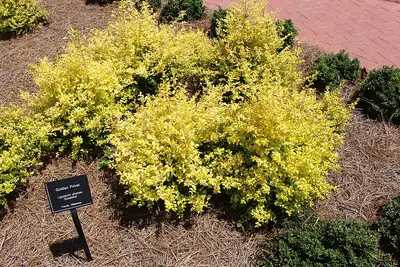
A golden-leafed evergreen shrub that brightens any landscape with its brilliant yellow-green foliage that holds its color year-round. This compact, low-maintenance plant produces small white flowers followed by dark berries, but it's grown primarily for its stunning golden color. Perfect for adding bright contrast to mixed borders and foundation plantings.
Sun
Full sun to partial shade
Zones
6–9
USDA hardiness
Height
6-15 feet
Planting Timeline
Showing dates for Sunshine Ligustrum in USDA Zone 7
All Zone 7 shrub →Zone Map
Click a state to update dates
Sunshine Ligustrum · Zones 6–9
Growing Details
Complete Growing Guide
Light: Dappled Sunlight (Shade through upper canopy all day), Full sun (6 or more hours of direct sunlight a day), Partial Shade (Direct sunlight only part of the day, 2-6 hours). Soil pH: Alkaline (>8.0). Height: 6 ft. 6 in. - 15 ft. 0 in.. Spread: 10 ft. 0 in. - 15 ft. 0 in.. Growth rate: Rapid. Maintenance: High.
Harvesting
Fruits are clusters of black, semi-fleshy, olive-like drupes that birds like to eat.
Color: Black. Type: Drupe. Length: < 1 inch. Width: < 1 inch.
Garden value: Showy
Harvest time: Summer
Storage & Preservation
Sunshine Ligustrum is an ornamental shrub, not a harvested crop, so traditional storage and preservation don't apply. However, if propagating cuttings, store them in a cool location (60-65°F) with high humidity (70-80%) in moist soil or water. Cut stems should be kept in cool conditions with indirect light. For long-term preservation of the plant itself, maintain consistent watering during establishment and protect from extreme frost in colder climates. Propagation methods include softwood cuttings in spring or hardwood cuttings in fall, rooted in well-draining medium under humidity domes.
History & Origin
Sunshine Ligustrum is a golden-leafed cultivar of Ligustrum sinense, the Chinese privet, a species native to central and southern China that has been cultivated for centuries in Asian ornamental gardening. While comprehensive breeding documentation for this particular selection remains limited in accessible horticultural records, it emerged within the broader wave of ornamental foliage cultivar development by major nurseries and plant breeders during the late twentieth century. The cultivar represents the type of targeted selection work that became standard practice among commercial growers seeking to expand the color palette of reliable landscape shrubs, particularly golden and variegated forms that could provide year-round visual interest in temperate gardens.
Origin: Eurasia
Advantages
- +Attracts: Songbirds
- +Fast-growing
Considerations
- -Toxic (Fruits, Leaves): Low severity
- -High maintenance
Companion Plants
Lavender and Boxwood are the two companions worth placing deliberately. Lavender shares Sunshine Ligustrum's preference for lean, well-drained soil and a full-sun position, so they don't compete for water or undercut each other's roots — keep 3 feet between them for clean airflow. Boxwood adds structural contrast without pushing into the same root zone aggressively. Black Walnut is a flat-out problem: its roots release juglone, a compound that disrupts cellular respiration in many ornamentals, and Ligustrum sinense hasn't shown reliable tolerance to it in trials.
Plant Together
Hosta
Thrives in partial shade created by ligustrum, complementary foliage textures
Boxwood
Similar pruning needs and growth habits, creates cohesive hedge design
Lavender
Attracts beneficial insects and repels pests that may target ligustrum
Astilbe
Enjoys filtered light under ligustrum canopy, adds colorful blooms
Camellia
Similar soil preferences and provides winter interest when ligustrum is dormant
Heuchera
Excellent groundcover under ligustrum, tolerates root competition well
Rhododendron
Both prefer slightly acidic soil and benefit from wind protection
Ferns
Natural woodland companions that thrive in ligustrum's dappled shade
Keep Apart
Black Walnut
Produces juglone toxin that inhibits ligustrum root development and growth
Large Oak Trees
Excessive root competition for water and nutrients, creates too much shade
Eucalyptus
Allelopathic compounds suppress ligustrum growth and establishment
Pests & Disease Resistance
Resistance
Very disease resistant
Common Pests
Scale insects occasionally, generally pest-free
Diseases
Rarely affected by diseases
Troubleshooting Sunshine Ligustrum
What you'll see, why it happens, and what to do about it.
Yellow leaves appearing on interior branches, spreading outward over several weeks
Likely Causes
- Overwatering or poorly drained soil causing root stress
- Natural interior leaf drop — Sunshine Ligustrum sheds old growth when crowded
What to Do
- 1.Check soil moisture 3 inches down before watering; if it's still damp, hold off
- 2.Improve drainage by amending the planting area with coarse grit or pine bark fines
- 3.If the yellowing is limited to the deep interior and new growth looks fine, do nothing — it's normal
Sticky residue on leaves and stems, sometimes with sooty black coating
Likely Causes
- Scale insects (likely soft scale, Coccidae family) feeding on stems and excreting honeydew
- Sooty mold (Capnodium spp.) colonizing the honeydew deposit — secondary, not the root cause
What to Do
- 1.Scrub visible scale off stems with a soft brush dipped in 70% isopropyl alcohol
- 2.Apply horticultural oil spray when temps are between 40°F and 90°F — full stem coverage, not just the tops of leaves
- 3.Wipe sooty mold off with a damp cloth once scale is controlled; it won't clear on its own until the honeydew stops
New foliage losing its bright chartreuse color, fading to washed-out pale green or near-white
Likely Causes
- Insufficient light — Sunshine Ligustrum needs at least 4 to 6 hours of direct sun to hold its color
- Excess nitrogen pushing fast, soft growth that doesn't color up properly
What to Do
- 1.Move container plants to a sunnier spot, or thin nearby canopy trees if shade is the issue
- 2.Cut back on high-nitrogen fertilizers; switch to a balanced slow-release like 10-10-10 applied once in spring
- 3.If it's in-ground and too shaded, plan to move it in fall once temps drop below 75°F
Dieback on one or more branches — leaves browning and clinging, stems snap dry
Likely Causes
- Winter cold damage in zone 6 fringe areas where temps drop below 0°F
- Root damage from planting too deep — crown buried more than 1 inch below grade
- Drought stress during establishment (first 12 months after transplant)
What to Do
- 1.Cut dead wood back to live tissue — scratch the bark; green underneath means it's alive
- 2.Check planting depth and expose the root flare if it's buried; replant higher if needed
- 3.Water deeply once a week during the first growing season, even though this shrub handles dry spells well once established
Frequently Asked Questions
Is Sunshine Ligustrum a good shrub for beginners?▼
How long does Sunshine Ligustrum take to mature?▼
Can you grow Sunshine Ligustrum in containers?▼
When should I plant Sunshine Ligustrum?▼
Does Sunshine Ligustrum need full sun to maintain its golden color?▼
Zone-by-Zone Planting Calendar
Growing Guides from Wind River Greens
Sources & References
External authority sources used in compiling this guide.
- ExtensionNC State Extension
See the Methodology page for how this data is sourced, what's AI-assisted, and known limitations.