Privet Hedge
Ligustrum vulgare
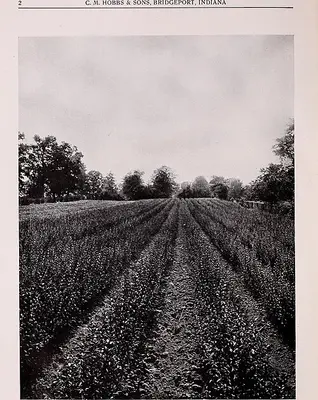
The gold standard for formal hedging that creates perfect living walls with minimal fuss. This fast-growing shrub responds beautifully to pruning and can be shaped into precise geometric forms or maintained as informal screening. Small white flowers appear in summer followed by dark berries, but the real appeal lies in its reliability and classic hedge appearance.
Sun
Full sun to partial shade
Zones
4–7
USDA hardiness
Height
12 feet
Planting Timeline
Showing dates for Privet Hedge in USDA Zone 7
All Zone 7 shrub →Zone Map
Click a state to update dates
Privet Hedge · Zones 4–7
Growing Details
Complete Growing Guide
Light: Full sun (6 or more hours of direct sunlight a day), Partial Shade (Direct sunlight only part of the day, 2-6 hours). Soil: Clay, Loam (Silt), Sand. Drainage: Good Drainage, Moist, Occasionally Dry. Growth rate: Rapid. Maintenance: High. Regions: Mountains, Piedmont.
Harvesting
Semi-fleshy, green drupe that matures to black
Color: Black. Type: Drupe. Length: < 1 inch. Width: < 1 inch.
Garden value: Showy
Harvest time: Fall
Storage & Preservation
Privet hedge cuttings for propagation should be stored in a cool location (50-60°F) in moist—not wet—sand or peat moss for 2-4 weeks. Keep humidity around 60-70%. For preserved foliage, air-dry stems in bundles in a dark, ventilated space for 1-2 weeks. Alternatively, condition fresh cuttings in water indoors before planting. Properly stored hardwood cuttings remain viable for several months in cool, frost-free conditions, making spring propagation feasible from winter-collected material.
History & Origin
Ligustrum vulgare, commonly known as privet, originated in Europe and western Asia, where it has been utilized as a hedging plant since medieval times. The specific cultivar "Privet Hedge" represents the species itself rather than a distinct modern breeding development, as privet's suitability for formal hedging emerged through centuries of practical horticultural use rather than deliberate breeding programs. Documentation of its formal introduction or specific breeder is sparse, reflecting its status as a traditional landscape staple that predates modern plant breeding records. The species became standardized as the hedging benchmark throughout Europe and North America during the Victorian era, when formal gardens and geometric topiary flourished, cementing privet's reputation as the quintessential hedge plant.
Origin: Eurasia
Advantages
- +Attracts: Bees, Butterflies
- +Fast-growing
Considerations
- -Toxic (Fruits, Leaves): Medium severity
- -High maintenance
Companion Plants
Lavender and rosemary hold up well alongside privet — both tolerate the same wide pH range (6.0–8.0) and need less water once established, so they're not in a tug-of-war with the hedge roots. Their volatile oils also tend to disorient thrips and aphids that would otherwise zero in on soft privet growth. Marigolds planted at the base do similar work at ground level. Boxwood is a practical structural partner: its roots run shallow and don't undercut the privet, and both shrubs respond well to formal shearing, so you're not juggling two different pruning approaches on the same planting.
Black walnut is worth keeping far away — it releases juglone through its root zone, a biochemical that interferes with cellular respiration in sensitive plants, and privet declines slowly enough that the cause is easy to misread as drought or nutrient trouble. Large oaks create a different problem: their canopy can push privet below the 4-hour light minimum it needs to hold a tight, dense form, and their surface roots are aggressive enough to dry out a 3-foot hedging strip through a whole summer.
Plant Together
Lavender
Repels pests like moths and aphids, attracts beneficial pollinators
Rosemary
Natural pest deterrent and complements privet's drought tolerance
Boxwood
Similar growing conditions and maintenance requirements for formal hedging
Hostas
Thrives in partial shade created by privet hedge, provides ground cover
Ferns
Enjoys the filtered light and moisture retention under privet canopy
Azaleas
Benefits from wind protection provided by privet hedge
Marigolds
Repels harmful insects and adds color beneath privet
Ivy
Provides ground cover and helps prevent weeds around hedge base
Keep Apart
Black Walnut
Produces juglone toxin that inhibits growth of privet and most plants
Large Oak Trees
Competes heavily for water and nutrients, creates excessive shade
Eucalyptus
Allelopathic compounds suppress growth of nearby plants including privet
Pests & Disease Resistance
Resistance
Generally disease resistant, very hardy
Common Pests
Aphids, scale insects, thrips
Diseases
Anthracnose, leaf spot, honey fungus
Troubleshooting Privet Hedge
What you'll see, why it happens, and what to do about it.
Leaves covered in sticky residue with curled or distorted new growth, often with black sooty mold developing on top
Likely Causes
- Aphid colonies (commonly Myzus persicae or Aphis spiraecola) feeding on soft new shoots
- Scale insects (e.g., wax scale, Ceroplastes sp.) excreting honeydew that feeds the sooty mold fungus
What to Do
- 1.Blast aphids off with a hard stream of water — repeat every 2-3 days for two weeks
- 2.For scale, scrub visible bumps off stems with a soft brush dipped in isopropyl alcohol, then apply horticultural oil at the label rate
- 3.Check for ants farming the aphids; if you see ant trails up the stems, band the base with Tanglefoot to cut off their access
Irregular brown or tan lesions on leaves, sometimes with a yellow halo, leaves dropping prematurely in mid to late summer
Likely Causes
- Cercospora leaf spot (Cercospora ligustri) — a fungal disease that spreads in wet, humid conditions
- Anthracnose (Colletotrichum sp.) — also fungal, typically worse after prolonged rain or overhead irrigation
What to Do
- 1.Rake up and bag fallen leaves immediately — don't compost them
- 2.Thin dense sections of the hedge with hand pruners so air can move through; a solid wall of foliage stays wet far longer after rain than an open-grown shrub
- 3.If the problem recurs yearly, apply a copper-based fungicide at bud break in spring, before conditions turn wet
Frequently Asked Questions
How fast does privet hedge grow?▼
Is privet hedge good for beginners?▼
How often should I prune privet hedge?▼
Can privet hedge grow in shade?▼
What pests affect privet hedges?▼
How do I propagate privet hedge?▼
Zone-by-Zone Planting Calendar
Growing Guides from Wind River Greens
Sources & References
External authority sources used in compiling this guide.
- ExtensionNC State Extension
See the Methodology page for how this data is sourced, what's AI-assisted, and known limitations.