Barberry Red Rocket
Berberis thunbergii 'Red Rocket'
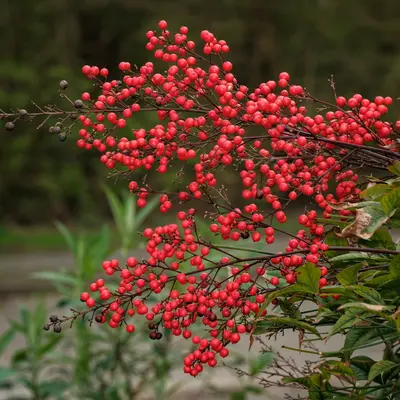
This columnar barberry brings intense red foliage and a unique upright form to landscapes where space is at a premium. Unlike spreading barberry varieties, Red Rocket grows tall and narrow, making it perfect for tight spaces, foundation plantings, or creating living pillars in the garden. The thorny branches provide excellent security while the fiery red leaves hold their color all season long.
Sun
Full sun to partial shade
Zones
4–8
USDA hardiness
Height
3-6 feet
Planting Timeline
Showing dates for Barberry Red Rocket in USDA Zone 7
All Zone 7 shrub →Zone Map
Click a state to update dates
Barberry Red Rocket · Zones 4–8
Growing Details
Complete Growing Guide
Light: Full sun (6 or more hours of direct sunlight a day), Partial Shade (Direct sunlight only part of the day, 2-6 hours). Soil: Clay, Loam (Silt), Sand. Drainage: Good Drainage, Moist, Occasionally Dry, Very Dry. Height: 3 ft. 0 in. - 6 ft. 0 in.. Spread: 4 ft. 0 in. - 7 ft. 0 in.. Spacing: 3 feet-6 feet, 6-feet-12 feet. Growth rate: Medium. Maintenance: High. Propagation: Seed. Regions: Coastal, Mountains, Piedmont.
Harvesting
This plant has 0.3"-1", bright, ellipsoidal and glossy red berries in the fall, persisting into winter
Color: Red/Burgundy. Type: Berry. Length: < 1 inch. Width: < 1 inch.
Garden value: Long-lasting, Showy
Harvest time: Fall, Winter
Storage & Preservation
Barberry Red Rocket is an ornamental shrub, not a food product, so traditional storage and shelf life do not apply. However, for landscape maintenance, prune and shape during the dormant season (late fall to early spring). Store freshly cut branches in cool water indoors to preserve foliage color temporarily. For propagation purposes, hardwood cuttings can be preserved in cool, moist conditions (40-50°F) over winter. Maintain the plant with regular watering during establishment and drought periods to preserve foliage vibrancy.
History & Origin
Origin: Asia (Japan)
Advantages
- +Columnar form saves space in narrow garden areas and tight foundations
- +Vibrant red foliage persists throughout growing season without fading
- +Thorny branches provide natural security barrier around property perimeters
- +Excellent disease resistance with minimal pest problems requiring intervention
- +Easy to grow with low maintenance demands once established
Considerations
- -Thorns make pruning and handling this plant difficult and hazardous
- -Barberry invasiveness potential in some regions requires responsible planting
- -Narrow upright form limits visual impact compared to wider shrubs
- -Red coloring intensity may fade in hot climates or full afternoon sun
Companion Plants
Lavender, Sedum, Russian Sage, and Catmint are natural pairings here. All four share 'Red Rocket's preference for well-drained soil and a solid stretch of direct sun, and none of them compete aggressively for water or root space. The silvery-blue tones of Russian Sage and Catmint also create a sharper color contrast against the shrub's burgundy foliage than most pairings will — that's a design payoff that holds from June through first frost. Ornamental grasses and Black-eyed Susan round out the list on similar terms: low water demands, open root systems, and enough height variation to keep the bed from reading as one flat mass.
Hostas, Azaleas, and Impatiens don't belong in the same bed. Hostas and Impatiens both want consistent moisture and some shade — exactly the conditions that tip 'Red Rocket' toward the Phytophthora root rot described above. Azaleas are the more specific mismatch: they thrive at a soil pH of 4.5–6.0, which sits well below 'Red Rocket's comfortable range of 6.0–7.5. You can't amend a single bed to satisfy both, so don't try.
Plant Together
Lavender
Repels deer and rabbits that may browse barberry, shares similar drought tolerance
Ornamental Grasses
Complement the architectural form, provide textural contrast, similar low maintenance needs
Sedum
Thrives in similar well-drained conditions, provides groundcover beneath shrub
Russian Sage
Matches drought tolerance and full sun requirements, creates nice color contrast
Juniper
Similar hardiness and drought tolerance, provides evergreen structure year-round
Black-eyed Susan
Tolerates same growing conditions, bright flowers complement red foliage
Catmint
Deters pests, thrives in similar dry conditions, purple flowers enhance red foliage
Spirea
Similar growth requirements and pruning needs, complementary flowering periods
Keep Apart
Hostas
Requires moist, shaded conditions that conflict with barberry's sun and drainage needs
Azaleas
Needs acidic, moist soil and partial shade, opposite of barberry's alkaline, dry preferences
Impatiens
Requires consistent moisture and shade, will struggle in barberry's preferred dry, sunny location
Pests & Disease Resistance
Resistance
Excellent disease and pest resistance
Common Pests
Very few pest problems, occasionally aphids
Diseases
Highly resistant to diseases, occasional leaf spot
Troubleshooting Barberry Red Rocket
What you'll see, why it happens, and what to do about it.
Leaves curling or distorted on new growth, with sticky residue on stems
Likely Causes
- Aphid colonies (commonly Aphis fabae or related species) feeding on tender new growth
- Ants farming aphids and protecting them from natural predators
What to Do
- 1.Knock aphids off with a strong stream of water from a hose — repeat every 2-3 days until the population crashes
- 2.If that's not working, spray with insecticidal soap, coating the undersides of leaves thoroughly
- 3.Check for ant trails at the base of the shrub; disrupting ant access often lets ladybugs and lacewings move back in
Small dark or tan spots on leaves, sometimes with a yellow halo, appearing mid-summer
Likely Causes
- Leaf spot fungus (Cercospora or Phyllosticta spp.) — more common in wet summers with poor airflow
- Overhead watering that keeps foliage wet for extended periods
What to Do
- 1.Remove and dispose of heavily spotted leaves in the trash, not the compost pile
- 2.Switch to drip irrigation or water at the base — keep water off the foliage
- 3.If spotting is severe two years running, apply a copper-based fungicide at bud break the following spring
Overall leaf color fading from deep red to dull greenish-bronze, especially on interior branches
Likely Causes
- Insufficient light — 'Red Rocket' needs at least 4-6 hours of direct sun to hold its red pigmentation; shade washes it out
- Neighboring plants crowding in and blocking light to interior growth
What to Do
- 1.Relocate the shrub to a spot with more direct sun if it's getting fewer than 4 hours daily
- 2.Prune back competing branches from adjacent plants that are casting shade onto the shrub
- 3.Do a hard renewal prune in early spring to open up the interior and push new, well-colored growth
Wilting or yellowing leaves despite regular watering, with roots appearing brown and mushy at the crown
Likely Causes
- Root rot (Phytophthora spp.) caused by consistently waterlogged soil
- Clay-heavy soil that holds standing water after rain
- Planting too deep, which keeps the crown wet indefinitely
What to Do
- 1.Dig the shrub and inspect the roots; cut away any mushy brown sections back to firm white tissue before replanting
- 2.Work coarse grit or aged compost into the planting site to break up compaction before putting it back in the ground
- 3.Set the crown at or just slightly above the surrounding soil grade — never below it
Frequently Asked Questions
Is Barberry Red Rocket a good choice for beginners?▼
Can you grow Barberry Red Rocket in containers?▼
How tall does Barberry Red Rocket grow?▼
When should I plant Barberry Red Rocket?▼
Does Barberry Red Rocket need full sun?▼
Are Barberry Red Rocket plants thorny and deer resistant?▼
Zone-by-Zone Planting Calendar
Growing Guides from Wind River Greens
Sources & References
External authority sources used in compiling this guide.
- ExtensionNC State Extension
See the Methodology page for how this data is sourced, what's AI-assisted, and known limitations.