Marigold, Gem
Tagetes tenuifolia
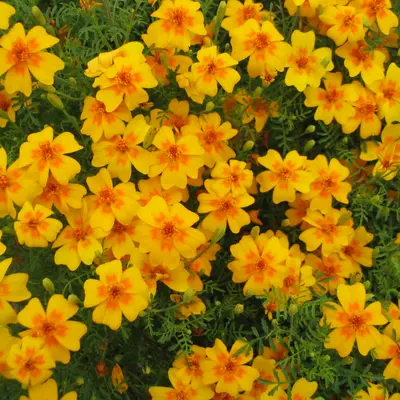
Easy to grow! Spicy flavor with light citrus undertones. Makes a unique dessert garnish. Based on our yield trial, we recommend seeding 4 gm per tray at approx. 7 flats per oz of seed. Avg. days to maturity was 18 days when harvested at the first true leaf (as opposed to cotyledon) stage.
Harvest
16-25d
Days to harvest
Sun
Full sun
Zones
2–11
USDA hardiness
Height
8-30 inches
Planting Timeline
Showing dates for Marigold, Gem in USDA Zone 7
All Zone 7 microgreen →Zone Map
Click a state to update dates
Marigold, Gem · Zones 2–11
Growing Details
Succession Planting
Gem marigold microgreens turn around fast — 16 to 25 days from sow to harvest — so a new tray every 10–12 days keeps a near-continuous supply going without much overlap. Start the next tray when your current one hits day 10, right as it's sizing up. That stagger means if one tray underperforms, you're never more than a week from the next cut.
The planting calendar runs January through December indoors, so there's no real off-season — just manage your light. A south-facing windowsill handles summer fine. Come December and January, you'll likely need a grow light held 2–4 inches above the tray to keep cotyledons from going leggy and pale. Tagetes tenuifolia germinates reliably at 65–75°F, but trays sitting on surfaces above 80°F — near a heat mat turned too high or a warm appliance — will see erratic, uneven germination.
Complete Growing Guide
Growing Gem Marigold microgreens is straightforward, but they require a bit more patience than fast crops like radish or pea. Plan for 16-25 days from seed to harvest, with most trays peaking around day 18 when the first true leaves emerge. Harvesting at this true-leaf stage — rather than cotyledon — is what unlocks the signature spicy citrus flavor.
Start with a clean 1020 tray filled with 1 to 1.5 inches of fine-textured, pre-moistened soilless mix. Coco coir blends or a peat-based microgreen mix both work well. Avoid heavy compost-based mixes, which can hold too much moisture and invite damping off during the longer grow cycle.
Weigh out 4 grams of seed per tray (roughly 7 flats per ounce) and broadcast as evenly as possible across the surface. Gem Marigold seeds are slim and needle-like, so a gentle shake from a shaker bottle gives the most even distribution. Press the seed lightly into the soil surface with another tray — do not bury. Mist thoroughly.
Stack trays under weight or cover with a blackout dome for 4-6 days during germination, misting once daily to keep the surface moist but never soggy. Germination is uneven if the surface dries out, so check daily. Once you see consistent green sprouts lifting the cover, move the tray to bright light (a basic LED shop light at 12-16 hours daily is plenty).
Water from the bottom once the canopy is established. Pour about 1-2 cups of water into the tray base and let the mix wick it up. Top-watering at this stage encourages mold and matted foliage. Maintain ambient temps between 65-75°F. Cooler rooms slow the crop noticeably; warmer rooms can trigger mold.
Gem Marigold does not need fertilizer if you started with a quality mix, but a very dilute kelp or fish emulsion drench around day 10 can boost true-leaf development if your media is lean.
The most common mistake growers make is harvesting too early at the cotyledon stage — the flavor is grassy and underwhelming until the lacy true leaves develop. Be patient. The second mistake is overseeding; at densities above 5 grams per tray, airflow drops and you'll see fungal issues by day 12. Stick to the 4-gram rate for clean, full trays.
Harvesting
Harvest Gem Marigold microgreens once the first true leaves have fully emerged and started to show their characteristic feathery, dissected shape — typically around day 18, though anywhere from 16 to 25 days is normal depending on temperature and light. The cotyledons alone taste flat; the true leaves are where the spicy citrus flavor lives, so resist the urge to cut early.
Harvest in the morning when the tray is fully hydrated and the greens are most turgid — they'll have better shelf life than afternoon-cut trays. Use a sharp, clean chef's knife or a serrated harvesting knife and cut just above the soil line in smooth, drawing strokes. Hold a small section of canopy gently with your free hand to keep stems upright as you cut. Avoid pulling or twisting, which dislodges soil and contaminates the harvest. Do not rinse unless absolutely necessary; surface moisture dramatically shortens shelf life.
Storage & Preservation
Store unwashed Gem Marigold microgreens in a sealed clamshell or container lined with a dry paper towel to absorb condensation. Refrigerate at 36-40°F. Properly cut and stored, they hold quality for 7-10 days, though flavor is brightest in the first 5 days. If they were cut wet, expect closer to 4-5 days before slime sets in.
These microgreens do not preserve well by traditional methods — freezing destroys the delicate texture, and drying mutes the citrus notes that make them special. The best preservation strategy is succession sowing every 7-10 days for a continuous fresh supply. For short-term use, you can infuse the trimmed greens into simple syrups for cocktails or desserts, which captures the citrus flavor for up to 2 weeks refrigerated.
History & Origin
Gem Marigolds belong to Tagetes tenuifolia (formerly T. signata), a species native to Mexico and Central America, distinct from the more common Tagetes patula (French marigold) and T. erecta (African marigold). Indigenous peoples of Mesoamerica cultivated Tagetes species for centuries for ceremonial, medicinal, and culinary uses long before European contact. The 'Gem' series — including Lemon Gem, Tangerine Gem, and Red Gem — was developed as a compact, edible-flowered ornamental line prized for its delicate foliage and citrus-scented blooms.
While traditionally grown as a garden annual for edible flowers, Gem Marigold's adoption as a microgreen is much more recent, gaining traction in the 2010s among specialty chefs and microgreen growers seeking unique garnish crops. Its spicy, citrus-forward flavor at the true-leaf stage made it a favorite for high-end pastry and cocktail applications, where conventional microgreens fall short.
Advantages
- +Unique spicy-citrus flavor unlike any other microgreen on the market
- +High visual appeal with lacy, feathery true leaves perfect for plating
- +Commands premium prices in chef and farmers market channels
- +Excellent yield of 7 flats per ounce of seed at the recommended seeding rate
- +Easy to grow with no special equipment beyond standard microgreen setup
- +Pairs beautifully with sweet applications — rare among microgreens
Considerations
- -Longer grow cycle (18 days average) ties up tray space versus 10-day crops
- -Must be grown to true-leaf stage; cotyledon-stage flavor is bland and grassy
- -Higher mold risk during the extended grow cycle if airflow is poor
- -Delicate texture means very short shelf life compared to brassicas
- -Does not preserve well — must be used fresh
Companion Plants
Gem marigolds (Tagetes tenuifolia specifically, not the big African or French types) are genuinely useful near tomatoes and peppers — the roots release alpha-terthienyl, a compound documented to suppress root-knot nematodes (Meloidogyne species) in the surrounding soil. The effect accumulates over a full growing season, so rotating marigolds through a bed the year before transplanting tomatoes does something measurable. Grown as microgreens, that nematode suppression is nil — you're harvesting at day 16–25, roots and all — but they're still a practical tray to run alongside seedlings in the greenhouse, since the scent disorients aphids and whiteflies scanning for a host plant.
Nasturtiums pair well not because of any documented chemical interaction, but because they share Gem marigold's citrusy-peppery bite and look good together on the plate. For microgreens, that's often the more useful reason to grow two things side by side. Cucumbers and beans are fine neighbors in a shared space; none of them compete at the same root depth or pull heavily on the same nutrients at the same time.
Keep Gem marigolds well away from fennel. Fennel is allelopathic — it releases anethole and related compounds that inhibit germination and root development across a wide range of plants, and marigolds are susceptible. In our zone 7 Georgia gardens, fennel can overwinter in a raised bed and spread before you've noticed it, which makes the placement problem worse than it sounds on paper. Black walnut presents the same category of issue through juglone toxicity, though that one's easier to avoid.
Plant Together
Tomatoes
Marigolds repel tomato hornworms, whiteflies, and nematodes that damage tomato roots
Peppers
Marigolds deter aphids, spider mites, and other pests that commonly attack pepper plants
Cucumbers
Repels cucumber beetles, aphids, and squash bugs while attracting beneficial predatory insects
Carrots
Marigolds help control carrot fly and other root pests through their strong scent
Lettuce
Provides natural pest control against aphids and slugs that damage lettuce leaves
Cabbage
Deters cabbage worms, flea beetles, and other brassica pests with aromatic compounds
Beans
Repels Mexican bean beetles and aphids while improving overall garden biodiversity
Nasturtiums
Both attract beneficial insects and create a pest-confusing polyculture system
Keep Apart
Fennel
Releases allelopathic compounds that can inhibit marigold germination and growth
Black Walnut
Produces juglone toxin that stunts growth and can kill marigold plants
Sunflowers
Allelopathic effects can reduce marigold growth and may compete heavily for nutrients
Nutrition Facts
Per 100g serving. % Daily Value based on 2,000 calorie diet. Source: USDA FoodData Central (FDC #167782)
Pests & Disease Resistance
Diseases
Damping off, gray mold (Botrytis) during extended grow cycle if airflow is poor
Troubleshooting Marigold, Gem
What you'll see, why it happens, and what to do about it.
Seedlings collapse at the soil line within the first 7–10 days, stems look pinched or water-soaked at the base
Likely Causes
- Damping off — typically Pythium or Rhizoctonia species — triggered by overwatering or poor drainage in the tray
- Top-watering after germination, which keeps the surface wet and the stem base sitting in moisture
What to Do
- 1.Switch to bottom-watering only as soon as sprouts emerge — set the tray in a shallow pan of water for 20–30 minutes, then let it drain fully
- 2.Run a small fan on low for 4–6 hours a day to keep air moving across the tray surface
- 3.If the whole tray goes down, don't try to save it — dump it, bleach-rinse the tray, and start fresh with dry, sterile growing medium
Gray fuzzy coating appearing on stems or cotyledons around day 14–20, especially near the tray edges or under a humidity dome
Likely Causes
- Gray mold (Botrytis cinerea) — moves fast in stagnant air and high humidity, especially if you've left a dome on past day 3 or 4
- Overcrowded seeding density that traps moisture between stems
What to Do
- 1.Pull the humidity dome off no later than day 3 after germination — Gem marigold microgreens don't need it past that point
- 2.Remove any visibly affected stems with clean scissors and increase airflow immediately
- 3.Harvest the tray early if mold is spreading — at day 16 the cotyledons are already edible, and cutting your losses beats losing the whole batch
Frequently Asked Questions
How long do Gem Marigold microgreens take to grow?▼
What do Gem Marigold microgreens taste like?▼
Are Gem Marigold microgreens easy for beginners?▼
How much seed do I need per tray for Gem Marigold microgreens?▼
Why are my Gem Marigold microgreens tasteless?▼
Can you grow Gem Marigold microgreens indoors year-round?▼
Zone-by-Zone Planting Calendar
| Zone | Indoor Start | Transplant | Direct Sow | Harvest |
|---|---|---|---|---|
| Zone 1 | January – December | — | — | January – December |
| Zone 2 | January – December | — | — | January – December |
| Zone 11 | January – December | — | — | January – December |
| Zone 12 | January – December | — | — | January – December |
| Zone 13 | January – December | — | — | January – December |
| Zone 3 | January – December | — | — | January – December |
| Zone 4 | January – December | — | — | January – December |
| Zone 5 | January – December | — | — | January – December |
| Zone 6 | January – December | — | — | January – December |
| Zone 7 | January – December | — | — | January – December |
| Zone 8 | January – December | — | — | January – December |
| Zone 9 | January – December | — | — | January – December |
| Zone 10 | January – December | — | — | January – December |
Growing Guides from Wind River Greens
Sources & References
External authority sources used in compiling this guide.
- BreederJohnny's Selected Seeds
- USDAUSDA FoodData Central
See the Methodology page for how this data is sourced, what's AI-assisted, and known limitations.