Sprouting Mix
Mixed spp.
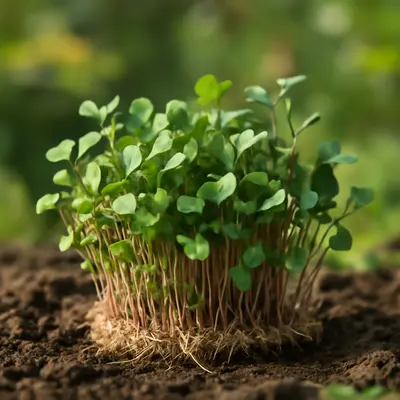
Various shades of green leaves and pink and white stems with a crisp, mildly spicy flavor. Mix includes: broccoli, radish, alfalfa, and kale. One tablespoon of seed yields approx. 1 cup of sprouts. All of Johnny's high-germination sprouting seeds have tested negative for the presence of E. coli 0157 and Salmonella.
Harvest
4-6d
Days to harvest
Sun
Indoor
Zones
1–11
USDA hardiness
Height
1-2 inches"
Planting Timeline
Showing dates for Sprouting Mix in USDA Zone 7
All Zone 7 microgreen →Zone Map
Click a state to update dates
Sprouting Mix · Zones 1–11
Growing Details
Succession Planting
Sprouts finish in 4–6 days, so succession is easy to fold into a weekly routine. Start a new jar or tray every 2–3 days — two or three staggered batches means you're harvesting something every other day without any single jar sitting past its peak. No season to track; this rotation runs twelve months straight on a kitchen counter.
Complete Growing Guide
Growing Sprouting Mix (Mixed spp.) microgreen. Light: Indoor. Hardy in USDA zones 1 to 11. Days to maturity: 4-6. Difficulty: Easy.
Harvesting
Ready for harvest in 4-6 days from sowing or transplant. Harvest at peak ripeness for best flavor and storage life. Pick regularly to encourage continued production where applicable.
Storage & Preservation
Freshly harvested sprouting mix keeps best at 32–40°F in a breathable container lined with paper towels to absorb excess moisture; plastic bags trap humidity and promote rot. Expect 5–7 days of usable freshness when stored this way. Freezing works reasonably well for cooked applications—blanch briefly, cool in ice water, then pack into freezer bags—though raw texture suffers noticeably. Drying is less practical since microgreens are mostly water and lose their appeal when desiccated. For longer preservation, consider fermenting small batches in brine (3% salt solution), which develops tangy flavor and extends life to several weeks in the refrigerator. Because sprouting mix contains tender, delicate stems, handle gently during storage to minimize bruising. Store away from ethylene-producing fruits like apples to prevent premature wilting.
History & Origin
Sprouting Mix (Mixed spp.) is a cultivar grown commercially. See category-level varieties for general species history and origin information.
Advantages
- +Organic-certified seed
- +Easy to grow — beginner-friendly
- +Quick harvest — ready in about 4-6 days
- +Wide hardiness — grows in USDA zones 1-11
Companion Plants
Sprouting mixes are grown in jars or trays indoors, so field-style companion planting doesn't apply. The beneficials listed — basil, chives, dill, parsley, nasturtium — are plate companions, not bed companions; chives and dill in particular cut through the mild bitterness of brassica and radish-forward mixes. Black walnut's juglone and fennel's allelopathic compounds are genuine outdoor problems for other crops, but in a sprouting context they're irrelevant — your actual limiting factors are drainage, seed density, and keeping temps in the 65–72°F range.
Plant Together
Basil
Repels aphids and other pests that commonly attack young seedlings
Marigold
Deters whiteflies and aphids while attracting beneficial insects
Chives
Natural fungicide properties help prevent damping-off disease in seedlings
Nasturtium
Acts as trap crop for aphids and flea beetles, protecting delicate microgreens
Parsley
Attracts beneficial insects and doesn't compete for space with shallow-rooted microgreens
Mint
Repels ants and rodents that might disturb microgreen trays
Catnip
Strong pest deterrent, especially effective against aphids and flea beetles
Dill
Attracts beneficial predatory insects while repelling spider mites
Keep Apart
Black Walnut
Produces juglone toxin that inhibits germination and stunts growth of most plants
Fennel
Allelopathic compounds inhibit seed germination and early plant development
Eucalyptus
Essential oils and leaf compounds suppress seed germination and seedling growth
Nutrition Facts
Per 100g serving. % Daily Value based on 2,000 calorie diet. Source: USDA FoodData Central (FDC #167782)
Pests & Disease Resistance
Common Pests
None—indoor sprouting environment excludes pests
Diseases
Mold (Aspergillus, Rhizopus, Mucor species) if moisture control or air circulation is inadequate
Troubleshooting Sprouting Mix
What you'll see, why it happens, and what to do about it.
White or gray fuzzy growth on seeds or roots by day 2–3
Likely Causes
- Mold (Rhizopus or Mucor species) — caused by standing water between rinse cycles
- Overcrowded seeds trapping moisture and blocking airflow
What to Do
- 1.Tip the jar or tray at a 45-degree angle after each rinse so water drains completely — no pooling
- 2.Reduce seed density; a single layer of seeds (pre-soak) across the bottom of a quart jar is enough
- 3.Move the sprouts to a spot with better air circulation — a fan on low nearby helps more than most people expect
Sprouts smell sour or fermented by day 3–4, even without visible mold
Likely Causes
- Aspergillus species or bacterial contamination from rinsing only once daily in warm conditions above 75°F
- Residue from soaking water left on seeds — not rinsing thoroughly enough after the initial soak
What to Do
- 1.Rinse at least twice daily — morning and evening — with cool water, draining for a full 10–15 minutes each time
- 2.Bring ambient temperature down if possible; bacterial growth accelerates sharply above 75°F
- 3.Discard the batch, sanitize the jar with a dilute bleach solution (1 tablespoon per gallon of water), and start fresh with new seed
Frequently Asked Questions
How long does Sprouting Mix take to grow?▼
Is Sprouting Mix good for beginners?▼
What does Sprouting Mix taste like?▼
Can you grow Sprouting Mix in containers or only jars?▼
How do you prevent mold when sprouting?▼
Zone-by-Zone Planting Calendar
| Zone | Indoor Start | Transplant | Direct Sow | Harvest |
|---|---|---|---|---|
| Zone 1 | January – December | — | — | January – December |
| Zone 2 | January – December | — | — | January – December |
| Zone 11 | January – December | — | — | January – December |
| Zone 12 | January – December | — | — | January – December |
| Zone 13 | January – December | — | — | January – December |
| Zone 3 | January – December | — | — | January – December |
| Zone 4 | January – December | — | — | January – December |
| Zone 5 | January – December | — | — | January – December |
| Zone 6 | January – December | — | — | January – December |
| Zone 7 | January – December | — | — | January – December |
| Zone 8 | January – December | — | — | January – December |
| Zone 9 | January – December | — | — | January – December |
| Zone 10 | January – December | — | — | January – December |
Growing Guides from Wind River Greens
Sources & References
External authority sources used in compiling this guide.
- BreederJohnny's Selected Seeds
- USDAUSDA FoodData Central
See the Methodology page for how this data is sourced, what's AI-assisted, and known limitations.