Onion Microgreens
Allium cepa
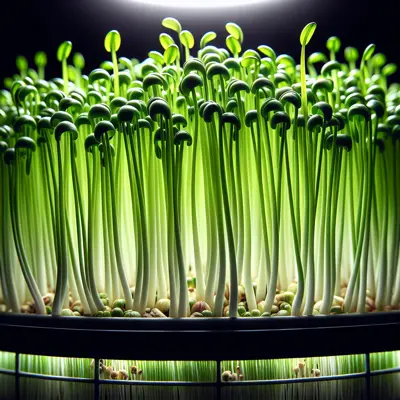
Widely adapted, day-neutral, and matures well anywhere in North America from spring sowing. Suitable for fall planting where short-day onions are normally grown. Produces uniform, large, white-skinned onions with mild flavor and thick rings. Not for long storage. Sierra Blanca is the same variety as Super Star. It has been renamed by the breeder. AAS Winner. Also offered as plants and as conventional seed with NOP-compliant pelleting.
Harvest
109d
Days to harvest
Sun
Full sun
Zones
5–10
USDA hardiness
Height
12-18 inches
Planting Timeline
Showing dates for Onion Microgreens in USDA Zone 7
All Zone 7 microgreen →Zone Map
Click a state to update dates
Onion Microgreens · Zones 5–10
Growing Details
Succession Planting
Onion microgreens can be sown indoors every month of the year — no heat bolt threshold to manage, no frost date to watch. A fresh tray every 10–14 days is a practical cadence: germination runs 7–14 days, and you're cutting shoots around day 10–12 from sow (the 109-day figure on the seed packet is for full bulb development, not microgreens). That stagger keeps a steady supply without a glut piling up in the fridge. One tray at a time suits most households; two overlapping trays if you're supplying a small CSA or market table.
Complete Growing Guide
Onion microgreens thrive best when sown densely on moisture-rich medium and kept at consistent 65-70°F temperatures, as this day-neutral variety resists premature bolting better than many greens but still needs cool conditions to prevent excessive stretching. Since these microgreens mature around 109 days to full size, plan successive sowings every two weeks for continuous harvest if growing for mature bulbs, or harvest at the microgreen stage (10-14 days) for tender shoots with mild onion flavor. Watch for damping-off disease in overly wet conditions—ensure adequate air circulation and avoid waterlogging the soil surface. The thick-ringed bulbs store poorly, so prioritize fresh use over preservation. One practical tip: soak seeds for four hours before sowing to accelerate germination and ensure more uniform emergence across your tray, reducing gaps in your microgreen crop.
Light: Full sun (6 or more hours of direct sunlight a day). Soil: High Organic Matter, Loam (Silt), Sand. Soil pH: Alkaline (>8.0), Neutral (6.0-8.0). Drainage: Good Drainage, Moist. Height: 1 ft. 0 in. - 1 ft. 6 in.. Spread: 0 ft. 6 in. - 1 ft. 0 in.. Spacing: Less than 12 inches, 12 inches-3 feet. Maintenance: Medium. Regions: Coastal, Mountains, Piedmont.
Harvesting
Onion microgreens reach peak harvest readiness when the first true leaves develop their characteristic pale green color and the stems reach approximately one to two inches in height, with a tender yet sturdy feel when gently pinched. Visual cues include fully opened cotyledons and the emergence of the first set of true leaves, signaling optimal nutrient density and flavor development. For continuous harvests, cut microgreens just above the soil line using clean scissors, allowing roots to remain in place for potential regrowth, though most growers prefer a single harvest for maximum yield and quality. Time your cutting for early morning when stems are fully hydrated and crisp, typically seven to ten days after sowing, to ensure the mildest flavor and best texture for this cultivar.
Flowers wither and convert to bulblets
Type: Capsule.
Harvest time: Summer
Edibility: The bulb and tops are edible raw or cooked. However, the plant also has poisonous characteristics as noted in the "Poisonous to Humans" section of this record. Toxicity can depend on the age of the person or animal, the age of the plant, the part of the plant ingested, how much is ingested, whether the person or animal has sensitivities or allergies, whether it's eaten raw or cooked, and so forth. Consult with a medical professional for further details.
Storage & Preservation
Fresh onion microgreens are highly perishable and should be used within 3-5 days of harvest for optimal flavor and texture. Store unwashed microgreens in the refrigerator at 35-40°F in a breathable container lined with paper towels to absorb excess moisture. Avoid plastic bags which trap humidity and accelerate decay.
For short-term storage, place cut microgreens in a glass of water like fresh herbs, covering loosely with a plastic bag and refrigerating. Change the water daily to maintain freshness.
Onion microgreens don't preserve well through traditional methods due to their delicate structure and high water content. However, you can freeze-dry them for long-term storage as a seasoning – the hollow stems dehydrate completely while retaining much of their onion flavor. Avoid freezing fresh microgreens as they become mushy when thawed. For continuous supply, succession plant new trays every 5-7 days rather than trying to preserve harvested microgreens.
History & Origin
Onion microgreens derive from conventional onion breeding lines within *Allium cepa*, though specific documentation regarding the exact origin of this microgreen variety is limited. The variety appears to represent a selection optimized for microgreen production rather than a formally named heirloom or heritage type. Its development likely emerged from the broader microgreens cultivation movement of recent decades, where growers began adapting conventional vegetable seeds for rapid, nutrient-dense sprouting. The mild flavor profile and uniform growth characteristics suggest intentional selection for culinary microgreen applications, though the breeder and introduction date remain undocumented in widely available sources.
Origin: Central Asia and central Persia
Advantages
- +Widely adapted variety grows well across North America year-round
- +Produces uniform, large, mild-flavored onion microgreens with crisp texture
- +Day-neutral timing allows flexible spring and fall planting schedules
- +AAS Winner variety ensures quality and reliable performance
- +Less pungent than mature onions makes it palatable fresh
Considerations
- -Damping off and purple blotch diseases thrive in humid conditions
- -White rot risk requires careful soil sanitation and prevention
- -Thrips occasionally damage crops requiring integrated pest management
- -Not suitable for long-term storage limits commercial shelf life
Companion Plants
Onion microgreens share a grow rack well with radish microgreens, arugula, spinach, and lettuce — similar water needs, no aggressive root chemistry, and none of them will stunt Allium germination. Basil, parsley, and cilantro are fine at close range too, though their germination windows differ enough that mixing seeds in a single tray makes harvest timing a headache; keep them in their own trays. Fennel is the problem neighbor: it releases allelopathic compounds that actively suppress Allium germination, and even proximity on a shared rack has been noted to cause uneven sprout rates. Beans and sage create milder but real issues through root exudates and moisture competition.
Plant Together
Basil
Repels aphids and thrips that commonly attack microgreens
Chives
Natural fungicide properties help prevent damping-off disease
Parsley
Attracts beneficial insects and doesn't compete for light in microgreen setups
Lettuce
Similar growing conditions and onion microgreens may deter lettuce pests
Cilantro
Complementary growth rates and helps repel spider mites
Arugula
Benefits from onion's pest-deterrent properties, especially flea beetles
Radish Microgreens
Onions help repel root maggots that can affect radish seeds
Spinach
Onion compounds help deter aphids that commonly attack spinach
Keep Apart
Fennel
Allelopathic compounds inhibit germination and growth of most plants
Beans
Onion compounds can inhibit nitrogen fixation and bean germination
Sage
Strong aromatic oils may inhibit delicate microgreen germination
Nutrition Facts
Per 100g serving. % Daily Value based on 2,000 calorie diet. Source: USDA FoodData Central (FDC #170000)
Pests & Disease Resistance
Resistance
Pink Root (Intermediate)
Common Pests
Thrips occasionally, onion maggots (rare in microgreen stage)
Diseases
Damping off, purple blotch in humid conditions, white rot in contaminated soil
Troubleshooting Onion Microgreens
What you'll see, why it happens, and what to do about it.
Seedlings collapsing at the soil line within the first 5–7 days after germination
Likely Causes
- Damping off (Pythium or Rhizoctonia spp.) — fungal rot triggered by overwatering and poor airflow
- Misting too frequently, keeping the growing medium waterlogged between sessions
What to Do
- 1.Cut misting to once daily and let the surface dry slightly between waterings
- 2.Run a small fan on low for 4–6 hours a day to improve airflow over the tray
- 3.Discard the affected tray — damping off spreads fast — and sanitize with a 10% bleach rinse before reusing
Pale gray or purple lesions forming on the shoots around day 8–12, especially in humid conditions
Likely Causes
- Purple blotch (Alternaria porri) — a fungal pathogen that thrives above 70% relative humidity
- Trays crowded too tightly with no airflow between them
What to Do
- 1.Space trays at least 2 inches apart and run ventilation — a window or a fan will do
- 2.Harvest immediately at the first sign of spread; onion microgreens at that stage are still edible
- 3.For the next round, bring humidity in your grow space below 65% if you can manage it
Shoots germinating unevenly or failing to emerge past day 14, with some seeds visibly rotting in place
Likely Causes
- White rot (Sclerotium cepivorum) introduced through contaminated potting mix or unsterilized reused trays
- Seeds sown too deep — onion seeds need to sit no more than 1/4 inch below the medium surface
- Grow space below 65°F slowing or stalling germination
What to Do
- 1.Use fresh, sterile potting medium for every grow — don't reuse soil pulled from a previous tray
- 2.Press seeds onto the surface and cover with just a thin dusting of medium, or skip the cover entirely
- 3.Keep your grow space at 68–75°F during germination; a seedling heat mat set to 70°F solves this reliably
Frequently Asked Questions
How long do onion microgreens take to grow?▼
Are onion microgreens good for beginners?▼
Can you grow onion microgreens without soil?▼
What do onion microgreens taste like compared to regular onions?▼
Why are my onion microgreens turning yellow and dying?▼
Do I need to soak onion seeds before planting microgreens?▼
Zone-by-Zone Planting Calendar
| Zone | Indoor Start | Transplant | Direct Sow | Harvest |
|---|---|---|---|---|
| Zone 1 | January – December | — | — | January – December |
| Zone 2 | January – December | — | — | January – December |
| Zone 11 | January – December | — | — | January – December |
| Zone 12 | January – December | — | — | January – December |
| Zone 13 | January – December | — | — | January – December |
| Zone 3 | January – December | — | — | January – December |
| Zone 4 | January – December | — | — | January – December |
| Zone 5 | January – December | — | — | January – December |
| Zone 6 | January – December | — | — | January – December |
| Zone 7 | January – December | — | — | January – December |
| Zone 8 | January – December | — | — | January – December |
| Zone 9 | January – December | — | — | January – December |
| Zone 10 | January – December | — | — | January – December |
Growing Guides from Wind River Greens
Sources & References
External authority sources used in compiling this guide.
See the Methodology page for how this data is sourced, what's AI-assisted, and known limitations.