Mild Micro Mix
Brassica spp.
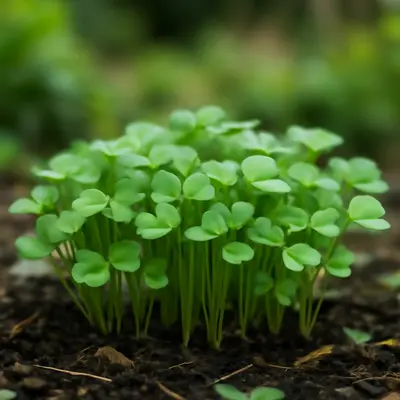
This blend of mildly flavored brassicas contains mizuna, cabbage, kale, and kohlrabi. Mostly green with a touch of purple. Based on our yield trial, we recommend seeding 11 gm per tray at approx. 2.5 flats per oz of seed. Avg. days to maturity was 13.5 days when harvested at the first true leaf (as opposed to cotyledon) stage. Varieties are subject to change depending upon availability.
Harvest
10-15d
Days to harvest
Sun
Full sun to part shade
Zones
6–9
USDA hardiness
Height
0 ft. 10 in. - 2 ft. 0 in.
Planting Timeline
Showing dates for Mild Micro Mix in USDA Zone 7
All Zone 7 microgreen →Zone Map
Click a state to update dates
Mild Micro Mix · Zones 6–9
Growing Details
Succession Planting
Mild Micro Mix is about as well-suited to staggered sowing as anything gets — a 10–15 day turnaround means you can start a new tray every 5–7 days and stay in continuous harvest. The simplest system: sow a fresh tray the day you cut the previous one, or keep 2–3 trays running at different stages so there's no gap. No heat threshold or bolting concern the way there is with full-size brassicas like arugula or mustard; as long as your indoor temperature holds between 65–75°F, this runs year-round without adjustment.
Complete Growing Guide
This blend of mildly flavored brassicas contains mizuna, cabbage, kale, and kohlrabi. Mostly green with a touch of purple. Based on our yield trial, we recommend seeding 11 gm per tray at approx. 2.5 flats per oz of seed. Avg. days to maturity was 13.5 days when harvested at the first true leaf (as opposed to cotyledon) stage. Varieties are subject to change depending upon availability. According to Johnny's Selected Seeds, Mild Micro Mix is 10 - 15 days to maturity, annual. Notable features: Easy Choice, Hydroponic Performer.
Light: Full sun (6 or more hours of direct sunlight a day), Partial Shade (Direct sunlight only part of the day, 2-6 hours). Soil: Clay, Loam (Silt), Sand. Soil pH: Acid (<6.0), Neutral (6.0-8.0). Drainage: Good Drainage, Moist. Height: 0 ft. 10 in. - 2 ft. 0 in.. Spread: 1 ft. 0 in. - 2 ft. 0 in.. Spacing: 12 inches-3 feet. Growth rate: Medium. Maintenance: Medium. Propagation: Seed, Stem Cutting. Regions: Coastal, Mountains, Piedmont.
Harvesting
Mild Micro Mix reaches harvest at 10 - 15 days from sowing per Johnny's Selected Seeds. Expect 11 g at peak. As an annual, harvest continues until frost ends the season.
The fruits dry and split when ripe.
Color: Brown/Copper, Green. Type: Siliqua. Length: > 3 inches.
Garden value: Edible
Harvest time: Fall, Summer
Bloom time: Spring, Summer
Edibility: The foliage is edible raw or cooked but when cooked can emit an unpleasant odor.
Storage & Preservation
Harvest Mild Micro Mix microgreens in the morning after moisture dries from the leaves. Store them unwashed in a breathable container—a perforated clamshell or paper-lined box works well—and refrigerate at 35–40°F with 85–95% humidity. They'll keep for 5–7 days, though quality peaks within the first 3 days. For longer storage, blanch briefly (30–45 seconds), ice-bath immediately, then freeze on a sheet tray before transferring to freezer bags; frozen microgreens work best in smoothies, soups, and cooked dishes rather than fresh applications. Drying is less ideal since these tender greens lose their delicate texture and mild flavor profile. A practical tip: separate the microgreens into meal-sized portions before refrigerating to minimize handling and air exposure, which extends usability and reduces waste from oxidation and bruising.
History & Origin
This blend represents a modern microgreen formulation combining species with deep vegetable heritage. Mizuna, cabbage, and kale are ancient brassicas domesticated in Asia and Europe respectively, while kohlrabi emerged as a cultivated form in medieval Northern Europe. The specific "Mild Micro Mix" composition appears to be a contemporary seed company creation designed for commercial microgreen production, though detailed documentation of its breeder, introduction year, and originating company is not readily available in standard horticultural records. The blend exemplifies how modern seed companies curate heirloom and traditional varieties into specialized microgreen blends optimized for quick harvesting and consistent flavor profiles suited to contemporary culinary markets.
Brassica is a genus of plants in the cabbage and mustard family (Brassicaceae). The members of the genus are informally known as cruciferous vegetables, cabbages, mustard plants, or simply brassicas. Crops from this genus are sometimes called cole crops—derived from the Latin caulis, denoting the stem or stalk of a plant.
Advantages
- +Quick 10-15 day harvest fits high-turnover production schedules well
- +Mild flavor appeals to broad customer base and picky eaters
- +Easy cultivation requires minimal experience or specialized equipment
- +Visually attractive green-and-purple color mix enhances plate presentation
- +Efficient seeding rate of 11gm per tray maximizes profitability
Considerations
- -Brassica varieties susceptible to fungal diseases in humid conditions
- -Seed availability variability may force unwanted substitutions in blend
- -Purple varieties can fade quickly if stored improperly post-harvest
Companion Plants
Microgreens grow in trays, not beds, so companion planting here is really about what shares your growing space — shelf, bench, or windowsill. Chives and mint grown nearby can deter fungus gnats (Bradysia spp.), which find their way into any warm indoor setup within a few weeks. Marigolds and nasturtiums do similar work if you're running trays on a porch or greenhouse bench. Fennel and black walnut are on the harmful list, but their allelopathic compounds matter mainly in soil culture — juglone doesn't leach into coco coir the way it does a garden bed, so the practical concern is minimal unless you're cramming them into the same enclosed space.
Plant Together
Chives
Natural pest deterrent, repels aphids and fungus gnats that can affect microgreen trays
Marigolds
Repels whiteflies, aphids, and nematodes while attracting beneficial insects
Nasturtiums
Acts as trap crop for aphids and cucumber beetles, protecting nearby microgreens
Mint
Deters ants, mice, and cabbage moths that may disturb microgreen growing areas
Dill
Attracts beneficial insects like ladybugs and parasitic wasps for natural pest control
Parsley
Compatible growing conditions and attracts hoverflies that control aphids
Lettuce
Similar light and moisture requirements, can share growing space efficiently
Cilantro
Repels aphids and spider mites while having compatible growing conditions
Keep Apart
Black Walnut
Releases juglone toxin that inhibits growth of many plants including brassica microgreens
Fennel
Allelopathic properties inhibit germination and growth of most other plants
Eucalyptus
Essential oils have allelopathic effects that can suppress seed germination
Nutrition Facts
Per 100g serving. % Daily Value based on 2,000 calorie diet. Source: USDA FoodData Central (FDC #167782)
Pests & Disease Resistance
Common Pests
Mold, damping-off fungi
Diseases
Damping-off disease, fungal mold
Troubleshooting Mild Micro Mix
What you'll see, why it happens, and what to do about it.
White or gray fuzzy growth on the soil surface or stem bases, appearing within the first 5 days of germination
Likely Causes
- Mold (saprophytic fungi) feeding on seed hulls or organic matter in the growing medium
- Overwatering combined with poor airflow — stagnant, humid air is the main trigger
What to Do
- 1.Reduce bottom-watering frequency; let the top of the medium dry just slightly between waterings
- 2.Set a small fan nearby on low — even gentle airflow cuts mold dramatically
- 3.If it's only on the soil surface and not the stems, you can continue to harvest; mold on stems means toss the tray
Seedlings collapse at the soil line — stems look pinched or water-soaked right where they meet the medium, usually days 4–8
Likely Causes
- Damping-off disease, caused by Pythium or Rhizoctonia fungi — both thrive in wet, poorly-drained trays
- Reusing trays that weren't sanitized between runs
What to Do
- 1.Toss the affected tray — damping-off spreads fast and there's no saving it once it starts
- 2.Sanitize trays between every grow with a 10% bleach solution or hydrogen peroxide diluted to 3%
- 3.Use a sterile, soilless medium (coco coir or a dedicated microgreen mix) rather than potting soil, which carries more fungal load
Seedlings are pale yellow-green and leggy, stretching past 2 inches tall before day 10 with thin, weak stems
Likely Causes
- Insufficient light — brassica microgreens need at least 12–16 hours under a full-spectrum grow light positioned 2–4 inches above the tray
- Blackout period extended too long; keeping the tray covered past day 4–5 after germination causes etiolation
What to Do
- 1.Drop a grow light to within 3–4 inches of the canopy, or move the tray to the brightest south-facing window you have
- 2.Pull the blackout dome by day 4 once seeds have germinated, even if the shoots aren't fully upright yet
- 3.Leggy microgreens are still edible — flavor holds up — but fix the light before the next sow
Frequently Asked Questions
How long does it take to grow Mild Micro Mix microgreens?▼
Is Mild Micro Mix good for microgreen beginners?▼
What does Mild Micro Mix taste like?▼
What are the light requirements for Mild Micro Mix?▼
How much seed do I need to grow Mild Micro Mix?▼
What makes Mild Micro Mix different from other microgreen blends?▼
Zone-by-Zone Planting Calendar
| Zone | Indoor Start | Transplant | Direct Sow | Harvest |
|---|---|---|---|---|
| Zone 3 | January – December | — | — | January – December |
| Zone 4 | January – December | — | — | January – December |
| Zone 5 | January – December | — | — | January – December |
| Zone 6 | January – December | — | — | January – December |
| Zone 7 | January – December | — | — | January – December |
| Zone 8 | January – December | — | — | January – December |
| Zone 9 | January – December | — | — | January – December |
| Zone 10 | January – December | — | — | January – December |
| Zone 1 | January – December | — | — | January – December |
| Zone 2 | January – December | — | — | January – December |
| Zone 11 | January – December | — | — | January – December |
| Zone 12 | January – December | — | — | January – December |
| Zone 13 | January – December | — | — | January – December |
Growing Guides from Wind River Greens
Sources & References
External authority sources used in compiling this guide.
- BreederJohnny's Selected Seeds
- USDAUSDA FoodData Central
See the Methodology page for how this data is sourced, what's AI-assisted, and known limitations.