Corn Microgreens
Zea mays
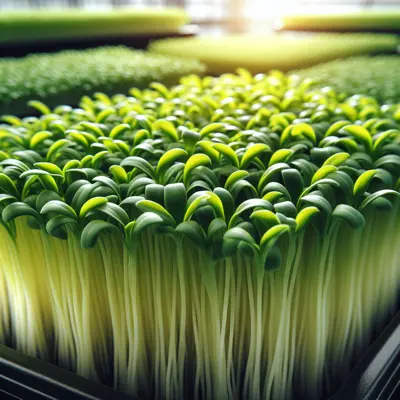
7-8" ears with glossy deep yellow kernels. A high percentage of kernels pop producing tender popcorn. 8-9' plants.
Harvest
112d
Days to harvest
Sun
Full sun
Zones
2–11
USDA hardiness
Height
5-8 feet
Planting Timeline
Showing dates for Corn Microgreens in USDA Zone 7
All Zone 7 microgreen →Zone Map
Click a state to update dates
Corn Microgreens · Zones 2–11
Growing Details
Succession Planting
Corn microgreens are harvested once — you cut them at 1–2 inches, usually between days 8 and 12, and the tray is done. There's no regrowth worth waiting for. Succession here just means staggering new trays: start a fresh one every 5–7 days if you want a continuous supply. Given the 3–4 day germination and roughly 10-day total cycle, that cadence keeps at least one tray always a few days from harvest.
If you're growing for a specific event or weekly box, count back 10–12 days from your target date and seed then. No heat thresholds to manage indoors — this runs year-round as long as you have light and a space that stays above 65°F.
Complete Growing Guide
This popcorn cultivar requires patient timing since it needs the full 112 days to develop mature kernels with adequate starch for popping; start seeds 4-5 weeks before your last frost and avoid the temptation to harvest early. Corn microgreens thrive in warm soil (at least 60°F, ideally 70°F+) and full sun exposure, which prevents the stretching common in cooler or low-light conditions. Watch for corn earworm and fall armyworm, which target developing ears, and monitor for Stewart's wilt, a bacterial disease spread by flea beetles that can devastate young plants. The 8-9 foot height means adequate spacing—plant at least 8-12 inches apart to ensure good air circulation and reduce fungal issues. One practical tip: succession plant every 2-3 weeks if you want continuous popcorn harvests rather than a single large crop, since all ears ripen within a narrow window.
Light: Full sun (6 or more hours of direct sunlight a day). Soil: Clay, High Organic Matter, Loam (Silt). Soil pH: Acid (<6.0), Neutral (6.0-8.0). Drainage: Good Drainage. Height: 5 ft. 0 in. - 8 ft. 0 in.. Spread: 1 ft. 0 in. - 2 ft. 0 in.. Spacing: 12 inches-3 feet. Growth rate: Rapid. Maintenance: Medium. Propagation: Seed. Regions: Coastal, Mountains, Piedmont.
Harvesting
Corn microgreens reach peak harvest readiness when the first true leaves develop their characteristic deep yellow-green color and the stems reach approximately 2-3 inches tall with a sturdy, upright posture. The cotyledons should feel firm yet tender when gently pinched, indicating optimal nutrient density. Unlike single-harvest crops, corn microgreens support continuous harvesting by cutting above the soil line, allowing secondary growth from the remaining root system for a second, lighter yield within 7-10 days. For best results, harvest in the early morning when stems are fully hydrated and most crisp, as afternoon cutting yields softer microgreens prone to wilting. This timing maximizes the signature sweet corn flavor and crunchy texture while minimizing the grassy notes that intensify if harvesting is delayed past the true-leaf stage.
Color: Gold/Yellow. Type: Caryopsis. Length: > 3 inches. Width: 1-3 inches.
Garden value: Edible, Showy
Harvest time: Fall
Edibility: Edibile
Storage & Preservation
Fresh corn microgreens are highly perishable and best used immediately after harvest. Store them in the refrigerator at 35-40°F in a breathable container lined with paper towels to absorb excess moisture. They'll maintain peak quality for 3-5 days, though the characteristic crunch diminishes after day three.
For short-term storage, place stems in a glass of water like fresh herbs, covering loosely with a plastic bag. Change water every two days to prevent bacterial growth.
Corn microgreens can be flash-frozen for up to three months, though they lose their signature crunch. Blanch quickly in boiling water for 30 seconds, shock in ice water, drain thoroughly, and freeze in single-use portions. Frozen corn microgreens work well blended into smoothies or incorporated into cooked dishes. Dehydrating is another option—dry at 95°F until crisp for a concentrated corn flavor that works as a unique garnish or seasoning.
History & Origin
The origins of corn microgreens are rooted in the broader microgreen movement of the late 20th century, which adapted traditional sprouting techniques to produce nutrient-dense seedlings across various crop species. While specific breeder attribution and development dates for this particular microgreen variety remain undocumented in readily available seed literature, corn microgreens likely emerged from commercial seed companies experimenting with Zea mays varieties suitable for quick germination and tender growth stages. The practice capitalizes on corn's natural vigor and appeal, drawing from decades of popcorn and sweet corn breeding that prioritized kernel quality and plant productivity. Documentation of the exact cultivar's introduction is limited, though its development reflects the broader horticultural trend toward functional foods and microgreen cultivation that gained momentum during the 1990s and 2000s.
Origin: Mexico
Advantages
- +Sweet corn flavor with pleasant crunch makes corn microgreens uniquely tasty
- +Minimal indoor pest issues means less chemical intervention needed
- +Glossy deep yellow kernels provide attractive visual appeal on plates
- +High popcorn kernel percentage offers novelty and extended harvest potential
Considerations
- -Damping-off and root rot require careful watering discipline and monitoring
- -Moderate difficulty level demands more attention than beginner-friendly varieties
- -112-day maturity is lengthy compared to faster-growing microgreen alternatives
Companion Plants
For indoor microgreen trays, companion planting isn't about soil ecology over a season — it's about what grows well side by side on the same rack or in a mixed-tray setup. Corn microgreens do well next to lettuce microgreens, radish microgreens, and pea microgreens because all three share similar moisture needs and none release compounds that suppress neighboring seeds. Pea microgreens are worth pairing on the same shelf specifically: they germinate in 3–5 days and tolerate the same blackout-then-light routine, so you're running one schedule instead of two.
Basil and cilantro in adjacent trays work fine practically — neither harms corn microgreens, and the scheduling overlap is manageable. Chives and mint are slow as microgreens and don't interact with corn shoots in any meaningful way when they're in separate trays, so proximity is a non-issue. That said, corn microgreens have a mild, sweet flavor that pairs better with cilantro than with mint on a plate, which is probably the more useful thing to know.
Keep fennel off the rack entirely. It releases allelopathic compounds — anethole and fenchone primarily — that can suppress germination in neighboring seeds when trays are packed tightly or share drainage runoff. Black walnut produces juglone and is almost never a real indoor concern, but skip any walnut-derived growing medium or amendment just to be safe. Eucalyptus-based products carry similar risks and should stay out of the growing area entirely.
Plant Together
Basil
Repels aphids and thrips that commonly affect corn microgreens
Marigolds
Natural pest deterrent against aphids and fungus gnats in growing trays
Chives
Antimicrobial properties help prevent damping-off disease in seedlings
Lettuce Microgreens
Similar growing requirements and compatible root systems in shared trays
Radish Microgreens
Fast germination helps break soil crust, improving corn microgreen emergence
Pea Microgreens
Nitrogen-fixing bacteria in pea roots benefit corn's nitrogen requirements
Cilantro
Natural fungicide properties help prevent mold in humid microgreen environments
Mint
Deters ants and rodents that may disturb growing trays
Keep Apart
Fennel
Allelopathic compounds inhibit germination and growth of corn seeds
Black Walnut
Juglone toxicity severely stunts corn microgreen development
Eucalyptus
Essential oils suppress seed germination and early seedling growth
Nutrition Facts
Per 100g serving. % Daily Value based on 2,000 calorie diet. Source: USDA FoodData Central (FDC #167782)
Pests & Disease Resistance
Resistance
Generally resistant when grown as microgreens
Common Pests
Minimal indoor pest issues
Diseases
Damping-off, root rot if overwatered
Troubleshooting Corn Microgreens
What you'll see, why it happens, and what to do about it.
Seedlings collapse at the soil line, stems look pinched or water-soaked, usually within the first 5 days after germination
Likely Causes
- Damping-off (Pythium or Rhizoctonia spp.) — fungal pathogens that thrive in wet, poorly-ventilated trays
- Overwatering combined with low airflow, which keeps the medium saturated long enough for pathogens to establish
What to Do
- 1.Water from the bottom by setting the tray in a shallow pan for 10–15 minutes, then letting it drain fully — keep the surface drier
- 2.Run a small fan nearby on low to improve airflow; even 30 minutes a day makes a difference
- 3.If it keeps happening, drench fresh medium with a diluted hydrogen peroxide solution (1 part 3% H2O2 to 4 parts water) before seeding
Shoots are pale yellow or white instead of the expected yellow-green, even after 6–8 days of growth
Likely Causes
- Insufficient light — corn microgreens need strong light once the blackout period ends; a dim windowsill won't cut it
- Extended blackout phase left too long past the point when shoots were already 1–2 inches tall
What to Do
- 1.Move the tray under a grow light or to the brightest south-facing window you have; aim for at least 12–16 hours of light per day
- 2.Once shoots are visibly pushing the blackout cover up (usually day 3–4), remove the cover — don't wait another day
- 3.Harvest within 1–2 days of color developing; corn microgreens don't improve with extra time on the tray
Frequently Asked Questions
How long do corn microgreens take to grow?▼
Do corn microgreens taste like actual corn?▼
Why won't my corn microgreens germinate?▼
Can you grow corn microgreens without soil?▼
Are corn microgreens good for beginners?▼
Can I regrow corn microgreens after harvesting?▼
Zone-by-Zone Planting Calendar
| Zone | Indoor Start | Transplant | Direct Sow | Harvest |
|---|---|---|---|---|
| Zone 3 | January – December | — | — | January – December |
| Zone 4 | January – December | — | — | January – December |
| Zone 5 | January – December | — | — | January – December |
| Zone 6 | January – December | — | — | January – December |
| Zone 7 | January – December | — | — | January – December |
| Zone 8 | January – December | — | — | January – December |
| Zone 9 | January – December | — | — | January – December |
| Zone 10 | January – December | — | — | January – December |
| Zone 1 | January – December | — | — | January – December |
| Zone 2 | January – December | — | — | January – December |
| Zone 11 | January – December | — | — | January – December |
| Zone 12 | January – December | — | — | January – December |
| Zone 13 | January – December | — | — | January – December |
Growing Guides from Wind River Greens
Sources & References
External authority sources used in compiling this guide.
See the Methodology page for how this data is sourced, what's AI-assisted, and known limitations.