Chinese Cabbage, Tokyo Bekana
Brassica rapa var. chinensis
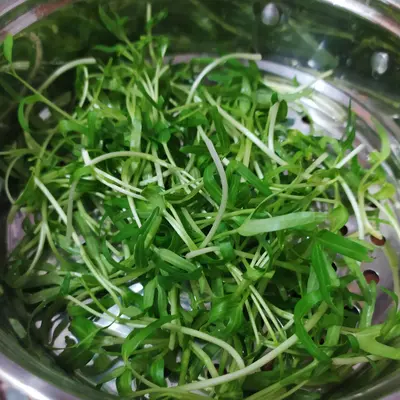
One of our fastest-growing microgreens! Pale green color blends well and beautifully complements dark green and dark red varieties in mixes. Mild and earthy brassica flavor. Based on our yield trial, we recommend seeding 14 gm per tray at approx. 2 flats per oz of seed. Avg. days to maturity was 10 days when harvested at the first true leaf (as opposed to cotyledon) stage.
Harvest
10-15d
Days to harvest
Sun
Full sun to part shade
Zones
5–9
USDA hardiness
Height
3 feet
Planting Timeline
Showing dates for Chinese Cabbage, Tokyo Bekana in USDA Zone 7
All Zone 7 microgreen →Zone Map
Click a state to update dates
Chinese Cabbage, Tokyo Bekana · Zones 5–9
Growing Details
Succession Planting
Tokyo Bekana microgreens go from seed to harvest in 10–15 days, which is fast enough that a simple stagger keeps you in continuous supply. Start a new tray every 5–7 days — or whenever the previous tray hits the blackout-to-light transition — and you'll be pulling cuts roughly twice a week without any gap. There's no heat threshold to outrun the way there is with outdoor brassicas; as long as your grow space holds between 65°F and 80°F, the same cadence runs year-round.
Complete Growing Guide
One of our fastest-growing microgreens! Pale green color blends well and beautifully complements dark green and dark red varieties in mixes. Mild and earthy brassica flavor. Based on our yield trial, we recommend seeding 14 gm per tray at approx. 2 flats per oz of seed. Avg. days to maturity was 10 days when harvested at the first true leaf (as opposed to cotyledon) stage. According to Johnny's Selected Seeds, Chinese Cabbage, Tokyo Bekana is 10 - 15 days to maturity, annual, hybrid (f1). Notable features: Hydroponic Performer.
Light: Full sun (6 or more hours of direct sunlight a day), Partial Shade (Direct sunlight only part of the day, 2-6 hours). Soil: Clay, Loam (Silt), Sand. Soil pH: Acid (<6.0), Neutral (6.0-8.0). Drainage: Good Drainage, Moist. Height: 0 ft. 10 in. - 2 ft. 0 in.. Spread: 1 ft. 0 in. - 2 ft. 0 in.. Spacing: 12 inches-3 feet. Growth rate: Medium. Maintenance: Medium. Propagation: Seed, Stem Cutting. Regions: Coastal, Mountains, Piedmont.
Harvesting
Chinese Cabbage, Tokyo Bekana reaches harvest at 10 - 15 days from sowing per Johnny's Selected Seeds. Expect 14 g at peak. As an annual, harvest continues until frost ends the season.
The fruits dry and split when ripe.
Color: Brown/Copper, Green. Type: Siliqua. Length: > 3 inches.
Garden value: Edible
Harvest time: Fall, Summer
Bloom time: Spring, Summer
Edibility: The foliage is edible raw or cooked but when cooked can emit an unpleasant odor.
Storage & Preservation
Harvest Tokyo Bekana microgreens in the morning when soil moisture is optimal, then refrigerate immediately in a sealed container or perforated plastic bag at 35–40°F with 90–95% relative humidity. Fresh microgreens will keep for 5–7 days, though quality and nutrient density decline after day 3. For longer preservation, freeze whole or chopped microgreens in airtight freezer bags for up to three months; thaw gently before adding to cooked dishes. Blanching briefly before freezing helps retain color. Drying is less recommended due to the delicate leaf structure, but you can air-dry on screens in a cool, dark space for tea blends. Light fermentation in brine for 2–3 days develops pleasant umami notes and extends storage to two weeks refrigerated. Tokyo Bekana's tender leaves bruise easily, so handle with care during harvest and storage to minimize oxidative damage and maintain their mild, sweet cabbage flavor.
History & Origin
Chinese Cabbage, Tokyo Bekana is an F1 hybrid developed through controlled cross-pollination. Listed in the Johnny's Selected Seeds catalog.
Brassica is a genus of plants in the cabbage and mustard family (Brassicaceae). The members of the genus are informally known as cruciferous vegetables, cabbages, mustard plants, or simply brassicas. Crops from this genus are sometimes called cole crops—derived from the Latin caulis, denoting the stem or stalk of a plant.
Advantages
- +Exceptionally fast maturity at just 10 days makes Tokyo Bekana highly profitable.
- +Pale green color naturally complements both dark greens and reds in mixes.
- +Easy difficulty level requires minimal experience or specialized growing skills.
- +Mild, earthy brassica flavor appeals to broad culinary applications and palates.
- +Efficient seed usage at 14 gm per tray maximizes production economics.
Considerations
- -Brassica family susceptibility to fungal diseases requires careful humidity management.
- -Pale coloring may appear less visually striking than darker microgreen varieties.
- -Fast growth window leaves minimal margin for error in harvest timing.
Companion Plants
Tokyo Bekana microgreens live in trays, not beds, so companion planting here is really about what shares your grow rack or enclosed space. Lettuce, spinach, arugula, and radish microgreens are natural tray-mates — same light duration, same watering frequency, same humidity target, so you're not constantly pulling conditions in opposite directions. Avoid running tomato seedlings or strawberry runners in the same enclosed setup; both want drier air, and the 70–80% humidity you're holding for the brassica will invite Botrytis cinerea on those crops. Potted chives or cilantro nearby can cut down on fungus gnat pressure — the more practical payoff in any indoor tray setup.
Plant Together
Lettuce
Similar growing conditions and harvest timing, efficient space utilization
Radish
Quick-growing companion that helps break soil and deters flea beetles
Spinach
Compatible growth rates and similar light requirements for microgreens
Chives
Natural pest deterrent, repels aphids and cabbage worms
Dill
Attracts beneficial insects and may improve flavor of brassicas
Nasturtiums
Acts as trap crop for aphids and flea beetles that attack brassicas
Cilantro
Similar growing conditions and helps repel aphids
Arugula
Fellow brassica with compatible growing requirements
Keep Apart
Strawberries
May stunt growth of brassicas through root competition and chemical interactions
Tomatoes
Different watering needs and may inhibit brassica growth
Fennel
Allelopathic effects inhibit growth of most brassicas including Chinese cabbage
Nutrition Facts
Per 100g serving. % Daily Value based on 2,000 calorie diet. Source: USDA FoodData Central (FDC #169975)
Troubleshooting Chinese Cabbage, Tokyo Bekana
What you'll see, why it happens, and what to do about it.
Stems are leggy and pale, flopping over by day 7–8
Likely Causes
- Insufficient light — less than 12 hours of bright light per day
- Tray placed too far from a grow light (more than 3–4 inches away)
What to Do
- 1.Move the tray to within 2–3 inches of a T5 fluorescent or LED grow light
- 2.Increase the light period to 14–16 hours using a timer
- 3.If growing in a window, rotate the tray 180° daily to even out light exposure
White or gray fuzzy growth at the base of stems, near the soil line, around day 5–10
Likely Causes
- Damping-off caused by Pythium spp. or Rhizoctonia solani — both thrive when trays stay waterlogged
- Overwatering or poor drainage in the growing medium
What to Do
- 1.Bottom-water only: pour water into a drip tray and let the medium wick it up, then drain after 20 minutes
- 2.Improve airflow by running a small fan near the trays for a few hours a day
- 3.Toss the affected tray — damping-off spreads fast — and sanitize with a 1:10 bleach solution before reseeding
Cotyledons showing small dark pinhole damage or ragged edges before harvest
Likely Causes
- Fungus gnats (Bradysia spp.) — larvae chew roots and lower stems; adults spread through open growing media
- Growing medium left consistently wet on the surface, which draws egg-laying adults in
What to Do
- 1.Let the top 1/2 inch of the growing medium dry out between waterings to break the egg-laying cycle
- 2.Place yellow sticky traps directly above the trays to catch adults
- 3.Cover trays with a fine-mesh screen or a vented humidity dome to block adults during germination
Uneven germination — some seeds sprouted by day 4, others still bare on day 8
Likely Causes
- Inconsistent seed-to-medium contact from uneven spreading or insufficient pressing
- Tray temperature dropping below 65°F at night, slowing germination in cooler spots
What to Do
- 1.Press seeds firmly and evenly into the growing medium with a flat board or the bottom of a second tray before covering
- 2.Use a seedling heat mat to hold the medium at 70–75°F through germination
- 3.Check that your blackout cover isn't sitting directly on the seeds and creating cold pockets — leave a small air gap
Frequently Asked Questions
How long does Tokyo Bekana microgreen take to harvest?▼
Is Chinese Cabbage Tokyo Bekana good for beginners?▼
What does Tokyo Bekana microgreen taste like?▼
Can I grow Tokyo Bekana microgreens in containers or trays?▼
How does Tokyo Bekana mix with other microgreens?▼
What light conditions does Tokyo Bekana microgreen need?▼
Zone-by-Zone Planting Calendar
| Zone | Indoor Start | Transplant | Direct Sow | Harvest |
|---|---|---|---|---|
| Zone 3 | January – December | — | — | January – December |
| Zone 4 | January – December | — | — | January – December |
| Zone 5 | January – December | — | — | January – December |
| Zone 6 | January – December | — | — | January – December |
| Zone 7 | January – December | — | — | January – December |
| Zone 8 | January – December | — | — | January – December |
| Zone 9 | January – December | — | — | January – December |
| Zone 10 | January – December | — | — | January – December |
| Zone 1 | January – December | — | — | January – December |
| Zone 2 | January – December | — | — | January – December |
| Zone 11 | January – December | — | — | January – December |
| Zone 12 | January – December | — | — | January – December |
| Zone 13 | January – December | — | — | January – December |
Growing Guides from Wind River Greens
Sources & References
External authority sources used in compiling this guide.
- BreederJohnny's Selected Seeds
- USDAUSDA FoodData Central
See the Methodology page for how this data is sourced, what's AI-assisted, and known limitations.