Cabbage Microgreens
Brassica oleracea var. capitata
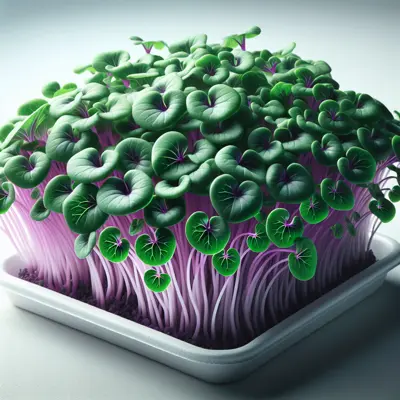
Cabbage Microgreens are tender, delicate seedlings harvested at 7-14 days, well before the 68-day full plant maturity. These vibrant green microgreens feature a mild cabbage taste with a fresh, crisp texture and subtle peppery finish. They're prized for their nutrient density and visual appeal in salads, garnishes, and culinary presentations. Easy to grow indoors using fine potting mix or coconut coir, they require 4-6+ hours of light daily. Their key differentiator is rapid harvest time compared to full-sized cabbage, making them ideal for home gardeners and chefs seeking quick, fresh-from-seed produce with concentrated nutritional value.
Harvest
68d
Days to harvest
Sun
Full sun to partial shade
Zones
6–9
USDA hardiness
Height
10-24 inches
Planting Timeline
Showing dates for Cabbage Microgreens in USDA Zone 7
All Zone 7 microgreen →Zone Map
Click a state to update dates
Cabbage Microgreens · Zones 6–9
Growing Details
Succession Planting
Cabbage microgreens go from sow to harvest in roughly 8–12 days under good light — not the 68-day figure on the seed packet, which is for full-size heads. Stagger a new 10x20 tray every 3–4 days and you'll pull cuttings on a rolling schedule without any dry spell in between. There's no heat threshold or frost date to work around. Growing indoors year-round, the only thing that sets your cadence is how much you want to harvest each week.
Complete Growing Guide
Cabbage microgreens require 68 days to reach harvest maturity, significantly longer than faster varieties, so plan your succession sowings accordingly to maintain continuous production. These cultivars thrive in cooler conditions between 60–70°F and prefer consistent moisture without waterlogging, which prevents the fungal issues common in high-humidity environments. While generally disease-resistant, watch for damping-off in overly wet seedling trays and monitor for cabbage worms if growing near mature brassicas. This variety exhibits minimal bolting tendency but may stretch under insufficient light, so ensure 12–14 hours of bright, indirect light daily to maintain compact, sturdy growth. A practical tip: harvest just before the innermost leaves fully expand to capture peak tenderness and that distinctive sweet, mild flavor; waiting too long results in tougher, more peppery leaves that sacrifice the delicate crunch this cultivar is known for.
Light: Full sun (6 or more hours of direct sunlight a day), Partial Shade (Direct sunlight only part of the day, 2-6 hours). Soil: Clay, Loam (Silt), Sand. Soil pH: Acid (<6.0), Neutral (6.0-8.0). Drainage: Good Drainage, Moist. Height: 0 ft. 10 in. - 2 ft. 0 in.. Spread: 1 ft. 0 in. - 2 ft. 0 in.. Spacing: 12 inches-3 feet. Growth rate: Medium. Maintenance: Medium. Propagation: Seed, Stem Cutting. Regions: Coastal, Mountains, Piedmont.
Harvesting
Cabbage microgreens reach peak harvest readiness when the outer wrapper leaves develop a characteristic blue-green hue and the small heads feel firm and compact to gentle pressure, typically between 10-24 inches tall. Visual uniformity across your crop signals optimal timing, as these microgreens mature synchronously. For continuous harvests, cut outer wrapper leaves selectively while leaving inner leaves intact, allowing the plant to produce additional tender growth for successive pickings. Alternatively, harvest the entire head at once for a single yield. A crucial timing tip: harvest in early morning after dew has dried but before heat stress occurs, which preserves the crisp texture and sweet, mild flavor these cultivars are prized for. This easy-to-grow variety responds well to frequent, light harvesting over several weeks rather than waiting for full head development.
The fruits dry and split when ripe.
Color: Brown/Copper, Green. Type: Siliqua. Length: > 3 inches.
Garden value: Edible
Harvest time: Fall, Summer
Edibility: The foliage is edible raw or cooked but when cooked can emit an unpleasant odor.
Storage & Preservation
Fresh cabbage microgreens store best when completely dry and refrigerated immediately after harvest. Gently rinse if needed and spin dry in a salad spinner or pat with paper towels. Store in breathable containers like perforated plastic bags or containers with paper towels to absorb excess moisture.
Properly stored cabbage microgreens maintain peak quality for 7-10 days in the refrigerator at 35-40°F. Unlike mature vegetables, microgreens don't preserve well through traditional methods like canning or drying, as their delicate structure breaks down quickly.
For longer storage, freezing works for cooked applications. Blanch quickly in boiling water for 30 seconds, shock in ice water, drain thoroughly, and freeze in portion-sized bags. Frozen microgreens work well in smoothies, soups, or stir-fries but lose their crisp texture. The best preservation method is succession planting – start new trays every 4-5 days for continuous fresh harvests.
History & Origin
Cabbage microgreens represent a modern horticultural adaptation of traditional cabbage cultivation rather than a formally documented variety with a specific breeder or introduction date. This microgreen form derives directly from common cabbage (Brassica oleracea var. capitata), one of humanity's oldest domesticated vegetables with origins in the Mediterranean region dating back millennia. The microgreen category itself emerged as a culinary trend in the late twentieth century, capitalizing on consumer demand for nutrient-dense, tender greens harvested at early growth stages. While specific breeding records for this particular microgreen selection are not extensively documented in horticultural literature, the variety reflects contemporary seed company efforts to select cabbage lines offering uniformity, mild flavor, and visual appeal suited to modern specialty salad and garnish markets. Documentation remains thin regarding its precise origin, though it exemplifies the broader pattern of adapting established vegetable genetics for the emerging microgreen industry.
Origin: W. Europe
Advantages
- +Excellent mild, sweet cabbage flavor makes them versatile for salads and cooked dishes
- +Extremely uniform small heads with tender, crunchy inner leaves and good wrapper leaves
- +Quick 68-day harvest cycle allows for multiple plantings per growing season
- +Easy difficulty level makes cabbage microgreens suitable for beginner growers
Considerations
- -Damping-off disease risk requires careful watering management and soil moisture control
- -Fungus gnats and aphids frequently infest indoor cabbage microgreens requiring pest monitoring
- -Extended 68-day growing period demands more space and resources than faster microgreens
Companion Plants
Cabbage microgreens are a tray crop, so companion planting here is about what shares your grow shelf, not what's planted next door in the ground. Dill, thyme, and chamomile grown nearby can interfere with aphid and fungus gnat (Bradysia spp.) pressure through volatile aromatic compounds — useful indoors where there are no predatory insects to do that work for you. Give tomato and strawberry seedlings their own separate shelf; both attract Botrytis cinerea in humid conditions, and that moisture-loving gray mold will spread to brassica trays faster than you'd expect in a closed indoor space.
Plant Together
Dill
Attracts beneficial insects like parasitic wasps that control cabbage pests
Onion
Repels cabbage worms, aphids, and flea beetles with strong sulfur compounds
Garlic
Natural fungicide properties and deters cabbage moths and root maggots
Chamomile
Improves soil health and may enhance growth and flavor of brassicas
Nasturtium
Acts as trap crop for aphids and flea beetles, protecting cabbage microgreens
Thyme
Repels cabbage worms and flea beetles while attracting beneficial predatory insects
Marigold
Deters nematodes and various pests with natural compounds in roots and foliage
Lettuce
Compatible growing conditions and may help utilize space efficiently
Keep Apart
Tomato
May inhibit brassica growth through allelopathic compounds and compete for nutrients
Strawberry
Can harbor pests that also attack brassicas and may compete for growing space
Rue
Produces allelopathic compounds that can stunt growth of brassica family plants
Nutrition Facts
Per 100g serving. % Daily Value based on 2,000 calorie diet. Source: USDA FoodData Central (FDC #169975)
Pests & Disease Resistance
Resistance
Resistant to most diseases when grown in clean conditions
Common Pests
Fungus gnats, aphids (indoor growing)
Diseases
Damping-off from overwatering
Troubleshooting Cabbage Microgreens
What you'll see, why it happens, and what to do about it.
Seedlings collapsing at the soil line, stems pinching thin and dark, usually within the first 5 days
Likely Causes
- Damping-off (Pythium or Rhizoctonia spp.) — fungal rot triggered by overwatering and poor air circulation
- Misting too frequently or leaving standing water in the tray
What to Do
- 1.Back off to misting once a day until the surface dries slightly between waterings
- 2.Run a small fan nearby on low — even 30 minutes of airflow morning and evening cuts the humidity enough to matter
- 3.If the whole tray is affected, toss it and start fresh; damping-off doesn't stop once it's established
Tiny slow-moving flies hovering around the tray, plus stunted or uneven germination around day 4–6
Likely Causes
- Fungus gnats (Bradysia spp.) — adults lay eggs in moist growing medium, larvae chew root hairs
- Overwatered medium staying wet longer than 12 hours between mistings
What to Do
- 1.Set a yellow sticky trap flat on the edge of the tray to catch adults and get a read on how bad the population is
- 2.Let the top of the growing medium dry out more between mistings — Bradysia larvae need near-constant surface moisture to survive
- 3.Switch to bottom-watering the tray instead of misting from above if the problem keeps coming back
Frequently Asked Questions
How long do cabbage microgreens take to grow?▼
Are cabbage microgreens good for beginners?▼
Do I need to soak cabbage seeds before planting microgreens?▼
What do cabbage microgreens taste like?▼
Can you grow cabbage microgreens without soil?▼
Why are my cabbage microgreens falling over?▼
Zone-by-Zone Planting Calendar
| Zone | Indoor Start | Transplant | Direct Sow | Harvest |
|---|---|---|---|---|
| Zone 1 | January – December | — | — | January – December |
| Zone 2 | January – December | — | — | January – December |
| Zone 11 | January – December | — | — | January – December |
| Zone 12 | January – December | — | — | January – December |
| Zone 13 | January – December | — | — | January – December |
| Zone 3 | January – December | — | — | January – December |
| Zone 4 | January – December | — | — | January – December |
| Zone 5 | January – December | — | — | January – December |
| Zone 6 | January – December | — | — | January – December |
| Zone 7 | January – December | — | — | January – December |
| Zone 8 | January – December | — | — | January – December |
| Zone 9 | January – December | — | — | January – December |
| Zone 10 | January – December | — | — | January – December |
Growing Guides from Wind River Greens
Sources & References
External authority sources used in compiling this guide.
See the Methodology page for how this data is sourced, what's AI-assisted, and known limitations.