Spinach
Spinacia oleracea
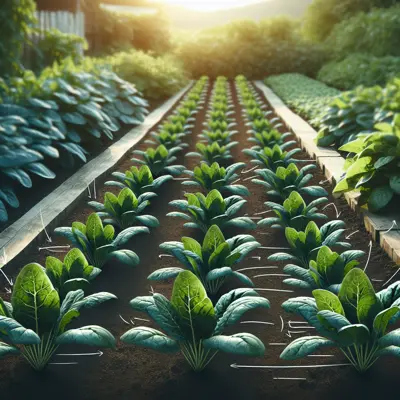
Spinach is a nutrient-dense leafy green with tender, deep green leaves that develop characteristic slight crinkles as they mature. Ready to harvest in approximately 25 days, this hybrid variety transitions from a mild, slightly sweet flavor when young to a more complex, mineral-rich taste with age. It thrives in cool seasons and performs well in full sun to partial shade conditions. Spinach is versatile in the kitchen—equally excellent fresh in salads when young or cooked in mature form. Its rapid growth and ease of cultivation make it ideal for beginner gardeners seeking quick, reliable harvests.
Harvest
25d
Days to harvest
Sun
Full sun to partial shade
Zones
2–11
USDA hardiness
Height
6-12 inches
Planting Timeline
Showing dates for Spinach in USDA Zone 7
All Zone 7 lettuce →Zone Map
Click a state to update dates
Spinach · Zones 2–11
Growing Details
Succession Planting
Direct sow every 10–14 days starting around March 1 in zone 7, and keep going through mid-April. Once daytime highs are consistently hitting 75–80°F, spinach bolts fast — the center stem shoots up and the leaves turn bitter almost overnight, so there's no point pushing past that window. Pick it back up in late August or early September for a fall run; soil temps below 70°F are what spinach actually needs, and fall-sown plants can hold in the ground well into November or through a light frost without much fuss.
Complete Growing Guide
Light: Full sun (6 or more hours of direct sunlight a day), Partial Shade (Direct sunlight only part of the day, 2-6 hours). Soil: High Organic Matter. Soil pH: Neutral (6.0-8.0). Drainage: Good Drainage, Moist. Height: 0 ft. 6 in. - 1 ft. 0 in.. Spread: 0 ft. 6 in. - 1 ft. 0 in.. Spacing: 12 inches-3 feet. Growth rate: Rapid. Maintenance: Medium. Propagation: Seed. Regions: Coastal, Mountains, Piedmont.
Harvesting
Spiny husk (utricle).
Color: Brown/Copper, Cream/Tan. Type: Achene. Length: < 1 inch. Width: < 1 inch.
Harvest time: Summer
Edibility: Leaves can be eaten fresh or cooked. Harvest only as needed as fresh leaves only keep in the refrigerator for a few days. Freeze for longer storage.
Storage & Preservation
Fresh spinach keeps best unwashed in the refrigerator, stored in perforated plastic bags or ventilated containers in the crisper drawer. Properly stored, harvest-fresh spinach maintains quality for 7-10 days at 32-35°F with high humidity. Avoid washing until ready to use, as excess moisture accelerates decay.
For longer preservation, blanch leaves in boiling water for 2 minutes, shock in ice water, drain thoroughly, and freeze in portions. Frozen spinach works excellently in cooked dishes but loses texture for raw applications. Dehydrating works well too—dry leaves at 95°F until brittle, then powder for use as a nutrient-dense seasoning.
Avoid canning spinach due to its low acid content and dense texture, which can create food safety issues in home canning. Instead, focus on fermentation: spinach ferments beautifully in kimchi-style preparations or mixed into sauerkraut, adding nutrition and extending storage life to several months when kept refrigerated.
History & Origin
Origin: Central Asia to SW. Siberia
Advantages
- +Edible: Leaves can be eaten fresh or cooked. Harvest only as needed as fresh leaves only keep in the refrigerator for a few days. Freeze for longer storage.
- +Fast-growing
Considerations
- -Toxic (Flowers, Leaves, Stems): Low severity
Companion Plants
Radishes and carrots work well alongside spinach because they occupy different soil depths — spinach roots stay in the top 6–8 inches, while carrots push well below that, so there's no real competition for water or nutrients. Peas fix nitrogen through their root nodules, which feeds spinach without you having to side-dress anything mid-season. Garlic and chives pull some weight against aphids through scent disruption — not a guarantee, but consistent enough that the bed space isn't wasted. Fennel is the one to keep out entirely; it releases allelopathic compounds that stunt most vegetables around it, and spinach is no exception.
Plant Together
Radishes
Break up soil for spinach roots and mature quickly without competing for space
Carrots
Deep roots don't compete with shallow spinach roots, and carrots help aerate soil
Strawberries
Provide ground cover and living mulch while spinach grows vertically
Peas
Fix nitrogen in soil which benefits leafy spinach growth
Garlic
Repels aphids and other pests that commonly attack spinach
Chives
Deter aphids and improve overall garden health with natural pest control
Nasturtiums
Act as trap crop for aphids and flea beetles, protecting spinach
Beans
Fix nitrogen in soil and provide beneficial ground cover
Keep Apart
Fennel
Produces allelopathic compounds that inhibit spinach germination and growth
Potatoes
Heavy feeders that compete for nutrients and may shade out spinach
Sunflowers
Allelopathic effects and heavy nutrient competition with shallow-rooted spinach
Nutrition Facts
Per 100g serving. % Daily Value based on 2,000 calorie diet. Source: USDA FoodData Central (FDC #2346388)
Pests & Disease Resistance
Resistance
Downy Mildew races 1-3, 5, 6, 8, 9, 11, 12, 14, 16, 19 (High)
Common Pests
Aphids, leaf miners, flea beetles, slugs
Diseases
Downy mildew, fusarium wilt, white rust, damping off
Troubleshooting Spinach
What you'll see, why it happens, and what to do about it.
Seedlings collapse at soil level within the first 7-10 days after sowing — stems look pinched or water-soaked at the base
Likely Causes
- Damping off — typically Pythium spp. or Rhizoctonia solani — triggered by cold, wet, poorly-draining soil
- Overwatering or sowing too deep into soil that stays saturated
What to Do
- 1.Pull and discard affected seedlings; don't compost them
- 2.Let the bed surface dry slightly between waterings — spinach wants 1–1.5 inches per week, not constant wet
- 3.Next sowing, mix in perlite or coarse compost to improve drainage, and avoid planting in a bed that had damping off the previous season
Gray-purple fuzzy coating on the undersides of leaves, with pale yellow patches on top — usually appears in cool, wet stretches
Likely Causes
- Downy mildew (Peronospora farinosa f. sp. spinaciae) — spreads fast in temps between 45–65°F with high humidity
- Overcrowded planting that traps moisture and limits airflow
What to Do
- 1.Remove and bag affected leaves immediately — this spreads by spores
- 2.Thin plants to at least 3–4 inches apart to open up airflow
- 3.If downy mildew hits you two seasons in a row, switch to a hybrid variety with a resistance rating — most seed catalogs list which races the variety covers
Tiny irregular holes punched through leaves on seedlings, especially in spring and fall — damage looks almost shotgunned
Likely Causes
- Flea beetles (Phyllotreta spp.) — tiny, jumping, black beetles that feed heavily on young seedlings
- Slow-germinating or stressed seedlings are hit harder than vigorous ones
What to Do
- 1.Cover beds with row cover immediately after sowing — flea beetles can't find what they can't land on
- 2.Keep soil temps around 50–65°F so seeds germinate fast; seedlings that reach 3–4 inches quickly outgrow the worst of the damage
- 3.Diatomaceous earth dusted around the base of plants can reduce pressure, though it needs reapplication after rain
Pale, winding tunnels or blotches across the leaf surface — hold the leaf up to light and you can sometimes spot a small larva inside
Likely Causes
- Leaf miners (Liriomyza spp.) — adult flies lay eggs just under the leaf surface, larvae tunnel through the tissue from the inside
- Beds near beets or chard tend to carry higher leaf miner populations since those crops share the same host range
What to Do
- 1.Pinch out and destroy mined leaves as soon as you spot them — the larva is still inside, and you'll knock back the next generation
- 2.Row cover from day one is the most reliable prevention; once miners are inside the leaf tissue, foliar sprays don't reach them
- 3.Rotate spinach away from beets and chard — leaf miners overwinter in the soil and will move straight to the next susceptible crop in the same bed
Frequently Asked Questions
How long does spinach take to grow from seed?▼
Can you grow spinach in containers?▼
When should I plant spinach for fall harvest?▼
Why does my spinach keep bolting?▼
Is spinach good for beginner gardeners?▼
What does homegrown spinach taste like compared to store-bought?▼
Zone-by-Zone Planting Calendar
| Zone | Indoor Start | Transplant | Direct Sow | Harvest |
|---|---|---|---|---|
| Zone 1 | — | — | June – July | June – September |
| Zone 2 | — | — | May – July | June – September |
| Zone 11 | — | — | January – February | January – December |
| Zone 12 | — | — | January – February | January – December |
| Zone 13 | — | — | January – February | January – December |
| Zone 3 | — | — | May – June | May – October |
| Zone 4 | — | — | April – June | May – October |
| Zone 5 | — | — | April – May | May – November |
| Zone 6 | — | — | April – May | April – November |
| Zone 7 | — | — | March – May | April – November |
| Zone 8 | — | — | March – April | March – December |
| Zone 9 | — | — | February – March | February – December |
| Zone 10 | — | — | January – March | February – December |
Growing Guides from Wind River Greens
Sources & References
External authority sources used in compiling this guide.
See the Methodology page for how this data is sourced, what's AI-assisted, and known limitations.