Carlton
Brassica rapa var. perviridis
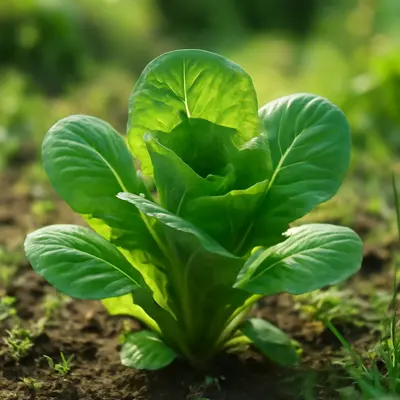
Compact plant with good heat and cold tolerance. Better uniformity and yield than open-pollinated varieties. Traditionally used in Japan either steamed and seasoned with soy sauce, or in stir fries and soups. It is also excellent braised or, at the baby leaf stage, used in salads.
Harvest
21d
Days to harvest
Sun
Full sun to part shade
Zones
5–9
USDA hardiness
Height
3 feet
Planting Timeline
Showing dates for Carlton in USDA Zone 7
All Zone 7 lettuce →Zone Map
Click a state to update dates
Carlton · Zones 5–9
Growing Details
Succession Planting
Carlton clocks in at 21 days to harvest and bolts hard once daytime temperatures climb past 80°F, so the succession window is narrower than it looks on paper. In zone 7, direct sow every 14 days from March 1 through late April, then pause — anything going in the ground after early May will likely bolt before you get a full cut. Start the fall run in late August with the same 14-day cadence and carry it through early October; cooler nights slow bolting and the heads tend to be tighter and better flavored than the spring run.
Complete Growing Guide
Compact plant with good heat and cold tolerance. Better uniformity and yield than open-pollinated varieties. Traditionally used in Japan either steamed and seasoned with soy sauce, or in stir fries and soups. It is also excellent braised or, at the baby leaf stage, used in salads. According to Johnny's Selected Seeds, Carlton is 21 baby; 35 full size to maturity, annual, hybrid (f1). Notable features: Cold Tolerant, Heat Tolerant.
Light: Full sun (6 or more hours of direct sunlight a day), Partial Shade (Direct sunlight only part of the day, 2-6 hours). Soil: Clay, Loam (Silt), Sand. Soil pH: Acid (<6.0), Neutral (6.0-8.0). Drainage: Good Drainage, Moist. Height: 0 ft. 10 in. - 2 ft. 0 in.. Spread: 1 ft. 0 in. - 2 ft. 0 in.. Spacing: 12 inches-3 feet. Growth rate: Medium. Maintenance: Medium. Propagation: Seed, Stem Cutting. Regions: Coastal, Mountains, Piedmont.
Harvesting
Carlton reaches harvest at 21 baby; 35 full size from sowing per Johnny's Selected Seeds. As an annual, harvest continues until frost ends the season.
The fruits dry and split when ripe.
Color: Brown/Copper, Green. Type: Siliqua. Length: > 3 inches.
Garden value: Edible
Harvest time: Fall, Summer
Bloom time: Spring, Summer
Edibility: The foliage is edible raw or cooked but when cooked can emit an unpleasant odor.
Storage & Preservation
Carlton mizuna keeps best when harvested in the morning after dew dries and stored immediately in a perforated plastic bag in the refrigerator's crisper drawer at 32–40°F with 95% humidity. Expect 7–10 days of peak crispness before gradual wilting occurs. For longer preservation, blanch whole fronds for two minutes, ice-bath them, then freeze in vacuum-sealed bags for up to three months—though texture suffers slightly. Light pickling works well: pack raw fronds in jars with vinegar brine, refrigerate, and enjoy tangy greens within days. Mizuna's fine, feathery leaves are prone to moisture loss, so avoid washing until just before use and never store near ethylene-producing fruits like apples. The tender texture makes it unsuitable for traditional drying or canning.
History & Origin
Carlton is an F1 hybrid developed through controlled cross-pollination. Listed in the Johnny's Selected Seeds catalog.
Brassica is a genus of plants in the cabbage and mustard family (Brassicaceae). The members of the genus are informally known as cruciferous vegetables, cabbages, mustard plants, or simply brassicas. Crops from this genus are sometimes called cole crops—derived from the Latin caulis, denoting the stem or stalk of a plant.
Advantages
- +Compact plant size makes Carlton ideal for small garden spaces
- +Excellent heat and cold tolerance allows year-round growing in most climates
- +Superior uniformity and yield compared to traditional open-pollinated varieties
- +Versatile culinary applications from baby leaves to mature steamed greens
- +Fast maturity at 21 days provides quick harvests for impatient gardeners
Considerations
- -Limited flavor complexity compared to heirloom Brassica rapa varieties
- -Hybrid seed requires annual repurchasing rather than saving seeds
- -Requires consistent moisture to prevent bolting during temperature fluctuations
- -Susceptible to common brassica pests like cabbage moths and flea beetles
Companion Plants
Chives and garlic both off-gas sulfur compounds that disrupt how aphids locate host plants — Carlton is susceptible to aphid colonies, so planting either one every few feet along the row is a practical use of the space. Tagetes patula (French marigold specifically) adds a physical and chemical break between plantings and deters whiteflies. Radishes are a good fit structurally: they're shallow-rooted, out in 25–30 days, and gone before they can pull water away from Carlton's root zone. Broccoli is the one to skip — as a fellow brassica it competes for the same nutrients and has documented allelopathic effects on nearby leafy greens.
Plant Together
Chives
Repels aphids and other soft-bodied insects that damage lettuce
Marigolds
Deters nematodes and aphids while attracting beneficial insects
Carrots
Deep roots don't compete with shallow lettuce roots, good space utilization
Radishes
Break up soil for lettuce roots and mature quickly as companion crop
Garlic
Natural fungicide properties help prevent lettuce diseases like downy mildew
Spinach
Similar growing requirements and can provide shade for lettuce in warm weather
Nasturtiums
Trap crop for aphids and cucumber beetles, acts as living mulch
Dill
Attracts beneficial insects like ladybugs that prey on lettuce pests
Parsley
Attracts beneficial insects and doesn't compete heavily for nutrients
Keep Apart
Broccoli
Competes for nutrients and space, can shade out lettuce with large leaves
Sunflowers
Allelopathic compounds inhibit lettuce germination and growth
Nutrition Facts
Per 100g serving. % Daily Value based on 2,000 calorie diet. Source: USDA FoodData Central (FDC #2346388)
Pests & Disease Resistance
Common Pests
Aphids, slugs, snails, flea beetles
Diseases
Downy mildew, lettuce mosaic virus, tipburn
Troubleshooting Carlton
What you'll see, why it happens, and what to do about it.
Seedlings collapse at soil level within the first 7–10 days after going in the ground — stems look pinched or rotted at the base
Likely Causes
- Damping off (Pythium spp. or Rhizoctonia solani) — a soil-borne fungal complex that spikes in cool, waterlogged soil
- Overwatering or poor drainage keeping the root zone saturated
What to Do
- 1.Pull and trash the dead seedlings; don't compost them
- 2.Let the top inch of soil dry slightly between waterings — Carlton needs consistent moisture, not constant wet
- 3.If the same bed has had damping off before, drench with a dilute copper fungicide at sow time, or start seeds in fresh sterile mix and transplant out once they're 2–3 inches tall
Fuzzy gray-purple growth on the undersides of leaves, with yellow patches visible on top — shows up in cool, humid stretches
Likely Causes
- Downy mildew (Bremia lactucae) — spreads fast when nights stay below 65°F and leaf surfaces stay wet overnight
- Dense planting or poor airflow trapping humidity around the canopy
What to Do
- 1.Pick off and discard affected outer leaves immediately — don't let them sit on the soil
- 2.Water at the base, not overhead, and do it early in the day so foliage dries before dark
- 3.Space plants the full 12 inches apart; Carlton reaches 3 feet and needs the room to breathe
Ragged holes chewed in outer leaves overnight, with a slime trail visible in the morning
Likely Causes
- Slugs or snails — active at night, especially after rain or irrigation in beds with heavy mulch or debris
- Flea beetles will also chew holes, but they leave small round punctures with no slime trail and tend to hit in dry, warm conditions
What to Do
- 1.Set out iron phosphate bait (Sluggo or equivalent) around the bed perimeter in the evening — it breaks down into fertilizer and won't harm pets or wildlife
- 2.Pull mulch back 3–4 inches from plant bases to remove the damp shelter slugs prefer
- 3.For flea beetles, drape lightweight Agribon-15 row cover over transplants at planting; no surface to land on means no damage
Frequently Asked Questions
How long does Carlton lettuce take to harvest?▼
Is Carlton lettuce good for beginners?▼
Can you grow Carlton lettuce in containers?▼
What does Carlton lettuce taste like and how is it traditionally used?▼
How much sunlight does Carlton lettuce need?▼
What makes Carlton lettuce different from open-pollinated varieties?▼
Zone-by-Zone Planting Calendar
| Zone | Indoor Start | Transplant | Direct Sow | Harvest |
|---|---|---|---|---|
| Zone 3 | — | — | May – June | May – October |
| Zone 4 | — | — | April – June | May – October |
| Zone 5 | — | — | April – May | May – November |
| Zone 6 | — | — | April – May | April – November |
| Zone 7 | — | — | March – May | April – November |
| Zone 8 | — | — | March – April | March – December |
| Zone 9 | — | — | February – March | February – December |
| Zone 10 | — | — | January – March | February – December |
| Zone 1 | — | — | June – July | June – September |
| Zone 2 | — | — | May – July | June – September |
| Zone 11 | — | — | January – February | January – December |
| Zone 12 | — | — | January – February | January – December |
| Zone 13 | — | — | January – February | January – December |
Growing Guides from Wind River Greens
Sources & References
External authority sources used in compiling this guide.
- BreederJohnny's Selected Seeds
- USDAUSDA FoodData Central
See the Methodology page for how this data is sourced, what's AI-assisted, and known limitations.