Green Giant
Brassica rapa var. perviridis
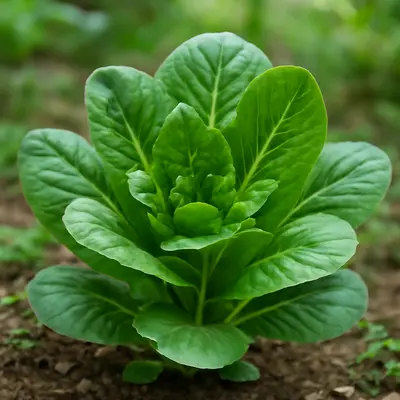
Broad, slightly cupped, rounded leaf. Faster growing and less-cupped leaf than Koji. Wider leaf, shorter petiole, and faster than Carlton. Komatsuna is similar to tatsoi, but has a denser, less juicy texture.
Harvest
21d
Days to harvest
Sun
Full sun to part shade
Zones
5–9
USDA hardiness
Height
3 feet
Planting Timeline
Showing dates for Green Giant in USDA Zone 7
All Zone 7 lettuce →Zone Map
Click a state to update dates
Green Giant · Zones 5–9
Growing Details
Succession Planting
Green Giant bolts fast once daytime temps push past 80°F, so the goal is to stay ahead of the heat. Direct sow every 14–18 days starting in late March, and plan your last spring sowing so harvest lands before your area sees sustained highs above 80°F. In zones 7–9 that usually means stopping new sowings by late April or early May. With a 21-day days-to-harvest, you can fit 3–4 rounds in a good spring window if you start on time.
Pick back up in late August for a fall run. Soil temps need to be below 75°F for reliable germination — if it's still hot, pre-chill seeds in a damp paper towel in the fridge for 2 days before sowing. Sow every 14 days through September, and you'll carry harvests into November in most of zones 7–9.
Complete Growing Guide
Broad, slightly cupped, rounded leaf. Faster growing and less-cupped leaf than Koji. Wider leaf, shorter petiole, and faster than Carlton. Komatsuna is similar to tatsoi, but has a denser, less juicy texture. According to Johnny's Selected Seeds, Green Giant is 21 baby to maturity, annual, hybrid (f1). Notable features: Cold Tolerant, Hydroponic Performer.
Light: Full sun (6 or more hours of direct sunlight a day), Partial Shade (Direct sunlight only part of the day, 2-6 hours). Soil: Clay, Loam (Silt), Sand. Soil pH: Acid (<6.0), Neutral (6.0-8.0). Drainage: Good Drainage, Moist. Height: 0 ft. 10 in. - 2 ft. 0 in.. Spread: 1 ft. 0 in. - 2 ft. 0 in.. Spacing: 12 inches-3 feet. Growth rate: Medium. Maintenance: Medium. Propagation: Seed, Stem Cutting. Regions: Coastal, Mountains, Piedmont.
Harvesting
Green Giant reaches harvest at 21 baby from sowing per Johnny's Selected Seeds. As an annual, harvest continues until frost ends the season.
The fruits dry and split when ripe.
Color: Brown/Copper, Green. Type: Siliqua. Length: > 3 inches.
Garden value: Edible
Harvest time: Fall, Summer
Bloom time: Spring, Summer
Edibility: The foliage is edible raw or cooked but when cooked can emit an unpleasant odor.
Storage & Preservation
Harvest Green Giant at peak tenderness, around day 21, and refrigerate immediately in a sealed plastic bag or container at 32–40°F with 95% humidity to maintain crispness. Fresh leaves will keep for 5–7 days before wilting noticeably. For longer preservation, blanch whole leaves for 2–3 minutes, ice-bath them quickly, then freeze in airtight containers or vacuum-sealed bags for up to eight months. Fermentation works well too: finely shred the leaves, salt at 2–3%, and pack into jars under weight for a tangy condiment ready in 3–5 days. Drying is less practical due to the tender texture, though thin slicing and low-temperature dehydration (under 95°F) yields brittle chips for soups. Green Giant's rapid growth means successive plantings yield continuous harvests rather than bulk preservation needs.
History & Origin
Green Giant is an F1 hybrid developed through controlled cross-pollination. Listed in the Johnny's Selected Seeds catalog.
Brassica is a genus of plants in the cabbage and mustard family (Brassicaceae). The members of the genus are informally known as cruciferous vegetables, cabbages, mustard plants, or simply brassicas. Crops from this genus are sometimes called cole crops—derived from the Latin caulis, denoting the stem or stalk of a plant.
Advantages
- +Matures quickly in just 21 days, ideal for succession planting
- +Broad rounded leaves provide excellent yield per plant
- +Less cupped than similar varieties, easier to harvest and clean
- +Easy difficulty level makes it suitable for beginner growers
- +Denser texture holds up better in cooking than juicy varieties
Considerations
- -Shorter petiole may reduce harvestable leaf length per plant
- -Wider leaves increase surface area vulnerable to pest damage
- -Less juicy texture appeals to fewer culinary applications
Companion Plants
Basil and marigolds are the two companions worth planting close to Green Giant. Basil may help confuse aphids — those soft-bodied insects that target young brassica and leafy greens — by masking the scent of the leaves. French marigolds (Tagetes patula) are well-documented for deterring whiteflies and, when grown densely, for suppressing root-knot nematodes in the surrounding soil. Radishes are worth tucking in at the edges too: they germinate in 3–5 days, their foliage stays low, and they draw flea beetles away from your main crop before you pull them at 25–30 days.
Fennel is the one to exclude entirely — it releases allelopathic compounds from its roots that stunt nearby plants, and leafy greens like Green Giant are particularly sensitive to them. Broccoli causes a different problem: it's a heavy nitrogen competitor, and at 12 inches or closer it will pull from the same fertility pool you need for fast leaf production. Put them at opposite ends of the bed.
Plant Together
Basil
Repels aphids and whiteflies, may improve flavor
Chives
Deters aphids and other soft-bodied pests that damage lettuce
Marigolds
Repels nematodes and aphids while attracting beneficial insects
Carrots
Deep roots don't compete with shallow lettuce roots, maximizes space
Radishes
Quick-growing crop helps break up soil and can be harvested before lettuce needs space
Nasturtiums
Acts as trap crop for aphids and cucumber beetles, draws pests away from lettuce
Garlic
Natural pest deterrent against aphids, slugs, and other lettuce pests
Spinach
Similar growing requirements and harvest timing, efficient use of garden space
Keep Apart
Fennel
Releases allelopathic compounds that inhibit lettuce growth and germination
Broccoli
Large leaves create too much shade and compete heavily for nutrients
Sunflowers
Allelopathic effects inhibit lettuce growth and massive size creates excessive shade
Nutrition Facts
Per 100g serving. % Daily Value based on 2,000 calorie diet. Source: USDA FoodData Central (FDC #2346388)
Troubleshooting Green Giant
What you'll see, why it happens, and what to do about it.
Seedlings collapsing at soil level within the first 7–10 days after planting — stems look pinched or rotted at the base
Likely Causes
- Damping off — typically Pythium spp. or Rhizoctonia solani — a fungal disease that thrives in cold, waterlogged soil
- Overwatering or poorly draining seed-starting mix keeping the root zone constantly wet
What to Do
- 1.Pull the dead seedlings and check for fuzzy white mold on the soil surface; if you see it, treat remaining seedlings with a copper-based fungicide drench
- 2.Don't reuse the same bed for lettuce starts for at least one season — NC State Extension's IPM guidance specifically flags repeated lettuce plantings in the same spot as a setup for disease carryover
- 3.Start future seeds in fresh, sterile potting mix and water only when the top half-inch is dry
Leaves turning pale or yellowing from the outer edges inward, plant stalling out well under 3 feet
Likely Causes
- Nitrogen deficiency from leached or low-fertility soil — Green Giant is a fast, leafy grower that needs consistent fertility to hit 21-day harvests
- Root competition from nearby heavy feeders planted within 12 inches
What to Do
- 1.Side-dress with a balanced granular fertilizer (something around 10-10-10) at the 10-day mark, or drench with fish emulsion every 7 days
- 2.Make sure spacing is at least 12 inches — crowded plants can't access enough nutrients even in amended beds
- 3.If you're succession planting, refresh the bed with 1–2 inches of compost between rounds
Frequently Asked Questions
How long does Green Giant lettuce take to harvest?▼
Is Green Giant lettuce good for beginner gardeners?▼
Can you grow Green Giant lettuce in containers?▼
What does Green Giant lettuce taste like?▼
Does Green Giant lettuce need full sun to grow?▼
How is Green Giant lettuce different from Carlton lettuce?▼
Zone-by-Zone Planting Calendar
| Zone | Indoor Start | Transplant | Direct Sow | Harvest |
|---|---|---|---|---|
| Zone 3 | — | — | May – June | May – October |
| Zone 4 | — | — | April – June | May – October |
| Zone 5 | — | — | April – May | May – November |
| Zone 6 | — | — | April – May | April – November |
| Zone 7 | — | — | March – May | April – November |
| Zone 8 | — | — | March – April | March – December |
| Zone 9 | — | — | February – March | February – December |
| Zone 10 | — | — | January – March | February – December |
| Zone 1 | — | — | June – July | June – September |
| Zone 2 | — | — | May – July | June – September |
| Zone 11 | — | — | January – February | January – December |
| Zone 12 | — | — | January – February | January – December |
| Zone 13 | — | — | January – February | January – December |
Growing Guides from Wind River Greens
Sources & References
External authority sources used in compiling this guide.
- BreederJohnny's Selected Seeds
- USDAUSDA FoodData Central
See the Methodology page for how this data is sourced, what's AI-assisted, and known limitations.