Red Velvet
Lactuca sativa 'Red Velvet'
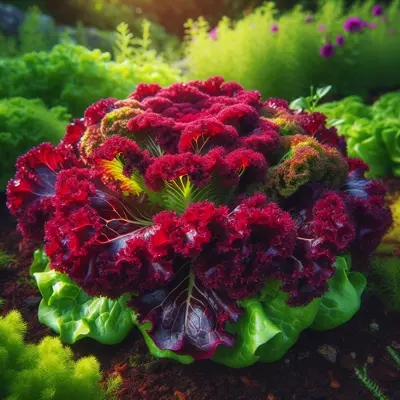
A stunning loose-leaf variety that brings dramatic burgundy-red color to the garden and gourmet appeal to the table with its deeply ruffled, almost frilly leaves. This heat-tolerant beauty maintains its vibrant coloration even in warm weather while delivering exceptional flavor with tender, sweet leaves that add both visual impact and culinary excellence to any salad mix. The combination of ornamental beauty and outstanding performance makes it a standout choice for edible landscaping.
Harvest
45-55d
Days to harvest
Sun
Full sun to partial shade
Zones
2–11
USDA hardiness
Height
6-12 inches
Planting Timeline
Showing dates for Red Velvet in USDA Zone 7
All Zone 7 lettuce →Zone Map
Click a state to update dates
Red Velvet · Zones 2–11
Growing Details
Succession Planting
Direct sow Red Velvet every 14 days starting March 1, and keep going through mid-April in zone 7. Once daytime highs push past 75°F consistently, the 45-55 day maturity window closes fast — lettuce sends up a seed stalk and the leaves go bitter within days. Pick back up with sowings in late August through early October for a fall run; an October 1 sowing can still put harvestable heads on the table before a hard frost hits.
For cut-and-come-again harvests, cutting outer leaves only and leaving the crown intact stretches each sowing by 1-2 weeks. Don't try to hold a single planting past 70 days once warm weather arrives — another 14-day sowing beats coaxing a planting that's already eyeing the bolt.
Complete Growing Guide
Red Velvet lettuce performs best when started directly in the garden, though indoor sowing is also viable. For direct sowing, plant seeds outdoors two to three weeks before your last spring frost, as lettuce germinates in cool soil and actually prefers temperatures between 60–70°F. If you prefer starting indoors, sow seeds six weeks before transplanting and move seedlings outside after they've developed two true leaves. For fall crops, sow seeds in mid to late summer for harvest before the first hard freeze. Red Velvet's heat tolerance means it can handle slightly warmer conditions than many other loose-leaf varieties, extending your growing window into early summer if you provide afternoon shade.
Space Red Velvet plants eight to ten inches apart in rows spaced twelve inches apart, allowing room for the deeply ruffled foliage to spread without crowding. Sow seeds directly at a quarter-inch depth, covering lightly with fine soil or compost. This variety thrives in rich, well-draining soil amended with two to three inches of compost or aged manure worked in before planting. Red Velvet particularly benefits from consistent soil moisture, so incorporate organic matter generously to improve water retention and nutrient availability—these dramatic burgundy leaves demand good nutrition to maintain their vibrant color and tender texture.
Water Red Velvet deeply and consistently, providing about one inch per week through rainfall or irrigation. Keep soil evenly moist but not waterlogged, as lettuce is shallow-rooted and susceptible to bolting when stressed by dry conditions. Feed with a balanced, water-soluble fertilizer every two to three weeks, or side-dress with compost every three weeks if you prefer organic methods. The rich coloration and frilly leaf development respond well to nitrogen-rich feeding, so consider a fertilizer slightly higher in nitrogen than phosphorus.
Red Velvet's burgundy pigmentation and tender leaves make it especially attractive to slugs and snails, which can devastate young plants. Hand-pick these pests regularly, and create barriers using copper tape or diatomaceous earth around plants. Flea beetles may also target young seedlings, causing characteristic small holes in foliage—use row covers until plants are established. The variety's ornamental foliage can mask early signs of downy mildew, so watch for yellowing undersides of outer leaves and remove affected foliage promptly. Ensure good air circulation by not overcrowding, and avoid overhead watering to reduce fungal disease pressure.
Succession planting is ideal for Red Velvet, allowing continuous harvests. Sow new seeds every two to three weeks for uninterrupted supply. Begin harvesting outer leaves once plants reach four inches tall, allowing the center to continue growing. Most gardeners overlook the importance of afternoon shade in warm climates—providing dappled light when temperatures approach 75°F keeps Red Velvet from bolting prematurely and preserves its tender, sweet leaf quality and vivid color intensity.
Harvesting
Red Velvet lettuce reaches peak harvest readiness when its deeply ruffled burgundy-red leaves have developed their full color intensity and the plant measures 6-10 inches across, with leaves feeling crisp and tender to the touch rather than limp or tough. For continuous harvesting, pinch off the outer leaves individually once the plant establishes 4-6 true leaves, allowing the center to keep producing fresh growth throughout the season. Alternatively, harvest the entire head by cutting at soil level when it reaches desired size. Timing matters significantly with this heat-tolerant variety: harvest in early morning when leaves are fully hydrated and most crisp, and prioritize picking before midday heat peaks, as this preserves the tender texture and sweet flavor that define this cultivar's appeal.
Tiny seeds with a dandelion-like tuft (pappus) to aid in wind dispersal.
Color: Brown/Copper. Type: Achene. Length: < 1 inch. Width: < 1 inch.
Harvest time: Summer
Edibility: Leaves can be used raw or cooked in salads, sandwiches, and other dishes. Head lettuce can be stored for 2-3 weeks while leaf and butterhead store for 1-2 weeks.
Storage & Preservation
Fresh Red Velvet lettuce stores best when harvested dry and immediately refrigerated. Gently wash leaves in cool water, spin dry thoroughly, and store in perforated plastic bags in the refrigerator's crisper drawer. Properly stored leaves maintain quality for 7-10 days.
Avoid storing wet leaves, which quickly develop slimy spots and decay. The burgundy coloration may fade slightly during storage but flavor remains intact.
Red Velvet doesn't preserve well through traditional methods like canning or freezing, as the delicate leaves become mushy. However, you can extend your harvest by succession planting every 2-3 weeks during cool seasons.
For longer-term storage, consider making lettuce soup or adding leaves to green smoothies before freezing. The leaves also work well dehydrated as seasoning flakes, though they lose their dramatic color. Focus on extending fresh storage life rather than preservation methods for best results with this variety.
History & Origin
Red Velvet represents a modern development within the broader tradition of red and burgundy leaf lettuce varieties that gained popularity in European cuisine during the 20th century. While specific breeder attribution and introduction date for this particular cultivar remain undocumented in widely available horticultural records, Red Velvet belongs to a lineage of heat-tolerant loose-leaf lettuces developed through conventional breeding to enhance both ornamental appeal and culinary quality. The variety embodies contemporary breeding priorities toward colorful edible landscaping plants, likely emerging from commercial seed companies' innovation in the late 20th or early 21st century as demand for visually striking, gourmet salad greens increased among home gardeners and culinary professionals.
Origin: Mediterranean to Siberia
Advantages
- +Striking burgundy-red leaves provide dual ornamental and culinary value together
- +Heat-tolerant variety maintains vibrant color during warm growing seasons
- +Mild, sweet flavor with tender leaves requires no special preparation
- +Fast 45-55 day maturity delivers harvests quickly for succession planting
- +Deeply ruffled frilly texture adds premium visual appeal to salads
Considerations
- -Susceptible to downy mildew in humid or poorly ventilated conditions
- -Aphids and flea beetles frequently target red velvet requiring pest management
- -Requires consistent moisture to prevent lettuce drop disease development
Companion Plants
Radishes pull double duty next to Red Velvet: they mature in 25-30 days and their emergence breaks up soil crust, making it easier for shallower lettuce roots to spread. They also draw flea beetles (Phyllotreta spp.) away from the lettuce — not a perfect decoy, but a measurable one. Chives and garlic work on a different mechanism, releasing volatile sulfur compounds that disrupt aphids looking for a landing site. Plant garlic at the bed edges rather than woven through the lettuce rows; it needs the full season in the ground and will still be sitting there when you pull your second succession.
Fennel produces allelopathic root exudates that stunt most vegetable neighbors, and lettuce at 6.0-7.0 pH soil is no exception — keep it 3 feet away minimum. Broccoli is a subtler problem: it competes for the same shallow moisture zone, and once it heads up its canopy drops enough shade to slow a lettuce planting that was already in partial shade. Those two get their own bed.
Plant Together
Chives
Repels aphids and improves lettuce flavor while providing natural pest deterrent
Carrots
Deep roots don't compete with shallow lettuce roots, and carrots help break up soil
Radishes
Fast-growing radishes can be harvested before lettuce needs space, and they help loosen soil
Marigolds
Repel nematodes, aphids, and other pests that commonly attack lettuce
Nasturtiums
Act as trap crops for aphids and cucumber beetles, drawing pests away from lettuce
Dill
Attracts beneficial insects like ladybugs and lacewings that control lettuce pests
Spinach
Similar growing requirements and can be interplanted for efficient space usage
Garlic
Natural fungicide properties help prevent downy mildew and other fungal diseases in lettuce
Keep Apart
Broccoli
Large leaves create excessive shade and compete heavily for nutrients needed by lettuce
Fennel
Produces allelopathic compounds that inhibit lettuce germination and growth
Sunflowers
Tall growth creates too much shade and roots release chemicals that can stunt lettuce growth
Nutrition Facts
Per 100g serving. % Daily Value based on 2,000 calorie diet. Source: USDA FoodData Central (FDC #2346388)
Pests & Disease Resistance
Resistance
Good heat tolerance, slow to bolt, moderate disease resistance
Common Pests
Aphids, slugs, snails, flea beetles
Diseases
Downy mildew, lettuce drop, bacterial leaf spot
Troubleshooting Red Velvet
What you'll see, why it happens, and what to do about it.
Seedlings collapse at soil level within the first 7-14 days after germination — stems look pinched or water-soaked at the base
Likely Causes
- Damping off — a complex of soil-borne fungi (most commonly Pythium spp. or Rhizoctonia solani) that thrive in cold, wet, poorly drained soil
- Overwatering or planting in a bed that stays saturated overnight with no drainage
What to Do
- 1.Don't replant lettuce into the same raised bed soil without amending it — add perlite or coarse compost to improve drainage before the next sowing
- 2.Let the soil surface dry slightly between waterings during the germination window; lettuce needs consistent moisture, not constant wetness
- 3.If starting seeds indoors, use a sterile seed-starting mix rather than reused garden soil, which can harbor Pythium and Rhizoctonia
Gray-purple fuzzy coating on the undersides of older leaves, with yellow patches on the upper surface — usually appearing during cool, wet stretches
Likely Causes
- Downy mildew (Bremia lactucae) — a water mold that spreads fast in temperatures between 50-65°F with high humidity or overhead watering
- Crowded spacing that keeps foliage wet longer than it should
What to Do
- 1.Pull and trash (don't compost) any badly infected leaves — they're actively sporulating and will spread to neighboring plants
- 2.Switch to drip irrigation or water at the base of the plant in the morning so foliage dries before nightfall
- 3.Give plants the full 8-12 inch spacing; airflow is what slows Bremia down, and tight rows defeat that entirely
Tiny ragged holes punched through young leaves, especially on seedlings in the first 3 weeks after germination
Likely Causes
- Flea beetles (Phyllotreta spp.) — small, jumping, black or bronze beetles that feed aggressively on seedlings in warm, dry conditions
- Aphid colonies building in the inner crown — look for curled leaves and sticky residue alongside the feeding damage
What to Do
- 1.Cover rows with floating row cover (Agribon AG-19 or similar) immediately after sowing — flea beetles locate plants by sight and scent, and physical exclusion outperforms any spray
- 2.For aphids, a strong blast of water from a hose dislodges most colonies; repeat every 2-3 days for a week
- 3.Lettuce past 4 true leaves tolerates moderate flea beetle pressure without losing yield — focus your protection on that early window
Frequently Asked Questions
How long does Red Velvet lettuce take to grow?▼
Can you grow Red Velvet lettuce in containers?▼
What does Red Velvet lettuce taste like?▼
When should I plant Red Velvet lettuce?▼
Is Red Velvet lettuce good for beginners?▼
Red Velvet vs Oak Leaf lettuce - what's the difference?▼
Zone-by-Zone Planting Calendar
| Zone | Indoor Start | Transplant | Direct Sow | Harvest |
|---|---|---|---|---|
| Zone 3 | — | — | May – June | June – October |
| Zone 4 | — | — | April – June | June – October |
| Zone 5 | — | — | April – May | June – November |
| Zone 6 | — | — | April – May | May – November |
| Zone 7 | — | — | March – May | May – November |
| Zone 8 | — | — | March – April | April – December |
| Zone 9 | — | — | February – March | March – December |
| Zone 10 | — | — | January – March | March – December |
| Zone 1 | — | — | June – July | July – September |
| Zone 2 | — | — | May – July | July – September |
| Zone 11 | — | — | January – February | February – December |
| Zone 12 | — | — | January – February | February – December |
| Zone 13 | — | — | January – February | February – December |
Growing Guides from Wind River Greens
Sources & References
External authority sources used in compiling this guide.
See the Methodology page for how this data is sourced, what's AI-assisted, and known limitations.