Asian Delight
Brassica rapa var. chinensis
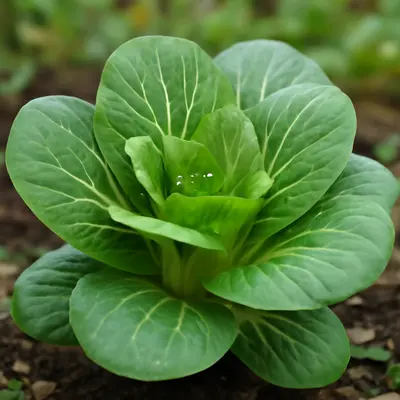
Nice and dense, fully formed mini heads. Longer harvest window than most white-stem types. Suitable for spring, summer, and fall production. Winter cropping possible in mild areas. AAS Winner.
Harvest
37d
Days to harvest
Sun
Full sun to part shade
Zones
5–9
USDA hardiness
Height
3 feet
Planting Timeline
Showing dates for Asian Delight in USDA Zone 7
All Zone 7 lettuce →Zone Map
Click a state to update dates
Asian Delight · Zones 5–9
Growing Details
Succession Planting
Asian Delight matures in 37 days, which makes it well-suited to staggered plantings. Direct sow every 14 days from early March through late April, then pause when daytime highs are consistently hitting 85°F — heat pushes bok choy to bolt fast, and the leaves turn bitter before you get a full harvest. Pick back up with sowings in late August through September for a fall run, aiming to finish before your first hard frost.
If you're in zones 5–6, compress that spring window — start in mid-March and stop by early April, since the gap between "too cold to germinate reliably" and "too hot to grow without bolting" is narrow. In zones 8–9, late February works for the first sowing, but the spring window closes sooner; the fall run is typically more productive and can stretch into December.
Complete Growing Guide
Nice and dense, fully formed mini heads. Longer harvest window than most white-stem types. Suitable for spring, summer, and fall production. Winter cropping possible in mild areas. AAS Winner. According to Johnny's Selected Seeds, Asian Delight is 37 days to maturity, annual, hybrid (f1). Notable features: Cold Tolerant, Hydroponic Performer, Heat Tolerant, AAS (All-America Selections) Winners.
Light: Full sun (6 or more hours of direct sunlight a day), Partial Shade (Direct sunlight only part of the day, 2-6 hours). Soil: Clay, Loam (Silt), Sand. Soil pH: Acid (<6.0), Neutral (6.0-8.0). Drainage: Good Drainage, Moist. Height: 0 ft. 10 in. - 2 ft. 0 in.. Spread: 1 ft. 0 in. - 2 ft. 0 in.. Spacing: 12 inches-3 feet. Growth rate: Medium. Maintenance: Medium. Propagation: Seed, Stem Cutting. Regions: Coastal, Mountains, Piedmont.
Harvesting
Asian Delight reaches harvest at 37 days from sowing per Johnny's Selected Seeds. As an annual, harvest continues until frost ends the season.
The fruits dry and split when ripe.
Color: Brown/Copper, Green. Type: Siliqua. Length: > 3 inches.
Garden value: Edible
Harvest time: Fall, Summer
Bloom time: Spring, Summer
Edibility: The foliage is edible raw or cooked but when cooked can emit an unpleasant odor.
Storage & Preservation
Asian Delight is best stored unwashed in a perforated plastic bag in the crisper drawer at 32–40°F with 95% humidity, where it will keep for 7–10 days. For longer preservation, blanch whole leaves or chopped greens for 2–3 minutes, then ice-bath and freeze in airtight containers for up to eight months. Fermentation works particularly well with this tender variety; pack shredded leaves with salt (2–3% by weight) in a jar, weight down, and allow 5–7 days at room temperature for a tangy condiment. Drying is less recommended due to the delicate leaf structure, though dehydrator sheets at 95–105°F for 4–6 hours will produce crispy chips suitable for soups. The thick, succulent stems tolerate freezing better than the leaves, so separate and freeze them independently if planning extended storage.
History & Origin
Asian Delight is an F1 hybrid developed through controlled cross-pollination. Listed in the Johnny's Selected Seeds catalog.
Brassica is a genus of plants in the cabbage and mustard family (Brassicaceae). The members of the genus are informally known as cruciferous vegetables, cabbages, mustard plants, or simply brassicas. Crops from this genus are sometimes called cole crops—derived from the Latin caulis, denoting the stem or stalk of a plant.
Advantages
- +Compact mini heads perfect for small space gardeners and containers
- +Extended harvest window reduces replanting frequency compared to similar varieties
- +AAS award recognition indicates superior performance and reliability
- +Versatile seasonal growing from spring through fall in most climates
- +Dense head formation ensures better texture and longer shelf life
Considerations
- -Requires consistent moisture to prevent bolting during heat stress
- -Susceptible to cabbage worms and flea beetles like most brassicas
- -Mini head size limits yield per plant for commercial operations
- -Prefers rich, well-draining soil and may struggle in poor conditions
Companion Plants
Radishes are probably the most useful thing you can tuck in around Asian Delight. They germinate in 5–7 days, their quick root activity breaks up the top few inches of soil, and the sharp scent disrupts flea beetles that would otherwise zero in on young brassica leaves. Pull the radishes at 25–30 days and you've also freed up space just as the bok choy canopy starts to spread.
Marigolds — Tagetes patula specifically — do real work here. Their root secretions suppress some soilborne nematode populations, and the flowers draw in predatory wasps that feed on aphids. That matters for Asian Delight in particular, since Myzus persicae (green peach aphid) is the primary vector for lettuce mosaic virus. Chives and garlic add a second layer: the sulfur compounds they release interfere with aphid host-location, which won't eliminate the problem but does reduce pressure. Nasturtiums at the bed's edge act as a trap crop — aphid colonies tend to pile onto them instead of the bok choy, and you can cut the infested nasturtium stems and bin them.
Broccoli is the companion to skip. Same family, overlapping pest list — clubroot, flea beetles, imported cabbageworm (Pieris rapae) — and grouping two brassicas together just doubles the target size. Walnut trees are a harder constraint: juglone, the allelopathic compound in black walnut (Juglans nigra) roots, is toxic to a wide range of vegetables, brassicas included. The affected soil zone can extend 50 feet or more from the trunk, and it persists even after the tree is removed.
Plant Together
Carrots
Helps break up soil with deep roots, doesn't compete for space with shallow lettuce roots
Radishes
Quick-growing, helps loosen soil and can be harvested before lettuce needs the space
Chives
Repels aphids and other soft-bodied insects that commonly attack lettuce
Marigolds
Deters nematodes and aphids while attracting beneficial insects
Spinach
Similar growing requirements and can be succession planted together
Garlic
Natural pest deterrent against aphids, slugs, and other lettuce pests
Nasturtiums
Acts as trap crop for aphids and cucumber beetles, draws pests away from lettuce
Parsley
Attracts beneficial insects and doesn't compete heavily for nutrients
Keep Apart
Broccoli
Large leaves create excessive shade and compete heavily for nutrients
Sunflowers
Allelopathic effects inhibit lettuce growth and creates too much shade
Walnut trees
Produces juglone which is toxic to lettuce and most vegetables
Nutrition Facts
Per 100g serving. % Daily Value based on 2,000 calorie diet. Source: USDA FoodData Central (FDC #2346388)
Pests & Disease Resistance
Common Pests
Aphids, slugs, snails, flea beetles, cutworms
Diseases
Downy mildew, lettuce mosaic virus, damping-off
Troubleshooting Asian Delight
What you'll see, why it happens, and what to do about it.
Seedlings collapse at soil level within the first 1–2 weeks after sowing, sometimes with fuzzy white mold visible on the soil surface
Likely Causes
- Damping-off — caused by soilborne fungi including Pythium spp. and Rhizoctonia solani, both of which thrive in cool, waterlogged soil
- Overwatering or poor drainage keeping the root zone saturated
What to Do
- 1.Pull the dead seedlings and check for a pinched, water-soaked stem at the soil line — that confirms damping-off
- 2.Don't replant into the same wet spot; improve drainage or switch to a raised bed with fresh, well-draining mix
- 3.Start seeds indoors in sterile seed-starting mix and hold off on watering until the top 1/4 inch dries slightly between waterings
Grayish-purple fuzzy coating on the undersides of older leaves, with yellow patches showing on the upper surface
Likely Causes
- Downy mildew (Bremia lactucae) — spreads fast in humid, cool conditions, especially when nights drop below 65°F and leaves stay wet
What to Do
- 1.Remove and trash (don't compost) affected leaves immediately
- 2.Water at the base of the plant, not overhead — keeping foliage dry cuts transmission significantly
- 3.Space plants at least 8 inches apart to get air moving through the canopy
Leaves show mosaic patterning — irregular light and dark green patches — and plants are stunted or distorted compared to healthy ones nearby
Likely Causes
- Lettuce mosaic virus (LMV), transmitted by aphids, particularly Myzus persicae (green peach aphid)
- Infected seed — LMV is seed-borne at low rates
What to Do
- 1.Pull and dispose of infected plants; there's no cure once a plant is infected
- 2.Control aphid populations early — a hard spray of water or insecticidal soap (2–3 applications, 5 days apart) keeps numbers down
- 3.Source certified virus-tested seed when possible
Ragged holes scattered across leaves, or seedlings cut off cleanly at soil level overnight
Likely Causes
- Flea beetles (Phyllotreta spp.) — chew small scattered holes, most damaging on seedlings under 3 inches tall
- Cutworms (Agrotis spp.) — sever seedlings at the base, typically at night, one plant at a time
- Slugs and snails — leave irregular holes and a slime trail on the soil or lower leaves
What to Do
- 1.Drape row cover (Reemay or similar) directly over seedlings at planting — flea beetles can devastate a bed of young bok choy in 48 hours
- 2.For cutworms, press a 3-inch cardboard collar around each transplant, pushed 1 inch into the soil
- 3.For slugs, scatter iron phosphate bait (Sluggo) around the bed perimeter at dusk; reapply after heavy rain
Frequently Asked Questions
How long does Asian Delight lettuce take from seed to harvest?▼
Is Asian Delight lettuce good for beginner gardeners?▼
Can you grow Asian Delight lettuce in containers?▼
When is the best time to plant Asian Delight lettuce?▼
What makes Asian Delight different from other mini lettuce varieties?▼
Does Asian Delight lettuce prefer full sun or shade?▼
Zone-by-Zone Planting Calendar
| Zone | Indoor Start | Transplant | Direct Sow | Harvest |
|---|---|---|---|---|
| Zone 3 | — | — | May – June | June – October |
| Zone 4 | — | — | April – June | June – October |
| Zone 5 | — | — | April – May | May – November |
| Zone 6 | — | — | April – May | May – November |
| Zone 7 | — | — | March – May | April – November |
| Zone 8 | — | — | March – April | April – December |
| Zone 9 | — | — | February – March | March – December |
| Zone 10 | — | — | January – March | February – December |
| Zone 1 | — | — | June – July | July – September |
| Zone 2 | — | — | May – July | June – September |
| Zone 11 | — | — | January – February | January – December |
| Zone 12 | — | — | January – February | January – December |
| Zone 13 | — | — | January – February | January – December |
Growing Guides from Wind River Greens
Sources & References
External authority sources used in compiling this guide.
- BreederJohnny's Selected Seeds
- USDAUSDA FoodData Central
See the Methodology page for how this data is sourced, what's AI-assisted, and known limitations.