Salanova Green Crispy
Lactuca sativa 'Salanova Green Crispy'
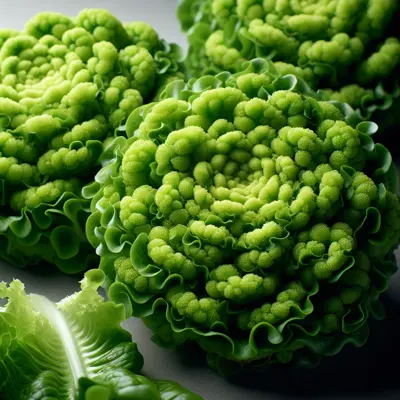
A revolutionary modern hybrid that transforms salad preparation with its innovative multi-leaf technology - one cut at the base yields perfectly sized, ready-to-eat leaves without waste. This compact variety produces dense heads packed with crispy, uniform leaves that maintain excellent texture and freshness longer than traditional lettuce types. Perfect for busy gardeners and commercial growers who want maximum efficiency and consistent results.
Harvest
55-65d
Days to harvest
Sun
Full sun to partial shade
Zones
2–11
USDA hardiness
Height
6-12 inches
Planting Timeline
Showing dates for Salanova Green Crispy in USDA Zone 7
All Zone 7 lettuce →Zone Map
Click a state to update dates
Salanova Green Crispy · Zones 2–11
Growing Details
Succession Planting
Direct sow Salanova Green Crispy every 14–18 days starting March 1 through late April for a spring run. Stop new sowings once daytime highs are consistently hitting 80°F — tip burn accelerates and heads turn bitter past that point faster than you'd expect. Resume around August 15, once soil temps drop back below 75°F, and sow through late September for a fall harvest that can run into November in most zones.
The 55–65 day window is short enough that staggering plantings actually matters — two or three small successions beat one large planting you can't eat down before the outer leaves start to deteriorate.
Complete Growing Guide
Salanova Green Crispy thrives when started either indoors about four weeks before your last spring frost or direct sown once soil temperatures reach 40°F. For spring crops, sow seeds indoors in seed trays and transplant seedlings when they develop their second true leaf. Direct sowing works equally well and often produces sturdier plants with less transplant shock. In mild climates, you can succession plant every two weeks from early spring through fall, allowing you to harvest continuously without replanting entire beds.
This compact variety needs consistent spacing of eight to ten inches apart to develop its characteristically dense, uniform heads. Sow seeds a quarter-inch deep in well-draining soil enriched with compost before planting. Salanova Green Crispy performs best in soil with a pH between 6.0 and 7.0 and benefits from moderate fertility—avoid excessive nitrogen, which encourages bolting rather than the crisp leaf texture this variety is bred to deliver. Prepare beds by working in aged compost several weeks ahead, as this hybrid responds well to established soil ecosystems.
Water consistently and deeply, aiming for one to one and a half inches weekly, adjusting for rainfall. The multi-leaf technology that makes Salanova Green Crispy revolutionary depends on steady moisture; irregular watering causes tip burn and splits the tightly packed leaves. A light fertilizer application every three weeks with balanced, water-soluble fertilizer supports growth without oversupplying nitrogen. Mulching around plants conserves moisture and maintains soil temperature stability.
Aphids and thrips particularly target the dense foliage of Salanova Green Crispy, so inspect leaf undersides weekly starting at week three. Use neem oil or insecticidal soap at first sign of infestation, as dense heads can harbor pests longer than loose-leaf varieties. Leafminers tunnel through leaves; remove affected foliage immediately to prevent population buildup. While many modern Salanova strains show downy mildew resistance, ensure adequate air circulation between plants to prevent this fungal disease, and water at soil level rather than overhead.
The most critical technique gardeners overlook with Salanova Green Crispy is harvesting at peak maturity—typically days fifty-five to sixty-five from transplant. Waiting too long causes heads to loosen and lose the uniform leaf quality that defines this variety's appeal. Make one clean cut at the soil level, and the entire head separates with ready-to-eat leaves requiring minimal processing. This unique characteristic demands timely harvesting to fully appreciate what makes this hybrid revolutionary for busy gardeners seeking efficiency without sacrifice.
Harvesting
Harvest Salanova Green Crispy when the compact head reaches 6-12 inches in diameter with leaves displaying vibrant green coloring and a firm feel when gently squeezed. The innovative multi-leaf structure signals readiness when individual leaves feel crisp and turgid rather than limp. This variety excels with continuous harvesting—simply cut individual outer leaves as needed, allowing the inner leaves to continue developing, or remove the entire head at the base for a single harvest. For optimal texture retention, time your harvest in early morning after dew dries but before afternoon heat sets in, as this maximizes crispness and extends post-harvest freshness considerably compared to afternoon-harvested heads.
Tiny seeds with a dandelion-like tuft (pappus) to aid in wind dispersal.
Color: Brown/Copper. Type: Achene. Length: < 1 inch. Width: < 1 inch.
Harvest time: Summer
Edibility: Leaves can be used raw or cooked in salads, sandwiches, and other dishes. Head lettuce can be stored for 2-3 weeks while leaf and butterhead store for 1-2 weeks.
Storage & Preservation
Store freshly harvested Salanova Green Crispy immediately in the refrigerator at 32-35°F with high humidity. Place the cut head in a perforated plastic bag or wrap loosely in damp paper towels to maintain moisture while allowing air circulation. Properly stored, it maintains excellent texture and flavor for 10-14 days – significantly longer than traditional lettuce varieties.
Avoid washing until ready to use, as excess moisture accelerates deterioration. The variety's dense structure and thick leaves naturally resist wilting better than loose-leaf types.
While lettuce doesn't preserve well through traditional methods like canning or freezing, you can extend your harvest season by succession planting every 2-3 weeks. For meal prep, the cut leaves stay crisp in airtight containers for 5-7 days, making this variety particularly valuable for commercial food service and busy households planning weekly salads.
History & Origin
Salanova Green Crispy belongs to the Salanova family, a proprietary hybrid line developed by Rijk Zwaan, a Dutch seed company known for advanced lettuce breeding. The Salanova concept—distinguished by its innovative multi-leaf harvest technology where leaves separate cleanly from a central core—emerged in the early 2000s as a response to commercial and home gardener demands for efficiency and reduced waste. While the specific year of 'Green Crispy' introduction remains undocumented in widely available sources, it represents the refinement of Salanova's core breeding objectives: uniformity, crispness, and labor-saving harvest characteristics. The variety continues Rijk Zwaan's tradition of developing lettuce hybrids suited to both intensive production and home garden cultivation.
Origin: Mediterranean to Siberia
Advantages
- +Innovative multi-leaf technology eliminates waste and saves preparation time
- +Compact, dense heads deliver consistently uniform, crispy leaves every harvest
- +Maintains excellent texture and freshness significantly longer than traditional lettuce
- +Ready-to-eat leaves from single base cut perfect for busy gardeners
- +Moderate difficulty makes it accessible for both home and commercial growers
Considerations
- -Susceptible to aphids and thrips requiring regular pest monitoring
- -Prone to tip burn in inconsistent watering or low humidity conditions
- -Lettuce drop disease can devastate crops during warm, wet seasons
- -Requires well-draining soil and consistent moisture for optimal head development
Companion Plants
Chives and garlic are the most useful bed-edge plantings here — both push off aphids through scent, and aphids are the main insect problem you'll actually see on Salanova. Keep them to the perimeter so they don't eat into the 4-hour minimum of direct sun the lettuce needs. Radishes are worth squeezing in too: a fast variety like 'Cherry Belle' clears the ground in 25–30 days before any real root competition builds, and their presence seems to confuse leafminers looking for a place to lay eggs. Nasturtiums work as an aphid draw — pests prefer them over lettuce heads, which buys you time, though you'll want to pull heavily infested nasturtium stems before the colony moves on.
Skip broccoli. It's a heavy feeder whose root zone overlaps almost exactly with lettuce at the same pH 6.0–7.0 range, and the water competition shows up fast in dry spells. Sunflowers create a different problem — the canopy shade is enough to slow head development noticeably on a crop that's already working against a 55–65 day clock.
Plant Together
Chives
Repels aphids and improves lettuce flavor while providing natural pest deterrent
Carrots
Helps break up soil for lettuce roots and doesn't compete for nutrients
Radishes
Quick harvest allows space for lettuce expansion and helps loosen soil
Marigolds
Deters nematodes, aphids, and other pests that commonly attack lettuce
Nasturtiums
Acts as trap crop for aphids and adds beneficial insects to garden
Spinach
Similar growing requirements and can provide shade during hot weather
Garlic
Natural fungicide properties help prevent lettuce diseases like downy mildew
Dill
Attracts beneficial insects and may help improve lettuce growth
Keep Apart
Broccoli
Heavy feeder that competes for nitrogen and can shade out lettuce
Sunflowers
Allelopathic compounds inhibit lettuce germination and growth
Walnut trees
Juglone toxicity severely stunts or kills lettuce plants
Nutrition Facts
Per 100g serving. % Daily Value based on 2,000 calorie diet. Source: USDA FoodData Central (FDC #2346388)
Pests & Disease Resistance
Resistance
Excellent resistance to downy mildew races, good bolt tolerance
Common Pests
Aphids, thrips, leafminers
Diseases
Downy mildew (resistant strains), lettuce drop, tip burn
Troubleshooting Salanova Green Crispy
What you'll see, why it happens, and what to do about it.
Seedlings collapse at soil level within the first 7–10 days after transplanting or direct sow — stems look pinched or water-soaked at the base
Likely Causes
- Damping off — typically Pythium or Rhizoctonia solani, both soil-borne fungi that thrive in cool, wet, poorly-drained conditions
- Overwatering or compacted soil that holds moisture too long around the stem
What to Do
- 1.Pull the dead seedlings and check the roots — slimy brown roots confirm a Pythium problem; dry, pinched stems point more toward Rhizoctonia
- 2.Don't replant into the same spot immediately; let the bed dry out for a few days, then work in compost to improve drainage before resowing
- 3.Start fresh seed in a different location or container; NC State's IPM guidance recommends rotating away from beds with a history of damping off
Older outer leaves develop yellow-green patches on top with grayish-purple fuzzy growth on the undersides, usually after a stretch of cool, humid weather
Likely Causes
- Downy mildew (Bremia lactucae) — favored by temps between 50–65°F and high humidity or overhead irrigation at night
- Crowded spacing below 8 inches that traps moisture between heads
What to Do
- 1.Strip and discard affected leaves — don't compost them
- 2.Water in the morning so foliage dries before nightfall; switch to drip if you're running overhead sprinklers
- 3.Salanova Green Crispy carries some downy mildew resistance, but resistance isn't immunity — if pressure is heavy, a copper-based fungicide at first sign can slow spread
Leaf tips and inner head edges turn brown and papery, most visible on young inner leaves, no insects present
Likely Causes
- Tip burn — poor internal calcium translocation during fast growth spurts, especially when daytime temps climb above 75°F; not necessarily low soil calcium
- Boom-and-bust watering that disrupts calcium uptake at the roots
What to Do
- 1.Keep moisture even at 1 to 1.5 inches per week — tip burn almost always flares after a dry stretch followed by a heavy soak
- 2.Harvest at 55–65 days and don't let heads sit; the longer they linger in warm weather, the worse the browning gets
- 3.If it keeps recurring, open spacing to the full 10 inches and back off nitrogen — excess fertilizer pushes leafy growth faster than calcium can move through the plant
Frequently Asked Questions
How long does Salanova Green Crispy lettuce take to grow?▼
Can you grow Salanova lettuce in containers?▼
Is Salanova Green Crispy good for beginners?▼
What does Salanova Green Crispy taste like?▼
When should I plant Salanova lettuce?▼
How do you harvest Salanova lettuce properly?▼
Zone-by-Zone Planting Calendar
| Zone | Indoor Start | Transplant | Direct Sow | Harvest |
|---|---|---|---|---|
| Zone 3 | — | — | May – June | July – October |
| Zone 4 | — | — | April – June | June – October |
| Zone 5 | — | — | April – May | June – November |
| Zone 6 | — | — | April – May | June – November |
| Zone 7 | — | — | March – May | May – November |
| Zone 8 | — | — | March – April | May – December |
| Zone 9 | — | — | February – March | April – December |
| Zone 10 | — | — | January – March | March – December |
| Zone 1 | — | — | June – July | August – September |
| Zone 2 | — | — | May – July | July – September |
| Zone 11 | — | — | January – February | February – December |
| Zone 12 | — | — | January – February | February – December |
| Zone 13 | — | — | January – February | February – December |
Growing Guides from Wind River Greens
Sources & References
External authority sources used in compiling this guide.
See the Methodology page for how this data is sourced, what's AI-assisted, and known limitations.