Iceberg
Lactuca sativa var. capitata 'Iceberg'
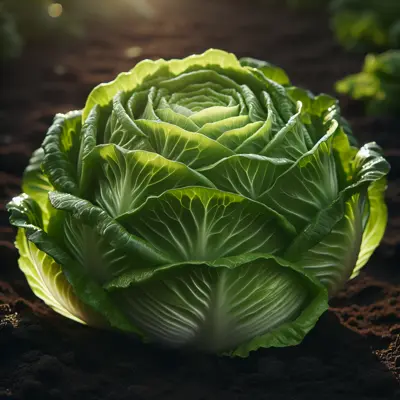
The quintessential American head lettuce that forms tight, dense heads of crisp, pale green leaves with unmatched crunch and refreshing flavor. While challenging to grow perfectly, successful heads reward gardeners with the ultimate salad lettuce that stays fresh for weeks and provides that signature satisfying crunch. This variety requires patience and proper timing but delivers restaurant-quality results when grown correctly.
Harvest
80-95d
Days to harvest
Sun
Full sun to partial shade
Zones
2–11
USDA hardiness
Height
6-12 inches
Planting Timeline
Showing dates for Iceberg in USDA Zone 7
All Zone 7 lettuce →Zone Map
Click a state to update dates
Iceberg · Zones 2–11
Growing Details
Succession Planting
Direct sow Iceberg every 14-18 days starting March 1 in zone 7, and stop by early May — once daytime highs consistently clear 75°F, heading quality drops fast and bolting follows within a week or two. With 80-95 days to maturity, a late-April sowing is about the last one that'll finish before summer shuts it down.
Pick back up in late August for a fall run, sowing every 14 days through mid-September. Fall heads often come out tighter and cleaner than spring ones — cool nights slow tipburn and let the head firm up properly. Stop sowing when you're 95 days out from your first hard frost date.
Complete Growing Guide
Iceberg lettuce thrives best when direct sown in early spring, approximately two to three weeks before your last frost date. The seeds are tiny and benefit from light to germinate, so simply press them into moist soil rather than covering them. If you prefer starting indoors, sow seeds four to six weeks before transplanting, but handle seedlings carefully since they resent root disturbance. In areas with mild winters, you can also direct sow in late summer for a fall crop, though this often proves more successful than spring plantings since the cooler autumn temperatures support head formation.
Prepare your soil with generous amendments of compost or aged manure to create a loose, well-draining medium rich in organic matter. Iceberg lettuce demands consistent soil moisture and nutrients throughout its growth cycle, making soil preparation non-negotiable. Space seedlings or thin direct-sown seeds to six to eight inches apart, as these varieties require room to develop their characteristically dense, compact heads. Plant in rows spaced twelve inches apart, and ensure soil pH hovers between 6.0 and 7.0.
Water deeply and consistently, aiming for one to one and a half inches weekly, keeping the soil evenly moist but never waterlogged. Iceberg's tightly layered heads are particularly susceptible to tipburn, a physiological disorder caused by irregular watering and calcium deficiency. Maintain steady moisture rather than alternating between wet and dry periods. Feed with a balanced, diluted liquid fertilizer every two weeks, or incorporate a slow-release fertilizer at planting time. Avoid excessive nitrogen, which promotes soft foliage at the expense of firm head development.
This variety faces specific vulnerabilities worth monitoring closely. Tipburn appears first on inner leaves as brown, papery spots, often signaling calcium uptake problems linked to water stress. Bottom rot, another Iceberg-specific concern, develops when basal leaves remain too wet; ensure adequate air circulation and avoid wetting the base of plants. Premature bolting in heat is perhaps the greatest challenge—Iceberg requires consistent temperatures below 65°F for proper heading. Plant for spring or fall harvest rather than summer, or use shade cloth in warm regions. Watch vigilantly for aphids and flea beetles, which colonize the tight leaf layers where they're difficult to reach; spray insecticidal soap at first sign of damage.
Succession planting extends your harvest by sowing seeds every two weeks from early spring through mid-summer, though only early and late plantings typically produce quality heads. Resist the urge to harvest prematurely; Iceberg requires the full eighty to ninety-five days to develop that signature crisp, dense head. The most common gardening mistake is impatience with temperature control—many growers try forcing Iceberg during warm seasons and end up with loose, bitter plants instead of the tight, sweet heads this variety demands. Time your planting to cooler seasons, and you'll achieve that restaurant-quality crunch.
Harvesting
Harvest Iceberg lettuce when the head feels firm and solid to gentle pressure, typically at 6–8 inches in diameter with tightly packed, pale green outer leaves that show no signs of bolting or browning. The head should feel dense and compact rather than loose or hollow, indicating it has reached peak crispness. For best results, harvest in the early morning after dew has dried, as this is when the lettuce contains maximum moisture and will be at its crunchiest. Iceberg is typically harvested as a single, complete head by cutting at the soil line with a sharp knife, rather than as a cut-and-come-again crop, though outer leaves can be removed selectively if needed. Once cut, store the head in the refrigerator immediately to maintain that signature texture for up to three weeks.
Tiny seeds with a dandelion-like tuft (pappus) to aid in wind dispersal.
Color: Brown/Copper. Type: Achene. Length: < 1 inch. Width: < 1 inch.
Harvest time: Summer
Edibility: Leaves can be used raw or cooked in salads, sandwiches, and other dishes. Head lettuce can be stored for 2-3 weeks while leaf and butterhead store for 1-2 weeks.
Storage & Preservation
Fresh Iceberg heads store exceptionally well when handled properly. Remove any damaged outer leaves and wrap the head loosely in paper towels, then place in a perforated plastic bag in your refrigerator's crisper drawer. Maintain humidity around 95% and temperature between 32-34°F for maximum shelf life of 2-3 weeks.
Unlike other lettuce varieties, Iceberg's dense structure makes it unsuitable for traditional preservation methods like dehydrating or freezing, as these destroy its signature crisp texture. However, you can blanch and freeze chopped Iceberg for use in cooked dishes like stir-fries or soups, though it will lose its crunch.
For extended freshness, core the lettuce and rinse the hollow core area with cold water every few days, wrapping again in fresh paper towels. This prevents the core from browning and maintains overall head quality.
History & Origin
The origins of Iceberg lettuce remain somewhat obscured by time, though it emerged in North America during the early twentieth century as a deliberate improvement on crisphead varieties already in cultivation. While specific breeder attribution is unclear, the variety gained prominence through commercial seed companies and agricultural development during the 1920s-1930s, coinciding with the expansion of industrial agriculture and refrigerated transportation across the United States. The name "Iceberg" itself reflects the innovative shipping methods of the era, when lettuce heads were packed in ice for cross-country rail transport, a marketing advantage that helped establish this variety as the dominant American salad lettuce. Its ancestry traces to European crisphead breeding lines, though the exact parentage and breeding selections remain largely undocumented in horticultural records.
Origin: Mediterranean to Siberia
Advantages
- +Exceptional crunch and long storage life make Iceberg ideal for meal prep.
- +Dense heads provide substantial yield per plant compared to loose-leaf varieties.
- +Mild flavor pairs universally with any salad dressing or culinary application.
- +High water content creates refreshing, crisp texture that defines quality salads.
- +Restaurant-quality appearance and texture justify the extra growing effort required.
Considerations
- -Tipburn and bottom rot are chronic problems in inconsistent watering conditions.
- -Requires 80-95 days to maturity, making succession planting difficult in short seasons.
- -Heat sensitivity causes premature bolting and bitter flavor in warm temperatures.
- -Multiple pest vulnerabilities including aphids and flea beetles demand vigilant monitoring.
- -Tight head formation needs consistent nutrients and precise spacing to succeed.
Companion Plants
Radishes and chives are the most useful plants to put near Iceberg. Radishes germinate in 5-7 days and draw flea beetles away from young lettuce leaves — a sacrificial trap crop you'd harvest anyway. Chives planted at the bed edge produce a mild allium scent that disrupts aphid host-finding before they locate the heads. Tagetes patula (French marigold) works at a broader radius for the same aphid pressure and is worth the space if your beds have had infestations in back-to-back seasons. Carrots and spinach share a similar root depth with lettuce and don't compete hard for water, so they fill gaps without crowding.
Broccoli is the companion to skip. It's a heavy nitrogen feeder and bulks up into a canopy that shades lettuce out right when the heads are trying to develop — and its root competition in the same 6-inch zone hits lettuce harder than most people expect. Tomatoes are mostly a timing mismatch: by the time tomatoes want deep, infrequent soaks, lettuce needs consistent moisture at 1 to 1.5 inches per week and is already on its way to bolting.
Plant Together
Chives
Repels aphids and improves lettuce growth and flavor
Carrots
Loosens soil for lettuce roots and doesn't compete for space
Radishes
Breaks up soil, deters flea beetles, and matures quickly between lettuce plantings
Marigolds
Repels nematodes, aphids, and other pests that damage lettuce
Nasturtiums
Acts as trap crop for aphids and cucumber beetles
Spinach
Similar growing requirements and can be interplanted for succession harvests
Garlic
Deters aphids, slugs, and rabbits that commonly attack lettuce
Dill
Attracts beneficial insects that prey on lettuce pests
Keep Apart
Broccoli
Competes heavily for nutrients and can shade out lettuce
Sunflowers
Allelopathic compounds inhibit lettuce germination and growth
Tomatoes
Large root system competes for nutrients and water needed by shallow-rooted lettuce
Nutrition Facts
Per 100g serving. % Daily Value based on 2,000 calorie diet. Source: USDA FoodData Central (FDC #2346388)
Pests & Disease Resistance
Resistance
Susceptible to tipburn and bottom rot, requires cool conditions to prevent bolting
Common Pests
Aphids, cutworms, wireworms, flea beetles
Diseases
Tipburn, bottom rot, downy mildew, premature bolting in heat
Troubleshooting Iceberg
What you'll see, why it happens, and what to do about it.
Seedlings collapsing at the soil line within the first 1-2 weeks after planting, sometimes with fuzzy white mold visible on the soil surface
Likely Causes
- Damping off — a fungal complex (often Pythium or Rhizoctonia) that thrives in cold, wet, poorly-drained soil
- Overwatering or planting too early into soil below 40°F
What to Do
- 1.Don't replant into the same bed immediately — let it dry out, and work in compost to improve drainage before the next sowing
- 2.Start fresh seeds in a different location or container with clean, sterile seed-starting mix
- 3.NC State Extension recommends scouting early and sending a soil or plant sample to a diagnostic lab if damping off keeps recurring in the same bed across seasons
Outer or inner wrapper leaves developing brown, papery edges — most visible when you peel back the head at harvest
Likely Causes
- Tipburn — calcium deficiency caused by poor translocation during rapid growth, not usually a soil calcium problem
- Inconsistent watering or a spike above 75°F that accelerates growth faster than the plant can move calcium to leaf margins
What to Do
- 1.Water consistently at 1 to 1.5 inches per week — irregular wet-dry cycles are the main trigger
- 2.Pull heads at 80-85 days rather than letting them sit; tipburn worsens the longer a mature head stays in the ground during warm spells
- 3.Next season, time your planting so daytime highs stay below 70°F during the final 3 weeks of heading
Frequently Asked Questions
How long does Iceberg lettuce take to grow from seed?▼
Can you grow Iceberg lettuce in containers?▼
Is Iceberg lettuce good for beginners?▼
Why didn't my Iceberg lettuce form heads?▼
When should I plant Iceberg lettuce?▼
What does fresh Iceberg lettuce taste like compared to store-bought?▼
Zone-by-Zone Planting Calendar
| Zone | Indoor Start | Transplant | Direct Sow | Harvest |
|---|---|---|---|---|
| Zone 1 | — | — | June – July | August – September |
| Zone 2 | — | — | May – July | August – September |
| Zone 11 | — | — | January – February | March – December |
| Zone 12 | — | — | January – February | March – December |
| Zone 13 | — | — | January – February | March – December |
| Zone 3 | — | — | May – June | July – October |
| Zone 4 | — | — | April – June | July – October |
| Zone 5 | — | — | April – May | July – November |
| Zone 6 | — | — | April – May | June – November |
| Zone 7 | — | — | March – May | June – November |
| Zone 8 | — | — | March – April | May – December |
| Zone 9 | — | — | February – March | April – December |
| Zone 10 | — | — | January – March | April – December |
Growing Guides from Wind River Greens
Sources & References
External authority sources used in compiling this guide.
See the Methodology page for how this data is sourced, what's AI-assisted, and known limitations.