Green Leaf
Lactuca sativa 'Green Leaf'
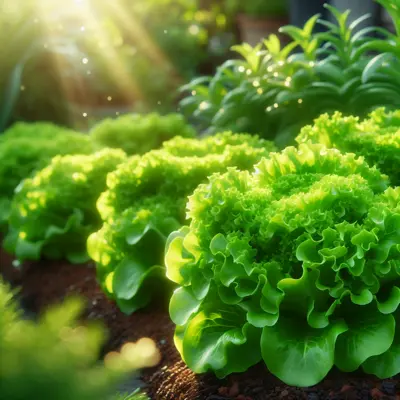
A reliable, fast-growing loose-leaf lettuce that's perfect for beginners and continuous harvesting. The tender, ruffled green leaves provide mild, sweet flavor and can be harvested leaf by leaf for weeks of fresh salads. This heat-tolerant variety is ideal for succession planting throughout the growing season.
Harvest
45-55d
Days to harvest
Sun
Full sun to partial shade
Zones
2–11
USDA hardiness
Height
6-12 inches
Planting Timeline
Showing dates for Green Leaf in USDA Zone 7
All Zone 7 lettuce →Zone Map
Click a state to update dates
Green Leaf · Zones 2–11
Growing Details
Succession Planting
Direct sow every 14 days starting March 1 in zone 7, and keep going through mid-May. Once daytime highs are consistently hitting 80°F, Green Leaf bolts fast — leaves turn bitter and the seed stalk appears within days. Pick up again in late August for a fall run, sowing through late September. You can push into October with row cover on nights that dip below 28°F.
For a consistent harvest across several weeks, three staggered sowings in spring — early March, mid-March, late March — will give you cut-and-come-again heads that don't all peak the same day. Don't try to bridge the summer gap with shade cloth; above 85°F this variety just stalls and bolts regardless.
Complete Growing Guide
Green Leaf lettuce thrives when planted in cool weather, making early spring and fall your prime growing windows. You can either start seeds indoors three to four weeks before your last spring frost or direct sow them outdoors two weeks before that frost date. For fall crops, plant seeds six to eight weeks before your first expected frost. Direct sowing is often easier for this variety since Green Leaf germinates quickly and doesn't require the fussiness of transplanting. If you do start indoors, keep seedlings under grow lights and maintain soil temperatures around 65–70°F for optimal germination within 7–10 days.
Space Green Leaf seedlings or thinned plants 6–8 inches apart in rows spaced 12 inches apart. Sow seeds ¼ inch deep in loose, well-draining soil enriched with compost. This variety appreciates slightly acidic to neutral soil (pH 6.0–7.0) and benefits from consistent moisture retention, so work organic matter into your beds before planting. Green Leaf's shallow root system means surface amendments matter more than deep cultivation.
Water Green Leaf consistently, aiming for 1–1.5 inches weekly through rainfall or irrigation. Moisture should reach the root zone but not waterlog the soil. During hot spells, you may need to water twice weekly. Feed lightly with a balanced, nitrogen-rich fertilizer every two to three weeks once seedlings establish their first true leaves. Green Leaf is a moderate feeder compared to denser head lettuces, so avoid over-fertilizing, which can encourage bolting and reduce that signature mild, sweet flavor.
Green Leaf's loose-leaf growth habit makes it particularly susceptible to flea beetles, which create tiny shot-like holes in young foliage. Monitor seedlings closely and use floating row covers until plants are established. Slugs are attracted to the tender ruffled leaves, especially in humid conditions; hand-pick them at dusk or use beer traps near the planting area. Aphids can colonize leaf undersides quickly, so check regularly and spray with insecticidal soap if populations spike. Downy mildew thrives in cool, wet conditions, so ensure good air circulation and avoid overhead watering.
The key to maximizing Green Leaf is succession planting. Rather than harvesting the entire plant, pick outer leaves individually when they reach 4–6 inches long, allowing the plant to continue producing for 4–6 weeks. This extends your harvest window significantly. Plant new seeds every two weeks throughout spring and again in midsummer for fall production, ensuring a continuous salad supply.
Many gardeners kill Green Leaf by planting it too late in spring or neglecting to provide afternoon shade during heat waves. Though this variety is more heat-tolerant than many lettuces, temperatures above 75°F consistently trigger early bolting and bitterness. If your area experiences hot springs, provide 20–30% shade cloth during the warmest part of the day, or focus your main crop on cooler seasons.
Harvesting
Green Leaf lettuce reaches peak harvest readiness when the outer leaves develop their characteristic bright, medium green color and reach 4–6 inches in length with a tender, ruffled texture that yields gently to touch without wilting. For continuous harvesting, pinch or cut outer leaves at the base once plants are 4–6 weeks old, allowing the inner leaves to mature for subsequent picks that can extend productivity for several weeks. For optimal flavor and crispness, harvest in early morning after the dew has dried but before temperatures rise, as this timing ensures maximum water content and natural sugars in the leaves while minimizing any potential bitterness from heat stress.
Tiny seeds with a dandelion-like tuft (pappus) to aid in wind dispersal.
Color: Brown/Copper. Type: Achene. Length: < 1 inch. Width: < 1 inch.
Harvest time: Summer
Edibility: Leaves can be used raw or cooked in salads, sandwiches, and other dishes. Head lettuce can be stored for 2-3 weeks while leaf and butterhead store for 1-2 weeks.
Storage & Preservation
Store freshly harvested Green Leaf lettuce immediately in the refrigerator for best quality. Rinse leaves gently in cold water, spin dry thoroughly, and wrap in paper towels before placing in a perforated plastic bag in your crisper drawer. Properly stored lettuce stays fresh for 7-10 days at 32-35°F. For short-term storage, you can keep unwashed lettuce in the refrigerator for up to 5 days. Green Leaf lettuce doesn't freeze or can well due to its high water content, but you can preserve it by making lettuce soup and freezing that, or dehydrating outer leaves at 125°F for 6-8 hours to create lettuce powder for seasoning. The best preservation method is succession planting every 2-3 weeks to ensure continuous fresh harvests throughout the growing season.
History & Origin
Green Leaf lettuce emerged from the broader American loose-leaf breeding tradition of the mid-twentieth century, though its precise breeder and introduction year remain undocumented in accessible horticultural records. The variety likely developed through conventional selection within the loose-leaf genetic pool already established by seed companies and agricultural institutions by the 1960s-70s. Its parentage traces to the wild ancestor Lactuca serriola and domesticated lettuce varieties refined over centuries, but specific crossing data or breeding programs are not widely recorded. The variety's popularity suggests it either arose through open-pollination selection or was introduced by a major American seed company during the era when loose-leaf types gained commercial prominence for home gardens.
Origin: Mediterranean to Siberia
Advantages
- +Fast-growing variety ready to harvest in just 45-55 days
- +Loose-leaf design allows continuous leaf-by-leaf harvesting for weeks
- +Heat-tolerant nature makes it reliable for summer succession planting
- +Mild, sweet flavor appeals to most palates without bitter aftertaste
- +Beginner-friendly with easy cultivation requirements and minimal care needs
Considerations
- -Susceptible to multiple pests including aphids, flea beetles, and slugs
- -Prone to fungal diseases like downy mildew and lettuce drop
- -Lower overall yield compared to head-forming lettuce varieties
Companion Plants
Radishes and carrots are the most practical companions here. Radishes germinate in 5-7 days and can mark your lettuce rows while drawing flea beetles away from the seedlings — they function as a low-cost trap crop you'd be pulling anyway. Carrots share the bed without crowding the root zone; lettuce pulls moisture from the top 6 inches, carrots work deeper, and neither one muscles the other out. Chives and garlic planted at the row ends do push back on aphid pressure through volatile sulfur compounds — it's not a silver bullet, but it costs you nothing to tuck a few in.
Fennel is the one to leave out entirely — it releases allelopathic compounds that suppress germination and stunt growth in shallow-rooted crops like lettuce. Sunflowers cause a simpler problem: a 6-12 inch lettuce plant next to a 6-foot sunflower just gets shaded out of production. Broccoli competes hard for the same cool-season nutrients, and in a shared bed it tends to take the lion's share.
Plant Together
Chives
Repels aphids and other pests while improving lettuce flavor
Carrots
Different root depths allow efficient space use without competition
Radishes
Break up soil for lettuce roots and deter flea beetles
Marigolds
Repel aphids, whiteflies, and nematodes that damage lettuce
Garlic
Deters aphids, slugs, and rabbits that commonly eat lettuce
Nasturtiums
Act as trap crop for aphids and cucumber beetles
Spinach
Similar growing conditions and can provide mutual shade
Dill
Attracts beneficial insects that control lettuce pests
Keep Apart
Sunflowers
Create too much shade and compete heavily for nutrients
Broccoli
Both are heavy nitrogen feeders causing nutrient competition
Fennel
Releases allelopathic compounds that inhibit lettuce growth
Nutrition Facts
Per 100g serving. % Daily Value based on 2,000 calorie diet. Source: USDA FoodData Central (FDC #2346388)
Pests & Disease Resistance
Resistance
Good resistance to tipburn and bolting in moderate heat
Common Pests
Aphids, flea beetles, slugs, cutworms
Diseases
Downy mildew, lettuce drop, bottom rot
Troubleshooting Green Leaf
What you'll see, why it happens, and what to do about it.
Seedlings collapse at soil level within the first 7-10 days after planting — stems look pinched or water-soaked at the base
Likely Causes
- Damping off — a fungal complex (often Pythium or Rhizoctonia solani) that thrives in cold, wet, poorly-drained soil
- Planting in a bed that has grown lettuce for 2+ consecutive years without rotation, allowing pathogen buildup in the top few inches of soil
What to Do
- 1.Pull and trash the dead seedlings — don't compost them
- 2.Let the bed surface dry slightly between waterings; don't water late in the day
- 3.Rotate lettuce out of that bed for at least one season and work in compost to improve drainage before the next planting
Gray-purple fuzzy coating on the underside of leaves, with pale yellow patches on top — showing up in cool, wet stretches
Likely Causes
- Downy mildew (Bremia lactucae) — spreads fast when nights stay below 65°F and humidity is high
- Dense planting that traps moisture around the canopy
What to Do
- 1.Space plants at least 6-8 inches apart to get air moving through the row
- 2.Water at the base, not overhead, and do it in the morning so foliage dries before nightfall
- 3.Remove and bag heavily infected leaves immediately — Bremia lactucae spreads by airborne spores
Outer leaves slimy and collapsed at the base of the plant, foul smell — inner head may still look intact at first
Likely Causes
- Lettuce drop (Sclerotinia sclerotiorum) — a soilborne fungus that produces hard, black resting structures (sclerotia) capable of surviving in soil for 5+ years
- Bottom rot (Erwinia carotovora) — a bacterial rot that moves fast once temperatures climb above 70°F and water is sitting at the crown
What to Do
- 1.Pull affected plants immediately and dispose of them in the trash, not the compost pile
- 2.Switch to drip irrigation or water at the base — anything that keeps the crown dry
- 3.Solarize the bed in summer if Sclerotinia has been a recurring problem: 4-6 weeks under clear plastic can knock back sclerotia populations in the top few inches of soil
Frequently Asked Questions
How long does Green Leaf lettuce take to grow?▼
Can you grow Green Leaf lettuce in containers?▼
Is Green Leaf lettuce good for beginners?▼
When should I plant Green Leaf lettuce?▼
What does Green Leaf lettuce taste like?▼
Why is my Green Leaf lettuce turning bitter?▼
Zone-by-Zone Planting Calendar
| Zone | Indoor Start | Transplant | Direct Sow | Harvest |
|---|---|---|---|---|
| Zone 3 | — | — | May – June | June – October |
| Zone 4 | — | — | April – June | June – October |
| Zone 5 | — | — | April – May | June – November |
| Zone 6 | — | — | April – May | May – November |
| Zone 7 | — | — | March – May | May – November |
| Zone 8 | — | — | March – April | April – December |
| Zone 9 | — | — | February – March | March – December |
| Zone 10 | — | — | January – March | March – December |
| Zone 1 | — | — | June – July | July – September |
| Zone 2 | — | — | May – July | July – September |
| Zone 11 | — | — | January – February | February – December |
| Zone 12 | — | — | January – February | February – December |
| Zone 13 | — | — | January – February | February – December |
Growing Guides from Wind River Greens
Sources & References
External authority sources used in compiling this guide.
See the Methodology page for how this data is sourced, what's AI-assisted, and known limitations.