Cheap Frills Mix
Brassica spp.
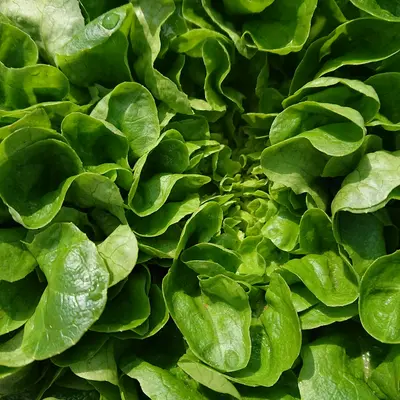
A colorful kaleidoscope of highly textured leaves that provides visual interest and excellent loft. An exceptional combination of textures, flavors, and colors. Includes red and green mustard, mizuna, and tatsoi. Varieties are subject to change depending upon availability.
Harvest
21d
Days to harvest
Sun
Full sun to part shade
Zones
6–9
USDA hardiness
Height
0 ft. 10 in. - 2 ft. 0 in.
Planting Timeline
Showing dates for Cheap Frills Mix in USDA Zone 7
All Zone 7 lettuce →Zone Map
Click a state to update dates
Cheap Frills Mix · Zones 6–9
Growing Details
Succession Planting
Direct sow every 14 days starting March 1 in zone 7, running through early May. Once daytime highs are consistently above 80°F, these brassica-mix greens bolt or turn bitter fast — stop sowing and let the bed rest. Pick back up around August 15, sowing every 14 days through late September for cuts that carry into November.
At 21 days to harvest, three or four staggered small patches will keep a near-continuous supply going through spring. Avoid sowing one large block at once — you'll have more than you can eat for two weeks, then a gap while you wait for the next planting to size up.
Complete Growing Guide
A colorful kaleidoscope of highly textured leaves that provides visual interest and excellent loft. An exceptional combination of textures, flavors, and colors. Includes red and green mustard, mizuna, and tatsoi. Varieties are subject to change depending upon availability. According to Johnny's Selected Seeds, Cheap Frills Mix is 21 days to maturity, annual. Notable features: Easy Choice.
Light: Full sun (6 or more hours of direct sunlight a day), Partial Shade (Direct sunlight only part of the day, 2-6 hours). Soil: Clay, Loam (Silt), Sand. Soil pH: Acid (<6.0), Neutral (6.0-8.0). Drainage: Good Drainage, Moist. Height: 0 ft. 10 in. - 2 ft. 0 in.. Spread: 1 ft. 0 in. - 2 ft. 0 in.. Spacing: 12 inches-3 feet. Growth rate: Medium. Maintenance: Medium. Propagation: Seed, Stem Cutting. Regions: Coastal, Mountains, Piedmont.
Harvesting
Cheap Frills Mix reaches harvest at 21 days from sowing per Johnny's Selected Seeds. As an annual, harvest continues until frost ends the season.
The fruits dry and split when ripe.
Color: Brown/Copper, Green. Type: Siliqua. Length: > 3 inches.
Garden value: Edible
Harvest time: Fall, Summer
Bloom time: Spring, Summer
Edibility: The foliage is edible raw or cooked but when cooked can emit an unpleasant odor.
Storage & Preservation
# Storage and Preservation
For maximum freshness, harvest Cheap Frills Mix in the cool early morning and refrigerate immediately at 32–40°F in a perforated plastic bag or breathable container lined with paper towels to absorb excess moisture. Properly stored, the ruffled leaves will keep for 7–10 days, though flavor and texture decline noticeably after five days. These tender lettuces don't freeze or can well due to their delicate leaf structure, but they're excellent candidates for quick pickling if you have surplus. For longer preservation, dry the leaves thoroughly, then layer them between paper towels in an airtight container with silica packets; use within a month for best results. The frilly leaf margins on this mix brown more readily than flat-leafed varieties, so minimize handling and air exposure during storage to reduce cosmetic damage and maintain marketable appearance.
History & Origin
Documentation on the specific origins of Cheap Frills Mix is limited, as commercial seed blends typically represent curated selections rather than formally bred varieties. This particular mix draws from established Asian greens and mustard breeding lines, combining cultivars like mizuna and tatsoi that have long histories in Japanese and Chinese agriculture, along with red and green mustard varieties developed through conventional selection. The "mix" format itself reflects modern seed company practices of offering pre-assembled salad blends for consumer convenience, though the exact breeder and introduction date remain undocumented. The component varieties have deep heritage traditions in their regions of origin, but this specific commercial blend's provenance is not clearly recorded in accessible breeding literature.
Brassica is a genus of plants in the cabbage and mustard family (Brassicaceae). The members of the genus are informally known as cruciferous vegetables, cabbages, mustard plants, or simply brassicas. Crops from this genus are sometimes called cole crops—derived from the Latin caulis, denoting the stem or stalk of a plant.
Advantages
- +Quick 21-day harvest makes this ideal for succession planting strategies
- +Vibrant red and green colors add visual appeal to salads
- +Excellent loft and texture create interesting eating experience and presentation
- +Easy growing difficulty suitable for beginners and experienced gardeners alike
Considerations
- -Variety mix means inconsistent leaf sizes complicate uniform harvesting
- -Mustard and mizuna varieties prone to flea beetle damage in spring
- -Thin-leaved greens wilt quickly after cutting without proper cold storage
Companion Plants
Radishes are the most practical neighbor here — sow them around the perimeter of the bed and they'll draw flea beetles away before those beetles find the frilly leaves. Marigolds (Tagetes patula) and nasturtiums pull in predatory wasps that keep aphid populations from building into a Lettuce mosaic virus problem, and both fit easily at 12-inch intervals without shading out low-growing greens. Chives and garlic provide mild allium chemistry that soft-bodied insects tend to avoid. Fennel is the one to keep out entirely — it produces allelopathic compounds that suppress neighboring plants and will stunt anything growing within 18 inches of it.
Plant Together
Basil
Repels aphids and whiteflies, may improve lettuce flavor
Chives
Repels aphids and other pests while providing natural pest deterrent
Marigolds
Deters nematodes and aphids, attracts beneficial insects
Carrots
Deep roots don't compete with shallow lettuce roots, good space utilization
Radishes
Quick harvest before lettuce matures, helps break up soil
Spinach
Similar growing conditions and water needs, efficient space usage
Nasturtiums
Trap crop for aphids and cucumber beetles, adds color to garden
Garlic
Natural pest deterrent against aphids and slugs
Keep Apart
Fennel
Allelopathic properties inhibit lettuce growth and development
Broccoli
Heavy feeder that competes for nutrients, may shade delicate lettuce
Sunflowers
Allelopathic compounds inhibit lettuce germination and growth
Nutrition Facts
Per 100g serving. % Daily Value based on 2,000 calorie diet. Source: USDA FoodData Central (FDC #2346388)
Pests & Disease Resistance
Common Pests
Aphids, flea beetles, slugs
Diseases
Lettuce mosaic virus, downy mildew, powdery mildew
Troubleshooting Cheap Frills Mix
What you'll see, why it happens, and what to do about it.
Seedlings collapse at soil level within the first 7–10 days after transplanting or germination
Likely Causes
- Damping off — fungal complex (Pythium, Rhizoctonia) that thrives in cold, wet, poorly drained soil
- Overwatering immediately after sowing, especially in heavy or compacted beds
What to Do
- 1.Remove and trash any dead seedlings immediately; don't let them sit and spread spores
- 2.Let the soil surface dry slightly between waterings — seedlings need moisture, not saturation
- 3.If this bed had damping off last season, solarize it for 4–6 weeks before replanting, or start fresh in a raised bed with new mix
Tiny round holes punched through leaves on young transplants, especially within the first 2–3 weeks
Likely Causes
- Flea beetles (Phyllotreta spp.) — small, jumping black beetles that feed aggressively on seedlings under stress
- Dry, hot conditions that slow plant growth and give beetles more time to do damage
What to Do
- 1.Cover transplants immediately with row cover (Agribon AG-19 or similar) and seal the edges — flea beetles are persistent
- 2.Keep the bed consistently moist; fast-growing plants outpace flea beetle damage more easily
- 3.If pressure is heavy, dust leaves with kaolin clay as a physical deterrent
Undersides of leaves show white-gray fuzzy patches; upper surface looks pale or yellowed in matching spots
Likely Causes
- Downy mildew (Bremia lactucae) — favors cool nights below 60°F and humid air, most common in spring and fall
- Dense planting that traps moisture and cuts airflow between plants
What to Do
- 1.Thin to at least 6 inches apart to open up the canopy
- 2.Water at the base in the morning so leaves dry before nightfall — skip overhead irrigation entirely if you've had mildew before
- 3.Strip and trash affected outer leaves; if the whole plant is gone, remove it and rotate that spot out of brassicas and lettuce for one season
Irregular light and dark green mosaic patterning across the leaf surface, with puckering or downward curl — no clean margins, no spots
Likely Causes
- Lettuce mosaic virus (LMV) — aphid-vectored, spreads fast once colonies establish on the undersides of leaves
- Infected transplants or a contaminated seed lot introduced to the bed
What to Do
- 1.Check leaf undersides for aphid colonies; knock them off with a firm water spray or apply insecticidal soap 2–3 times, 5–7 days apart
- 2.Pull any plant showing mosaic symptoms — no treatment reverses it, and infected plants act as a reservoir feeding the aphid cycle
- 3.Source seed from suppliers who test for LMV; the virus can be seed-borne and arrive before you've planted a thing
Frequently Asked Questions
How long does Cheap Frills Mix lettuce take to harvest?▼
Is Cheap Frills Mix good for beginner gardeners?▼
Can you grow Cheap Frills Mix in containers?▼
What does Cheap Frills Mix lettuce taste like?▼
When should I plant Cheap Frills Mix lettuce?▼
Does Cheap Frills Mix need full sun?▼
Zone-by-Zone Planting Calendar
| Zone | Indoor Start | Transplant | Direct Sow | Harvest |
|---|---|---|---|---|
| Zone 1 | — | — | June – July | June – September |
| Zone 2 | — | — | May – July | June – September |
| Zone 11 | — | — | January – February | January – December |
| Zone 12 | — | — | January – February | January – December |
| Zone 13 | — | — | January – February | January – December |
| Zone 3 | — | — | May – June | May – October |
| Zone 4 | — | — | April – June | May – October |
| Zone 5 | — | — | April – May | May – November |
| Zone 6 | — | — | April – May | April – November |
| Zone 7 | — | — | March – May | April – November |
| Zone 8 | — | — | March – April | March – December |
| Zone 9 | — | — | February – March | February – December |
| Zone 10 | — | — | January – March | February – December |
Growing Guides from Wind River Greens
Sources & References
External authority sources used in compiling this guide.
- BreederJohnny's Selected Seeds
- USDAUSDA FoodData Central
See the Methodology page for how this data is sourced, what's AI-assisted, and known limitations.