St. Augustine Grass
Stenotaphrum secundatum
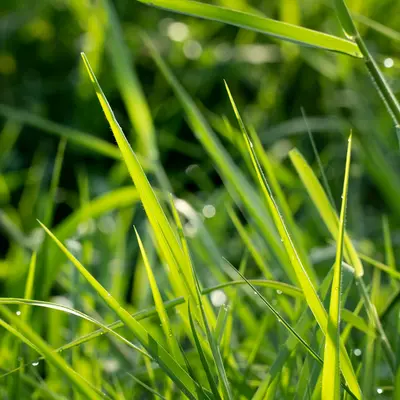
A thick, luxurious warm-season grass that creates a dense, carpet-like lawn perfect for Southern climates. Known for its excellent shade tolerance and aggressive spreading habit, it quickly fills in bare spots to create a lush green lawn. Its broad, flat blades give it a distinctive coarse texture that many homeowners love for its tropical appearance.
Sun
Full sun to partial shade
Zones
7–12
USDA hardiness
Height
11 inches
Planting Timeline
Showing dates for St. Augustine Grass in USDA Zone 7
All Zone 7 grass →Zone Map
Click a state to update dates
St. Augustine Grass · Zones 7–12
Growing Details
Complete Growing Guide
Light: Dappled Sunlight (Shade through upper canopy all day), Full sun (6 or more hours of direct sunlight a day), Partial Shade (Direct sunlight only part of the day, 2-6 hours). Soil: Clay, Loam (Silt), Sand. Soil pH: Acid (<6.0), Alkaline (>8.0), Neutral (6.0-8.0). Drainage: Moist, Occasional Flooding, Occasionally Dry, Occasionally Wet. Spacing: Less than 12 inches. Growth rate: Slow. Maintenance: High, Medium. Regions: Coastal, Piedmont.
Harvesting
Fruits are available August-November.
Type: Caryopsis.
Harvest time: Fall
Storage & Preservation
St. Augustine grass doesn't require traditional storage or preservation methods since it's an established lawn. However, newly sodded areas should be kept consistently moist (not waterlogged) during the first 2-3 weeks to establish roots. For sod rolls prior to installation, store in a cool, shaded location and keep damp—they should be laid within 24-48 hours of delivery. Long-term maintenance involves regular watering during establishment and drought stress, occasional dethatching to remove dead grass buildup, and aeration every 1-2 years to improve soil health and reduce compaction in high-traffic areas.
History & Origin
Origin: Southeastern U.S.A., South America, Africa
Advantages
- +Attracts: Small Mammals, Songbirds
Considerations
- -High maintenance
Companion Plants
St. Augustine does best when low-growing, non-aggressive plants fill the gaps rather than fight it for space. Clover fixes nitrogen at the root level — feeding the turf without a bag of fertilizer — and its shallow roots don't compete for depth. Ajuga and wild strawberry stay under 6 inches tall and handle the partial-shade margins where St. Augustine thins out; in zone 7 Georgia, those shaded edges along tree lines are typically where a lawn goes patchy first. Bermuda grass is the plant to exclude entirely: it spreads by both stolons and rhizomes, moves faster than St. Augustine in heat, and the two don't share space — Bermuda takes over. Nutgrass (Cyperus rotundus) is technically a sedge, which is why standard grass herbicides won't touch it; hand-pulling just snaps the tubers and multiplies the colony, so use halosulfuron, a product formulated specifically for sedge control.
Plant Together
Clover
Fixes nitrogen in soil, enhances grass nutrition and reduces need for fertilizer
Dandelion
Deep taproot brings nutrients to surface, benefits shallow-rooted grass
Plantain
Indicates soil compaction issues and helps aerate soil for grass roots
Violets
Provides ground cover in shady areas where grass struggles to grow
Ajuga
Tolerates foot traffic and fills bare spots under trees where grass won't grow
Moss
Indicates and thrives in acidic conditions that St. Augustine grass prefers
Wild Strawberry
Low-growing ground cover that complements grass without competing heavily
Chickweed
Provides natural mulch and soil protection during grass dormancy
Keep Apart
Bermuda Grass
Aggressive spreader that outcompetes and overtakes St. Augustine grass
Nutgrass
Fast-spreading sedge that crowds out grass and is extremely difficult to eliminate
Crabgrass
Annual weed that competes for water and nutrients, weakening grass stands
Dollarweed
Thrives in overwatered conditions and quickly spreads to dominate lawn areas
Pests & Disease Resistance
Resistance
Moderate, susceptible to brown patch and gray leaf spot
Common Pests
Chinch bugs, sod webworms, grubs
Diseases
Brown patch, gray leaf spot, take-all root rot
Troubleshooting St. Augustine Grass
What you'll see, why it happens, and what to do about it.
Irregular yellow or brown patches, 6–18 inches across, appearing in mid-to-late summer heat — often near driveways, curbs, or south-facing slopes
Likely Causes
- Chinch bug (Blissus insularis) feeding — they pierce grass blades and inject a toxin while sucking sap
- Hot, dry microclimates along pavement edges where turf stress is highest
What to Do
- 1.Do the coffee-can test: cut both ends off a can, push it 3 inches into the turf at the patch edge, fill with water, and count chinch bugs floating up within 5 minutes — 20 or more per square foot confirms the problem
- 2.Treat with a bifenthrin-based lawn insecticide, following the label rate; water it in lightly after application
- 3.Raise mowing height to 3.5–4 inches to reduce heat stress and make the turf less hospitable to chinch bug colonies
Circular straw-colored patches, 1–3 feet across, appearing after hot humid nights — grass blades have tan lesions with darker brown borders
Likely Causes
- Brown patch (Rhizoctonia solani) — a soil-borne fungus that activates when nighttime temps stay above 70°F and humidity is high
- Fast-release nitrogen applied in summer, which pushes soft leafy growth that the fungus hits hard
What to Do
- 1.Hold off on any nitrogen applications from June through August; slow-release fertilizer in late spring is fine, but a mid-summer feeding invites this problem
- 2.Water in the early morning only — never in the evening — so blades dry before nightfall
- 3.Apply a fungicide labeled for Rhizoctonia (azoxystrobin or propiconazole) on a 14-day interval if the patch is actively spreading
Turf thinning in spreading areas, pulling up from the soil with almost no resistance — roots are short, dark, and rotted; often mistaken at first for drought stress
Likely Causes
- Take-all root rot (Gaeumannomyces graminis var. graminis) — a fungal disease that destroys the root system while blades may still look borderline acceptable for weeks
- Soil pH drifting below 6.0, which stresses the grass and creates conditions where the pathogen gains ground
What to Do
- 1.Get a soil test — your county extension office can process one for a few dollars — and apply dolomitic lime if pH reads below 6.0
- 2.Top-dress the affected area with 1/4 inch of coarse sand mixed with mature compost to improve drainage and introduce competing soil microbes
- 3.Cut irrigation frequency but water deeply (about 1 inch per session) to push roots down and away from the infected surface layer
Frequently Asked Questions
Is St. Augustine grass good for beginners?▼
How long does St. Augustine grass take to establish?▼
Can St. Augustine grass grow in shade?▼
What are the main pests that affect St. Augustine grass?▼
How often should I water established St. Augustine grass?▼
Why is St. Augustine grass ideal for Southern climates?▼
Zone-by-Zone Planting Calendar
Growing Guides from Wind River Greens
Sources & References
External authority sources used in compiling this guide.
- ExtensionNC State Extension
See the Methodology page for how this data is sourced, what's AI-assisted, and known limitations.