Seashore Paspalum
Paspalum vaginatum
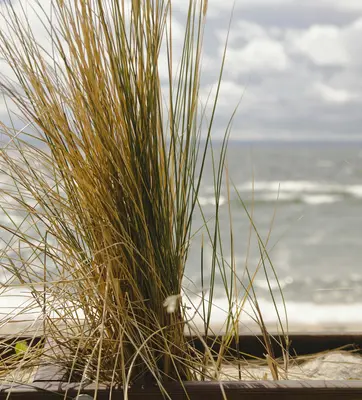
An extremely salt-tolerant warm-season grass that excels in coastal environments and areas with brackish water irrigation. Originally found in tropical and subtropical coastal regions, this premium grass creates a dense, fine-textured lawn that rivals Bermuda grass in quality. Its unique ability to thrive with saltwater irrigation makes it invaluable for waterfront properties and drought-prone areas with recycled water systems.
Sun
Full sun
Zones
8–11
USDA hardiness
Height
10 inches
Planting Timeline
Showing dates for Seashore Paspalum in USDA Zone 11
All Zone 11 grass →Zone Map
Click a state to update dates
Seashore Paspalum · Zones 8–11
Growing Details
Complete Growing Guide
Height: Height: 3.00 to 5.00 feet. Spread: Spread: 3.00 to 4.00 feet. Sun: Sun: Full sun. Water: Water: Medium to wet. Zones: Zone: 5 to 9. Bloom time: Bloom Time: August to November. Maintenance: Maintenance: Low.
Harvesting
Bloom time: Bloom Time: August to November
Storage & Preservation
Seashore Paspalum is a perennial grass that doesn't require traditional storage or preservation methods like fresh produce. Once established, maintain the lawn year-round by storing equipment in a cool, dry location. For sod or seed storage before planting, keep in a cool environment (50-60°F) with moderate humidity. Preservation involves proper seasonal maintenance: dormancy management during winter months, regular irrigation with salt or recycled water, and core aeration annually to maintain soil health and grass vitality.
History & Origin
Family: Family: Poaceae
Advantages
- +Exceptional salt tolerance allows growth in coastal and brackish water environments
- +Dense, fine-textured lawn rivals premium Bermuda grass quality and appearance
- +Thrives with recycled or saline irrigation, reducing freshwater dependency significantly
- +Ideal for waterfront properties where traditional grasses fail completely
Considerations
- -Moderate to difficult establishment requires expert installation and specialized management
- -Vulnerable to scale insects, mealybugs, and damaging nematode populations
- -Spring dead spot disease and fairy ring can damage lawn aesthetics
Companion Plants
Sea Oats and Coastal Sedge are the most practical neighbors here — both are adapted to the same sandy, saline conditions and root at different depths than Paspalum's stolons, so they fill vertical space without crowding the spread. Saltgrass and Beach Morning Glory do similar work along bare edges where plugs haven't fully knitted together yet. Keep Bermuda Grass (Cynodon dactylon) out entirely: it runs stolons at exactly the same level, pulls from the same moisture and light budget, and once it threads into an established Paspalum stand it's nearly impossible to remove selectively. St. Augustine shares that competitive stolon habit, and Tall Fescue brings mismatched pH and water needs that produce ragged, uneven turf even when neither grass is technically "winning."
Plant Together
Sea Oats
Provides wind protection and shares similar salt tolerance, creating natural coastal dune stabilization
Beach Morning Glory
Low-growing groundcover that helps prevent soil erosion and doesn't compete for vertical space
Saltgrass
Compatible halophyte that thrives in similar saline conditions and helps create diverse salt-tolerant turf
Coontail
Aquatic plant that can grow in brackish water areas where seashore paspalum borders water features
Sea Lavender
Salt-tolerant perennial that provides aesthetic contrast while thriving in similar coastal conditions
Coastal Sedge
Complementary native grass that helps with drainage and shares salt tolerance
Beach Pea
Nitrogen-fixing legume that improves soil fertility in sandy coastal soils
Glasswort
Extremely salt-tolerant succulent that can grow in areas too saline even for seashore paspalum
Keep Apart
Bermuda Grass
Aggressive spreader that can outcompete and crowd out seashore paspalum through rapid rhizome growth
St. Augustine Grass
Creates dense mat that blocks light and nutrients, inhibiting seashore paspalum establishment
Tall Fescue
Allelopathic properties inhibit germination and growth of other grasses including seashore paspalum
Pests & Disease Resistance
Resistance
Excellent disease resistance, especially in coastal conditions
Common Pests
Scale insects, mealybugs, nematodes
Diseases
Fairy ring, spring dead spot (rare)
Troubleshooting Seashore Paspalum
What you'll see, why it happens, and what to do about it.
White cottony masses clustered at stem bases or along stolons
Likely Causes
- Mealybugs (Pseudococcidae) — common in warm, humid conditions with poor air circulation
- Over-fertilization with nitrogen, which produces soft tissue mealybugs prefer
What to Do
- 1.Drench affected areas with insecticidal soap solution (2.5 tbsp per gallon of water) directly on colonies
- 2.Pull back any thatch buildup — mealybugs hide in it; dethatch mechanically if the layer exceeds half an inch
- 3.Cut back nitrogen applications and check whether new growth firms up over the next 3–4 weeks
Circular patches of dark green, fast-growing grass 6–24 inches across, sometimes with a ring of dead turf at the outer edge
Likely Causes
- Fairy ring — caused by soil-dwelling fungi (commonly Marasmius oreades or similar species) breaking down organic matter underground
- Buried woody debris or old root material feeding fungal growth beneath the surface
What to Do
- 1.Aerate the affected ring aggressively — punch holes every 2–3 inches to break up the hydrophobic fungal mat
- 2.Water deeply (1 inch) immediately after aerating to push moisture past the fungal layer
- 3.Excavate and remove any buried wood or organic debris you find 4–8 inches down in the ring zone
Yellowing, stunted patches that don't respond to watering or fertilizer; roots look stubby or have visible galls when you pull a plug
Likely Causes
- Root-knot nematodes (Meloidogyne spp.) — microscopic soil roundworms that form galls on roots and block nutrient uptake
- Prior planting of a nematode-susceptible crop in the same ground before installation
What to Do
- 1.Send a soil sample to your local extension lab for nematode counts before replanting — treatment without a count wastes money
- 2.If counts are high, solarize the soil for 6–8 weeks under clear plastic in full sun before re-sodding or re-plugging
- 3.Seashore Paspalum tolerates nematode pressure better than most warm-season grasses, but heavily infested ground will still show damage — solarization is the only practical reset short of fumigation
Uniform pale green or yellow color across a large area, no obvious spots or insects present
Likely Causes
- Iron chlorosis — Seashore Paspalum is prone to iron deficiency in alkaline soils above pH 7.5, where iron becomes chemically unavailable even when it's physically present
- Scalp damage from mowing below 1 inch on a stressed stand, which removes green tissue faster than roots can support recovery
What to Do
- 1.Test soil pH first — if it reads above 7.5, apply chelated iron as a foliar spray (ferrous sulfate at 2–3 oz per 1,000 sq ft is a standard starting rate)
- 2.Raise mowing height to 1.5–2 inches until color returns; don't push high-nitrogen fertilizer until the iron issue is resolved or you'll force growth the plant can't sustain
- 3.Sulfur amendments can nudge pH down over several months, though soils with high carbonate buffering capacity — coastal sandy soils often qualify — respond slowly
Frequently Asked Questions
How salt-tolerant is Seashore Paspalum compared to Bermuda grass?▼
Can you grow Seashore Paspalum from seed?▼
Is Seashore Paspalum good for beginners?▼
How long does Seashore Paspalum take to establish?▼
What are the main pests affecting Seashore Paspalum?▼
Can Seashore Paspalum tolerate shade?▼
Zone-by-Zone Planting Calendar
Growing Guides from Wind River Greens
Sources & References
External authority sources used in compiling this guide.
- Bot. GardenMissouri Botanical Garden
See the Methodology page for how this data is sourced, what's AI-assisted, and known limitations.