Pink Lady Apple
Malus domestica 'Cripps Pink'
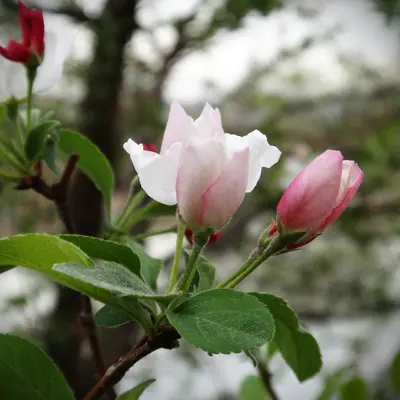
A premium late-season apple with stunning pink blush over yellow-green skin and an exceptional sweet-tart flavor that improves with storage. This Australian-bred variety requires a long, warm growing season to develop its signature taste and beautiful coloring, making it perfect for gardeners in warmer apple-growing regions. Pink Lady apples are prized for their crisp texture, excellent keeping quality, and complex flavor that balances sweetness with refreshing acidity.
Harvest
200-210d
Days to harvest
Sun
Full sun to partial shade
Zones
4–9
USDA hardiness
Height
15-30 feet
Planting Timeline
Showing dates for Pink Lady Apple in USDA Zone 7
All Zone 7 fruit-tree →Zone Map
Click a state to update dates
Pink Lady Apple · Zones 4–9
Growing Details
Complete Growing Guide
Pink Lady apples demand a long, warm growing season—at least 200-210 frost-free days—so delay spring pruning until late bud break to avoid frost damage to new growth. Position trees in full sun with excellent air circulation to prevent fungal diseases like powdery mildew and sooty blotch, which threaten fruit quality. This cultivar is moderately susceptible to fire blight, particularly in humid climates; prune infected branches during dormancy and sterilize tools between cuts. Pink Lady requires cross-pollination with a compatible variety like Gala or Fuji, and thinning fruit clusters in early summer is essential—space apples 6-8 inches apart to achieve the signature pink blush and concentrated flavor. For best results, avoid over-fertilizing with nitrogen, which produces excessive vegetative growth at the expense of fruit quality and storage potential.
Light: Full sun (6 or more hours of direct sunlight a day), Partial Shade (Direct sunlight only part of the day, 2-6 hours). Soil: Clay, Loam (Silt), Sand. Soil pH: Alkaline (>8.0), Neutral (6.0-8.0). Drainage: Good Drainage, Moist, Occasionally Dry. Height: 15 ft. 0 in. - 30 ft. 0 in.. Spread: 15 ft. 0 in. - 30 ft. 0 in.. Spacing: 24-60 feet. Growth rate: Medium. Maintenance: High. Propagation: Grafting, Seed. Regions: Coastal, Mountains, Piedmont.
Harvesting
Pink Lady apples reach peak harvest readiness when the base color shifts from yellow-green to golden yellow and the pink blush deepens to a rich crimson covering at least 75 percent of the fruit surface. Gently lift and twist individual apples—they should detach easily from the branch when mature, typically weighing 200-250 grams with a firm, smooth feel. Rather than harvesting all fruit at once, pick apples continuously over two to three weeks as they ripen unevenly across the tree, starting with the south-facing side which ripens first. A critical timing tip: delay harvest until late autumn when nighttime temperatures drop, as the cool nights trigger the final sugar development and acid balance that defines Pink Lady's signature complex flavor, potentially sacrificing some fruit for superior taste in remaining apples.
Large, round, firm fruits that often have a waxy coating. Some varieties ripen late summer and some in the fall.
Color: Gold/Yellow, Green, Red/Burgundy. Type: Pome. Length: > 3 inches. Width: > 3 inches.
Garden value: Edible
Harvest time: Fall, Summer
Edibility: Fruits can be eaten raw and cooked in a variety of dishes.
Storage & Preservation
Properly stored Pink Lady apples are legendary keepers, maintaining quality for 4-6 months under ideal conditions. Store unwashed fruits in perforated plastic bags in the refrigerator at 32-35°F with high humidity. Their excellent storage ability actually improves flavor—the starch converts to sugars while acidity mellows, creating the complex taste Pink Ladies are known for.
For preservation, Pink Ladies excel in dehydrating due to their firm flesh and balanced sugar content. Slice thinly and dehydrate at 135°F for 8-12 hours for crispy chips. They also freeze well when sliced with a bit of lemon juice, maintaining texture better than softer varieties. While suitable for canning, their premium eating quality makes fresh storage the preferred method. The variety's natural wax coating helps prevent moisture loss during extended storage periods.
History & Origin
Developed in Western Australia during the 1970s by John Cripps at the Department of Agriculture, this variety emerged from a cross between Lady Williams and Golden Delicious apples. The cultivar was officially registered as Cripps Pink and later commercialized under the trademark "Pink Lady" by the fruit industry. The breeding program specifically targeted the Australian climate, aiming to create a late-season apple with superior storage longevity and the pink coloration that would distinguish it in modern markets. Its success in warm-climate regions established it as a premium commercial variety exported globally by the 1980s.
Origin: Central Asia to Afghanistan
Advantages
- +Exceptional sweet-tart flavor with wine-like complexity that improves after harvest
- +Stunning pink blush coloring makes Pink Lady apples visually premium and marketable
- +Excellent storage quality keeps fruit crisp and flavorful for months
- +Late-season maturity extends fresh apple availability into winter months
- +Crisp, juicy texture remains firm longer than most other apple varieties
Considerations
- -Requires 200-210 warm growing days, unsuitable for short-season or cool climates
- -Vulnerable to fire blight in humid regions, requiring careful disease management
- -Moderate susceptibility to apple scab demands consistent fungicide applications in wet weather
- -Heavy pest pressure from codling moths and apple maggots requires intensive monitoring
Companion Plants
Comfrey is probably the most useful plant you can put under a Pink Lady. Its deep taproot — sometimes reaching 6 feet — pulls up calcium and potassium from below the rootzone and deposits them in its leaves. Chop and drop the leaves a few times a season and you're mulching and feeding the tree simultaneously. Chives planted at the drip line have a reasonable track record against apple scab; older European research suggests allicin compounds may inhibit Venturia inaequalis spore germination on nearby foliage, though it's not a substitute for a spray program. Clover as a ground cover fixes nitrogen slowly and steadily, which suits an apple tree well — a measured, even feed across the season rather than a flush of tender growth in May that fire blight can exploit.
Nasturtium and marigolds are worth scattering around the base mostly for aphid management. Nasturtium acts as a trap crop — aphids tend to hit it first — and marigolds attract hoverflies, whose larvae are effective aphid predators. Neither is a silver bullet, but if you're already growing them elsewhere in the garden, giving them a spot near the tree costs nothing.
Black walnut is the plant to keep well away from your apple. Juglone — the allelopathic compound walnut roots and hulls release into the soil — is toxic to many members of the Rosaceae family, and Malus domestica is on that list. Most extension sources recommend at least 50-60 feet of separation. Turf grass directly under the canopy is a quieter problem: it competes hard for water and nitrogen in the top 12 inches of soil right where feeder roots concentrate, and in young trees that competition slows establishment by a full season or more.
Plant Together
Comfrey
Deep roots bring nutrients to surface, leaves make excellent mulch and fertilizer
Chives
Repels aphids and reduces apple scab disease
Nasturtium
Acts as trap crop for aphids and woolly apple aphids
Marigold
Deters nematodes and various apple pests with strong scent
Clover
Fixes nitrogen in soil and provides living mulch
Tansy
Repels ants, mice, and various insects that damage apple trees
Dill
Attracts beneficial insects like parasitic wasps that control apple pests
Lavender
Repels moths and other flying pests, attracts pollinators
Keep Apart
Black Walnut
Produces juglone toxin that inhibits apple tree growth and can cause death
Fennel
Allelopathic properties inhibit growth of most fruit trees including apples
Grass
Competes heavily for water and nutrients, especially problematic for young trees
Nutrition Facts
Per 100g serving. % Daily Value based on 2,000 calorie diet. Source: USDA FoodData Central (FDC #168171)
Pests & Disease Resistance
Resistance
Good scab resistance, susceptible to fire blight in humid conditions
Common Pests
Codling moth, apple maggot, aphids, scale insects
Diseases
Fire blight in humid areas, apple scab (moderate), powdery mildew
Troubleshooting Pink Lady Apple
What you'll see, why it happens, and what to do about it.
Small, circular holes bored into developing fruit, often with a ribbon of brown frass just under the skin
Likely Causes
- Codling moth (Cydia pomonella) — larvae tunnel into the core shortly after petal fall
- Apple maggot (Rhagoletis pomonella) — lays eggs in fruit skin, larvae create winding brown tunnels through flesh
What to Do
- 1.Hang 1-2 codling moth pheromone traps per tree at petal fall to monitor pressure and time sprays
- 2.Apply kaolin clay (Surround WP) every 7-10 days from petal fall through mid-summer as a physical barrier
- 3.Bag individual fruit clusters with small paper bags or footies at about 10mm fruit diameter — labor-intensive but effective without any spray program
New shoots and blossoms turning brown and shriveled, often with a distinctive shepherd's-crook bend at the tip, appearing in spring
Likely Causes
- Fire blight (Erwinia amylovora) — a bacterial disease that enters through blossoms and young tissue during warm, wet spring weather above 65°F
- Pink Lady has moderate susceptibility; high humidity accelerates spread
What to Do
- 1.Prune out infected wood at least 8-12 inches below the visible infection, cutting into clean white wood; sterilize pruners with 70% isopropyl alcohol between every cut
- 2.Apply a copper-based bactericide at early pink bud stage and again at full bloom, per label rates — do not over-apply copper, as it accumulates in soil
- 3.Avoid heavy nitrogen fertilizing in spring, which pushes the fast, succulent growth fire blight loves
Dark, corky, olive-brown spots on leaves and fruit surface, sometimes causing fruit to crack or deform
Likely Causes
- Apple scab (Venturia inaequalis) — a fungal disease that overwinters in fallen leaf debris and releases spores during wet spring weather
- Pink Lady shows moderate susceptibility, so scab pressure varies significantly by site
What to Do
- 1.Rake and remove all fallen leaves in autumn — don't compost them, bag them — to cut the spore source dramatically
- 2.Apply sulfur-based fungicide starting at green tip and continuing on a 7-14 day schedule through petal fall, extending intervals in dry weather
- 3.Improve airflow by pruning to an open-center or modified central-leader form; dense canopies stay wet longer after rain
Frequently Asked Questions
How long does Pink Lady apple take to grow and produce fruit?▼
Can you grow Pink Lady apples in containers?▼
What does Pink Lady apple taste like?▼
What climate zone can you grow Pink Lady apples in?▼
Pink Lady vs Honeycrisp apple—what's the difference?▼
Do Pink Lady apple trees need a pollinator?▼
Zone-by-Zone Planting Calendar
Growing Guides from Wind River Greens
Sources & References
External authority sources used in compiling this guide.
See the Methodology page for how this data is sourced, what's AI-assisted, and known limitations.